

In an era where digital accessibility is increasingly recognized as a fundamental human right, a landmark exploratory study has revealed that user research involving participants with cognitive disabilities yields significantly more actionable insights than traditional testing methods. Conducted through a collaboration between Fable, a leading accessibility testing platform, and researchers at the University of California, Irvine, the study demonstrates that neurodivergent testers identify nearly double the number of usability issues and offer nearly double the suggestions for improvement compared to the general population. This finding suggests that cognitive inclusion is not merely a matter of compliance, but a strategic necessity for companies aiming to build robust, user-friendly digital products for all.
The Growing Landscape of Cognitive Disability
Cognitive disability serves as an umbrella term for a diverse range of conditions that impact how individuals process information, typically affecting memory, focus, and learning. This includes neurodivergent conditions such as ADHD, Autism, and Dyslexia, as well as cognitive decline associated with aging. According to data from the Centers for Disease Control and Prevention (CDC), cognitive disability is the most prevalent disability in the United States, affecting approximately 13.9% of the population.
Recent academic research further underscores the urgency of addressing these needs. A 2025 Yale University study reported a rapid increase in the number of U.S. adults reporting cognitive challenges. This trend is largely driven by an aging demographic; U.S. Census Bureau projections indicate that by 2060, one in four Americans will be an older adult. As the population ages, the prevalence of cognitive decline—which impacts memory and executive function—will become a dominant factor in how digital interfaces are consumed.
Chronology of the Research Initiative
The initiative began in the summer of 2024, when a working group of expert researchers was formed to establish standardized best practices for accessibility testing with people with cognitive disabilities. Led by the VP of Innovation at Fable, the group sought to move beyond theoretical frameworks and into empirical validation.
The research was executed in three distinct phases:
- Framework Development: The team reviewed existing literature and published studies involving cognitive testers to synthesize a set of preliminary best practices.
- The Pilot Study: A group of 25 testers participated in a pilot study to refine recruitment screeners and interview guides. This phase allowed researchers to iterate on their approach, ensuring that the testing environment was supportive and minimized unnecessary stress for participants.
- The Comparative Study: To validate the hypothesis that cognitive testers provide superior insights, a joint study was launched with the University of California, Irvine. This study involved 30 user interviews, split evenly between cognitive and general population participants, across three distinct website prototypes.
Methodology and Comparative Framework
To ensure a rigorous comparison, researchers utilized three AI-generated website prototypes, each designed with different aesthetic styles and functional goals:
- Strong Snacks: A "brutalist" and bright recipe website focused on simple content and minimal navigation.
- Turning Pages: A "moody" and classic bookstore site featuring complex filtering, a shopping cart, and a personalized "book matching" feature.
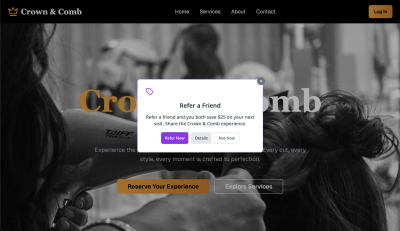
- Crown & Comb: A bold, black-and-white hair salon site with a complex appointment booking system and a hidden "bridal package" task designed to test extreme usability limits.
Participants were asked to complete specific tasks while thinking aloud. At the conclusion of each session, they completed the Accessible Usability Scale (AUS), a 10-question standardized survey used to quantify the perceived usability of a digital product.
Key Quantitative Findings: The 1.8x Factor
The data collected across the three websites provided a clear quantitative advantage for cognitive inclusion. Across all tests, participants with cognitive disabilities identified 197 usability issues, compared to only 113 identified by the general population. Similarly, the cognitive group provided 93 suggestions for improvement, while the general population group provided 54.
Website Performance Breakdown
The "Strong Snacks" website, characterized by its simple design, saw the highest overall usability scores. However, even here, cognitive participants found 3.4 more issues on average than the general population. Their AUS scores were notably lower (76.8 vs. 90.5), indicating that even "simple" designs can harbor hidden friction points for neurodivergent users.

"Turning Pages," the most functionally complex site, generated the highest volume of issues. Cognitive participants identified an average of 17 issues per session, compared to 11 for the general population. The AUS scores for this site plummeted to 60.8 for the cognitive group, highlighting how complex interactions—such as filtering and cart management—can quickly become overwhelming.
The "Crown & Comb" results provided a unique anomaly. While cognitive participants identified significantly more issues (12 vs. 5), they actually gave the site a higher median AUS score (68.0) than the general population (35.0). Researchers hypothesize that while the general population group was frustrated by the site’s intentional complexity, the cognitive group may have been more accustomed to navigating difficult interfaces, or perhaps perceived the visual clarity of the black-and-white design as more accessible despite the functional hurdles.
Qualitative Insights and Cognitive Load
Beyond the numbers, the study revealed a profound difference in how the two groups experienced digital friction. General population participants tended to describe their difficulties in terms of frustration or a lack of engagement. In contrast, cognitive participants described their experiences in terms of "mental energy" and "well-being."
One cognitive participant noted that excessive pop-ups and redundant options made them feel "drained and less able to focus." This qualitative feedback highlights the concept of "cognitive load"—the amount of mental effort required to use a product. When a website has high cognitive load, it doesn’t just annoy the user; it creates an accessibility barrier that can prevent the user from completing their task entirely.
The study categorized issues into several themes. Cognitive participants were far more likely to surface issues related to:

- Content Clarity: Confusing terminology or lack of clear instructions.
- Affordances: Buttons and links that did not look clickable or behaved in unpredictable ways.
- Visual Distractions: Continuous animations or cluttered layouts that disrupted focus.
- Media Interaction: Difficulties with video players or auto-playing content.
The "Curb-Cut Effect" in UX Design
The findings of this study reinforce the "Curb-Cut Effect"—the phenomenon where designs intended for people with disabilities end up benefiting everyone. Just as sidewalk ramps (curb cuts) help not only wheelchair users but also people with strollers, luggage, or bicycles, reducing cognitive load in UX design improves the experience for all users.
For example, cognitive participants in the study flagged that the "Strong Snacks" website lacked clear distinctions between recipe categories and blog posts. Addressing this by improving layout and visual hierarchy helps a neurodivergent user maintain focus, but it also helps a general user who is in a hurry and skimming the page.
Similarly, the confusion surrounding the "Add to Book Bag" button on the "Turning Pages" site points to a lack of clear feedback. Improving this interaction ensures that no user—regardless of cognitive ability—is left wondering if their action was successful. In a commercial context, these "subtle" issues often lead to abandoned carts and lost revenue.
Implications for the Tech Industry
The study’s results have significant implications for how UX teams allocate their research budgets. A UX Manager at Bell Media, reflecting on similar findings, stated, "Two sessions with cognitive users feel like 200 because of the volume of insights we get." This efficiency suggests that inclusive research is a "force multiplier," allowing teams to identify and fix more bugs with fewer participants.
Furthermore, as the legal landscape evolves—with regulations like the European Accessibility Act (EAA) and the Americans with Disabilities Act (ADA) increasingly being applied to digital spaces—cognitive accessibility is becoming a compliance requirement. Organizations that proactively integrate cognitive testing into their development lifecycle are better positioned to avoid litigation and reach a wider market.
Addressing Study Limitations
While the findings are compelling, the researchers acknowledged certain limitations. The sample size of 30 is relatively small for broad statistical generalizations, and the study was exploratory in nature. Additionally, the participants were recruited from different platforms (Fable Engage for the cognitive group and UserFeel for the general population), which could introduce variables related to participant experience and platform interface.
To maintain consistency, however, a single lead researcher reviewed all recordings and transcripts to count issues and suggestions, ensuring a uniform standard for what constituted a "usability flaw" across both groups.
Conclusion: A New Standard for Inclusive Research
The Fable and UC Irvine study provides empirical evidence that cognitive inclusion is a powerful on-ramp to better design. By prioritizing the needs of users with challenges in memory, focus, and learning, UX teams can identify the most critical friction points in their products.
As the global population continues to age and the prevalence of neurodivergent diagnoses rises, the ability to design for cognitive ease will become a defining characteristic of successful digital products. Cognitive inclusion is no longer an optional "extra" for accessibility teams; it is a fundamental pillar of modern, efficient, and ethical user research. By building for the most vulnerable users, companies ultimately ship better, clearer, and more predictable products for the entire world.

