
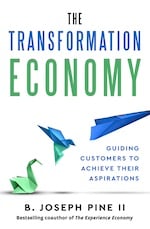
Management guru Joseph Pine has once again redefined the landscape of consumer engagement with his latest work, "The Transformation Economy: Guiding Customers to Achieve Their Aspirations." This groundbreaking book builds upon the enduring legacy of his 1999 bestseller, "The Experience Economy," which presciently identified the burgeoning power of consumer experiences in forging brand loyalty, superseding the sole reliance on tangible goods. Over the past quarter-century, the world has witnessed an unprecedented proliferation of these experiences, solidifying Pine’s initial foresight. However, in his newest treatise, Pine posits that experiences, while potent, are no longer the ultimate frontier. He argues that today’s consumers are actively seeking more – they desire products and services that demonstrably enhance their lives and propel their businesses forward.
Pine’s "progression of economic value" framework, a cornerstone of his thought leadership, traces the evolution from the agrarian manufacturing era to the industrial economy, which subsequently gave rise to the service sector, and finally, the experience economy. "The Transformation Economy" introduces the next logical evolution: a paradigm where businesses actively participate in the personal and professional growth of their clientele. This is not merely about providing a memorable interaction or a functional product; it is about facilitating genuine, lasting change.
The core thesis of "The Transformation Economy" is elegantly captured by Pine’s assertion: "You are what you charge for." This principle underscores the idea that the true value a business offers is not dictated by the cost of its inputs but by the tangible outcomes it delivers to its customers. Businesses that adeptly identify and address the aspirational "jobs to be done" by their customers – the overarching goals individuals and organizations strive to achieve – can command premium pricing and cultivate unparalleled loyalty. This profound shift in economic value creation moves beyond transactional relationships to forge partnerships in progress.
The Evolution of Economic Value: From Goods to Growth
Pine meticulously details this economic progression, illustrating how each stage builds upon the last:
- Commodities: Raw materials, indistinguishable from one seller to another. The value lies in the raw material itself.
- Goods: Differentiated products, offering tangible benefits. Value is derived from the utility and quality of the manufactured item.
- Services: Performing activities for customers, delivering benefits through actions. Value is in the execution and convenience.
- Experiences: Staging memorable events, engaging customers emotionally and intellectually. Value is in the feeling and the memory created.
- Transformations: Guiding customers toward their desired future state, fundamentally altering their capabilities, beliefs, or well-being. Value is in the achievement of aspirational goals.
This progression is not merely theoretical; it is observable across industries. Consider the evolution of a simple cup of coffee. It began as a commodity, then became a good (pre-ground coffee), then a service (a barista making coffee), then an experience (a cozy coffee shop ambiance), and finally, a transformation for some, perhaps a carefully curated coffee subscription that educates them on brewing techniques and cultivates a discerning palate.
Defining Transformation: Beyond Experience
In the opening chapter of "The Transformation Economy," Pine establishes a clear definition of transformation within the business context. He argues that businesses that succeed in this new economy do not merely sell products or services; they sell aspirational outcomes. This requires a deep understanding of the customer’s desired future state. The book emphasizes that businesses must shift their focus from what they do to what their customers become as a result of their engagement.
The second chapter delves into the concept of "human flourishing" – a notion Pine proposes as the ultimate purpose of business. This multifaceted concept is explored across four critical spheres:
- Health and Well-being: Enabling customers to achieve better physical and mental health, leading to a more vibrant and fulfilling life.
- Knowledge and Wisdom: Empowering customers with new insights, skills, and understanding, fostering personal growth and intellectual development.
- Wealth and Prosperity: Assisting customers in achieving financial security, growth, and economic well-being.
- Purpose and Meaning: Helping customers discover and pursue their passions, values, and a sense of deeper contribution to the world.
Illustrative Case Studies: Businesses Driving Transformation
Pine’s analysis is enriched by a diverse array of compelling examples, showcasing companies that have successfully transitioned into the transformation economy. These are not niche players but established entities that have reoriented their offerings to facilitate significant customer growth:
- Equinox Fitness Clubs: Beyond offering gym memberships (a service) or a workout experience, Equinox positions itself as a catalyst for a transformative lifestyle, emphasizing elite fitness, recovery, and holistic well-being. Their pricing reflects the aspirational outcome of achieving peak physical and mental condition, not just access to equipment.
- Fender Musical Instruments: While Fender sells guitars (goods), their true value proposition extends to enabling aspiring musicians to realize their dreams of creating music, performing, and expressing themselves artistically. They offer resources, educational platforms, and a community that fosters this creative transformation.
- Eataly: This Italian marketplace transcends selling food products. It offers an immersive experience and, more importantly, facilitates a transformation for its customers by educating them about authentic Italian cuisine, empowering them to cook like an Italian chef, and fostering a deeper appreciation for culinary culture.
- Burning Man: This annual festival is a prime example of a transformative experience that goes far beyond a typical outdoor event. Participants are encouraged to engage in radical self-expression, community building, and the creation of a temporary, utopian society, leading to profound personal introspection and often, lasting shifts in perspective.
- The U.S. Army: The military’s recruitment messaging often focuses on transformation – turning civilians into disciplined, skilled, and capable service members, offering them leadership development, career opportunities, and a sense of purpose and belonging.
- Princess Cruises: Beyond offering a vacation (an experience), cruise lines like Princess can facilitate transformations by providing opportunities for relaxation, cultural immersion, and personal rejuvenation, allowing passengers to return home with renewed energy and a broader worldview.
These examples, drawn from various sectors, highlight Pine’s central argument: businesses that understand and cater to their customers’ aspirations for self-improvement and goal achievement are positioned to thrive. The book draws insights from business leaders who have navigated these shifts, offering practical wisdom and strategic guidance.
Navigating the "Jobs to Be Done" Framework
A particularly valuable contribution of "The Transformation Economy" is its deep dive into the "jobs to be done" framework. Pine articulates that customers often engage with businesses not because they know precisely what they want, but because they have an underlying need or aspiration they are trying to fulfill. As Pine aptly states, "customers often don’t know what they want, and even when they do, they can’t always articulate it. You need to draw it out of them."
This framework is universally applicable, though its implementation may vary across industries. For high-end service businesses like health and wellness, travel, and finance, understanding individual customer aspirations is more feasible, often involving personalized consultations and bespoke offerings. The notion of "getting to know each customer personally" might seem like an insurmountable challenge for a company selling mass-market groceries or household consumables. However, the underlying principle of identifying the "job" a customer is "hiring" a product or service to do remains critical.
For instance, a customer buying milk might not just want a dairy product; they might be "hiring" it to ensure their children have nutritious breakfasts, to bake a cake for a special occasion, or to facilitate a comforting evening ritual. Businesses that can tap into these deeper motivations can create more resonant marketing campaigns and product development strategies.
Implications for Businesses and Consumers
The implications of "The Transformation Economy" are far-reaching for both businesses and consumers. For businesses, it signals a crucial strategic imperative: to move beyond merely satisfying needs and toward actively enabling growth. This requires a fundamental reorientation of business models, marketing strategies, and customer service approaches. Companies must invest in understanding their customers’ deepest aspirations, not just their current demands. This involves fostering a culture of empathy, investing in research, and developing offerings that are intrinsically linked to customer progress.
For consumers, the book offers a framework for making more intentional purchasing decisions. By understanding the "jobs to be done," consumers can better evaluate whether a product or service truly aligns with their personal goals and aspirations. It empowers them to seek out businesses that act as partners in their journey of self-improvement, rather than simply transactional providers.
Pine’s Enduring Influence
Joseph Pine’s prolific career as a management thinker has consistently focused on the evolving nature of economic value. His seminal work, "Mass Customization," published in 1992, was lauded by the Financial Times and Library Journal as a best business book, laying the groundwork for personalized products and services. His subsequent co-authored works, including "Authenticity" (2007) and "Infinite Possibility" (2011), have further explored the intangible dimensions of value in the marketplace.
However, it is "The Experience Economy" that cemented his status as a visionary. Twenty-five years after its initial publication, it remains a cornerstone text in product marketing, consistently ranking among Amazon’s top 10 in its category, a testament to its enduring relevance and the foresight of its analysis. The two updated editions published since its debut underscore the continued dialogue and adaptation of its core concepts.
"The Transformation Economy" is not a departure from this established lineage but a natural and necessary progression. Pine’s ability to synthesize complex economic shifts into accessible frameworks, supported by practical examples and actionable insights, makes this latest book an essential read for any business leader, marketer, or consumer seeking to navigate the future of value creation. The book concludes with practical exercises and probing questions designed to help readers apply these principles to their own businesses, reinforcing its commitment to tangible impact. With its clear prose, logical structure, and comprehensive index, "The Transformation Economy" promises to be another influential addition to Pine’s already formidable body of work.

