
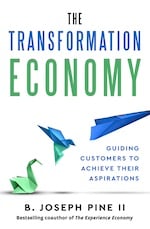
Management guru Joseph Pine, renowned for his seminal 1999 bestseller The Experience Economy, has once again advanced his influential framework for understanding evolving consumer value with his latest work, The Transformation Economy: Guiding Customers to Achieve Their Aspirations. Building upon his earlier prediction that experiences would supersede mere commodities in driving brand loyalty, Pine now argues that even transformative experiences are no longer the ultimate frontier. In this new book, he posits that today’s consumers are seeking something more profound: products and services that demonstrably improve their lives and contribute to their personal and professional growth. This evolution represents the latest stage in what Pine terms "the progression of economic value," a historical trajectory that has moved from agrarian production to the industrial economy, then to services, and subsequently to experiences.
Pine’s central thesis in The Transformation Economy is that customers engage with businesses not simply for a product or a pleasant experience, but to achieve a specific, often aspirational, goal. Businesses that can accurately identify and address these underlying customer aspirations, understanding what buyers genuinely hope to improve in their lives, are positioned to offer significantly greater value. This elevated value, Pine contends, becomes the primary determinant of pricing, eclipsing the traditional considerations of material costs or service delivery expenses. He crystallizes this idea with the provocative assertion, "You are what you charge for," emphasizing that the price a company commands is a direct reflection of the tangible progress and desired outcomes it facilitates for its customers.
The book meticulously outlines this progression. The initial chapters delve into the definition of transformation within the commercial landscape, setting the stage for a deeper exploration of human flourishing as the intrinsic purpose of business. Pine identifies four key spheres of human flourishing that businesses can address: health and well-being, knowledge and wisdom, wealth and prosperity, and purpose and meaning. To illustrate these concepts, The Transformation Economy draws upon a diverse array of real-world examples. Companies like Equinox Fitness Clubs are presented not merely as providers of gym memberships, but as facilitators of a healthier, more vibrant lifestyle. Similarly, Fender Musical Instruments is portrayed as a gateway to creative expression and personal mastery, transcending the sale of guitars. Other notable case studies include Eataly, which offers transformative culinary experiences and knowledge beyond mere food products; the Burning Man festival, which fosters a sense of community and personal discovery; the U.S. Army, which provides structured personal development and a sense of purpose; and Princess Cruises, which aims to deliver not just travel but life-enriching adventures and relaxation. These examples are enriched with insights gleaned from conversations with business leaders, providing a multi-faceted perspective on how transformation is being delivered across various sectors.
Pine employs clear diagrams and explanations to delineate the nuances between offering experiences and delivering transformations, detailing different types and levels of each. This systematic approach enables readers to grasp the strategic shift required to move up the value chain. The concluding chapters of the book are designed to be highly actionable, offering readers a series of probing questions to apply these concepts to their own business contexts. The volume is further enhanced by extensive notes and a comprehensive index, making it a robust resource for researchers and practitioners alike.
The Evolving Landscape of Customer Desires
While many of Pine’s observations and strategies are particularly well-suited for high-end service industries such as health and wellness, travel, and financial services – sectors where personalized customer engagement is paramount – his core "jobs to be done" framework possesses universal applicability. This framework, which focuses on understanding the fundamental tasks or goals that customers are trying to accomplish, can be effectively leveraged by any business, regardless of its sector. Pine astutely points out that "customers often don’t know what they want, and even when they do, they can’t always articulate it. You need to draw it out of them." This highlights the critical role of proactive inquiry and insightful guidance that businesses must undertake to truly understand and serve their clientele.
The impact of Pine’s work on the business world has been substantial over the past quarter-century. His earlier book, Mass Customization, published in 1992, was lauded by both the Financial Times and Library Journal as a seminal work in business strategy. This was followed by other influential titles, including Authenticity (2007) and Infinite Possibility (2011), co-authored with Jim Gilmore, his long-time collaborator on The Experience Economy. The Experience Economy, in particular, achieved immediate classic status and continues to be a top seller in the product marketing category on Amazon, a testament to its enduring relevance and the foresight it demonstrated. The book’s enduring presence, even after 25 years and two updated editions, underscores the profound shift it predicted and catalyzed in how businesses approach customer engagement and value creation.
Data Supporting the Shift Towards Transformation
The economic landscape has demonstrably shifted in ways that support Pine’s thesis. Over the last two decades, there has been a significant rise in consumer spending on experiences and personal development. Data from various market research firms indicates a growing preference for investing in intangible value over tangible goods. For instance, a 2023 report by Allied Market Research projected the global experience economy market to reach $11.9 trillion by 2028, growing at a compound annual growth rate (CAGR) of 12.3%. This surge is driven by consumers seeking memorable moments, personal growth, and social connection, all of which are central to the concept of transformation.
Furthermore, the "gig economy" and the rise of subscription services for personal development, education, and wellness are further indicators of this trend. Platforms offering online courses, personalized coaching, and fitness programs have seen exponential growth. According to Statista, the global e-learning market was valued at approximately $252 billion in 2022 and is expected to grow to over $600 billion by 2027. This expansion reflects a consumer willingness to invest in tools and services that promise self-improvement and the achievement of aspirational goals.
The increasing emphasis on purpose-driven brands also aligns with Pine’s framework. Consumers, particularly younger demographics, are increasingly choosing to support companies whose values and missions resonate with their own. A 2022 study by Cone Communications found that 79% of consumers are more loyal to brands that are authentic and transparent. This authenticity often stems from a company’s commitment to facilitating positive change or enabling customers to achieve their personal aspirations, moving beyond transactional relationships to foster deeper connections.
Broader Implications for Business Strategy
The implications of The Transformation Economy extend to fundamental business strategy, marketing, and product development. Companies that successfully embrace this paradigm shift will likely find themselves better positioned to differentiate themselves in crowded markets, command premium pricing, and cultivate enduring customer loyalty. This requires a deeper understanding of customer psychology, a commitment to continuous innovation in service delivery, and a willingness to measure success not just in sales figures, but in the tangible progress and well-being of their customers.
The book’s emphasis on the "jobs to be done" framework is particularly valuable for businesses that might find direct transformation challenging to implement across all their offerings. By identifying the underlying needs and goals that drive customer purchasing decisions, companies can adapt their existing products and services to better address these aspirations, even if they cannot fully embody a transformative offering. This could involve refining marketing messages to highlight aspirational outcomes, developing complementary services that support customer goals, or fostering communities that enable shared progress.
For businesses operating in sectors traditionally focused on commodities or basic services, the challenge lies in identifying opportunities to inject elements of transformation. This might involve partnering with specialists, developing educational content, or curating experiences that help customers achieve a desired outcome. For example, a grocery store could offer cooking classes focused on healthy eating or meal planning workshops to help customers achieve their wellness goals, thereby moving beyond simply selling food.
Pine’s work serves as a timely reminder that the economic value proposition continues to evolve. As consumers become more sophisticated and their aspirations more pronounced, businesses that can demonstrably guide them toward achieving their desired outcomes will be the ones that thrive in the future. The Transformation Economy provides a comprehensive roadmap for navigating this evolving landscape, offering both theoretical insights and practical guidance for businesses aiming to deliver profound and lasting value to their customers.

