
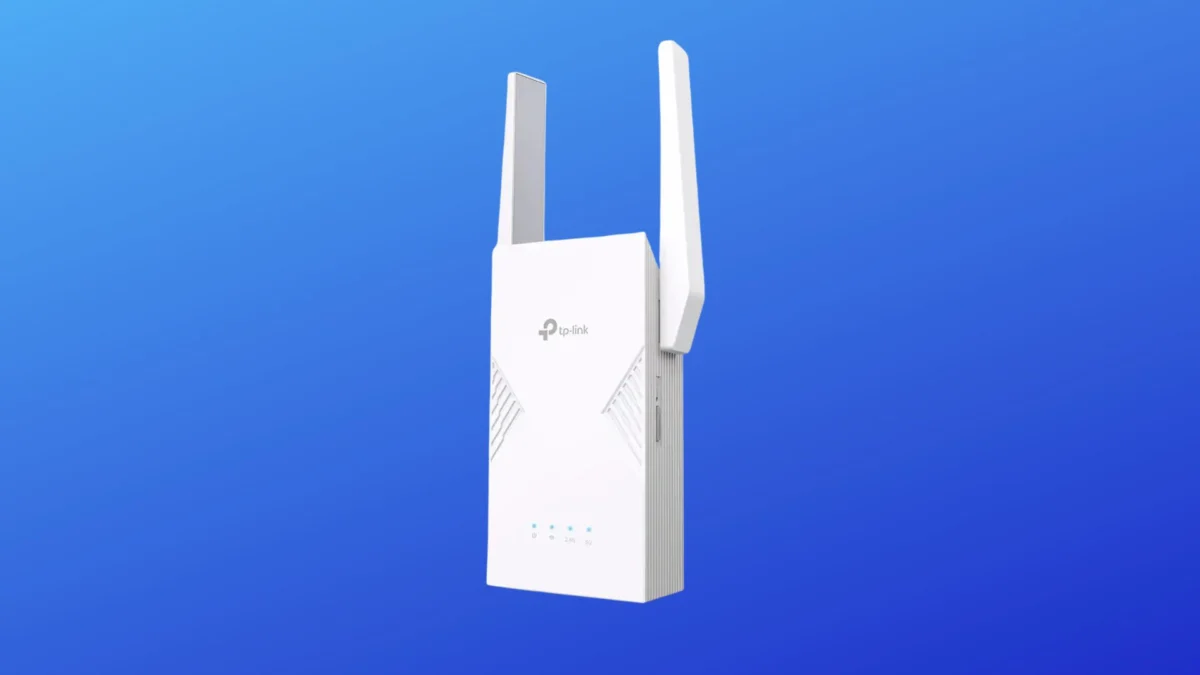
Consumers grappling with persistent Wi-Fi dead zones and sluggish internet speeds within their homes are presented with a significant opportunity to upgrade to next-generation Wi-Fi technology at a substantially reduced price. TP-Link’s BE3600 Wi-Fi 7 Range Extender, a device poised to bring the cutting-edge capabilities of Wi-Fi 7 to a broader audience, is currently available for $89.99. This represents a considerable saving of $60 from its usual retail price of $149.99, marking a substantial 40% discount. This price adjustment is particularly noteworthy given that much of the Wi-Fi 7 ecosystem remains in its nascent stages, with many devices still commanding premium prices reflective of early adoption. The availability of a full-fledged Wi-Fi 7 extender at this price point makes it an exceptionally attractive proposition for homeowners seeking to enhance their wireless network performance without incurring prohibitive costs.
The current market landscape for Wi-Fi 7 hardware is largely characterized by devices designed for early adopters, often featuring high price tags. This makes the TP-Link BE3600’s dramatic price reduction a significant development. The device’s ability to support the Wi-Fi 7 standard, coupled with its user-friendly setup and operation, positions it as an ideal solution for individuals who may be new to Wi-Fi extenders or are hesitant about the complexity often associated with advanced networking equipment. The ease of deployment, a crucial factor for widespread adoption, is a key selling point for this particular model.
The Evolution of Wi-Fi and the Advent of Wi-Fi 7
The journey to Wi-Fi 7, officially designated as IEEE 802.11be, represents a significant leap forward from its predecessors. Wi-Fi 6 (802.11ax) introduced substantial improvements in speed, efficiency, and capacity, particularly in dense environments. However, Wi-Fi 7 builds upon these foundations by introducing several groundbreaking technologies designed to deliver even higher throughput, lower latency, and enhanced reliability.
Key advancements in Wi-Fi 7 include:
- Wider Channels: Wi-Fi 7 supports wider channel bandwidths, specifically 320 MHz in the 6 GHz band, effectively doubling the capacity of Wi-Fi 6’s maximum 160 MHz channels. This allows for significantly faster data transfer rates.
- 4K-QAM Modulation: This advanced modulation scheme increases data density by approximately 20% compared to the 1024-QAM used in Wi-Fi 6. In simpler terms, it enables more data to be transmitted within the same signal spectrum, leading to higher effective speeds.
- Multi-Link Operation (MLO): This is perhaps the most transformative feature of Wi-Fi 7. MLO allows devices to connect and transmit data simultaneously across multiple frequency bands (e.g., 2.4 GHz, 5 GHz, and 6 GHz). This feature enhances throughput, reduces latency, and improves network reliability by providing redundant pathways. The TP-Link BE3600 leverages MLO to combine the 5GHz and 2.4GHz bands, offering a unified, higher-performance connection.
- Enhanced Beamforming: Improvements in beamforming technology allow for more precise targeting of wireless signals towards devices, leading to stronger and more stable connections.
The introduction of these technologies aims to address the growing demands of bandwidth-intensive applications such as high-resolution video streaming, cloud gaming, virtual and augmented reality, and the proliferation of smart home devices, all of which require robust and consistent wireless connectivity.
TP-Link BE3600: Key Features and Performance
The TP-Link BE3600 distinguishes itself through its implementation of Wi-Fi 7 capabilities, making it a compelling option for users looking to extend their existing network with cutting-edge technology.
Multi-Link Operation for Enhanced Speed and Stability
A core technological advantage of the BE3600 is its utilization of Multi-Link Operation (MLO). Unlike conventional dual-band extenders that typically select either the 2.4 GHz or 5 GHz band based on current network congestion, the BE3600 can aggregate both bands simultaneously. This concurrent operation significantly boosts overall bandwidth and enhances connection stability. The combined bandwidth across both bands can reach up to an impressive 3.6 Gbps. Specifically, the 5GHz band alone is capable of delivering speeds up to 2882 Mbps, a crucial factor for demanding applications like high-definition streaming or online gaming, particularly in areas of the home that were previously plagued by weak or unreliable signals.
4K-QAM for Increased Data Efficiency
The inclusion of 4K-QAM modulation is another significant feature that contributes to the BE3600’s performance. This technology allows for a higher density of data transmission, meaning more information can be packed into the same wireless signal. This translates to increased speeds and a more efficient use of the available spectrum, delivering a superior user experience without requiring a stronger signal to achieve the same results.

Versatile Connectivity with a 2.5Gbps Ethernet Port
Beyond its wireless capabilities, the BE3600 is equipped with a 2.5Gbps Ethernet port. This feature offers a wired connectivity option, which can be particularly beneficial for devices that demand stable, high-speed internet access and are situated in areas with poor Wi-Fi reception. Connecting a gaming console, a smart TV, or a desktop computer via this port can provide a more consistent and lag-free experience, bypassing potential wireless interference.
Seamless Network Integration with EasyMesh Compatibility
For users seeking a unified and hassle-free wireless network experience, the BE3600’s compatibility with the EasyMesh standard is a significant advantage. EasyMesh allows the extender to integrate seamlessly with compatible routers, creating a single, cohesive Wi-Fi network with a singular network name (SSID). This ensures that devices can roam effortlessly between the main router and the extender without requiring manual network switching. As users move throughout their home, their devices will automatically connect to the strongest available signal, eliminating the frustration of dropped connections or the need to manually reconnect to a different network. This feature is particularly valuable for mobile devices like smartphones and laptops, ensuring uninterrupted connectivity as users transition between different rooms.
Market Context and Pricing Strategy
The current promotional pricing of the TP-Link BE3600 at $89.99 places it in a unique position within the emerging Wi-Fi 7 market. Historically, advancements in Wi-Fi technology have often been accompanied by substantial price premiums, making cutting-edge features accessible only to a segment of the consumer base. The introduction of a Wi-Fi 7 extender at a price point below $100 signals a strategic move by TP-Link to democratize access to this next-generation technology.
This pricing strategy can be analyzed in several ways:
- Market Penetration: By offering a Wi-Fi 7 device at a more accessible price, TP-Link aims to capture a larger share of the market, particularly among consumers who have been holding back from upgrading due to cost concerns. This could accelerate the adoption rate of Wi-Fi 7 technology more broadly.
- Competitive Positioning: The aggressive pricing positions the BE3600 as a highly competitive offering, potentially influencing the pricing strategies of other manufacturers in the Wi-Fi extender and router market.
- Addressing Consumer Pain Points: The product directly addresses a common consumer frustration – poor Wi-Fi coverage. By offering a solution at a compelling price, TP-Link is likely tapping into a significant demand for improved home networking.
The original price of $149.99 aligns with the typical cost of early-generation Wi-Fi 7 devices. The current reduction to $89.99 represents a significant market adjustment, potentially indicating a shift towards broader consumer adoption and a move away from the niche early-adopter phase for Wi-Fi 7. This price drop is not merely a temporary sale but a strategic repositioning that makes advanced networking capabilities more attainable.
Background and Timeline of Wi-Fi 7 Development
The development and standardization of Wi-Fi 7 have been an ongoing process within the Institute of Electrical and Electronics Engineers (IEEE). The IEEE 802.11 working group has been instrumental in defining the technical specifications for this new standard.
- Early Development and Standardization Efforts: Work on the IEEE 802.11be standard began several years ago, with initial proposals and discussions laying the groundwork for the advanced features that would eventually define Wi-Fi 7.
- Draft Standards and Interoperability: As the standard progressed through various draft stages, manufacturers began developing preliminary hardware. Early interoperability testing and certification efforts, such as those led by the Wi-Fi Alliance, have been crucial in ensuring that devices from different vendors can communicate effectively. The Wi-Fi Alliance’s certification program for Wi-Fi 7 is expected to roll out more broadly as the standard solidifies.
- Product Launches and Market Entry: Following the standardization process, manufacturers have gradually begun to introduce Wi-Fi 7-enabled products to the market. Initially, these were primarily high-end routers and access points. The release of extenders like the TP-Link BE3600 signifies a move towards a wider range of device categories and a broader consumer market.
- Current Status: While the IEEE 802.11be standard is nearing finalization, many products already on the market incorporate its core features and are marketed as Wi-Fi 7 compliant. The current pricing trend, exemplified by the BE3600’s discount, suggests a maturing market and a drive towards wider consumer adoption.
The availability of the BE3600 at this price point suggests that the ecosystem is reaching a phase where performance enhancements are becoming more cost-effective to implement, and manufacturers are keen to capitalize on growing consumer interest in faster and more reliable wireless internet.
Implications for Home Networking and Consumer Behavior
The availability of affordable Wi-Fi 7 extenders like the TP-Link BE3600 has several significant implications for home networking and consumer behavior.
- Bridging the Digital Divide within Homes: For households experiencing inconsistent Wi-Fi, the BE3600 offers a practical and cost-effective solution to eliminate dead zones and improve connectivity in previously underserved areas. This can enhance productivity for remote workers, improve the entertainment experience for streaming enthusiasts, and ensure a smoother experience for online gamers.
- Accelerated Adoption of Wi-Fi 7: The substantial price reduction is likely to encourage more consumers to adopt Wi-Fi 7 technology sooner than they might have otherwise. As more homes deploy Wi-Fi 7 infrastructure, the demand for Wi-Fi 7-enabled client devices (laptops, smartphones, tablets) will also likely increase.
- Increased Demand for Bandwidth-Intensive Applications: With improved Wi-Fi capabilities, consumers may be more inclined to utilize bandwidth-heavy applications and services, such as 8K video streaming, cloud gaming with higher fidelity, and immersive VR/AR experiences, further driving the need for robust network infrastructure.
- Simplified Network Management: The EasyMesh compatibility simplifies the process of extending a home network, making advanced networking features more accessible to the average user who may not have extensive technical expertise. This ease of use is a critical factor in driving widespread adoption of any new technology.
- Potential for Future Innovations: As Wi-Fi 7 becomes more prevalent, it will pave the way for future innovations in wireless technology and the development of new applications that leverage its enhanced capabilities. The increased data throughput and reduced latency could enable advancements in areas such as real-time IoT communication and more sophisticated smart home ecosystems.
Conclusion
The TP-Link BE3600 Wi-Fi 7 Range Extender’s current price of $89.99 marks a pivotal moment in the accessibility of next-generation wireless technology. By offering advanced Wi-Fi 7 features at a significantly reduced cost, TP-Link is not only addressing common consumer pain points related to Wi-Fi coverage but also democratizing access to the future of wireless connectivity. This move is expected to accelerate the adoption of Wi-Fi 7, foster greater utilization of bandwidth-intensive applications, and ultimately contribute to a more seamless and robust home networking experience for a wider segment of the population. For consumers who have long endured the frustrations of weak Wi-Fi signals, this substantial discount presents an opportune moment to invest in a solution that promises to deliver superior performance and future-proof their home network.

