
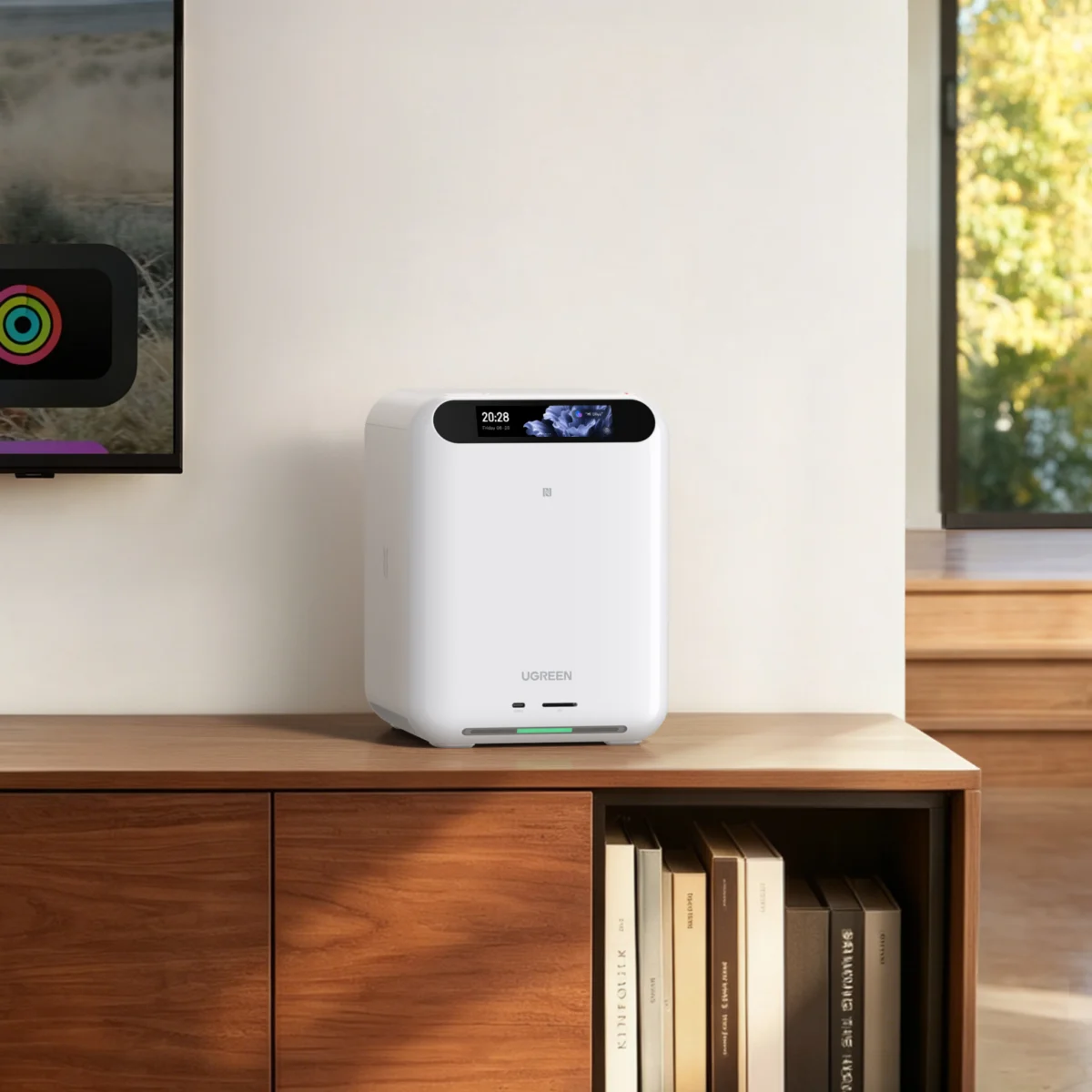
The smart home landscape has long been characterized by fragmented ecosystems, where individual devices and applications operate in silos, necessitating multiple cloud subscriptions and raising concerns about data privacy and security. UGREEN, a company known for its data storage and connectivity solutions, is challenging this paradigm with the introduction of its HomeAgent HA100, an Agentic AI Local Hub designed to unify local storage, computing, and home control into a single, integrated device. This ambitious project aims to bring a new level of autonomy, security, and personalization to the modern household by centralizing critical smart home functions and data on a local network.
The core of the HomeAgent HA100 is UGOS Pro, UGREEN’s proprietary Linux-based operating system, which has already been the backbone of its Network Attached Storage (NAS) lineup. This robust foundation is engineered for professional-grade data management, encompassing secure storage, data backup, synchronization, and a high degree of expandability. By leveraging this established infrastructure, UGREEN is extending its expertise in data management directly into the smart home realm, offering a solution that integrates seamlessly with existing NAS devices rather than introducing yet another standalone hub that competes for precious space and attention in a connected home. The HA100 is designed to be more than just a smart home controller; it’s a comprehensive platform that consolidates NAS capabilities with integrated home security, smart device orchestration, and intuitive voice interaction, effectively replacing a multitude of disconnected applications with a singular, cohesive system.
UGREEN’s vision for the HomeAgent HA100 centers on a "local-first" architecture, a significant departure from the cloud-centric models prevalent today. This approach prioritizes keeping user data and device operations within the home’s local network, thereby enhancing privacy and security. Footage from compatible UGREEN security cameras is stored and managed locally, eliminating the need for third-party cloud storage and associated recurring fees. This local storage capability is complemented by on-device AI processing, which enables advanced features such as AI event summaries and keyword-based search across recorded video footage. Users can leverage natural language queries, a feature UGREEN calls "Uliya," to interact with their system, requesting live status updates or reviewing past events with simple, everyday spoken commands.

The AI capabilities extend to object recognition, with the system capable of identifying people, vehicles, packages, and pets. While the initial focus is on people detection, package recognition is specifically tailored for standard kraft-paper packages, and pet recognition currently supports cats and dogs. It is important to note that more advanced biometric features, such as face recognition, are subject to explicit user authorization and stringent adherence to regional privacy laws. Consequently, the availability and scope of these features may vary significantly based on geographical location and local regulations. This commitment to data privacy is a cornerstone of the HomeAgent’s design philosophy, aiming to provide users with granular control over their personal data.
A critical aspect of the HomeAgent’s local-first architecture is its resilience. Devices on the local network are designed to continue functioning even in the absence of an active internet connection. This ensures that essential smart home functions, such as security monitoring and basic control, remain operational during internet outages, a common point of failure for cloud-dependent systems. However, "local-first" does not equate to complete offline operation. An internet connection is still a prerequisite for initial system activation, downloading AI models and software updates, enabling remote access from outside the home, and receiving system push notifications. This hybrid approach balances the benefits of local control with the convenience and functionality offered by cloud connectivity.
Voice control within the HomeAgent system is designed for clarity and responsiveness. It operates based on explicit spoken commands rather than open-ended conversational AI, ensuring that the system acts precisely as instructed. For integration with third-party smart home devices, the HomeAgent HA100 supports industry standards such as Matter and ONVIF. Matter compatibility, as detailed by UGREEN’s official list, currently encompasses a range of devices including gateways, lights, switches, sensors, curtains, smart plugs, smart locks, and robot vacuums, providing a broad spectrum of interoperability for a truly connected home experience.
The development of the HomeAgent HA100 represents a significant strategic move for UGREEN, building upon its established reputation in data storage solutions. The company has been actively involved in the storage market for years, offering a range of NAS devices that cater to both consumer and professional needs. These devices are known for their reliability, performance, and robust data management features. The HA100 is essentially an evolution of this expertise, merging the capabilities of a high-performance NAS with the functionalities of a dedicated smart home hub and security system. This convergence is driven by a growing consumer demand for more integrated, secure, and privacy-conscious smart home solutions. Recent market research indicates a significant uptick in consumer concern regarding data privacy and the increasing costs associated with multiple cloud subscriptions for smart home devices. A survey conducted by Consumer Reports in late 2023 found that over 60% of smart home device owners expressed concerns about the security of their data, and nearly half reported frustration with the complexity of managing multiple apps and subscriptions. UGREEN’s HomeAgent directly addresses these pain points by offering a unified, local solution.

The setup and ongoing management of the HomeAgent HA100 are streamlined through the UGREEN NAS App, the same application used for managing UGREEN’s NAS devices. This familiar interface is intended to simplify the activation process, device connection, and feature management for users. The HA100 requires the installation of at least two hard drives upon initialization: one dedicated to NAS storage and another for surveillance footage. These drives are not included with the device and must be purchased separately, offering users the flexibility to choose storage capacity based on their individual needs.
UGREEN has initiated a pre-order campaign for the HomeAgent HA100, offering an early adopter discount. The device is currently available for reservation with a $50 deposit, which is fully refundable after the crowdfunding campaign concludes, regardless of whether the user proceeds with a purchase. During this initial pre-order phase, which runs through October 26th, the HA100 is priced at $899, a substantial 50% reduction from its projected Manufacturer’s Suggested Retail Price (MSRP) of $1,799. Following this initial window, UGREEN will launch a separate Kickstarter campaign from October 27th through December 10th. During the Kickstarter phase, the HA100 will be offered at $1,079, representing a 40% discount off the MSRP. This phased rollout strategy aims to gauge market interest and build momentum for the product launch. The significant price difference between the initial pre-order and the subsequent Kickstarter campaign underscores the value proposition for early adopters who commit to the product now.
The implications of UGREEN’s HomeAgent HA100 extend beyond individual households. By championing a local-first, integrated approach, UGREEN is challenging the established cloud-centric model that has dominated the smart home industry. This shift could potentially influence other manufacturers to reconsider their own product development strategies, placing greater emphasis on local processing, data privacy, and interoperability through open standards like Matter. The success of the HomeAgent could signal a broader market trend towards decentralized smart home solutions, empowering consumers with more control over their data and their connected environments. For households actively seeking a smart home setup that consolidates data, device control, and security onto a single, local system, rather than relying on a patchwork of separate cloud services, the current pre-order window presents a compelling opportunity to invest in a potentially transformative technology. The long-term impact of such devices on the smart home market will likely be observed in how effectively they can balance advanced functionality with user privacy and security concerns, thereby fostering greater trust and adoption.

