
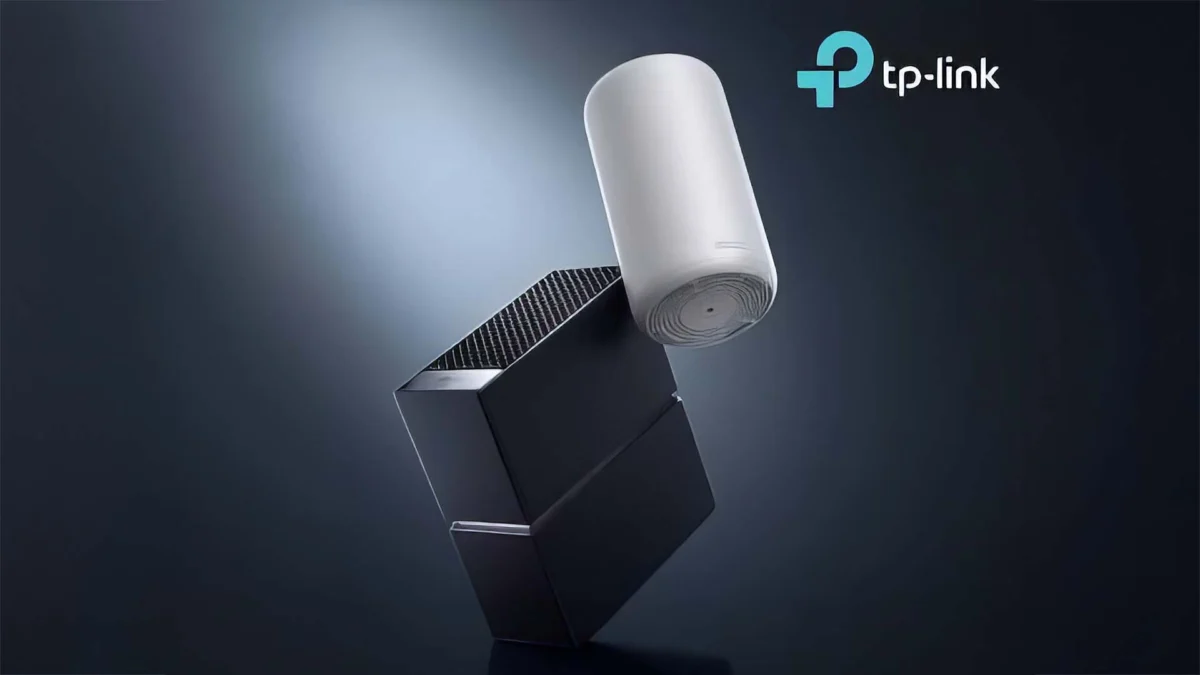
TP-Link has taken a significant stride into the next generation of wireless networking, unveiling its first Wi-Fi 8 products, the Archer 8 Ultra router and the Deco 8 Ultra mesh system, at the prestigious IFA 2026 trade show. This preemptive launch positions TP-Link as an early mover in the nascent Wi-Fi 8 ecosystem, even as the IEEE 802.11bn standard is still undergoing its rigorous ratification process. This process, which typically spans a year or more, means TP-Link is introducing hardware for a standard that is not yet finalized, a bold move that signals the company’s confidence in the emerging technology.
The Archer 8 Ultra and Deco 8 Ultra are built upon TP-Link’s proprietary Wi-Fi 8 StabilityEngine, a sophisticated system designed to address the most persistent challenges faced by modern home Wi-Fi networks. These challenges include ensuring robust coverage at the extremities of a dwelling, managing the increased network congestion caused by a growing number of connected devices vying for bandwidth, and mitigating unpredictable performance degradation due to wireless interference. The StabilityEngine is engineered to provide a more stable, responsive, and far-reaching wireless experience, even in demanding environments.
At the core of the StabilityEngine are several advanced technologies. Enhanced Long Range and Distributed Resource Units are employed to extend the Wi-Fi signal effectively to devices situated at greater distances from the router or mesh nodes. This addresses a common pain point where Wi-Fi performance diminishes significantly in rooms further away from the primary access point. To maintain network responsiveness when multiple devices are simultaneously consuming bandwidth, the system utilizes Non-Primary Channel Access. This technology allows the network to intelligently utilize available channels, preventing bottlenecks and ensuring smoother performance for all connected devices. Furthermore, Unequal Modulation is implemented to ensure consistent throughput even when the network encounters interference, a critical factor for uninterrupted streaming, online gaming, and critical work tasks.
The Archer 8 Ultra, a flagship tri-band router, is engineered to deliver an impressive aggregate wireless speed of up to 19Gbps. Complementing its wireless prowess, it boasts a substantial 10Gbps of wired throughput, catering to devices that benefit from the absolute lowest latency and highest bandwidth connections, such as high-performance gaming rigs or professional workstations. The router’s design incorporates 18 internal antennas, meticulously positioned and integrated to optimize signal propagation and maintain consistent, reliable coverage throughout an entire home. This sophisticated antenna array is a key component in delivering on the promise of seamless connectivity across diverse living spaces.
The Deco 8 Ultra mesh system offers a complementary solution for larger homes or those requiring ubiquitous Wi-Fi coverage. This tri-band system is rated for an even higher aggregate wireless speed of up to 22Gbps, providing ample bandwidth for the most demanding household needs. It shares the same robust 10Gbps wired connectivity as the Archer 8 Ultra. A typical three-pack of the Deco 8 Ultra is designed to extend reliable Wi-Fi coverage across an expansive area of approximately 9800 square feet. Critically, this mesh system is built to support an extensive network of over 200 connected devices simultaneously, a number that is increasingly becoming the norm in smart homes equipped with numerous IoT devices, smart appliances, and personal electronics.
Design Philosophy: Aesthetics Meets Performance
TP-Link’s commitment to enhancing the user experience extends beyond raw performance specifications to the physical design of its new Wi-Fi 8 products. Moving away from the utilitarian and often unsightly exposed-antenna designs that traditionally lead to routers being hidden away in cupboards, the Archer 8 Ultra and Deco 8 Ultra feature sophisticated aesthetics. The Archer 8 Ultra sports a distinctive dual-tone grille and a subtle, soft emissive status glow, replacing the conventional array of blinking LEDs. This design choice aims to integrate the device more harmoniously into living spaces, making it an object that users are comfortable displaying rather than concealing.
The Deco 8 Ultra adopts a similar design philosophy, characterized by its compact, organically shaped form factor. It features a matte body complemented by a glossy top panel, creating a visually appealing contrast. This design language is intended to draw the eye, making the device a statement piece rather than an afterthought on a shelf.
Gary Chang, TP-Link’s lead industrial designer, articulated this shift in perspective, stating, "We stopped building a piece of networking equipment and started designing for the home. When a router’s design becomes something people want to display, it ends up exactly where it performs best." This sentiment underscores TP-Link’s understanding that optimal Wi-Fi performance is often achieved when devices are placed in central, unobstructed locations, and that attractive design can facilitate this ideal placement.
Strategic Rollout and Future Expansion
TP-Link has outlined a clear roadmap for the introduction of its Wi-Fi 8 product line. The Archer 8 Ultra is slated for pre-order availability on September 30th, exclusively through TP-Link’s official online store. This date will also coincide with a global launch event that promises to reveal further details about the broader Wi-Fi 8 range.
Beyond these initial flagship products, TP-Link has confirmed a comprehensive rollout strategy. In early 2027, a separate Deco 8 mesh system will become available, offering another mesh solution within the Wi-Fi 8 ecosystem. Following this, the spring of 2027 will see the introduction of the Roam 8 travel router, designed for mobile connectivity, alongside a suite of Wi-Fi 8 extenders and adapters. This phased approach suggests a strategic effort to build out a complete Wi-Fi 8 ecosystem, catering to diverse user needs and network configurations.
While TP-Link has not yet disclosed specific pricing for either the Archer 8 Ultra or the Deco 8 Ultra, it has noted that regional availability and precise model designations, including rated speeds, will be adapted to comply with local regulations. This commitment to regulatory adherence is crucial for a global product launch. Further details regarding pricing and regional availability are anticipated at the September 30th launch event, which is expected to provide a comprehensive overview of TP-Link’s Wi-Fi 8 strategy.
The Context of IFA 2026 and the Wi-Fi 8 Standard
The unveiling of these products at IFA 2026 places them within the context of one of the world’s leading consumer electronics and home appliance trade shows. IFA serves as a crucial platform for manufacturers to showcase upcoming technologies and product innovations to a global audience of industry professionals, media, and consumers. Historically, Wi-Fi advancements have been a significant theme at IFA, and TP-Link’s early demonstration of Wi-Fi 8 hardware underscores the increasing pace of technological evolution in the networking sector.
The IEEE 802.11bn standard, commonly referred to as Wi-Fi 8, represents the next significant leap in wireless fidelity. While specific technical details are still being finalized during the ratification process, it is expected to build upon the foundations of Wi-Fi 6E and Wi-Fi 7, offering substantial improvements in speed, capacity, latency, and reliability. Key advancements anticipated for Wi-Fi 8 include the potential utilization of higher frequency bands, more sophisticated modulation schemes, and enhanced spatial multiplexing capabilities. These improvements are crucial for supporting the ever-growing demands of data-intensive applications such as high-resolution video streaming (8K and beyond), immersive virtual and augmented reality experiences, and the seamless operation of massive IoT networks.
TP-Link’s decision to launch products based on a standard not yet officially ratified is a calculated risk. However, it is also a common strategy in the fast-moving technology sector, allowing early adopters to gain a foothold and for manufacturers to gather real-world feedback. The underlying technologies powering Wi-Fi 8 are likely well-developed, and TP-Link’s proprietary StabilityEngine appears to be an attempt to leverage these emerging capabilities and offer a superior user experience even before the final standard is locked in.
Implications and Future Outlook
The early introduction of Wi-Fi 8 hardware by TP-Link has several significant implications. Firstly, it signals a strong industry push towards the next generation of wireless connectivity, encouraging other manufacturers to accelerate their own development cycles. Secondly, it provides consumers and businesses with a glimpse into the future of Wi-Fi performance, potentially influencing purchasing decisions for those looking to future-proof their home or office networks.
The emphasis on solving core Wi-Fi issues like coverage, congestion, and interference through the StabilityEngine is a practical approach. As homes become more connected and data demands escalate, these are the pain points that directly impact user satisfaction. By addressing these challenges head-on with advanced technologies, TP-Link aims to differentiate its Wi-Fi 8 offerings and establish a reputation for delivering reliable and high-performance wireless solutions.
The success of these early Wi-Fi 8 products will depend on several factors, including the final ratification of the IEEE 802.11bn standard, the compatibility of these devices with future certified Wi-Fi 8 equipment, and the perceived value proposition for consumers. However, TP-Link’s proactive stance at IFA 2026 demonstrates a clear commitment to leading the charge into the Wi-Fi 8 era, offering a preview of the enhanced connectivity that lies ahead. The industry will be closely watching as the ratification process unfolds and as more details emerge about TP-Link’s comprehensive Wi-Fi 8 ecosystem.

