
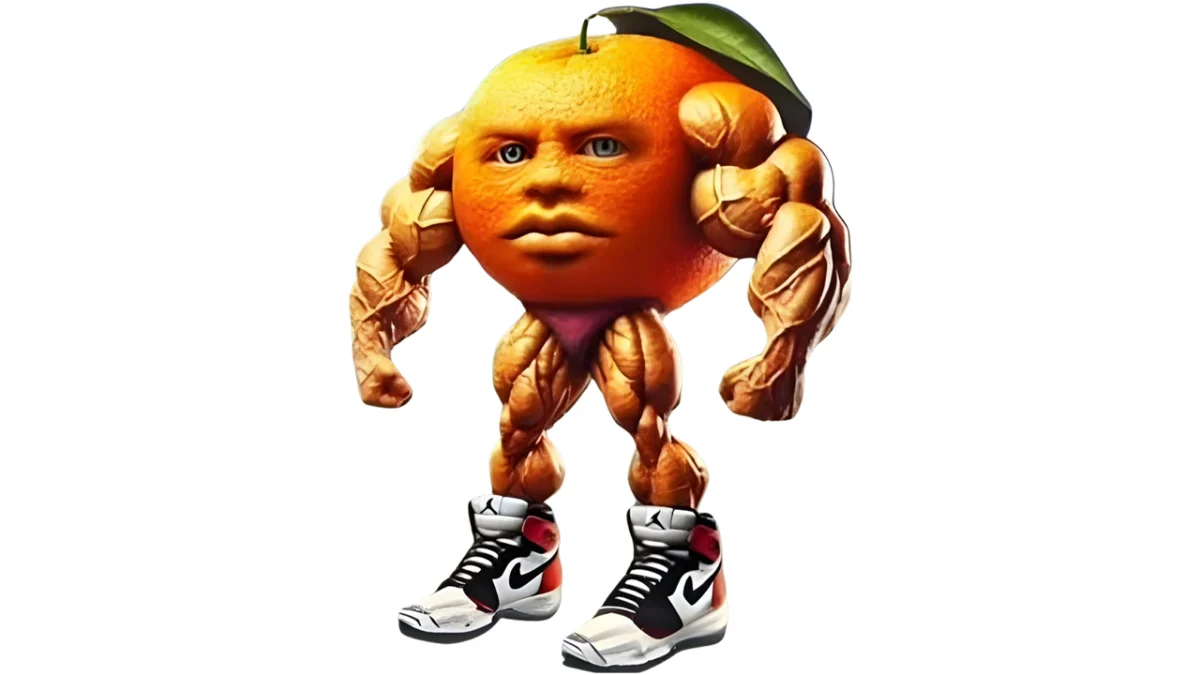
The digital landscape of early 2025 has been significantly reshaped by the emergence of "Udin Din Din Dun," an AI-generated character that has transcended its origins as a surrealist image to become a cornerstone of the global "Brainrot" subculture. Characterized by a bizarre synthesis of anthropomorphic fruit and professional bodybuilding aesthetics, Udin Din Din Dun represents a new era of algorithmic content creation where absurdism, artificial intelligence, and high-energy music converge to capture the attention of a younger, digitally native demographic. This character, often depicted as a muscular orange wearing athletic footwear and a Speedo, has not only dominated platforms like TikTok and YouTube but has also sparked a broader discussion regarding the evolution of internet humor and the role of generative AI in modern folklore.
Anatomical and Visual Identity of a Digital Icon
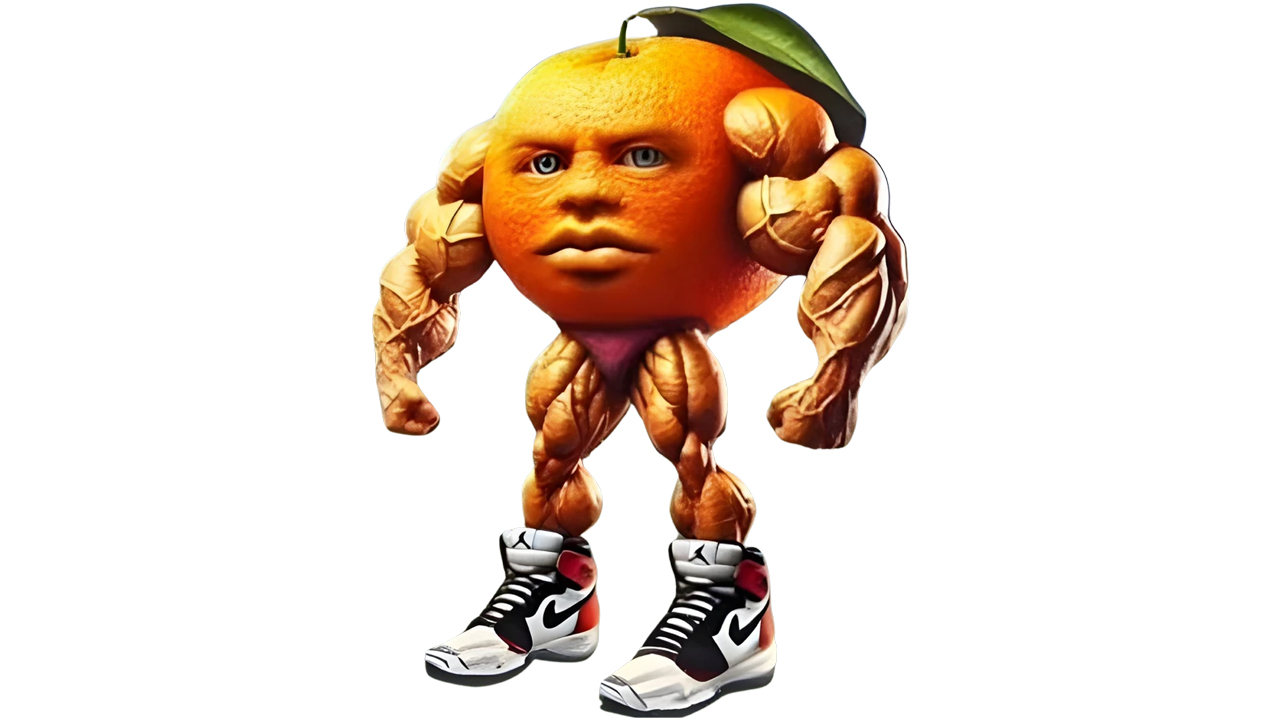
The visual identity of Udin Din Din Dun is meticulously specific, contributing to his immediate recognizability across various social media feeds. The character is typically portrayed as a large, vibrant orange with a single green leaf protruding from the top of his "head." In place of typical fruit features, he possesses a detailed human face, often bearing a stoic or intensely focused expression. This head is mounted upon a hyper-muscular, humanoid torso with well-defined pectoral and abdominal muscles, complemented by powerful arms and legs.
A recurring element in the character’s design is his attire: a minimalist red or purple Speedo and high-top Nike sneakers. He is most frequently situated in a gymnasium setting, reinforcing the "bodybuilder" persona. This juxtaposition of a common citrus fruit with the hyper-masculine tropes of fitness culture is a hallmark of the "Brainrot" genre—a style of content characterized by surreal, low-context, and often repetitive imagery designed to provide high levels of sensory stimulation.
The Narrative Lore: From Human to Citrus
While many internet memes lack a cohesive backstory, Udin Din Din Dun has developed a distinct, albeit nonsensical, "lore" that has been codified by creators and fans alike. According to the prevailing narrative, the character was once an ordinary human male. His transformation into a bodybuilder-orange hybrid was the result of a physiological anomaly triggered by the frequent consumption of orange seeds.
This backstory is often delivered via AI-generated Indonesian voiceovers, which explain that "because he often swallowed orange seeds, he eventually transformed into Udin Din Din Dun orange." This simplistic, quasi-mythological origin story serves several purposes: it provides a hook for "storytime" style videos, offers a template for fan-generated content, and adds a layer of ironic depth to an otherwise purely visual joke.
Chronology of Emergence and Viral Trajectory
The timeline of Udin Din Din Dun’s ascent illustrates the rapid speed at which AI-generated content can achieve global reach. While the exact moment of creation remains difficult to pin down due to the ephemeral nature of "brainrot" accounts, digital historians and tracking sites like Play Brainrot suggest the character first surfaced in late February 2025.
Initial Discovery: February 2025
Rumors of the character’s existence began circulating on YouTube around February 25, 2025. However, these early iterations were largely buried by algorithms or deleted by creators testing the waters of the new "Italian Brainrot" trend.
The First Viral Catalyst: March 2025
On March 2, 2025, TikTok user @reisonbs uploaded what is widely considered the first "active" viral post featuring Udin Din Din Dun. The video utilized an AI-generated image of the character in a gym, accompanied by a now-iconic Indonesian voiceover. The post reached over 1.2 million views within its initial months, establishing the character’s name and the "seed-swallowing" lore as the industry standard for the meme.
Expansion into Music and Animation: April – June 2025
By April 2025, the character had moved beyond static images. On April 15, 2025, the YouTuber 1HXSX released "UDIN DIN DIN DUN FUNK," a "super slowed" remix of a phonk track. This video alone garnered over 10 million views, demonstrating the character’s appeal within the "Phonk" and "Brazilian Funk" music scenes, which often provide the soundtrack for high-energy internet trends.
In June 2025, the YouTube channel Hornstromp 3D, known for producing high-quality 3D animations of popular internet characters, released "ODINDINDINDUN SAD ORIGIN STORY." This video, which received over 5 million views, integrated Udin into a wider universe of "Italian Brainrot Animals," further cementing his status as a pillar of the genre alongside characters like "Tung Tung Tung Sahur."
Technological and Cultural Context
The success of Udin Din Din Dun is inseparable from the technological tools used to create him. The character is a product of "Generative AI" workflows, likely involving text-to-image models (such as Midjourney or DALL-E) for the visuals, and text-to-speech models for the distinctive Indonesian narration. The ease with which these assets can be produced allows for a high volume of content, enabling the character to saturate platforms like TikTok and Instagram Reels.
The "Italian Brainrot" Connection
Despite the Indonesian voiceovers and naming conventions, Udin Din Din Dun is frequently categorized under the "Italian Brainrot" umbrella. This term refers to a specific style of AI-generated videos—often featuring anthropomorphic animals or objects engaged in bizarre activities—that gained popularity in Italy before spreading globally. The "Brainrot" label itself is a self-deprecating term used by Gen Alpha and Gen Z to describe content that is intentionally nonsensical, over-stimulating, and devoid of traditional narrative logic.
Cross-Platform Proliferation
The character’s reach extended into the gaming world via "Brainrot Evolution," a popular genre of Roblox and mobile games where players "evolve" characters by collecting items. Udin’s inclusion in these games transitioned him from a passive meme to an interactive digital asset, increasing his longevity among younger audiences.
Sociopolitical and Intellectual Property Anomalies
One of the more surreal moments in the character’s history occurred on June 18, 2025, when the controversial Russian political philosopher Alexander Dugin referenced the character on X (formerly Twitter). Dugin posted an image of Udin Din Din Dun with the caption "Orange Man Bad as UDIN DIN DUN DUN," juxtaposing the meme with American political slogans. This event highlighted the unpredictable nature of viral content, where an AI-generated orange could briefly bridge the gap between niche internet subcultures and high-level geopolitical discourse.
From a legal and commercial standpoint, Udin Din Din Dun exists in a "gray zone." Because the character is AI-generated and lacks a single corporate creator, he is treated as a community-owned asset. This has led to a proliferation of unauthorized merchandise, mobile apps, and "fan-made" games, challenging traditional notions of intellectual property in the age of generative media.
Implications for Digital Marketing and Media Consumption
The Udin Din Din Dun phenomenon provides valuable insights into the future of digital media. For marketers, the character’s rise demonstrates the power of "algorithmic stickiness." Content that is visually jarring, rhythmically repetitive, and easily remixed is more likely to be favored by recommendation engines.
Furthermore, the character exemplifies the "democratization of animation." In previous decades, creating a viral character required a studio or significant artistic skill. Today, a creator with access to AI tools can generate a globally recognized icon in a matter of minutes. This has led to a saturated market where characters must be increasingly bizarre to capture attention, a trend that critics argue may lead to a further decrease in the collective attention span of digital consumers.
Conclusion and Future Outlook
As of late 2025 and early 2026, Udin Din Din Dun remains a persistent figure in the digital zeitgeist. While many memes fade within weeks, the continuous influx of AI-generated stories, such as those produced by TikToker @oyum_ai, suggests that the character has entered a phase of "legacy brainrot."
Udin Din Din Dun is more than just a muscular orange; he is a testament to the strange, often inexplicable ways that technology and human humor interact. He represents a shift toward a more abstract, algorithm-driven form of entertainment that prioritizes sensation over substance. Whether he remains a staple of the internet or is eventually replaced by a newer, even more surreal AI creation, Udin Din Din Dun has already secured his place in the history of 21st-century digital folklore, proving that in the modern era, even a seed-swallowing orange can become a global superstar.

