
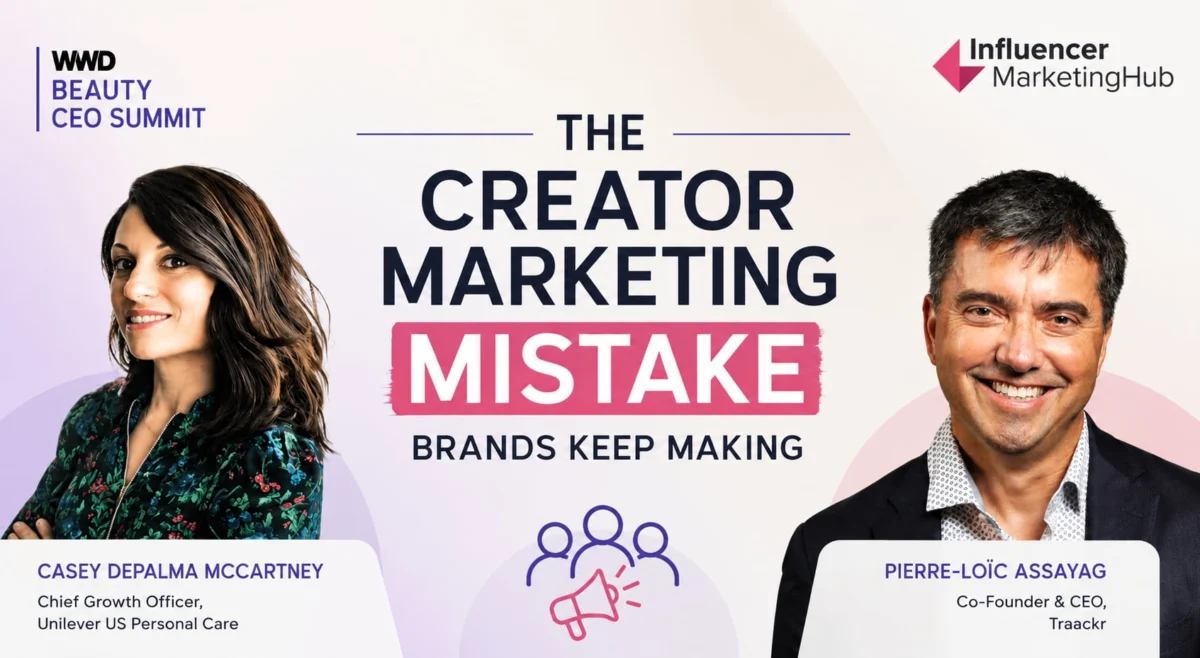
The landscape of creator marketing is undergoing a profound transformation, moving beyond the simplistic pursuit of scale to embrace a more sophisticated, strategic approach centered on quality, authentic relationships, and repeatable systems. This pivotal shift was a central theme at the WWD Beauty CEO Summit in May, where industry leaders converged to discuss the evolving dynamics of brand-creator partnerships. The consensus emerging from the summit signals a new phase where the conversation is no longer about if brands should invest in creators, but how they can construct robust creator programs that deliver sustained performance and genuine impact as they expand.
The WWD Beauty CEO Summit: A Strategic Forum for Industry Evolution
The WWD Beauty CEO Summit stands as a preeminent annual gathering for executives in the global beauty industry, offering a critical platform for discussing trends, challenges, and future strategies. Held this past May, the summit convened thought leaders from across the sector, providing an opportune moment for a deep dive into the rapidly maturing field of creator marketing. Among the key discussions was a panel featuring Casey McCartney, Chief Growth Officer at Unilever US Personal Care, and Pierre-Loïc Assayag, CEO and and Founder of Traackr. Their insights illuminated the next chapter for brands navigating the complex, yet immensely powerful, creator economy.
While Unilever’s ambitious goal to multiply its creator network by twentyfold garnered significant attention, the true essence of their strategy, as articulated by McCartney and Assayag, lay in the rationale behind this expansion. The core takeaway challenged a prevalent industry misconception: that sheer creator volume equates to marketing maturity or effectiveness. Instead, the most successful brands, they argued, are those meticulously building superior systems, cultivating deeper, more meaningful relationships, and making data-informed decisions before embarking on large-scale amplification. This nuanced perspective underscores a fundamental re-evaluation of growth metrics in the creator space.
Beyond the Numbers: Redefining Creator Marketing Maturity
For many years, as investment in creator marketing surged, the default path to growth often appeared straightforward: recruit more creators, launch an increasing number of partnerships, and escalate campaign output. This transactional model, while offering quick bursts of activity, frequently overlooked the underlying infrastructure necessary for sustained success. Unilever, a global powerhouse in consumer goods, has proactively challenged this assumption, advocating for a more deliberate and qualitative approach.
Casey McCartney’s remarks at the summit were particularly incisive: "Scaling alone is meaningless. Any brand with enough money could transact at scale. It is truly about quality and repeatability." This distinction is not merely semantic; it fundamentally alters how brands should conceptualize and execute their growth strategies. A creator program built primarily on one-off partnerships is inherently inefficient. Each new campaign necessitates starting from scratch – new outreach efforts, renegotiated terms, fresh approval processes, and repetitive onboarding procedures. These steps, while necessary, quickly become bottlenecks, draining resources and limiting agility.
In contrast, a truly mature creator program operates differently. It leverages pre-existing relationships with a curated network of creators who genuinely resonate with the brand’s ethos and values. Processes are not just established but optimized, allowing teams to respond swiftly to emerging opportunities or cultural moments. This model demonstrates that sustainable scale is a byproduct of repeatability and entrenched relationships, rather than a mere aggregation of individual transactions. Industry data consistently supports this view, with reports indicating that long-term brand-creator partnerships yield significantly higher engagement rates and return on investment (ROI) compared to transient collaborations. A recent study by Influencer Marketing Hub, for example, highlighted that consistent brand advocacy from a core group of creators fosters deeper trust and authenticity, which are critical drivers of consumer perception and purchase intent.
Cultivating Community: The Dove Blueprint for Pre-Campaign Engagement
One of the most compelling illustrations of this evolved strategy came from Unilever’s iconic brand, Dove. Rather than awaiting the final approval of a campaign brief before initiating creator engagement, Dove has strategically invested years in cultivating authentic relationships with creators who inherently align with its brand mission and values. This proactive approach ensures that when cultural moments arise or new product launches are imminent, the brand can mobilize rapidly. The foundational relationships are already in place, built on mutual understanding and trust.
McCartney characterized this strategy as "building creator communities before campaigns require them." This signifies a paradigm shift from reactive recruitment to proactive community development. By fostering a loyal network of advocates, Dove can tap into genuine enthusiasm and expertise, enabling nimble responses to market trends and accelerating content creation. This not only enhances the authenticity of brand messaging but also significantly reduces the operational friction typically associated with large-scale campaigns. It transforms creators from mere distribution channels into integral brand partners and co-creators.
Innovating Through Listening: The Vaseline Verified Success Story
Another exemplary case study emerged from Vaseline, demonstrating the power of social listening as a strategic input for creator marketing. Instead of solely relying on internal teams to conceptualize campaign ideas, Vaseline systematically monitored ongoing conversations across social media platforms. The brand observed a vibrant ecosystem of consumers organically sharing myriad creative uses for Vaseline, ranging from beauty hacks to unique skincare applications. This vast trove of user-generated content represented an untapped wellspring of authentic consumer behavior and innovation.
Recognizing the immense potential in these organic discussions, Vaseline launched the "Vaseline Verified" campaign. This initiative ingeniously brought the brand’s own scientists into the fold, tasking them with rigorously testing and validating popular community-shared hacks. Once a hack was scientifically verified, a network of creators was then engaged to amplify these validated ideas. This innovative approach transformed raw user-generated conversations into credible, engaging creator content, intrinsically grounded in genuine consumer behavior and validated by scientific expertise.
The impact of "Vaseline Verified" has been remarkable. According to McCartney, despite being a brand with over 150 years of history, Vaseline has become the most organically talked-about skincare brand year-to-date. This success story underscores a crucial lesson for the broader industry: social listening is rapidly becoming one of the most invaluable inputs for crafting effective creator strategies. Rather than tasking creators with manufacturing conversations, brands can now identify existing dialogues within their target audiences and empower creators to authentically expand upon them, adding value and credibility. This strategy not only enhances brand relevance but also fosters a deeper sense of community and trust among consumers who see their own ideas being acknowledged and celebrated.
AI’s Transformative, Not Just Automative, Role
The conversation inevitably turned to artificial intelligence, but Traackr CEO and Founder Pierre-Loïc Assayag offered a nuanced perspective that diverged from the prevailing narrative of immediate automation. Assayag cautioned against rushing to automate creator workflows if the underlying decision-making processes are flawed. His reasoning was straightforward: if existing outreach strategies, creator selection methods, or campaign planning are already ineffective, then simply automating these processes will only serve to amplify and accelerate those mistakes.
Instead, Assayag argued that AI’s initial and most impactful application in creator marketing should be focused on enhancing insights. By leveraging AI to process vast amounts of data, brands can gain superior creator intelligence, leading to more precise recommendations for partnerships. Better recommendations, in turn, cultivate stronger, more effective collaborations. Only once this foundation of improved decision-making and strategic insights is firmly established does workflow automation truly become valuable, enabling brands to scale good decisions efficiently.
"If you start with insights," Assayag summarized, "what you will amplify with AI is the good decisions instead of terrible ones." This perspective highlights AI not as a replacement for human strategy, but as a powerful augmentor of strategic thinking. Furthermore, Assayag urged brands to meticulously consider the creator data they collect today. As AI becomes increasingly embedded within marketing operations, historical data encompassing creator relationships, past campaign performance metrics, and proprietary partnership knowledge will transform into some of a company’s most valuable assets. "Your IP in the future is your data," he asserted, underscoring the critical importance of robust data collection and management practices for long-term competitive advantage. This includes granular data on audience demographics, engagement patterns, content preferences, and even the sentiment associated with past collaborations, all of which can feed into more intelligent AI models.
Creator Marketing as a Foundational Business Capability
Perhaps the most far-reaching implication from the WWD Summit discussion was the evolving organizational perception of creator marketing. The conversation strongly suggested that creator marketing is gradually transcending its traditional role as a mere campaign execution tool, maturing into a permanent and foundational business capability. This shift implies a broader integration of creators across various facets of a brand’s operations.
Creators are increasingly influencing not just the distribution of marketing messages, but also product innovation, commerce strategies, customer experience design, and even the fundamental articulation of brand strategy. They are no longer simply external amplifiers; they are becoming internal collaborators, offering direct feedback from their communities, inspiring new product lines, and shaping how brands interact with their consumer base. This deeper integration necessitates different types of investments. Success, in this new paradigm, depends less on the elusive hunt for the next viral sensation and more on building the robust infrastructure capable of supporting hundreds, or even thousands, of long-term, mutually beneficial relationships. This includes investing in dedicated talent management, legal frameworks for enduring partnerships, advanced analytics platforms, and internal education to foster a creator-first mindset across the organization.
For brands navigating this dynamic landscape and striving for sustainable growth, this represents a crucial distinction. Simply adding more creators to a roster may superficially increase activity, but it does not guarantee meaningful results. True, scalable growth in creator marketing stems from strategically building repeatable systems, fostering stronger, more authentic relationships, and leveraging sophisticated creator intelligence. This holistic approach ensures that creator marketing moves beyond tactical execution to become a strategic pillar, deeply embedded in the very fabric of a brand’s long-term success and innovation. The future of marketing is undeniably collaborative, and those brands that proactively invest in the infrastructure and relationships to support this collaboration are best positioned to thrive.

