
Nearly four years after the debut of ChatGPT and a few months later for its competitor Claude, the landscape of generative artificial intelligence (genAI) interaction remains largely opaque to consumers and marketers alike. The intricate details of user prompts and the sophisticated methodologies employed by these AI platforms in formulating responses have been a significant blind spot. This lack of transparency has forced industry observers to rely on traditional search query data as a proxy for understanding how users engage with genAI technologies. While Bing has made strides in offering some AI transparency through its reporting of "Grounding Queries" that lead to "fan out" responses, a recent development signals a significant shift in how Google is categorizing and potentially revealing these interactions.
The critical insight emerges from the observation that Google’s AI Mode, a conversational search interface, is now recording initial and follow-up prompts as conventional search queries within Google Search Console. This revelation, confirmed by Google’s own Search Liaison, John Mueller, offers a tangible pathway for SEO professionals and website owners to begin deciphering user behavior within these burgeoning AI-powered search environments.
The Genesis of Transparency: From LinkedIn to Search Console
The discovery that Google’s AI Mode prompts are appearing as search queries in Search Console was not a top-down announcement but rather an organic revelation within the SEO community. Anastasia Kourou, SEO Manager at Relevance Digital Agency in Greece, was instrumental in bringing this to light. She directly queried John Mueller on LinkedIn, a prominent figure within Google’s search advocacy team, regarding the presence of seemingly conversational prompts, such as "yes" and "yes, pricing," appearing as search queries in Search Console. Mueller’s response was direct and affirmative: these were indeed follow-up prompts from users interacting with AI Mode, thereby validating the data visible in Search Console.
This confirmation from Mueller is significant. It signifies that Google, while not explicitly labeling these as "AI prompts," is integrating the conversational threads of AI Mode interactions into the same data streams used for traditional organic search queries. This provides an unprecedented opportunity to analyze how users are conversing with Google’s AI, the nature of their follow-up questions, and the types of information they are seeking through this new modality.
Decoding AI Interactions: Practical Strategies for Search Console
The ability to identify these AI-driven prompts within Search Console opens up new avenues for search engine optimization and content strategy. While Search Console does not explicitly flag queries as originating from AI Mode, the nature and structure of these queries often provide strong indicators.

Leveraging Regular Expressions for Prompt Identification
One of the most effective methods to sift through the vast amount of data in Search Console and isolate potential AI prompts involves the use of regular expressions (regex). Regex allows for sophisticated pattern matching within text strings, enabling users to filter for queries that exhibit characteristics common to conversational AI interactions.
To implement this, users can navigate to the "Performance" report within Search Console, select "Add filter," and then choose "Query" followed by "Custom (regex)." A foundational regex pattern that has proven effective in identifying longer, more conversational queries is:
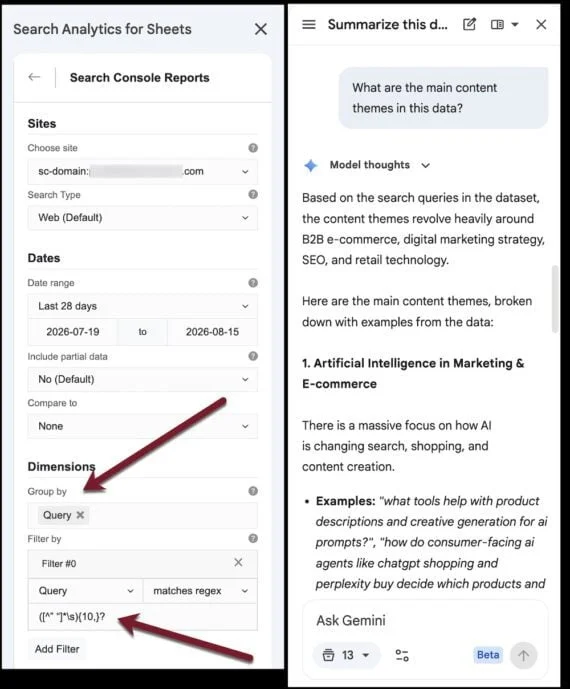
([^" "]*s)10,?
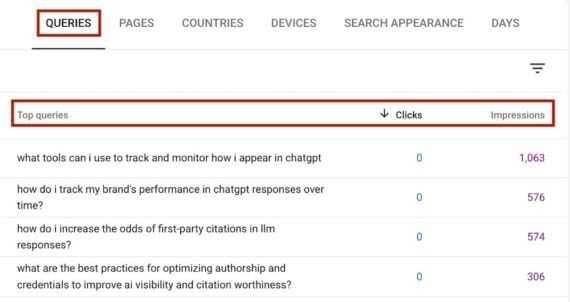
This regex targets queries that consist of ten or more words, a characteristic often found in detailed, human-generated prompts for AI models. By applying this filter, website owners can begin to see a list of queries that are unusually long and often lack the typical structure of traditional search terms. These queries might appear as phrases like "what tools can I use to track and monitor how I appear in chatgpt" or "explain the concept of quantum entanglement in simple terms."
The accompanying visual data from Search Console reports often displays these long, prompt-like queries with zero clicks but potentially high impressions. This pattern suggests that while these queries are being registered by Google, they might not be directly driving traditional organic traffic. However, their presence is invaluable for understanding the user’s intent and the specific information they are seeking from an AI.
Furthermore, the SEO community continues to refine these techniques. Jean-Christophe Chouinard, an SEO strategist at Tripadvisor, has shared more advanced regex patterns. These sophisticated expressions are designed to capture not only initial detailed prompts but also the shorter, more directive follow-up prompts that are characteristic of conversational AI sessions, such as "yes, please," "tell me more," or "can you elaborate?" These follow-up prompts are crucial for understanding the iterative nature of AI interactions and how users refine their queries based on initial AI responses.
Expanding Data Horizons with External Tools
While Search Console’s front-end interface provides valuable insights, its API offers access to a more extensive dataset. For those who may not have in-house development resources to directly leverage the API, several third-party tools offer a bridge. These tools can import data from Search Console, providing enhanced analytical capabilities and often integrating features like AI-powered data summarization.
A notable advantage of these external tools is their ability to pull a significantly larger volume of queries – up to 25,000 per query. This comprehensive data set can then be analyzed using the tool’s built-in functionalities, such as Gemini capabilities, to group and categorize the data. This allows for a more granular understanding of the themes and topics users are exploring through AI Mode.
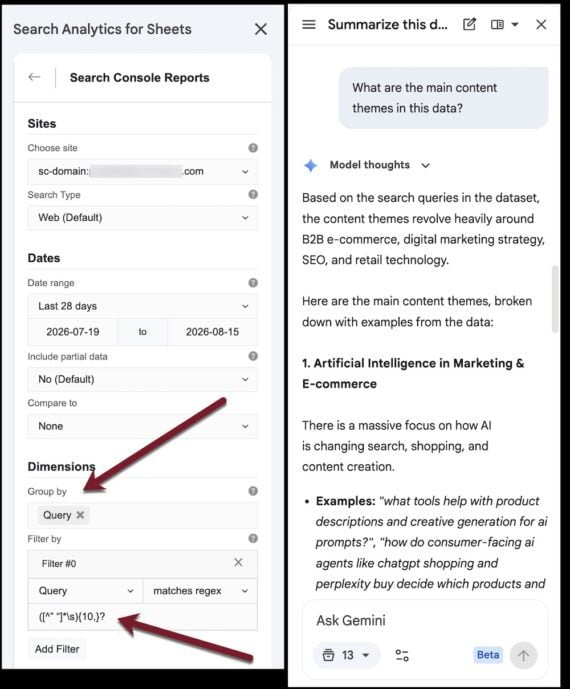
The primary consideration when using third-party tools is the sharing of confidential search data. However, the benefits often outweigh this concern, offering not only access to more data but also advanced features for analysis, visualization, and export. Tools like "Search Analytics for Sheets" can export Search Console data directly into Google Sheets, where further manipulation and analysis can be performed. The sidebar within such tools can then be utilized to filter queries by length using regex, and a Gemini panel can provide AI-driven summaries of the resulting query data, identifying recurring content themes and user intents.
Interpreting and Applying AI Prompt Data for Optimization
The identification of AI-driven prompts in Search Console is just the first step. The subsequent challenge lies in interpreting this data and applying it to optimize content and SEO strategies.
Identifying Prompt Characteristics
While Google does not explicitly label AI prompts, their linguistic characteristics are often telltale signs. These prompts tend to be:
- Detailed and Specific: Unlike traditional short-tail keywords, AI prompts are often phrased as complete sentences or detailed questions, reflecting a desire for comprehensive answers.
- Conversational and Contextual: They may include conversational fillers, follow-up phrases, or references to previous parts of an interaction, mirroring natural human dialogue.
- Unique and Exploratory: Prompts can be highly unique, delving into niche topics or complex concepts that might not be well-represented by common search terms.
- Lacking Traditional Categorization: They may not fit neatly into standard SEO metrics or content categories, requiring a different approach to analysis.
Analyzing Impression and Click Data
The presence of long queries with high impressions but zero clicks is a common observation. While this might initially seem counterintuitive, it provides valuable insights. These high impressions could indicate that Google’s AI is registering these as relevant queries in its internal processing, even if they aren’t leading to traditional website visits. This data can still be highly informative, revealing what topics or questions users are posing to AI, which can inform content creation and keyword research.
Moreover, the observation of these patterns can also hint at what competitors might be tracking or how AI-powered tools are being used to monitor AI performance. Even if the source is not directly human users clicking through, the data still reflects an interaction with the AI ecosystem.
Strategic Implications for Content and SEO
The ability to identify and analyze AI prompts has several key implications for content creators and SEO professionals:
- Content Gap Identification: By analyzing the types of questions users are asking AI, businesses can identify unmet information needs and create content that directly addresses these gaps. This is particularly valuable for long-tail, niche topics that might be overlooked in traditional keyword research.
- Enhanced User Intent Understanding: AI prompts offer a deeper, more nuanced understanding of user intent than traditional search queries. They reveal not just what users are looking for, but how they are thinking about it and the specific context of their inquiry.
- Conversational Content Optimization: Websites can optimize their content to better answer the types of detailed, conversational questions that users are posing to AI. This might involve structuring content in a Q&A format, providing detailed explanations, or creating explainer content for complex topics.
- Future-Proofing SEO Strategies: As AI becomes more integrated into search, understanding how users interact with these systems will be crucial for maintaining visibility. By adapting SEO strategies to include AI prompt analysis, businesses can stay ahead of the curve.
- Competitor Analysis: Even if the prompts are generated by AI tracking software, understanding the queries being registered can provide insights into competitor strategies and the information they are prioritizing for AI monitoring.
The evolving landscape of generative AI presents both challenges and opportunities for digital marketers. The recent transparency from Google Search Console, facilitated by the community’s keen observation and analytical skills, marks a significant step forward in demystifying AI interactions. By embracing these new analytical tools and methodologies, businesses can begin to unlock the valuable insights hidden within AI prompts, ultimately leading to more effective and future-ready digital strategies. The journey to fully understand and leverage genAI is ongoing, but the ability to peer into the engine of these interactions through tools like Search Console is a promising development.

