
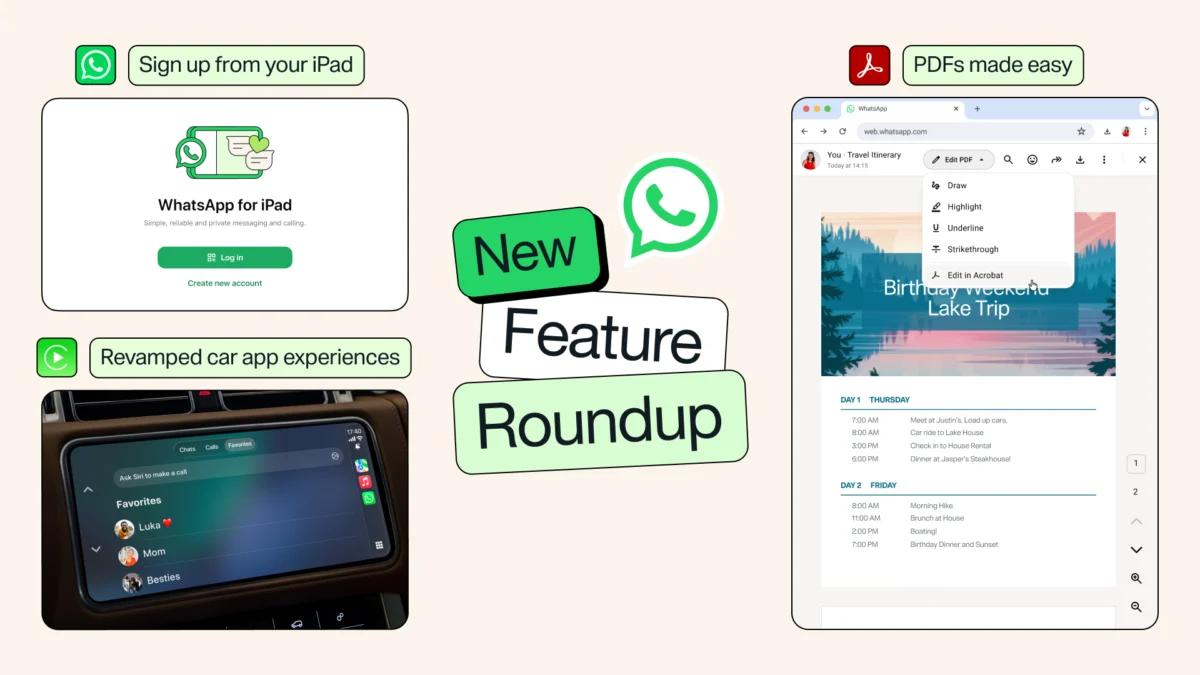
WhatsApp, the ubiquitous messaging platform owned by Meta, is rolling out a comprehensive suite of new features designed to fundamentally transform its application from a mere mobile messaging service into a robust, complete cross-device communication platform. Announced on Wednesday, these updates include a significantly revamped experience for Apple CarPlay and Android Auto, the long-awaited ability for users to register for WhatsApp accounts directly from their iPads, streamlined sharing of music to Status, and direct PDF viewing and annotation within the app. This strategic expansion underscores Meta’s ambition to embed WhatsApp more deeply into users’ daily digital lives, irrespective of the device they choose.
A Seamless Drive: Overhauling the In-Car Experience
One of the most significant enhancements targets the integration of WhatsApp with in-vehicle infotainment systems through Apple CarPlay and Android Auto. These platforms, which mirror smartphone applications onto a car’s dashboard display, have become standard features in modern vehicles, providing drivers with safer and more convenient access to navigation, media, and communication tools. Prior to this update, WhatsApp’s functionality within CarPlay and Android Auto was notably constrained, primarily limiting users to basic message composition via voice commands and placing calls. While this offered a degree of hands-free interaction, it often led to a disjointed communication experience, forcing users to resort to their mobile devices for more complex interactions—a practice that presents significant safety risks.
The new update addresses these limitations comprehensively. Drivers can now seamlessly hear incoming messages read aloud, a crucial feature for maintaining focus on the road. Furthermore, the ability to reply to messages directly from the car’s interface, presumably through voice commands or pre-set quick replies, drastically improves conversational flow. Users will also gain access to their full call history, enabling them to review past communications and initiate calls more efficiently. Perhaps most importantly for regular communicators, the integration now allows access to "favorite contacts," ensuring that priority individuals are readily reachable without extensive searching through contact lists. This level of integration brings WhatsApp’s in-car experience closer to that of native car communication systems, positioning it as a genuinely integrated part of the driving experience rather than an afterthought.
The implications of this enhancement are multi-faceted. From a safety perspective, minimizing the need for drivers to interact physically with their smartphones is paramount. According to data from the National Highway Traffic Safety Administration (NHTSA), distracted driving remains a leading cause of accidents, and robust, hands-free in-car communication systems are vital countermeasures. By making WhatsApp more functional within CarPlay and Android Auto, Meta is contributing to safer driving practices while simultaneously enhancing user convenience. For WhatsApp itself, this move expands its presence into a critical daily environment, reinforcing its role as the primary communication tool for many users, even when they are behind the wheel. The connected car market is experiencing rapid growth, with millions of new vehicles equipped with these systems annually, representing a substantial user base for enhanced WhatsApp integration.
Liberating Communication: Standalone WhatsApp for iPad
Another highly anticipated feature is the introduction of native WhatsApp account registration directly from an iPad. Since WhatsApp launched its dedicated iPad application last year, user feedback consistently highlighted the desire for independent account creation, rather than the previous model where the iPad app functioned solely as a companion device linked to a primary smartphone. This limitation meant that if the primary phone was offline or unavailable, the iPad application’s functionality would be severely hampered or cease entirely.
The new capability allows users to register for a WhatsApp account directly through the iPad app, effectively establishing a standalone presence for the service on the tablet. A WhatsApp spokesperson clarified to TechCrunch that while users will still need a phone number to register and receive a one-time passcode (OTP) for verification, once activated, the iPad app will operate independently. This distinction is crucial: it means the iPad will no longer be merely a "companion device" tethered to a phone but a fully functional, self-sufficient WhatsApp client.
This development holds significant implications for user convenience and WhatsApp’s strategic positioning. For professionals who often use iPads as their primary computing device for work on the go, this streamlines their communication workflow, allowing them to manage their WhatsApp interactions without needing to constantly monitor their smartphone. It also caters to individuals who might prefer using a tablet for its larger screen and keyboard for extended messaging sessions. Historically, the absence of a truly standalone iPad app was a point of frustration for many users, often cited as a competitive disadvantage against messaging apps like Telegram, which has long offered robust multi-device support. By addressing this gap, WhatsApp not only enhances user satisfaction but also strengthens its foothold in the tablet ecosystem, solidifying its ambition to be a genuinely cross-platform communication solution. This move aligns with Meta’s broader strategy of making its applications more resilient and accessible across its diverse hardware and software offerings.
Expressing Identity: Music Sharing to Status
In a move designed to enrich user expression and personalize the ephemeral "Status" feature, WhatsApp is now enabling users to share songs directly from popular streaming services like Apple Music and Spotify. WhatsApp Status, akin to "Stories" on Instagram and Facebook, allows users to share short-lived updates, photos, and videos with their contacts. The integration of music sharing taps into a widespread cultural trend of using music as a form of self-expression and social connection.
The new functionality permits users to select a track from their streaming service of choice and seamlessly post it to their WhatsApp Status. This feature is intended to allow users to convey their mood, share new discoveries, or simply highlight what they are currently listening to, making their Status updates more dynamic and unique. This reflects a broader trend in social media platforms to integrate more deeply with music services, recognizing the powerful role music plays in personal identity and social interaction. For users, it simplifies the process of sharing music, removing the need for cumbersome workarounds like recording audio or sharing links manually. For WhatsApp, it enhances the appeal of its Status feature, potentially increasing engagement and giving users more creative tools to interact with their network. This also subtly strengthens the ties between Meta’s communication ecosystem and major music streaming platforms, creating a more integrated digital experience.
Streamlining Productivity: Direct PDF Interaction within the App
Recognizing the ubiquitous nature of PDF documents in both personal and professional communications, WhatsApp is introducing the capability to open and even make lightweight edits to PDFs directly within the application. Previously, receiving a PDF via WhatsApp typically required users to download the document and then open it in an external PDF viewer or editor. This multi-step process often led to friction, especially for quick reviews or when users needed to make minor annotations.
With the new update, users can open PDFs directly within the chat interface, eliminating the need for external applications. More notably, the feature allows for "lightweight edits," such as highlighting and annotating, right within the WhatsApp environment. This significantly streamlines workflows for users who frequently share and review documents. The availability of this new capability across WhatsApp’s web and desktop versions further extends its utility, catering to a diverse range of user habits and computing environments.
The implications of this feature are substantial for productivity and convenience. For business users, project teams, or even students collaborating on documents, the ability to quickly review, highlight key passages, and add notes without leaving the communication platform can save considerable time and effort. It positions WhatsApp not just as a casual messaging app but as a more versatile tool capable of supporting semi-formal and professional document-centric interactions. This moves WhatsApp closer to the functionality offered by more dedicated collaboration tools, subtly broadening its appeal and utility in professional contexts. It represents a strategic step by Meta to make WhatsApp a more "complete" productivity hub, reducing the need for users to switch between multiple applications for related tasks.
The Broader Context: WhatsApp’s Strategic Evolution and Meta’s Vision
These latest features, announced on Wednesday, are not isolated updates but rather integral components of WhatsApp’s ongoing, rapid evolution. They follow a series of significant enhancements rolled out in recent months, collectively signaling Meta’s aggressive strategy to solidify WhatsApp’s position as a dominant, multi-faceted communication platform.
Just a few weeks prior, in June 2026, WhatsApp introduced usernames, a pivotal privacy-centric feature. This allowed users to share their profiles and connect with others without disclosing their personal phone numbers, a long-standing privacy concern for many. Usernames enhance discoverability while maintaining a crucial layer of anonymity, addressing a common pain point in a world increasingly wary of data sharing. This move was widely seen as a response to competitors like Telegram, which has long offered username-based contact.
In late May 2026, Meta also launched a subscription plan for WhatsApp, dubbed "WhatsApp Plus." This premium offering, launched alongside similar "Plus" plans for Instagram and Facebook, unlocks extra features such as enhanced profile customization, "super reactions" to messages, and story insights. The introduction of a subscription model marks a significant shift in WhatsApp’s monetization strategy, moving beyond its traditional ad-free model and exploring direct revenue streams through value-added services. This also signifies Meta’s broader push towards diversifying its revenue, leveraging its massive user bases across its family of apps to offer premium experiences.
These recent updates, combined with the core announcement of enhanced CarPlay/Android Auto, native iPad registration, music sharing, and PDF interaction, paint a clear picture of WhatsApp’s strategic trajectory. Meta is actively transforming WhatsApp from its humble origins as a simple, end-to-end encrypted mobile messaging app into a comprehensive digital ecosystem. This involves:
- Cross-Device Continuity: Ensuring a seamless experience across smartphones, tablets, web, desktop, and even in-car systems. This strategy addresses the modern user’s expectation of fluid interaction across all their devices.
- Enhanced Functionality Beyond Messaging: Integrating productivity tools (PDFs), expressive features (music sharing), and advanced communication options (CarPlay overhaul) to make the app more versatile.
- Privacy and Security: While adding new features, WhatsApp continues to emphasize its foundational end-to-end encryption, which is crucial for maintaining user trust, especially as the app handles more diverse types of data. The introduction of usernames further bolsters privacy controls.
- Monetization and Ecosystem Building: The subscription plan signals new revenue avenues, while deeper integration across Meta’s family of apps strengthens the overall Meta ecosystem, encouraging users to stay within its services.
The market impact of these combined features is expected to be substantial. By offering a more complete and integrated experience, WhatsApp aims to increase user engagement and retention. For the millions who rely on WhatsApp daily, these enhancements provide tangible benefits, from safer driving to more efficient document handling. The competitive landscape for messaging apps is fierce, with rivals like Telegram continually innovating. These updates allow WhatsApp to maintain its leadership position, catering to a broader range of user needs and use cases. As technology trends increasingly lean towards ambient computing and seamless integration across diverse platforms, WhatsApp’s strategic pivot positions it well for future growth and continued dominance in the global communication landscape.

