
WhatsApp, the ubiquitous messaging platform owned by Meta, has initiated a significant rollout of new features designed to transform its application from a predominantly mobile-centric messenger into a comprehensive cross-device communication platform. Announced this week, the suite of updates includes a dramatically revamped experience for Apple CarPlay and Android Auto, the long-awaited ability for users to register for WhatsApp directly from their iPad, enhanced media sharing capabilities, and the convenience of in-app PDF interaction. This strategic expansion underscores Meta’s ambition to deepen user engagement and solidify WhatsApp’s position in an increasingly competitive digital communication landscape.
The core of this latest enhancement wave focuses on seamless integration across various devices and use-cases, reflecting a broader industry trend towards ubiquitous access and consistent user experience regardless of the hardware in hand. The updates are poised to significantly improve convenience for WhatsApp’s global user base, which now exceeds two billion active users worldwide, by addressing long-standing requests and extending functionality into previously underserved environments.
The Drive Towards Seamless Connectivity: Enhanced CarPlay and Android Auto Integration
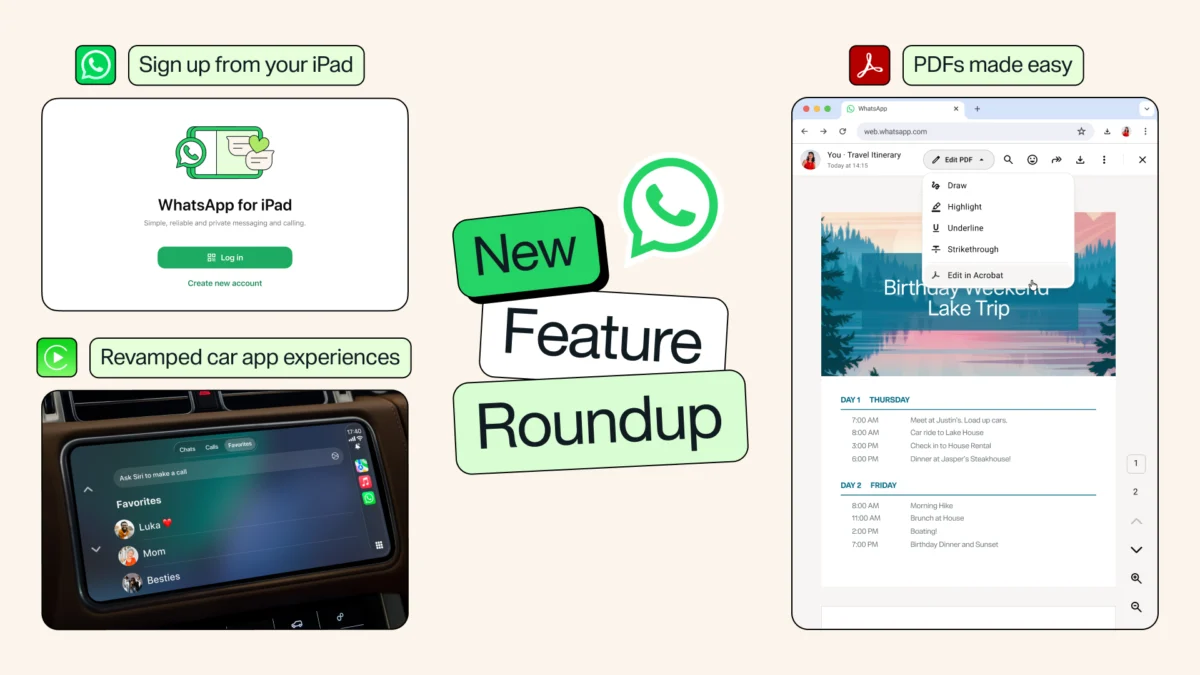
One of the most notable improvements targets the in-car experience, with WhatsApp significantly upgrading its integration with Apple CarPlay and Android Auto. These systems, which mirror smartphone apps onto a vehicle’s infotainment display, have become standard features in modern automobiles, facilitating safer and more convenient access to essential smartphone functions while driving. While WhatsApp has been accessible in CarPlay previously, its functionality was limited primarily to composing and sending messages and initiating calls. The new update drastically expands these capabilities.
Drivers can now seamlessly hear incoming messages read aloud, reply to them using voice commands, view their recent call history directly on the car’s display, and access their favorite contacts for quick communication. This enhancement moves WhatsApp beyond basic messaging in vehicles, offering a more complete and integrated communication hub. For millions of commuters, professionals on the go, and families coordinating travel, this translates into a safer and more efficient way to stay connected without diverting attention from the road. The emphasis on hands-free operation aligns with safety regulations and user expectations for in-car systems.
The demand for robust in-car communication is significant. Data from Statista indicates that Apple CarPlay and Android Auto collectively hold a dominant share in the connected car market, with millions of new vehicles integrating these platforms annually. For WhatsApp, optimizing this interface is crucial not only for user satisfaction but also for maintaining its competitive edge against native messaging solutions and other third-party apps that vie for attention in the vehicle environment. Competitors like Telegram and even Apple’s own iMessage offer varying degrees of in-car integration, making WhatsApp’s enhanced offering a necessary step to remain at the forefront of user choice. This move transforms the car from a device where WhatsApp is merely present, to one where it is fully functional and integral to the driving experience.
Liberating the Tablet Experience: Standalone WhatsApp for iPad
Perhaps one of the most anticipated updates, particularly within the Apple ecosystem, is the ability for users to sign up for and use WhatsApp directly from an iPad without needing to link it to a primary phone as a companion device. Since the launch of a dedicated WhatsApp for iPad app last year, users have consistently requested the option for direct account creation, mirroring the standalone functionality seen in other messaging platforms.
Previously, WhatsApp’s multi-device support, introduced in phases starting in 2021, allowed users to link up to four companion devices (including desktops and web browsers) to their primary phone. While the iPad app benefited from this, it still required an existing phone-based WhatsApp account to function. The new capability represents a significant shift. Users can now register for a WhatsApp account directly through the iPad app, setting up their profile as if it were their primary device. It’s important to note that a phone number is still required for the initial registration process, specifically to receive the one-time passcode for verification. However, once registered, the iPad app operates as a standalone account, no longer needing to be continuously linked or tethered to a smartphone.
This strategic move addresses a long-standing gap in WhatsApp’s device ecosystem. iPads, with their large screens and portability, are increasingly used as primary computing devices for many individuals, particularly students, professionals, and those who prefer a tablet-first approach. According to IDC, Apple consistently holds a significant share of the global tablet market, making the iPad a crucial platform for any major communication app. By offering standalone functionality, WhatsApp directly competes with platforms like Apple’s iMessage (native to iPads) and Telegram, which has long offered robust multi-device support allowing independent usage across various devices. This not only enhances user convenience but also expands WhatsApp’s potential user base to individuals who might primarily use an iPad and previously found the phone-linking requirement cumbersome or restrictive. The ability to manage a separate, unlinked WhatsApp account on an iPad could also appeal to users seeking to compartmentalize their communications or those who simply prefer a tablet interface for their messaging needs.
Beyond Text: Richer Media and Document Interaction
The latest feature rollout also brings substantial improvements to how users interact with media and documents within the app, reflecting WhatsApp’s evolution from a simple text messenger to a more versatile content-sharing platform.
Expressing Through Sound: Music Sharing to Status
In a nod to the growing importance of personal expression and multimedia content, WhatsApp now allows users to share songs directly from popular streaming services like Apple Music and Spotify to their WhatsApp Status. The "Status" feature, similar to "Stories" on Instagram and Snapchat, allows users to share ephemeral updates with their contacts, often comprising photos, videos, or short text snippets. The integration of music sharing adds a new dimension to this feature, enabling users to convey their mood, share new discoveries, or simply express themselves through the universal language of music.
This feature taps into a pervasive trend in social media, where music plays a crucial role in personal branding and emotional communication. By directly integrating with leading music platforms, WhatsApp streamlines the process, making it easier for users to enrich their status updates. This move is expected to boost engagement with the Status feature, providing a more dynamic and personalized way for users to connect with their network. The cultural impact of music sharing on social platforms is well-documented, with platforms observing significant interaction around shared musical content. For WhatsApp, this means increasing the "stickiness" of its app and offering a feature that resonates with a younger, digitally native audience accustomed to expressing themselves through diverse media.
Streamlining Productivity: In-App PDF Editing
Addressing a different, but equally important, user need, WhatsApp is now making it possible to open PDFs directly within the app without the necessity of downloading them first. More significantly, once a PDF is opened, users gain the ability to perform lightweight edits, such as highlighting and annotating, directly within the chat interface. This functionality is available across WhatsApp’s web and desktop versions, enhancing its utility as a tool for professional and academic collaboration.
The ubiquitous nature of PDF documents in modern communication, from sharing contracts and reports to academic papers and invoices, makes this a highly practical update. Previously, receiving a PDF on WhatsApp typically involved downloading the file, opening it in an external application, making any necessary edits, saving it, and then re-uploading it to the chat – a cumbersome and time-consuming process. By integrating viewing and basic editing capabilities, WhatsApp significantly streamlines workflows, reduces app-switching, and improves overall productivity. This feature positions WhatsApp as a more capable platform for professional exchanges, moving beyond informal chat to support more serious document-based collaboration. It also subtly encroaches on functionalities traditionally offered by dedicated document management tools, reinforcing WhatsApp’s ambition to be an all-encompassing communication hub. The availability on web and desktop further underscores its utility for users who often handle documents on larger screens during work or study.
A Broader Strategic Vision: WhatsApp’s Evolution and Recent Precursors
These latest features are not isolated additions but rather components of a sustained and aggressive strategy by Meta to evolve WhatsApp beyond its initial mandate as a simple, secure messaging app. Over recent months, the company has rolled out a series of significant updates, each contributing to a broader vision of a multifaceted, cross-device communication ecosystem.
A Chronology of Strategic Updates:
- Multi-Device Support (Phased Rollout since 2021): The foundation for much of the current expansion, this allowed users to link secondary devices without needing their primary phone to be online, a critical step towards device independence.
- WhatsApp for iPad (Launched Last Year): The initial dedicated app for Apple’s tablet, paving the way for the standalone registration now being introduced.
- Usernames (A few weeks ago): A pivotal privacy-enhancing feature that allows users to share their profile and connect with others without disclosing their phone number. This move significantly enhances user privacy and control, addressing a long-standing concern for many. It also makes WhatsApp more discoverable and social, akin to traditional social media platforms where usernames are the primary identifier. For businesses and public figures, this provides a more professional and secure way to share contact information.
- WhatsApp Plus Subscription (Late May): Meta officially launched a subscription plan for WhatsApp, mirroring similar "Plus" offerings for Instagram and Facebook. This premium tier unlocks extra features such as enhanced profile customization options, "super reactions" for messages, and story insights. This marks a significant step in Meta’s efforts to diversify its revenue streams beyond advertising, tapping into the growing market for subscription-based digital services. The introduction of premium features through a subscription model signals a deliberate shift towards monetizing advanced functionalities, catering to power users or those seeking a more personalized experience.
Meta’s overarching strategy for WhatsApp is clear: to create a "complete cross-device communication platform" that integrates seamlessly across its family of apps and extends its utility into every aspect of a user’s digital life, from their car to their tablet to their desktop. This strategy is also deeply intertwined with Meta’s broader "metaverse" vision, where interoperability and persistent digital identities across various platforms are key. By enhancing WhatsApp’s capabilities and device compatibility, Meta aims to lock in its massive user base, increase time spent within its ecosystem, and open new avenues for monetization.
Competitive Landscape and Future Outlook
The expanded feature set positions WhatsApp more directly against a range of competitors. Against privacy-focused apps like Signal, WhatsApp’s end-to-end encryption remains a core offering, but its new features lean more towards the functionality offered by Telegram, known for its extensive multi-device support, advanced features, and channel capabilities. For Apple users, the standalone iPad app and enhanced CarPlay integration make WhatsApp a more compelling alternative to iMessage and FaceTime, potentially challenging Apple’s native ecosystem lock-in.
The implications of these updates are far-reaching. For users, they promise increased convenience, flexibility, and a more integrated communication experience. For businesses, particularly small and medium enterprises that heavily rely on WhatsApp for customer communication, features like in-app PDF editing and enhanced desktop functionality could streamline operations. For Meta, these strategic enhancements are crucial for maintaining WhatsApp’s dominance in the global messaging market, fending off challengers, and driving user engagement across its interconnected platforms.
However, challenges remain. User adoption of new features, particularly paid subscriptions, will be a key metric. Balancing the introduction of new functionalities with maintaining the app’s core promise of simplicity and privacy will also be critical. As WhatsApp continues its transformation, its ability to innovate while adhering to user expectations for security and ease of use will determine its trajectory in the ever-evolving digital communication landscape. These latest updates, announced on Wednesday, firmly underscore WhatsApp’s ambition to not just be a messenger, but a comprehensive digital communication hub, seamlessly connecting users across every device and context imaginable.

