
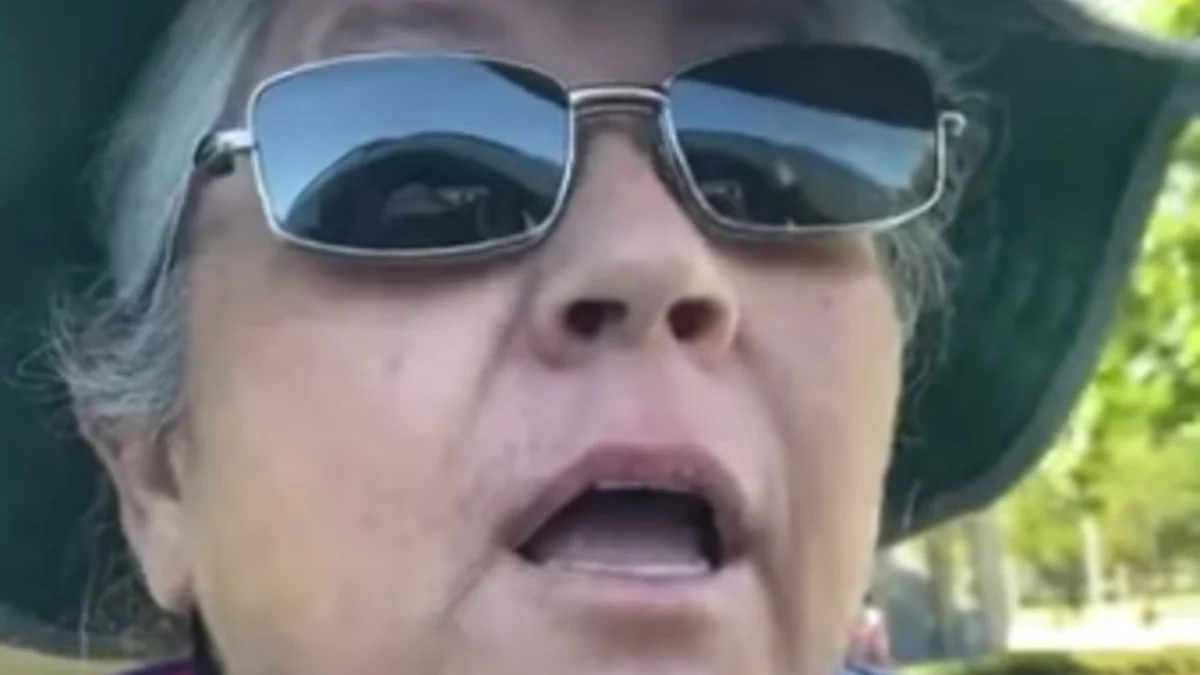
The intersection of digital outrage, legal accountability, and the cyclical nature of internet subcultures has been highlighted by the recent resurgence of a 2020 viral video. A clip featuring Lena Hernandez, a woman who gained international notoriety for a series of racist tirades in Torrance, California, has transitioned from a symbol of social unrest to a prominent meme format within the global gaming community. While the original incident resulted in significant legal repercussions and public condemnation, its 2026 revival on platforms such as TikTok demonstrates the unpredictable trajectory of viral media. This phenomenon raises questions regarding the "memeification" of aggressive behavior and the enduring shelf life of digital artifacts.
The 2020 Torrance Incidents: A Chronology of Confrontation
The origin of the audio clip dates back to mid-June 2020, a period characterized by heightened social tensions and the rapid documentation of public altercations via smartphone technology. Lena Hernandez, then 56 years old, was captured in multiple videos recorded at Wilson Park in Torrance. The most widely circulated footage involved Hernandez accosting a young woman who was exercising on a set of public stairs. Shortly thereafter, a second video emerged involving an Asian-American man who was confronted by Hernandez while sitting in his vehicle.
In this second encounter, Hernandez utilized the specific phrasing that would later become a viral soundbite. After directing racist vitriol toward the individual, Hernandez stated, "You play games, we don’t play games." When the victim questioned the nature of the "games" she was referring to, Hernandez responded with the phrase, "I play games where you get fucked to death." The aggression displayed in the video, combined with the nonsensical and threatening nature of the statement, led to immediate condemnation from local officials and the broader public.
The Torrance Police Department faced significant pressure to act as the videos garnered millions of views across Twitter (now X), Facebook, and YouTube. The incident occurred against the backdrop of the "Karen" phenomenon—a pejorative term used to describe entitled or racist individuals, typically white women, who engage in public harassment. Hernandez became one of the most prominent examples of this archetype during the summer of 2020.
Legal Consequences and Judicial Proceedings
The public outcry following the Wilson Park incidents led to an investigation into Hernandez’s prior conduct. It was revealed that the June 2020 tirades were not isolated events. Investigators linked Hernandez to a physical battery incident that had occurred in October 2019 at the Del Amo Fashion Center in Torrance. In that instance, Hernandez was accused of physically attacking a bystander who attempted to intervene while Hernandez was harassing a mall employee.
In July 2020, the Los Angeles County District Attorney’s office filed a misdemeanor battery charge against Hernandez related to the 2019 mall incident. While the racist rants at Wilson Park were widely viewed as hate speech, prosecutors initially struggled to file criminal charges for those specific encounters due to the high legal threshold for "criminal threats" and the lack of physical contact in the park videos. However, the cumulative weight of her public behavior influenced the judicial process.
In late 2020, Hernandez was sentenced to 45 days in county jail and ordered to serve three years of probation. Additionally, she was required to attend 52 weeks of anger management classes. The sentencing was viewed by civil rights advocates as a necessary step in addressing public harassment, though many argued that the psychological impact on the victims of her racist rhetoric warranted more severe intervention. Following her release, Hernandez largely receded from the public eye until the digital footprint of her outburst was repurposed six years later.
The 2026 TikTok Resurgence and Memeification
In September 2026, the audio from the Wilson Park confrontation underwent a significant cultural shift. Users on TikTok began stripping the audio from the original context of the racist tirade, focusing specifically on the "You play games… fucked to death" exchange. This transition from a serious social incident to a comedic or hyperbolic meme is a common occurrence in digital spaces, where the intensity of a person’s delivery is often divorced from the morality of their actions.
The meme found its primary audience within the "hardcore" gaming community. TikTokers began overlaying Hernandez’s voice onto footage of notoriously difficult video games, or "masocore" titles, which are designed to be punishingly hard and frequently result in the player’s character dying in gruesome or repetitive ways.
Key examples of this trend include:
- FromSoftware Titles: Games such as Elden Ring, Dark Souls, and Bloodborne became the most frequent subjects of the meme. The "fucked to death" line was used to humorously represent the experience of facing overwhelming boss encounters.
- Fear & Hunger: This indie survival-horror title, known for its extreme difficulty and dark themes, saw a spike in mentions alongside the Hernandez audio. The literal nature of the game’s mechanics—where failure often results in the brutal demise of the protagonist—aligned with the aggressive hyperbole of the soundbite.
- Competitive Shooters: Players of Rainbow Six Siege and Call of Duty: Black Ops II Zombies utilized the clip to describe the unforgiving nature of high-stakes competitive play or "high-round" survival attempts.
By September 25, 2026, the hashtag associated with the trend had accumulated millions of impressions. Users such as @therealzero66 and @sumo.plays were among the first to reach a broad audience, with their videos garnering hundreds of thousands of views within a 14-day window.
Sociological Analysis of the "Hardcore" Gaming Identity
The adoption of Hernandez’s rhetoric by the gaming community provides a case study in how subcultures utilize "unhinged" or "aggressive" mainstream media to reinforce their own identities. In the context of gaming, the phrase "I play games where you get fucked to death" is interpreted as a badge of honor or a statement of resilience. It serves to differentiate "casual" gamers from those who engage with titles that require extreme patience, skill, and a high tolerance for failure.
Psychologically, the use of this audio allows gamers to externalize the frustration of a difficult game through a figure who represents peak irrational aggression. By associating their hobby with the intense, albeit negative, energy of the Hernandez video, players create a meta-narrative where the game itself is the antagonist, and the player is the one "brave" enough to endure its "games."
However, this trend has not been without controversy. Critics point out that the memeification of the clip obscures the original victim’s experience. The 2020 incident was a traumatic display of racial harassment, and the "humorous" repurposing of the audio can be seen as a form of digital erasure. When a racist tirade becomes a punchline for a video game’s difficulty, the social weight of the original offense is often diminished in the eyes of younger audiences who may not be aware of the 2020 context.
Digital Archiving and the Persistence of the "Karen" Archetype
The longevity of the Lena Hernandez clip highlights the permanence of the digital record. In the pre-internet era, a local confrontation in a park would have faded from public memory within weeks. In the current era, such incidents are recorded, uploaded to the cloud, and archived by organizations and meme-tracking databases like Know Your Meme.
This persistence ensures that "Karens" of the 2020 era remain accessible to future generations of content creators. The "Karen" archetype has become a permanent fixture of digital folklore, representing a specific type of societal breakdown. As AI-driven algorithms on TikTok and Instagram continue to surface older content to new audiences, the probability of "vintage" viral videos being recontextualized increases.
Furthermore, the data suggests that content featuring high emotional arousal—whether it be anger, fear, or shock—is more likely to be repurposed. The Hernandez clip contains a high level of vocal "grain" and emotional intensity, making it an ideal candidate for audio-based memes that require a strong, recognizable reaction.
Broader Impact and Implications for Public Figures
The case of Lena Hernandez serves as a cautionary tale regarding the "digital afterlife" of public misconduct. While Hernandez served her legal sentence in 2020, her reputation remains tethered to her worst public moments. For individuals who become the subject of viral infamy, there is no "right to be forgotten" in the decentralized landscape of the internet.
For the victims of such incidents, the resurgence of these clips can be a double-edged sword. On one hand, the continued visibility of the perpetrator ensures that their actions are not forgotten; on the other, the trivialization of the event through gaming memes can feel like a secondary dismissal of the harm caused.
As of late 2026, the "You Play Games" meme continues to circulate, evolving into various remixes and iterations. It stands as a testament to the complex way in which society processes trauma, accountability, and entertainment in the 21st century. Whether as a tool for social commentary or a shorthand for video game difficulty, the words of Lena Hernandez remain an indelible, if uncomfortable, part of the modern digital lexicon.

