
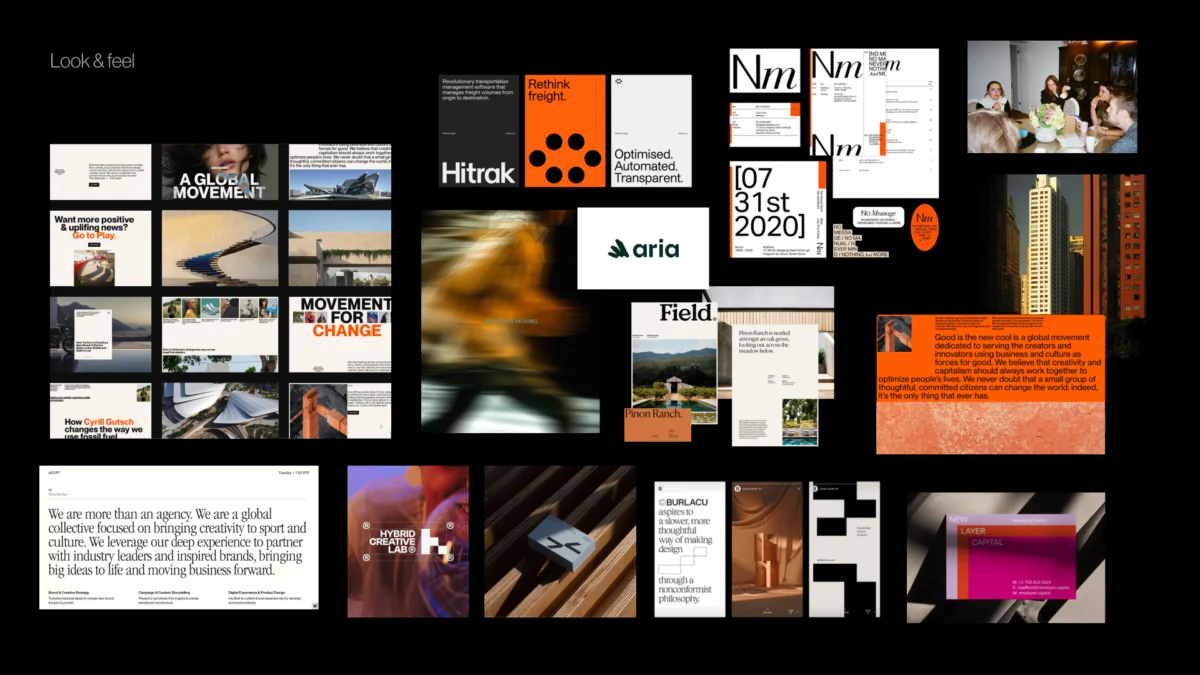
In the rapidly evolving landscape of corporate identity, the most resilient visual concepts are increasingly being traced back not to digital design tools like Figma, but to a rigorous investigative process known as the pre-concept phase. Industry analysis suggests that a significant percentage of branding projects fail to meet stakeholder expectations because of a critical disconnect between high-level strategy and visual execution. This failure typically occurs when abstract brand attributes—such as "modern," "trustworthy," or "disruptive"—remain undefined, leaving a vacuum that designers must fill with guesswork. To address this, a growing movement within the design community is formalizing the pre-concept stage, a period of intensive research and stakeholder alignment that serves as a practical bridge between what a brand means and how it eventually looks.
The Semantic Gap in Brand Strategy
The primary challenge in contemporary brand development is the "semantic gap." When a creative brief lists adjectives like "premium" or "friendly," it often assumes a shared understanding that does not exist. For instance, a stakeholder in a luxury automotive firm may interpret "premium" as "opulent and ornate," while a designer may interpret it as "minimalist and understated." Without a pre-concept phase to resolve these discrepancies, the resulting visual work often misses the mark, leading to costly revisions and delayed launches.
Data from the Design Management Institute indicates that design-led companies outperform the S&P 500 by as much as 211%. However, achieving this performance requires more than aesthetic appeal; it requires "strategic alignment." The pre-concept phase is designed to uncover hidden assumptions before a single pixel is moved. By forcing stakeholders to define the context of their adjectives, design teams can create a "visual foundation" that mitigates the risk of subjective rejection during the concept presentation.
Chronology of a Modern Brand Identity Project
To understand where the pre-concept phase fits, it is essential to view the typical chronology of a professional branding engagement. While timelines vary based on the scale of the organization, the following sequence has become the industry standard for high-stakes identity work:
- Discovery and Kickoff: Initial gathering of business goals, target audience data, and competitive landscapes.
- Strategic Positioning: Defining the brand’s "why," mission, and core values in written form.
- The Pre-Concept Phase: The critical "bridge" where strategy is translated into visual directions through workshops, perception mapping, and design code development.
- Concept Development: The creation of original visual identities, including logos, typography, and color systems, based on the agreed-upon pre-concept foundations.
- Refinement and Implementation: Testing the identity across touchpoints, such as mobile interfaces, physical packaging, and marketing collateral.
- Asset Delivery and Documentation: The finalization of brand guidelines and design systems.
The pre-concept phase typically occupies the space between weeks three and five of a standard three-month project. By investing time here, agencies report a 40% reduction in the number of required "round-one" revisions, as the client has already "bought into" the visual logic before seeing the final logo.

Methodology: Researching Brand Context and Perception
The cornerstone of the pre-concept phase is the shift from collecting facts to clarifying perception. Branding, as defined by industry veteran Marty Neumeier, is a "person’s gut feeling about a product, service, or company." Therefore, the designer’s task is to influence that gut feeling.
During this stage, designers employ specific questioning techniques to reveal the nuances of a brand’s character. For example, in a recent case study involving a health tech firm, the client requested a "disruptive" identity. In a vacuum, "disruptive" might imply neon colors and radical layouts. However, through pre-concept workshops, it was revealed that the firm’s primary clients were conservative government medical institutions. In this context, "disruption" actually meant "unprecedented efficiency and clarity." The resulting visual direction was professional and structured, rather than rebellious, ensuring the brand remained credible within its specific ecosystem.
Exercise-Based Alignment: Perception Mapping and Brand Drivers
To facilitate this alignment, designers use two primary exercises: Competitor Perception Mapping and Visual Brand Drivers.

Competitor Perception Mapping involves placing industry rivals on a two-axis grid. The axes are defined by the specific tensions the brand must navigate—such as "Traditional vs. Progressive" or "Understated vs. Bold." This exercise is not intended to critique design quality but to understand how stakeholders read the category. Disagreements during this exercise are considered valuable data points, as they highlight conflicting internal visions that would otherwise derail the project later.
Visual Brand Drivers utilize metaphor and association to separate brand perception from personal aesthetic preference. Stakeholders are asked to select images representing the company across unrelated categories, such as transportation, furniture, or architecture. If a company is a "high-speed train," it implies reliability and fixed-route precision; if it is a "private jet," it implies exclusivity and speed. These metaphors provide a "design code" that informs the eventual choice of shapes, lines, and textures.
Supporting Data: The Economic Case for Pre-Concept Work
The move toward a more rigorous pre-concept phase is supported by broader economic trends in the creative sector. According to a report by Adobe, 71% of companies that prioritize consistent brand presentation experience 10% to 20% revenue growth. However, consistency is impossible to maintain if the brand’s visual "logic" is not firmly established at the outset.

Furthermore, a study by McKinsey & Company on the "Business Value of Design" found that the most successful companies treat design as a top-management priority and use quantitative and qualitative research to drive creative decisions. The pre-concept phase aligns perfectly with this "analytical leadership" model by removing the "black box" of the creative process and replacing it with a transparent, collaborative framework.
Industry Responses and Expert Perspectives
Design strategists at leading global agencies have long advocated for this "bridge" work. While the term "pre-concept" is relatively new, the practice of "visual strategy" is becoming a standard line item in agency contracts.
"The biggest mistake a designer can make is to assume they and the client are speaking the same language," says one senior creative director at a New York-based branding firm. "We’ve moved away from the ‘big reveal’ model of the 1960s. Today’s clients are partners in the process. They need to see the scaffolding before they see the building."

In the fintech sector, where trust is the primary currency, the pre-concept phase is often used to balance "boldness" with "security." Analysts note that for a financial startup, looking "too disruptive" can be a liability. The pre-concept phase allows these companies to find the "sweet spot" where they look innovative enough to attract users but stable enough to manage their money.
Broader Implications: AI and the Future of the Creative Process
The rise of Generative Artificial Intelligence (AI) has added a new layer of urgency to the pre-concept phase. As AI tools make it easier to generate thousands of "concepts" in seconds, the value of the human designer shifts from "production" to "curation and strategy."
In an AI-augmented workflow, the pre-concept phase becomes the most valuable part of the project. AI can generate a logo, but it cannot understand the political nuances of a board of directors or the subtle cultural cues of a specific target demographic. The "design code" developed during the pre-concept phase provides the necessary constraints and prompts for AI tools, ensuring that the output is strategically grounded rather than just visually interesting.

Conclusion: The First Concept Should Not Be a Guess
The ultimate goal of the pre-concept phase is to ensure that when the first visual concept is presented, it feels like an inevitable conclusion rather than a surprise. By establishing shared direction, testing visual perception, and defining practical design boundaries, teams can move into the concept phase with confidence.
The pre-concept checklist—ensuring the team has defined category expectations, resolved stakeholder disagreements, and established visual metaphors—serves as a safeguard against project failure. In a global market where brand identity is a primary driver of enterprise value, the shift from "guessing" to "navigating" represents a significant maturation of the design profession. The strongest visual concepts, it appears, are those that are built on a foundation of the right questions, long before the first line is drawn in Figma.

