

This week’s influx of product and service updates for e-commerce merchants underscores a significant acceleration in the adoption of artificial intelligence and a continued push towards global market accessibility. From sophisticated international shipping solutions and streamlined cross-border payment gateways to AI-powered logistics, dynamic conversational advertising, and enhanced reputation management tools, the digital commerce ecosystem is rapidly evolving to meet the demands of an increasingly interconnected and technologically advanced marketplace. These developments signal a pivotal moment for businesses seeking to optimize operations, expand their reach, and cultivate deeper customer relationships in the competitive online arena.
Revolutionizing Global Trade and Payments
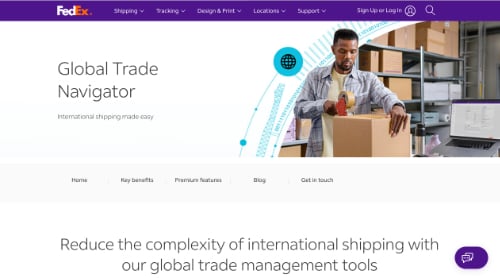
The complexities of international e-commerce are being systematically addressed by major logistics and payment providers. FedEx Corp. has launched its comprehensive Global Trade Navigator suite, a collection of digital tools designed to demystify international shipping for merchants. This initiative includes Trade Planner, a self-service guidance portal accessible directly on FedEx.com without requiring a login, offering immediate support for navigating global trade regulations and processes. Complementing this, the Duty and Tax app integrated with Shopify empowers merchants to provide an upfront duty and tax guarantee at checkout. This feature, crucial for preventing unexpected costs for international customers, enhances transparency and can significantly reduce cart abandonment rates. Furthermore, Global Trade APIs are enabling deeper integration of product classification, estimated duties and taxes, and regulatory information directly into merchant systems. The Ship Manager tool within the suite allows for the review of Harmonized System (HS) code classifications, customs values, and country-of-manufacture details, ensuring greater accuracy and compliance in shipping documentation. This multifaceted approach from FedEx aims to reduce friction and build confidence for businesses venturing into international markets.
In parallel, the logistics giant DHL Group has forged a strategic partnership with Alibaba.com to leverage Artificial Intelligence for improving logistics capabilities for small and medium-sized enterprises (SMEs) engaged in international trade. This collaboration will see the integration of DHL Global Forwarding’s extensive logistics services into Alibaba.com’s agentic AI platform, Accio. The initial rollout of this partnership will focus on Accio’s ability to connect directly with DHL Global Forwarding’s quotation and booking systems. This will enable businesses to obtain real-time freight forwarding quotes, compare various shipping options, and seamlessly book shipments directly through the Alibaba.com platform. This synergy is expected to significantly streamline the often-arduous process of international freight management for SMEs, making global sourcing and distribution more accessible.

The financial technology sector is also witnessing substantial AI integration, particularly in cross-border payments. Ant International, the entity behind the widely used Alipay+ wallet gateway, has announced a groundbreaking partnership with payment giants Visa and Mastercard. This collaboration is focused on developing a new payments standard for AI agents. The core objective is to establish robust protocols for "know your agent" practices, ensuring that each AI agent is linked to a verifiable entity and that their behavior can be effectively assessed and monitored. This initiative is a proactive step to address the burgeoning landscape of AI-driven commerce, aiming to build trust and security into the payment infrastructure as AI agents become more prevalent in consumer transactions. The development of such standards is critical for the future of secure and scalable digital commerce.
The Rise of Agentic Commerce and Conversational Experiences
The emergence of AI agents as active participants in the commerce journey is creating new platforms and marketplaces. M11 Labs has launched its agentic trust platform and marketplace, OpenMarket, built on the Universal Commerce Protocol. This platform facilitates a novel shopping experience where shoppers articulate their needs, and brand agents compete to provide recommendations. M11 Labs then verifies every claim made by these agents in real-time, ensuring accuracy and transparency. This system not only aims to build trust but also generates valuable research data on agent performance and market dynamics. The implication is a shift towards a more personalized and verified shopping experience, where AI agents act as trusted intermediaries.
Amazon Ads is piloting a significant integration with OpenAI, enabling advertising services within ChatGPT. This partnership allows advertisers to extend their Amazon Ads campaigns into a conversational format on ChatGPT. The aim is to enable advertisers to engage with customers in a more dynamic way as they explore product options, compare choices, and make purchasing decisions. This pilot program, currently underway with select U.S. advertisers, represents a bold move into the realm of conversational advertising, where AI chatbots can act as personalized shopping assistants, driving product discovery and conversion.
Instacart has introduced Clementine, its AI-powered grocery shopping assistant, now available to consumers across North America on the Instacart Marketplace. Clementine allows shoppers to describe their needs, upload recipes, or even share photos to generate personalized grocery lists. Simultaneously, Instacart is expanding its white-label AI shopping tool, Cart Assistant, which provides retailers with a branded shopping experience powered by their own product catalogs and customer data, enhanced by the same AI intelligence behind Clementine. This dual approach caters to both direct-to-consumer needs and business-to-business solutions, aiming to make online grocery shopping more intuitive and efficient.
Mastercard is also actively shaping the agentic commerce landscape with its Agent Connect platform and expanded Agent Suite for Merchants. Agent Connect serves as a unified integration point for merchants, AI agents, digital platforms, and payment providers, simplifying connectivity and transactions. Merchants retain significant control, deciding where and how they participate, which AI experiences to connect with, and maintaining oversight of pricing, fulfillment, customer relationships, brand experience, and their own business rules. This offers a flexible framework for businesses to engage with the growing AI agent ecosystem without sacrificing essential operational control.
The infrastructure supporting this agent-led growth is also attracting significant investment. Lightsage, formerly Sapient, has secured $4 million in funding to develop the foundational infrastructure for what it terms "agent-led growth." The company’s platform conducts large-scale simulations across answer engines and coding agents to benchmark a company’s market presence against competitors and predict future outcomes. Lightsage also offers analytics on real agent traffic, providing valuable insights into AI-driven customer interactions. This funding will bolster their capabilities in agent evaluation, analytics, attribution, and optimization, positioning them as a key player in the emerging agent economy.
Enhancing Customer Engagement and Retention
Beyond direct sales, merchants are leveraging new tools to enhance customer engagement and build lasting relationships. Mntn, a connected TV advertising company, has announced an integration with Klaviyo, a leading email marketing and B2C CRM platform. This integration brings Mntn’s Performance TV advertising directly into email and text marketing workflows. Marketers can now utilize Klaviyo audiences on Mntn Performance TV and, conversely, use ad exposure to trigger automated email and SMS journeys within Klaviyo. This cross-channel synergy aims to create more cohesive and personalized customer journeys, optimizing ad spend and improving marketing ROI.
Xflow, a cross-border payments platform backed by prominent investors like Stripe, PayPal Ventures, and General Catalyst, has launched its India collections service. This new offering enables global businesses to accept payments from customers in India through various methods, including cards, bank transfers, and UPI payments. Crucially, businesses can receive funds settled in their own currency without the need to establish a legal entity or navigate complex regulatory requirements within India. This significantly simplifies access to the vast Indian e-commerce market for international businesses.

Mastercard has also partnered with Flowcart, an e-commerce platform for WhatsApp, to embed secure card payments directly into social and conversational commerce experiences in East Africa. This initiative allows consumers to discover products, place orders, and complete payments within a single chat interface, eliminating the need to be redirected to external websites or apps. The partnership, initially launching in Kenya, is set to expand across key African markets, including South Africa, Nigeria, and Côte d’Ivoire, addressing the growing trend of social commerce in these regions.
Telesign, a digital identity platform, and B2Metric, a customer data and analytics company, have joined forces to enhance conversational commerce. By combining B2Metric’s predictive analytics with Telesign’s secure messaging API for WhatsApp and email, brands can now identify critical shopping moments and engage shoppers through their preferred communication channels. The goal is to make conversational commerce more intelligent, secure, and scalable, ensuring that customer interactions are both timely and relevant.
For businesses operating on Amazon, Jungle Scout has launched AI Solutions designed to provide deeper insights. Ask Cobalt offers a question-and-answer interface for users to inquire about brand performance, category trends, or competitive positioning. Additionally, the Jungle Scout MCP integrates this data into existing AI tools such as Claude, ChatGPT, Gemini Enterprise, and Microsoft Copilot, enabling Amazon sellers to leverage AI for more informed decision-making.
Shipt, the same-day delivery platform, has introduced Ask Shipt, its AI shopping assistant. Available within the Shipt app and website, Ask Shipt allows shoppers to describe their needs, upload recipes, or even share photos to generate shopping lists. After selecting a preferred retailer, shoppers can access Ask Shipt beneath the search bar, streamlining the grocery shopping process.

Optimizing Operations and Managing Reputation
The dropshipping model continues to evolve, with the dropshipping platform TopDawg announcing a live integration with Temu. This integration allows eligible retailers with a Temu seller account to connect their account to TopDawg, enabling them to source products from U.S.-based suppliers and fulfill orders through the Temu marketplace. This expansion aims to provide retailers with greater product variety and streamlined fulfillment options, enhancing their multi-channel dropshipping strategies.
Reputation management is also receiving an AI-driven boost. RankRabbit AI has launched Reputation AI, a tool designed to automate the monitoring and management of a business’s online reputation across multiple platforms. The system monitors reviews in real-time, applies sentiment analysis to identify negative trends, and generates draft responses for businesses to review and publish. This is the fourth product in RankRabbit AI’s brand visibility suite, following Search AI, Listing AI, and Social AI, underscoring a commitment to holistic online presence management.
Finally, SurveyMonkey has released its AI Analysis Suite and new design tools. The AI Analysis Suite enables users to interact with survey and form results using conversational language and automatically categorizes open-ended text responses into key themes. The accompanying design toolkit streamlines the creation of surveys and forms, with features that transform survey questions and automatically generate branded themes, making data collection and analysis more accessible and efficient.
These diverse advancements collectively paint a picture of an e-commerce industry that is rapidly embracing technological innovation to enhance operational efficiency, broaden market access, and deepen customer engagement. The pervasive integration of AI across various facets of the e-commerce value chain signals a fundamental shift towards more intelligent, personalized, and globally accessible online commerce.

