
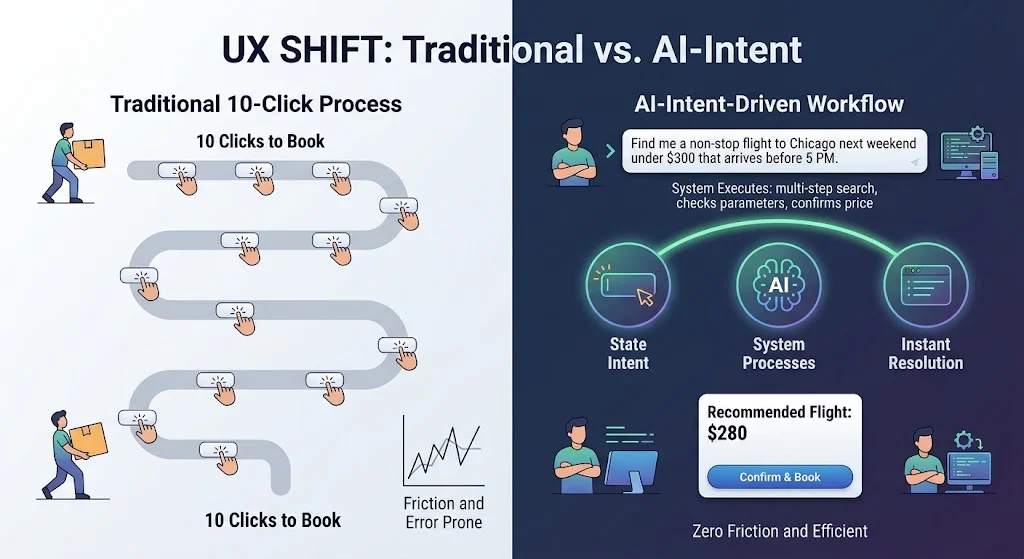
The Evolution of Interaction: From WIMP to Intent
The current shift represents the fourth major era in human-computer interaction (HCI). The first era was defined by Command Line Interfaces (CLI), requiring specialized knowledge of syntax. The second era, popularized by the Xerox Star in 1981 and the Apple Macintosh in 1984, introduced the "WIMP" paradigm (Windows, Icons, Menus, Pointer). This made computing accessible to the masses but tethered productivity to the user’s ability to navigate a digital labyrinth. The third era arrived with the 2007 launch of the iPhone, which introduced Natural User Interfaces (NUI) through touch and gestures.
The fourth era, which is now emerging, moves toward "Zero UI" or Intent-Driven Design. In this model, the computer is no longer a passive container of data that waits for a series of micro-commands. Instead, powered by Large Language Models (LLMs) and generative AI, the software anticipates the "intent" behind a user’s request. This transition aims to solve what UX researchers call the "10-click process"—the friction-heavy experience of manually cross-referencing data, filling out multi-step forms, and managing browser tabs to complete a single task, such as booking a flight or researching a medical symptom.

Chronology of the Shift Toward Invisible Interfaces
The movement toward invisible interfaces has been building for over a decade, though it reached a tipping point with the recent advancements in generative AI.
- 2012: Golden Krishna, a designer at Google, introduces the concept of "The Best Interface is No Interface," arguing that digital designers have become obsessed with screens rather than solving problems.
- 2015: Don Norman, the father of modern user experience, publishes critiques on the "complexity of modern design," calling for a return to human-centered principles where technology adapts to the person, not vice versa.
- 2022: The release of ChatGPT demonstrates that natural language can replace complex UI for data retrieval and synthesis.
- 2023-2024: Platforms like Perplexity AI and Vercel v0 begin to implement "Generative UI," where the interface itself is created dynamically in response to a user prompt, rather than existing as a static set of pre-designed pages.
- 2025-2026: Projections suggest that "Agentic AI"—software capable of executing multi-step tasks autonomously—will become the primary way users interact with the web, rendering traditional navigation bars obsolete for many categories of software.
Data-Driven Insights into UI Friction
Recent industry data underscores why the "death of the button" is becoming a necessity. According to a 2024 study by the Nielsen Norman Group, the average user spends approximately 45% of their digital time on "interface management"—tasks like resizing windows, navigating menus, and closing pop-ups—rather than on the core task they intended to perform.
Furthermore, data from the "Time Well Spent" movement suggests that interaction fatigue is at an all-time high. E-commerce conversion rates drop by an average of 7% for every additional click required in a checkout funnel. Intent-driven systems aim to reduce this interaction volume to a single "intent capture," potentially increasing efficiency by orders of magnitude. In developer environments, Vercel reported that using generative UI tools like v0 allowed teams to move from concept to functional code 5x faster than traditional drag-and-drop web editors.
Case Studies: Intent-Driven Platforms in Action
Several contemporary platforms are currently leading the transition from static menus to intent-driven experiences.
Perplexity AI: The Synthesis Model
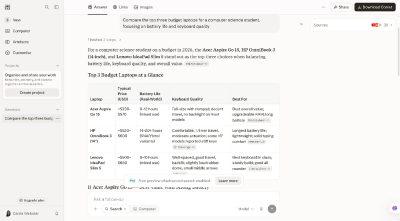
Traditional search engines like Google function as directories, providing a list of links that the user must then manually open and synthesize. Perplexity AI bypasses this "tab-heavy" workflow by capturing the user’s intent—such as "compare three budget laptops for video editing"—and generating a synthesized table and summary. The interface acts as a researcher rather than a librarian.
Vercel v0: The Generative UI Model
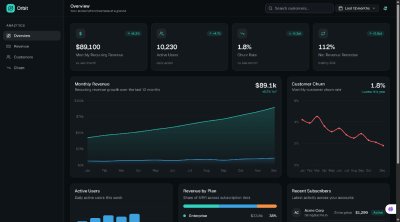
In traditional web design, creating a dashboard involves manually drawing rectangles and assigning CSS values. Vercel v0 allows users to describe a functional interface in plain English. The system then generates the code and the UI layout instantly. This shifts the designer’s role from a "pixel pusher" to a "system orchestrator," where the focus is on defining the logic of the experience rather than the static appearance of a button.
Goblin.tools: The Cognitive Support Model
Designed for neurodivergent users, Goblin.tools uses AI to break down overwhelming tasks (e.g., "clean the garage") into manageable micro-steps. It demonstrates how intent-driven design can provide high-level cognitive support, removing the mental "friction" of planning and organization that traditional productivity apps often exacerbate with their complex Kanban boards and deadline toggles.
The Three Pillars of Intent-Driven UX
To successfully transition away from visible interfaces, designers and engineers are coalescing around three core pillars:
- High-Level Goal Capture: Instead of micro-actions (clicks and toggles), the system focuses on natural language, context, and habits. It uses environmental metadata—such as location, device state, and past behavior—to anticipate what the user needs before they even ask.
- Generative UI Components: Rather than showing every user the same static page, the system renders UI components on the fly. If a user needs to calculate a mortgage, a calculator appears. Once the task is done, the interface recedes. This is "Just-In-Time" design.
- Autonomous Execution via Agents: The software no longer just shows data; it takes action. AI agents execute background tasks—such as booking a reservation or filtering emails—shifting the user’s role from "operator" to "approver."
Industry Responses and Ethical Considerations
The shift toward invisible interfaces has drawn both praise and caution from industry leaders. Sam Altman, CEO of OpenAI, has frequently discussed a future where "the computer is a colleague, not a tool," implying a move away from traditional software UIs. However, the Stanford Human-Computer Interaction Group has raised concerns regarding the "Black Box Problem." When an interface is invisible, troubleshooting becomes difficult. If a system makes an error in judgment—such as booking the wrong flight—the user may not realize it until it is too late.
Ethical frameworks from the Center for Humane Technology emphasize that as interfaces disappear, the potential for "manipulative defaults" increases. Without visible buttons and toggles, users may find it harder to opt-out of data collection or change privacy settings. Consequently, designers are being urged to maintain "clear boundaries" and "friction for high-stakes decisions," ensuring that while routine tasks are automated, significant financial or personal choices still require explicit human confirmation.
The Shifting Role of the UX Designer
For the design profession, the "death of the button" necessitates a radical re-evaluation of skills. The traditional focus on typography, color theory, and layout is being supplanted by a need for expertise in:
- Prompt Engineering and Logic Mapping: Designing the "conversation" between the user and the AI.
- Transparency Loops: Creating ways for invisible systems to communicate their status and reasoning to the user without cluttering the experience.
- Reversibility Mechanisms: Since AI agents act on behalf of users, the "Undo" button becomes more important than the "Submit" button. Designers must build robust rollback systems to handle autonomous errors.
Analysis of Broader Impact and Future Implications
The move toward intent-driven design is not merely a trend in web aesthetics; it is a fundamental shift in the economics of human attention. For decades, the success of a digital product was measured by engagement metrics: time spent in-app, click-through rates, and page views. These metrics incentivized designers to build "sticky" interfaces that maximized interaction volume.
Intent-driven design flips this metric on its head. The ultimate test of a modern digital product will be how effectively it solves a problem while requiring the least amount of user attention. This "efficiency-first" model aligns with the broader movement toward humane technology, which seeks to return time to the user rather than harvesting it.
In the long term, the "web" may cease to be a collection of destinations (websites) and instead become a fluid layer of services that we access through ambient devices—smart glasses, voice assistants, and integrated OS layers. In this future, the "button" is not just dead; it is a relic of an era when humans had to speak the language of machines. The future of the web is seamless, invisible completion, where the best interface is, quite literally, no interface at all.

