

A comprehensive study conducted by researchers at Fable and the University of California, Irvine, has revealed that incorporating participants with cognitive disabilities into user experience (UX) research yields significantly higher volumes of actionable insights than traditional testing methods. The exploratory research, spearheaded by Fable’s Vice President of Innovation and supported by academic collaborators, demonstrated that participants with cognitive disabilities—including those with challenges related to memory, focus, and learning—identified 1.8 times more usability issues and provided 1.8 times more suggestions for improvement than general population participants. These findings suggest that cognitive accessibility serves as a "stress test" for digital products, surfacing friction points that, while affecting all users, become insurmountable barriers for those with neurodivergent traits.
Contextualizing Cognitive Disability in the Modern Digital Landscape
Cognitive disability is a broad umbrella term encompassing a variety of conditions that affect how individuals process, retain, and act upon information. This includes neurodivergent conditions such as ADHD, Autism, and Dyslexia, as well as acquired conditions affecting memory and concentration. According to data from the Centers for Disease Control and Prevention (CDC), cognitive disability is the most prevalent form of disability in the United States, affecting approximately 13.9% of the adult population.
Furthermore, research from Yale University indicates that the number of adults reporting cognitive limitations is increasing rapidly. This trend is driven in part by a better understanding of neurodiversity and a significant demographic shift: the aging of the American population. U.S. Census Bureau projections suggest that by 2060, one in four Americans will be aged 65 or older. As cognitive decline is a natural component of aging, the demand for digital interfaces that accommodate memory and focus challenges is no longer a niche requirement but a fundamental necessity for market longevity.
Chronology of the Cognitive Usability Initiative
The initiative to formalize cognitive accessibility testing began in the summer of 2024. A working group of expert researchers was established to determine the most effective methodologies for engaging with people who have cognitive disabilities. The project followed a structured four-stage timeline:
- Development of Screening Protocols: The team created specific screeners to identify participants who self-identified with challenges in memory, focus, and learning. This was paired with a comprehensive literature review of existing studies to establish a baseline of best practices.
- The Pilot Phase: An initial group of 25 testers participated in a pilot study to test the proposed research frameworks. This iterative process allowed researchers to fine-tune their interview guides and survey instruments.
- Tool Creation: The researchers developed a guide for conducting user interviews with cognitive testers and integrated the Accessible Usability Scale (AUS), a 10-question survey designed to quantify the usability of digital products through an accessibility lens.
- The Comparative Study: In collaboration with Syed Fatiul Huq and researchers from the University of California, Irvine, a joint study was launched to validate the hypothesis that cognitive testers uncover more insights than general population (gen-pop) participants.
Study Methodology and Experimental Design
To ensure a controlled environment for testing, researchers generated three distinct websites using an AI prototyping tool. This allowed for the testing of various tasks across different design aesthetics and functional requirements:
- Strong Snacks: A simple, "brutalist" style website focused on high-protein recipes. Tasks included finding specific recipes and subscribing to a newsletter.
- Turning Pages: A complex bookstore site with "moody" aesthetics, featuring extensive filtering, a book-matching profile builder, and a checkout flow.
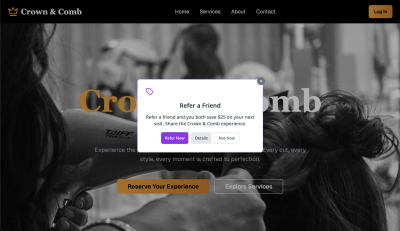
- Crown & Comb: A bold, high-contrast hair salon website designed for appointment booking and membership management. This site included an intentionally difficult task—finding a specific bridal package—to test the limits of user persistence.
The study involved 30 facilitated user interviews, with 10 sessions per website. Each group of 10 was split evenly between five cognitive participants and five gen-pop participants. Following the tasks, all participants completed the AUS survey to provide a standardized usability score ranging from 0 to 100.
Comparative Data Analysis: Cognitive vs. General Population
The data collected across the three websites provided a stark contrast in the depth of feedback received from the two groups. Across the board, participants with cognitive disabilities identified 197 usability issues, compared to only 113 identified by the general population group. Similarly, the cognitive group offered 93 suggestions for improvement, while the gen-pop group offered 54.

Website Performance Breakdown
The "Strong Snacks" site, being the simplest, received the highest usability scores. However, even here, cognitive participants found 3.4 times more issues than their gen-pop counterparts. The cognitive group’s average AUS score was 76.8, significantly lower than the gen-pop average of 90.5, highlighting that even "simple" designs can harbor hidden friction.
On the "Turning Pages" site, which featured the most complex functionality, cognitive participants identified an average of 17 issues per person, compared to 11 for the gen-pop group. The AUS scores reflected this difficulty, with cognitive participants rating the experience at 60.8, while gen-pop participants rated it at 78.0.
The "Crown & Comb" results provided a unique anomaly. While cognitive participants found significantly more issues (12 vs. 5), they actually rated the site higher on the AUS scale (63.8) than the gen-pop group (49.5). Researchers hypothesize that while the cognitive group was more vocal about specific visual and content-based hurdles, the gen-pop group’s frustration stemmed from a broader inability to complete the intentionally difficult "bridal package" task, leading to a more severe penalization of the overall experience.
Qualitative Findings and the Impact of Cognitive Load
The study categorized issues into several buckets: Content, Navigation, Buttons/Links, Icons/Visual Elements, and Media. The data revealed that cognitive participants are uniquely sensitive to certain design elements:

- Content and Clarity: Cognitive participants identified nearly double the issues related to content clarity. They frequently noted when language was too jargon-heavy or when instructions were ambiguous.
- Visual Affordances: Issues with buttons and links were significantly more prevalent in the cognitive group. Participants often struggled to identify what was clickable, a problem that gen-pop users often "muddled through" without consciously noting.
- Media Distractions: Cognitive users were far more likely to be hindered by continuous animations or autoplaying media, which they described as "draining" and detrimental to their ability to focus.
The qualitative feedback also highlighted a difference in the emotional impact of poor design. While gen-pop participants described their difficulties as "frustrating" or "not engaging," cognitive participants used language suggesting a deeper physiological toll, describing the experience as "draining" or stating that it made them "less able to focus."
Implications for Business and Inclusive Design
The findings of this study have profound implications for the return on investment (ROI) of inclusive UX research. Proponents of cognitive inclusion argue that by solving for the most sensitive users, companies create a "curb-cut effect" where the entire user base benefits.
For instance, the cognitive group’s feedback on the "Turning Pages" bookstore site revealed that ambiguous interactions in the "Add to Book Bag" flow decreased their confidence in the site. For a business, this lack of clarity translates directly into cart abandonment and lost revenue. By addressing the predictability and clarity of these interactions, a company ensures a smoother path to purchase for everyone, including stressed users, non-native speakers, and those using mobile devices in distracting environments.
Industry experts have begun to recognize the efficiency of this approach. A UX Manager at Bell Media noted that "two sessions with cognitive users feel like 200 because of the volume of insights we get." This efficiency allows research teams to identify "universal challenges" much faster than they would with a standard participant pool.
Conclusion: Cognitive Inclusion as a Research On-Ramp
The research conducted by Fable and UC Irvine suggests that cognitive accessibility is a powerful "on-ramp" for organizations looking to expand their inclusive research practices. While some teams may find it daunting to begin testing with complex assistive technologies like screen readers or alternative navigation devices, cognitive inclusion focuses on fundamental principles of clarity, predictability, and reduced cognitive load.
As the global population continues to age and the prevalence of reported neurodivergence grows, the ability to design for cognitive accessibility will become a critical differentiator in the digital marketplace. The study concludes that cognitive inclusion is not merely a matter of compliance or social responsibility; it is a strategic research methodology that produces more efficient, clearer, and more successful products for all users. By prioritizing the needs of those who process information differently, UX teams can effectively future-proof their designs against the rising tide of cognitive demand.

