
In the landscape of digital product development, the "moment of truth" for a user often occurs at the initial authentication screen, where a momentary pause can signal the difference between a seamless user experience and a total breakdown in test validity. For user experience (UX) researchers and product designers, particularly within the high-stakes financial technology (FinTech) sector, this pause is a known indicator of the "suspension of disbelief" failing. When a participant in a usability study realizes a prototype is merely a visual facade rather than a functional application, their behavior shifts from natural interaction to a performance of what they believe the researcher wants to see. This phenomenon, often referred to as social desirability bias, can significantly skew data and lead to the development of products that fail to meet real-world user needs.
The Trust Deficit in Financial User Experience Testing
The necessity for high-fidelity prototyping is nowhere more prevalent than in the banking and financial services industry. Unlike social media or e-commerce platforms, banking applications operate on a foundation of security and precision. Users are conditioned to be hyper-vigilant; they notice when a balance does not update in real-time, when a field accepts invalid characters, or when a security prompt feels unpolished.

Recent industry analysis suggests that low-fidelity prototypes in FinTech testing can lead to a "trust deficit," where up to 40% of participants report feeling "disengaged" or "distrustful" of the testing environment if the security features—such as login and biometric authentication—do not mirror the behavior of a live application. This disengagement results in "shallow data," where researchers capture feedback on aesthetics rather than the critical functional flows that define the product’s success. To combat this, design teams are increasingly moving away from static transitions toward logic-based prototyping tools like ProtoPie, which allow for the creation of functional inputs, conditional logic, and native-level animations without the need for traditional coding.
A Chronology of Prototyping: From Static Screens to Logic-Based Systems
The evolution of prototyping tools has followed a distinct timeline, reflecting the growing complexity of mobile application design. In the early 2010s, the industry standard relied heavily on "hotspot" prototyping, where static images were linked by simple transitions. While effective for basic navigation, these tools lacked the ability to handle user input.
By 2018, the rise of tools like Figma and Adobe XD introduced more sophisticated transitions, but the "logic gap" remained. Designers could show what a login screen looked like, but they could not easily validate whether a user entered a correct password. The current era, beginning around 2021, has seen the emergence of "high-fidelity logic" tools. This shift allows designers to incorporate variables and conditions—elements previously reserved for software engineers—into the design phase. This enables the creation of "living" prototypes that can respond to user input in real-time, providing a sandbox environment that is indistinguishable from a shipped product.
Technical Methodology: Bridging the Design-Development Gap
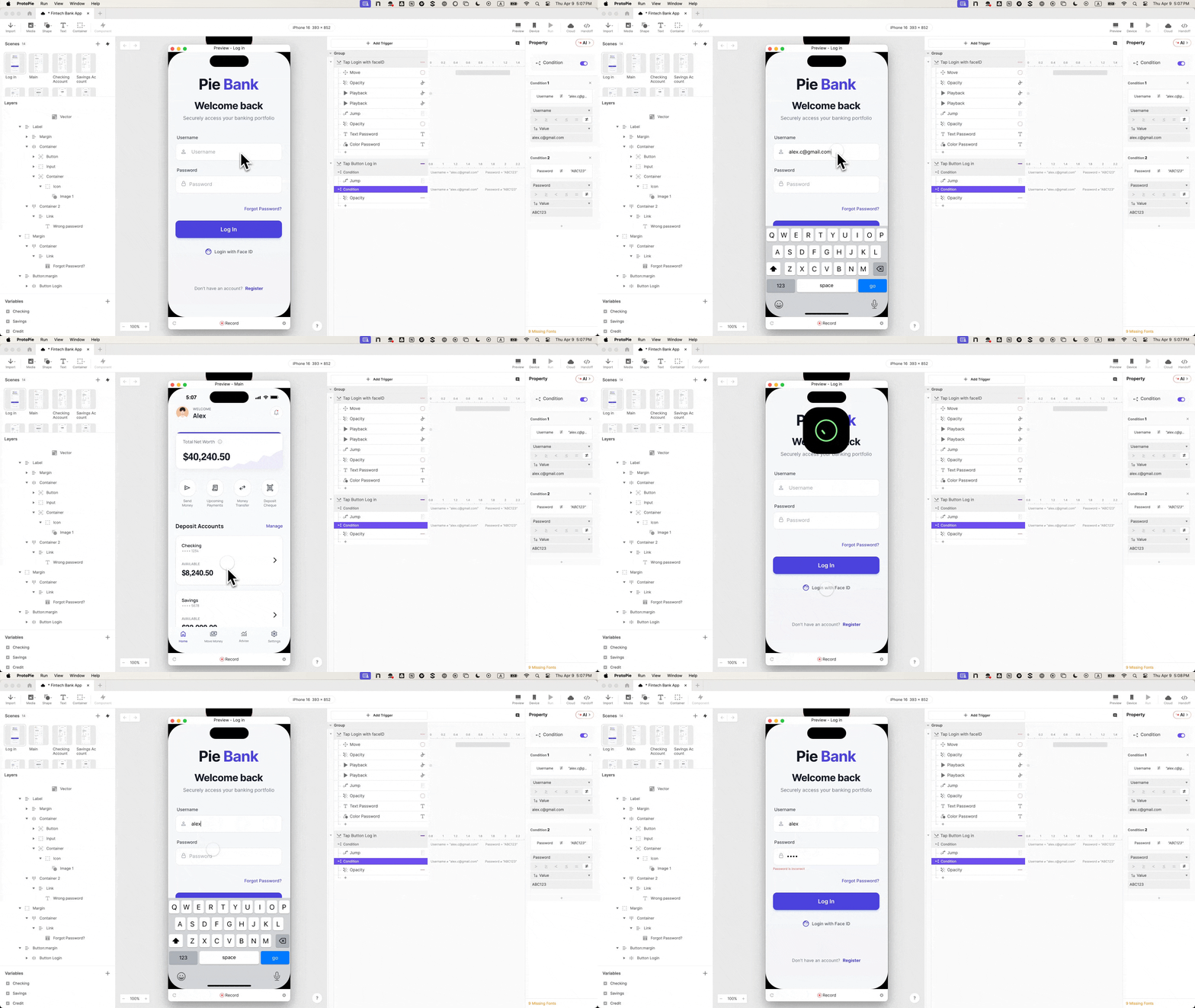
The transition from a design tool like Figma to a high-fidelity environment requires a systematic approach to asset management and logic implementation. Industry experts emphasize that the first step in this process is the preservation of layer hierarchy. When importing designs, professionals utilize "Scene" imports rather than "Flattened" images. This ensures that every element—from the "Log In" button to the individual text fields—remains a targetable, interactive layer.
The core of a functional login prototype lies in the replacement of static placeholders with dynamic input layers. In a professional workflow, these layers are configured to trigger native keyboards on mobile devices, allowing participants to type actual credentials. This small technical shift has a profound psychological impact: it anchors the participant in the reality of the task. Furthermore, the implementation of "Text Password" masking is essential for maintaining the illusion of security. Without masked fields, the prototype immediately signals its "fake" status to the user.
Data Validation and Conditional Logic: The Mechanics of Realism
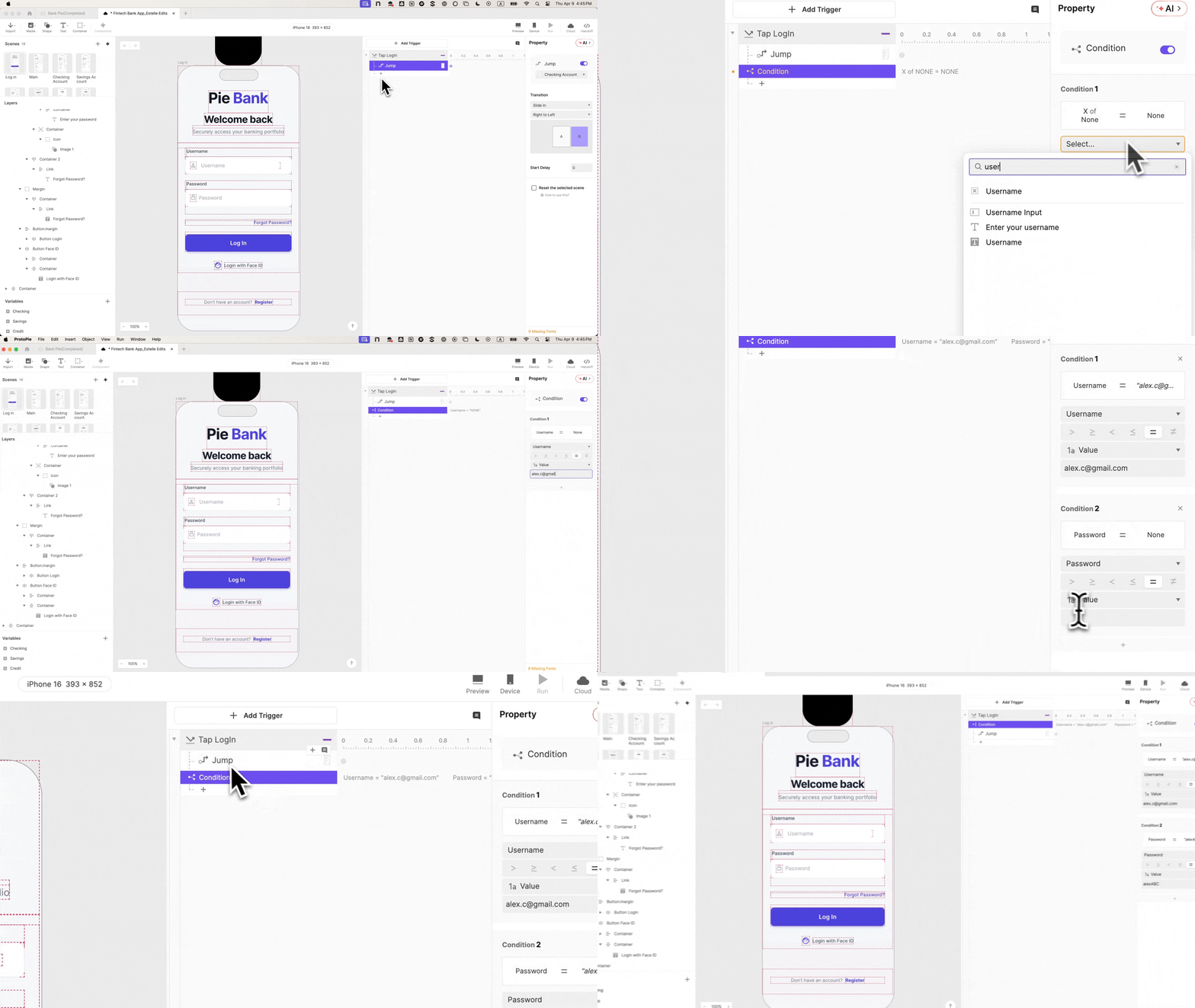
To achieve a prototype that "thinks," designers must implement variables—containers of information that the prototype remembers as the user interacts with it. By binding a "username" and "password" variable to the respective input fields, the prototype gains the ability to evaluate user behavior.
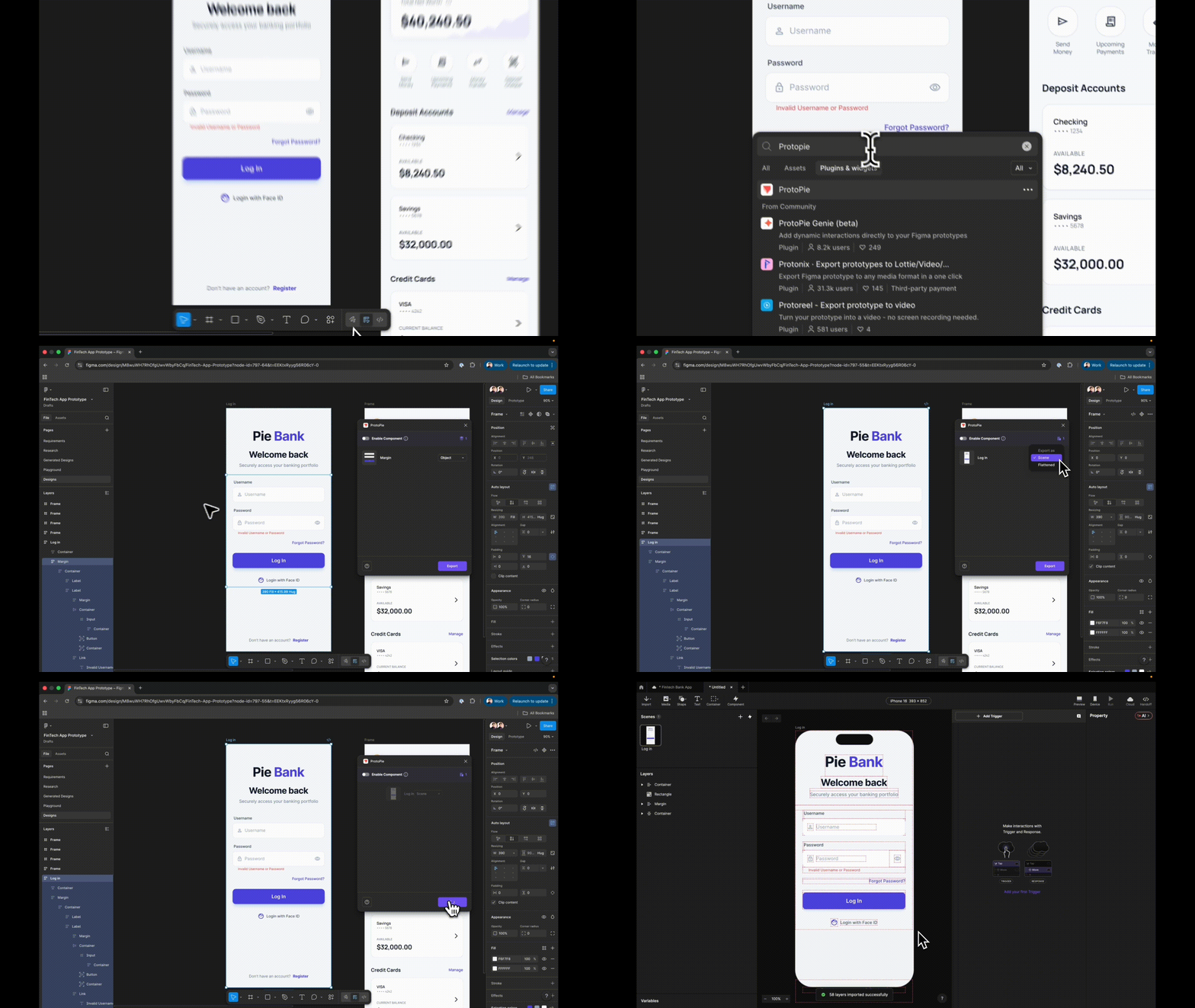
The use of conditional logic represents the highest tier of prototyping fidelity. In a standard FinTech testing scenario, a "Tap" trigger on a login button is no longer a simple link to a dashboard. Instead, it serves as a gatekeeper. By establishing conditions—such as requiring the username to equal a specific string and the password to meet a certain length—the prototype can provide two distinct outcomes:
- Success State: Navigation to the account dashboard.
- Failure State: The appearance of a live error message.
This dual-pathway approach is critical for research. It allows observers to see how a user reacts when they make a mistake. Do they read the error message? Do they attempt to reset their password? These are the high-value insights that static prototypes simply cannot capture.
Biometric Integration: The Role of Micro-interactions in Brand Perception
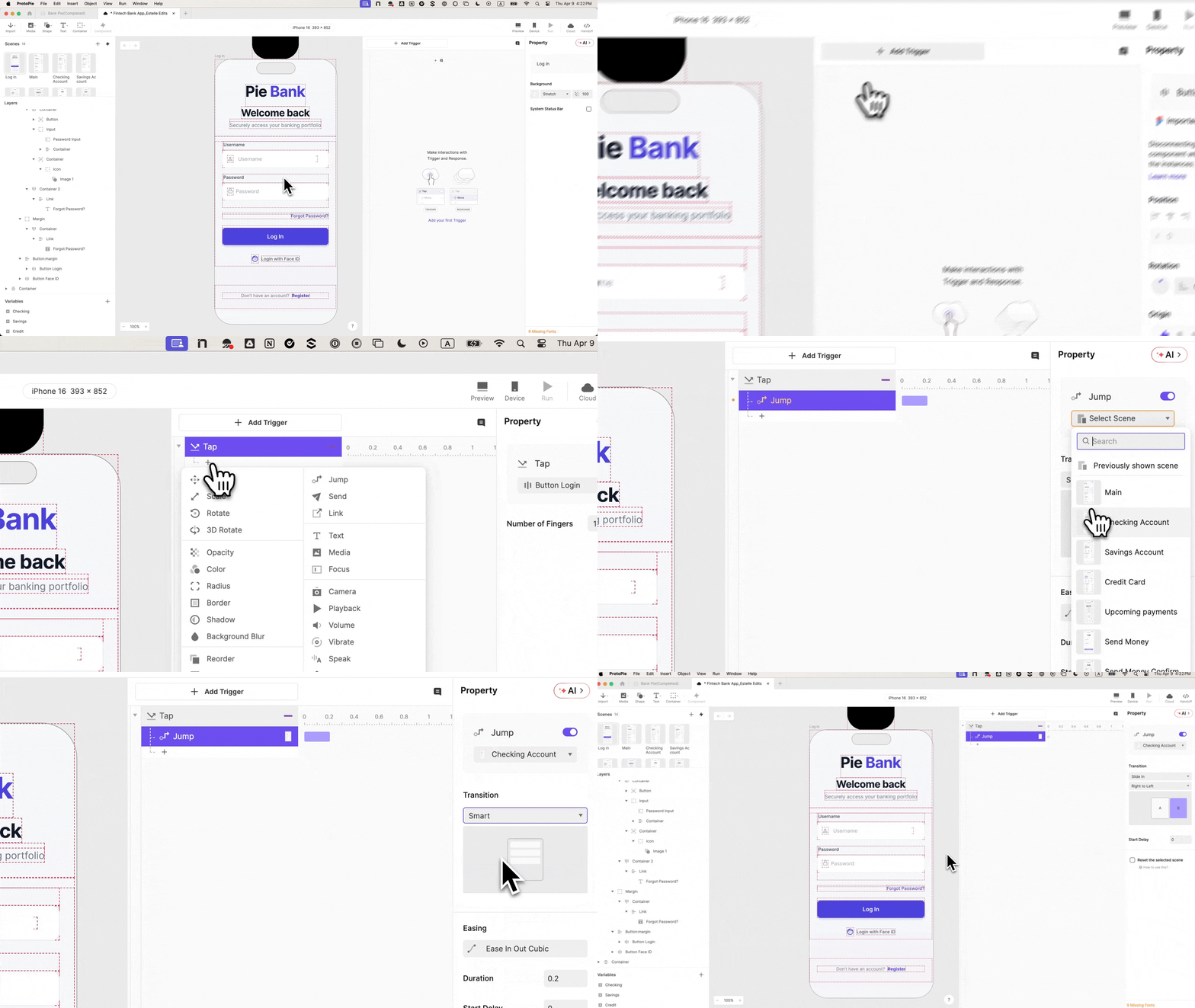
In the modern mobile landscape, Face ID and fingerprint recognition are no longer "extra" features; they are expected components of the authentication experience. For a prototype to feel "shipped," it must replicate these biometric flows with precise timing.

The integration of Lottie animations—a JSON-based animation format—allows designers to drop native-feeling Face ID sequences into their prototypes. However, the realism of these interactions depends heavily on "staggered timing." In a live iOS or Android environment, there are deliberate delays between a biometric scan, the "success" animation, and the eventual screen transition. Professional designers use millisecond-level offsets to ensure these transitions feel "native." When these micro-interactions are executed correctly, it reinforces the user’s trust in the platform’s security, leading to more authentic behavior during the remainder of the testing session.
The Impact on Engineering Handoff and Organizational Efficiency
Beyond user testing, high-fidelity prototypes serve as a vital communication tool between design and engineering departments. One of the most significant bottlenecks in product development is the "interpretation gap," where engineers must guess the intended logic behind a designer’s static screens.
By delivering a prototype that includes functional variables, conditions, and precise timing, design teams provide a clear roadmap for development. Lead engineers from major financial institutions have noted that high-fidelity prototypes can reduce "logic-related re-work" by as much as 25%. When the interaction panel of a prototype documents the exact behavior of an error state or a biometric delay, it serves as a functional specification that minimizes the need for back-and-forth clarification.
Broader Implications for the FinTech Industry
The move toward higher fidelity in prototyping is not merely a trend in design aesthetics; it is a strategic response to the increasing sophistication of the digital consumer. In an era where "deepfakes" and phishing scams are prevalent, users are more sensitive than ever to the "feel" of digital security.
For FinTech companies, the ability to validate the emotional and cognitive response of a user during the login process is a competitive advantage. It allows firms to identify friction points in the authentication flow—such as overly complex password requirements or confusing biometric prompts—well before a single line of production code is written.
Furthermore, the ROI of high-fidelity prototyping is seen in the quality of stakeholder reviews. When executives can interact with a prototype that behaves like a finished app, the conversation shifts from "How will this work?" to "How does this solve the user’s problem?" This clarity accelerates approval cycles and ensures that the final product is aligned with both business goals and user expectations.

Conclusion: Establishing the Foundation of User Trust
The login screen is more than just a gateway to a product; it is the foundation of the user’s relationship with a digital brand. In the context of financial services, this relationship is built on a bedrock of trust and reliability. By investing in high-fidelity prototypes that utilize functional inputs, conditional logic, and realistic animations, design teams can ensure that their user research is based on genuine human behavior rather than simulated responses.
As tools like ProtoPie continue to bridge the gap between design and code, the standard for what constitutes a "good" prototype will only continue to rise. For designers in the FinTech space, the message is clear: to get the right data, you must first create the right environment. Establishing trust at the login screen is the first, and perhaps most important, step in that journey.

