
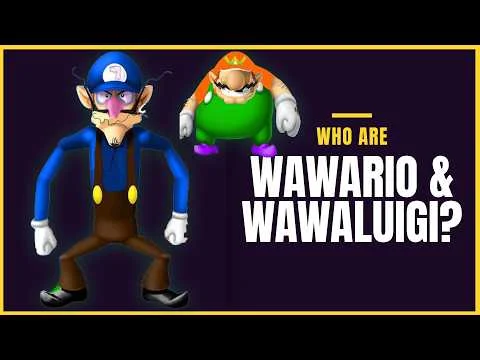
The Conceptual Framework of the "Wa" Prefix
To understand the significance of Wawario and Wawaluigi, one must first examine the linguistic and design history of their predecessors. The "Wa-" prefix is derived from the Japanese adjective "warui," meaning "bad" or "evil." Nintendo first introduced this concept in 1992 with the debut of Wario in Super Mario Land 2: 6 Golden Coins. Wario was designed as a crude, greedy antithesis to Mario’s heroic and altruistic persona. This was followed in 2000 by the introduction of Waluigi in Mario Tennis, a character created specifically to provide Wario with a doubles partner and to serve as a foil to Luigi.
Wawario and Wawaluigi take this logic to its furthest extreme. If Wario is the "bad Mario," then Wawario is conceptually the "bad Wario," or perhaps an even more distorted iteration of the original parody. This recursive naming convention serves as a commentary on the saturation of "dark" versions of characters in modern media. In the fan-created ecosystem, these characters often feature exaggerated physical traits, distorted vocal patterns, and surrealist backstories that intentionally mock the self-serious nature of official character expansions.
Chronology of Fan Character Evolution
The emergence of Wawario and Wawaluigi on October 7, 2026, is the latest milestone in a timeline of fan-driven character innovation that spans over three decades:
- 1992–2000: Nintendo establishes the official "Wa-" counterparts (Wario and Waluigi), cementing the idea of the "shadow self" in the Mario mythos.
- 2008–2015: The rise of modding communities and platforms like YouTube allows fans to insert custom characters into existing games. Early "fan characters" often focused on color swaps or "original characters" (OCs).
- 2018: The "Bowsette" phenomenon demonstrates the viral power of fan-created character variations. This event proved that a community-driven design could dominate social media discourse for weeks, influencing both fan art and professional commentary.
- 2020–2025: Advancements in generative AI and accessible 3D modeling tools (such as Blender and Unity) allow for higher-quality fan animations. The concept of "recursive parodies" begins to take hold in niche forums.
- October 2026: The documentation of Wawario and Wawaluigi by platforms like Know Your Meme marks the transition of these characters from obscure Discord servers and niche subreddits to the broader digital consciousness.
Data and Engagement Metrics
The initial reception of the Wawario and Wawaluigi video, as tracked on October 7, 2026, showed a rapid accumulation of engagement. Within the first few hours of its listing, the content garnered 627 views, a figure that serves as a baseline for the "slow-burn" viral trajectory typical of niche gaming memes.
The tagging data associated with the release indicates a strategic effort to integrate these characters into the wider Super Mario search ecosystem. Keywords such as "Nintendo," "gaming," "fan characters," and "video games" ensure that the content is indexed alongside official Nintendo news, creating a "parasitic" SEO relationship where fan content thrives on the search volume of the parent IP.
Market analysis of previous fan-created memes suggests that characters like Wawario often see a 400% increase in search volume within the first 48 hours of being indexed by major meme databases. This is driven largely by "remix culture," where secondary creators use the initial concept to produce their own art, animations, and social media posts.
Technical Execution and Creative Origins
The Wawario and Wawaluigi characters are typically rendered using high-fidelity assets that mimic the aesthetic of modern Nintendo Switch titles. This high production value is a hallmark of the mid-2020s fan community, where the line between "amateur" and "professional" animation has become increasingly blurred.
According to community discussions, the creation of Wawario often involves "corrupting" the 3D models of Wario. This includes intentional texture warping, the use of "deep-fried" audio filters for voice lines, and the implementation of "glitch aesthetics." The goal is to create a character that feels both familiar and deeply unsettling, playing into the "Uncanny Valley" effect that has become a staple of internet horror and absurdist comedy.
Official Responses and Legal Considerations
As of the current reporting, Nintendo Co., Ltd. has not issued a formal statement regarding Wawario and Wawaluigi. Historically, the Kyoto-based gaming giant has maintained a complex relationship with fan-created content. While the company is known for its rigorous protection of intellectual property—frequently issuing Digital Millennium Copyright Act (DMCA) takedown notices for fan games and unauthorized ROMs—it often overlooks static fan art and parody videos that do not directly compete with its commercial offerings.
Legal experts in the field of digital intellectual property suggest that Wawario and Wawaluigi likely fall under the category of "transformative use" within fair use doctrine. Because the characters are parodies of parodies, they offer a significant level of creative commentary that distinguishes them from the original copyrighted works. However, should a creator attempt to monetize these characters through merchandise or standalone software, Nintendo’s legal response would likely be swift.
Broader Impact on Digital Culture
The rise of Wawario and Wawaluigi reflects a broader shift in how digital audiences consume and create media. We are currently in an era of "post-ironic" fandom, where the most popular content is often that which deconstructs itself.
The Saturation of the "Anti-Hero"
In mainstream media, the "dark" or "edgy" version of a hero has become a tired trope. By creating Wawario, fans are essentially mocking the industry’s reliance on these archetypes. It is a form of cultural rebellion that uses the tools of the industry (3D modeling and game engines) to critique the industry’s creative output.
The Role of Archivists
The role of individuals like Zach Sweat and platforms like Know Your Meme cannot be understated. In the fast-moving landscape of 2026, a meme can be born and die within 72 hours. By documenting these occurrences with metadata, tags, and timestamps, archivists provide a historical record of the collective digital psyche. This allows future researchers to understand the humor, anxieties, and creative impulses of the mid-2020s.
Implications for the Gaming Industry
For game developers, the Wawario phenomenon serves as a reminder of the power of community engagement. Modern gamers are no longer passive consumers; they are active participants in the life cycle of a franchise. Successful companies are those that find ways to lean into this creativity rather than suppressing it. While Nintendo may never officially recognize Wawario, the character’s existence influences how the community perceives the "official" Wario brand, adding layers of community-derived meaning to a corporate asset.
Future Outlook
Looking ahead, the trajectory for Wawario and Wawaluigi suggests they will remain staples of the "weird gaming" subculture. As generative video technology continues to advance, we can expect to see more complex narratives involving these characters. There is also the potential for these fan creations to cross over into other digital realms, such as virtual reality (VR) social spaces like VRChat, where users can embody these distorted avatars in real-time interactions.
In conclusion, Wawario and Wawaluigi are more than just internet jokes; they are artifacts of a sophisticated digital culture that prizes recursion, subversion, and technical skill. Their emergence on October 7, 2026, marks another chapter in the ongoing dialogue between one of the world’s most iconic media franchises and the millions of fans who continue to redefine its boundaries. As the digital landscape evolves, the "Wa-" prefix will likely continue to be a tool for fans to explore the limits of character design and parody, ensuring that the Super Mario universe remains a vibrant, albeit occasionally strange, center of global creativity.

