
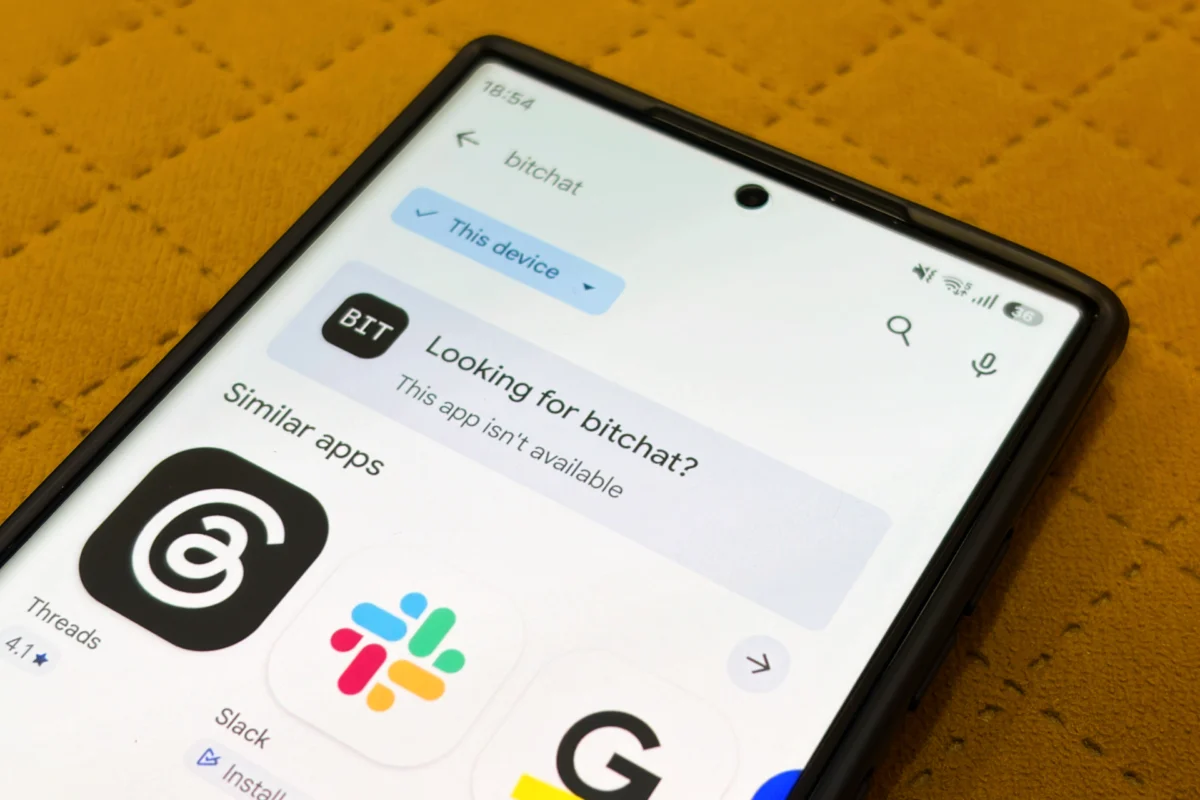
Bitchat, the pioneering decentralized messaging application developed by Jack Dorsey, designed for communication independent of traditional internet infrastructure, has been removed from Apple and Google app stores within India. This significant development follows months of escalating attempts by New Delhi to restrict access to the open-source software, raising profound questions about digital freedom, government oversight, and the future of decentralized technologies in highly regulated environments. The removal coincides with a period of heightened social unrest in India, marked by youth-led protests and concurrent government-ordered internet shutdowns.
The former Twitter CEO, Jack Dorsey, confirmed the app’s removal on Saturday, revealing that the Indian government had issued a direct order to Apple for Bitchat’s delisting from its App Store in the country. Dorsey shared a notice from Apple, which cited a demand from India’s Ministry of Electronics and Information Technology (MeitY) under Section 69A of the Information Technology Act. This specific provision is India’s primary legal instrument for government-mandated online content blocking. While Bitchat remains accessible on Apple’s App Store outside India, the notice indicated that even access via its TestFlight beta-testing service would be blocked within the country’s borders. Concurrently, TechCrunch verified that Bitchat was no longer available for download via Google Play in India, and its official website had become inaccessible across a variety of Indian internet service providers. The extent to which Google and local ISPs received similar direct orders from the federal government was not immediately clear, as neither Apple, Google, nor India’s IT ministry responded to requests for comment regarding these latest actions.
The Genesis and Design Philosophy of Bitchat
Bitchat, launched in July of the previous year, represents a paradigm shift in digital communication. Its core innovation lies in its utilization of Bluetooth mesh networking, enabling nearby devices to exchange encrypted messages without any reliance on conventional cellular networks, internet access, or centralized servers. This peer-to-peer architecture grants Bitchat a unique resilience, particularly in regions prone to internet shutdowns or where surveillance is a concern. Jack Dorsey, known for his advocacy of decentralized platforms and free speech principles, spearheaded the project through his company, Block (formerly Square), aiming to create a communication tool impervious to censorship and external control. The app’s open-source nature further underscores its commitment to transparency and community-driven development, allowing anyone to inspect its code and contribute to its improvement.
The very features that make Bitchat appealing to privacy advocates and users in restrictive environments are precisely what make it a target for governments seeking to maintain control over information flow and public discourse. Its ability to facilitate communication offline and its end-to-end encryption pose significant challenges for law enforcement agencies accustomed to traditional methods of communication interception and user tracing.
A Chronology of Escalating Restrictions
The recent removal from app stores is not an isolated incident but the latest in a series of actions taken by Indian authorities against Bitchat. The government’s intent to curb the app’s reach became evident much earlier:
- July 2025: Bitchat officially launches, offering a new, decentralized communication alternative.
- July 2026: Jack Dorsey publicly disclosed that Indian authorities had ordered GitHub, the popular code hosting platform, to take down repositories associated with the open-source messaging app. This move sparked considerable debate among digital rights advocates and legal experts regarding the legal basis for restricting software purely based on its functional design rather than specific unlawful content.
- July 2026 Protests: During a period of significant protests in India, demonstrators reportedly turned to Bitchat, along with rival app Briar, after authorities suspended internet services in affected areas. This demonstrated the app’s practical utility as a tool for organizing and communicating during government-imposed communication blackouts.
- Post-Protest Surge: Market intelligence firm Sensor Tower reported a dramatic surge in Bitchat downloads in India between July 17 and July 23, 2026. The country accounted for approximately 85% of the app’s global downloads during this period, a staggering increase from roughly 1% in the preceding 30 days. This data unequivocally linked the app’s growing popularity to its perceived utility during times of civil unrest and internet censorship.
- October 2026 Protests and Internet Shutdowns: A fresh wave of youth-led protests erupted across India, particularly in New Delhi, concerning alleged manipulation of voter rolls and demanding the resignation of the chief election commissioner. In response, police detained several individuals, and authorities suspended internet services around New Delhi’s Jantar Mantar for 12 hours on Friday, October 3rd. It is against this backdrop of ongoing protests and government efforts to control information that the latest order for Bitchat’s removal from app stores was issued.
- October 2026 App Store Removal: The app is delisted from Apple and Google app stores in India, cementing the government’s intent to prevent its use.
The Legal Battleground: Section 69A and its Interpretation
The Indian government’s actions against Bitchat are rooted in its broad powers to regulate online content and services. The initial order to GitHub in July 2026 highlighted concerns that Bitchat’s architecture made it exceedingly difficult for law enforcement agencies to intercept communications or trace users. Authorities also specifically pointed to its critical ability to continue operating during internet shutdowns, implying that this functionality itself was problematic from a national security or public order perspective. That initial order invoked a provision of India’s information technology law concerning intermediaries and their liability for third-party content.
However, the latest directive to Apple to remove Bitchat from its App Store explicitly cites Section 69A of the Information Technology Act. This section grants the government the power to issue directions to block public access to any information through any computer resource "in the interest of sovereignty and integrity of India, defence of India, security of the State, friendly relations with foreign States or public order or for preventing incitement to the commission of any cognizable offence relating to above."
Digital rights advocacy groups, such as the New Delhi-based Internet Freedom Foundation (IFF), have vehemently challenged the constitutionality of this latest order. The IFF argued that Section 69A is intended to allow the government to block unlawful information – specific content deemed illegal – rather than an entire messaging application solely due to its inherent functionality, such as its ability to operate during internet shutdowns. They contend that the government is misapplying a content-blocking provision to block a communication tool itself. Furthermore, the IFF criticized the lack of transparency, noting that neither the blocking order nor any allegedly illegal content cited as the basis for the action had been made public, thereby denying due process and the ability to challenge the decision effectively. This lack of transparency has been a recurring criticism of internet blocking orders in India, making it difficult for affected parties to understand the precise legal justification or seek recourse.
Broader Context: Internet Shutdowns and Digital Authoritarianism in India
India has a documented history of imposing internet shutdowns, often in response to protests or perceived threats to public order. According to reports from organizations like Access Now and the Software Freedom Law Centre, India consistently leads the world in the number of internet shutdowns annually. These shutdowns, ranging from temporary mobile data restrictions to complete communication blackouts, are frequently justified under the guise of maintaining law and order, preventing the spread of misinformation, or curbing incitement to violence. However, critics argue that they disproportionately affect ordinary citizens, disrupt economic activity, and stifle legitimate dissent.
The government’s crackdown on Bitchat must be understood within this broader context. As citizens increasingly rely on digital tools for communication and organization, particularly during times of protest, the government’s efforts to control these channels intensify. Apps like Bitchat, which circumvent traditional network infrastructure, represent a direct challenge to the state’s ability to impose communication blackouts and monitor citizen activity. The actions taken against Bitchat reflect a global trend where governments are increasingly seeking to regulate and, in some cases, suppress privacy-enhancing technologies and decentralized platforms.
Implications for Digital Rights and the Future of Decentralized Tech
The removal of Bitchat from Indian app stores carries significant implications:
- Erosion of Digital Rights: This move is seen by digital rights advocates as a further erosion of freedom of speech and expression in India. By targeting an application based on its functionality rather than specific content, the government sets a concerning precedent that could be applied to other privacy-focused or decentralized technologies.
- Challenges for Decentralized Platforms: For developers of decentralized applications (dApps) and advocates of Web3 technologies, the Bitchat incident highlights the formidable challenges of operating in jurisdictions with stringent internet regulations. Even open-source, peer-to-peer applications can be rendered inaccessible if major distribution platforms like Apple and Google are compelled to comply with government orders.
- The "Cat and Mouse" Game: The ongoing struggle between authorities seeking to control information and citizens seeking unrestricted communication is likely to intensify. As governments develop more sophisticated methods of censorship and surveillance, developers will continue to innovate with tools designed to circumvent these controls.
- Economic and Innovation Impact: Such restrictions could deter technology companies from launching or expanding services in India, a rapidly growing digital market. The uncertainty surrounding legal frameworks and the risk of arbitrary blocking orders can stifle innovation and investment in privacy-centric technologies.
- Global Precedent: India’s actions could set a precedent for other nations grappling with similar issues of digital control and national security, potentially leading to a fragmentation of the global internet and differing standards for digital freedom.
The incident underscores the growing tension between national security concerns, often broadly defined by governments, and fundamental rights to privacy and freedom of expression in the digital age. While authorities cite challenges in law enforcement and the potential for misuse, critics argue that these concerns should not supersede the rights of citizens to communicate securely and without fear of surveillance. The Bitchat case is a stark reminder of the ongoing global debate surrounding the balance between state control and individual digital liberties, a debate that is far from settled.

