
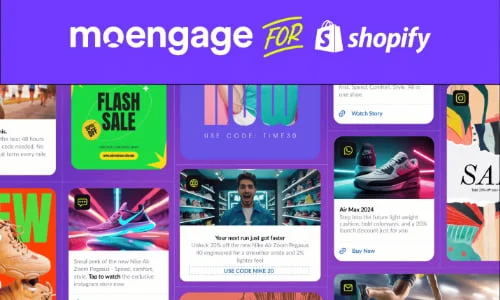
The e-commerce sector is experiencing a rapid transformation, with a flurry of new service launches aimed at empowering merchants to navigate an increasingly complex digital marketplace. This week’s rundown highlights significant advancements across various facets of online retail, including innovative website design tools, frictionless return processes, sophisticated AI-driven advertising, expedited delivery options, enhanced product discovery mechanisms, and expanded multichannel selling capabilities. These developments underscore a growing industry-wide focus on leveraging technology to improve operational efficiency, customer experience, and ultimately, sales performance.
The impetus behind this surge of innovation can be traced to several converging trends. The ongoing evolution of consumer expectations, demanding faster deliveries, personalized experiences, and seamless interactions, has pushed businesses to adopt more advanced solutions. Concurrently, the widespread integration of Artificial Intelligence (AI) is revolutionizing how businesses operate, from automating mundane tasks to providing sophisticated insights. Furthermore, the competitive pressures within the e-commerce space necessitate continuous adaptation and the adoption of cutting-edge tools to maintain a competitive edge.
Revolutionizing Store Design and User Experience
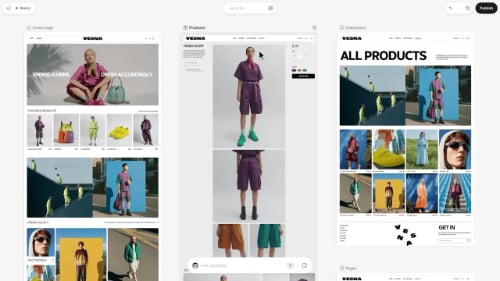
In a significant move to democratize sophisticated store design, Shopify has introduced Canvas, a groundbreaking design surface integrated with its AI agent, Sidekick. This feature empowers merchants, regardless of their technical expertise, to conceptualize and build their online stores with unprecedented ease. Merchants can now visualize page layouts and grasp the overall aesthetic of their store before diving into granular details. The interactive nature of Canvas allows for direct manipulation of elements or collaboration with Sidekick through a conversational interface. As the design progresses, Sidekick provides real-time validation and feedback through screenshots, ensuring that the evolving store adheres to best practices and design principles. This AI-assisted design process promises to reduce the time and cost associated with creating visually appealing and functional e-commerce storefronts, potentially leading to higher conversion rates and improved customer engagement. The implications are far-reaching, as it lowers the barrier to entry for small businesses and enables larger enterprises to iterate on designs more rapidly.

Streamlining Logistics and Marketplace Integration
The complexities of shipping and logistics remain a critical challenge for e-commerce merchants. In response, ShipStation has launched Ship with Walmart, a strategic integration designed to benefit sellers on the Walmart Marketplace. This new service grants Walmart Marketplace sellers direct access to negotiated shipping rates within the ShipStation platform for their U.S. domestic shipments. The integration streamlines the process by allowing sellers to purchase shipping labels, access seller protections, and manage their Marketplace orders directly within their existing ShipStation workflow. This move is particularly significant given Walmart’s growing prominence as an e-commerce marketplace. By facilitating more cost-effective and efficient shipping, ShipStation and Walmart are aiming to boost the competitiveness of sellers on the platform, potentially leading to increased sales volume and improved profit margins for these businesses. This partnership highlights a growing trend of direct integrations between logistics providers and major online marketplaces, simplifying cross-platform selling.
The Rise of Agentic Commerce and AI-Powered Discovery
Artificial intelligence is no longer just a buzzword; it’s becoming an integral part of the commerce experience. TikTok is at the forefront of this shift with its unveiling of agentic commerce shopping experiences. These new features are designed to enhance both product discovery and transaction processes. The introduction of "Buy Direct" allows customers to complete purchases within the TikTok app, eliminating the need to navigate away to external websites. Complementing this is "Shopping Assistant," a conversational AI agent that provides real-time assistance to shoppers, offering details on products, shipping, sizing, availability, and purchasing options. TikTok is also leveraging AI for lead generation, signaling a broader strategy to embed commerce more deeply into its platform. This development is particularly noteworthy given TikTok’s massive user base and its increasing influence on consumer trends. The integration of AI-driven shopping experiences could redefine how users discover and purchase products on social media platforms, potentially leading to higher impulse purchases and a more engaging shopping journey.
Amazon Ads is also embracing AI with the introduction of Ads Agent, an agentic AI platform designed to simplify and optimize advertising campaigns. Ads Agent consolidates various campaign types, including sponsored ads, full-funnel campaigns, and display, video, and audio advertising, into a unified platform. This allows advertisers to access information, receive decision support, and take direct action within a single interface. Advertisers have the flexibility to utilize manual campaign-building tools, delegate optimization to Amazon’s AI, or employ a hybrid approach. This move by Amazon underscores the increasing sophistication of AI in programmatic advertising, promising greater efficiency and potentially improved return on ad spend for businesses advertising on the platform. The ability for AI to manage and optimize campaigns can be particularly beneficial for smaller businesses with limited marketing resources.
In a similar vein, Swap has acquired Vizby to bolster its AI-powered discovery capabilities. Swap, which positions itself as a discovery-to-delivery e-commerce platform, is expanding its offerings by integrating Vizby, a Shopify-native AI visibility tool. This acquisition signifies a strategic push into enhancing product discovery through AI, building upon Swap’s existing agentic Storefront and Checkout+ solutions. The integration of advanced AI into product discovery aims to help consumers find relevant products more efficiently, thereby improving conversion rates and customer satisfaction. For merchants, this means better visibility for their products to the right audiences.
Contentstack has launched Canoe, an AI visibility tool that provides brands with insights into how AI search engines describe them and their competitors. Canoe analyzes a brand’s URL to identify the business, its products, target buyer personas, and up to ten key competitors. Brand users can then review and edit this information, after which Canoe generates potential buyer questions, categorizing them by shopping stage, from awareness through consideration and decision. This tool addresses a critical need for brands to understand their digital footprint and how they are perceived by AI-driven search algorithms, which are increasingly influencing consumer research and purchasing decisions.
Enhancing Customer Experience and Operational Efficiency
The customer return process is often a pain point for both consumers and businesses. UPS, through its Happy Returns service, has partnered with TikTok Shop to offer a no-box, no-label returns service. This initiative aims to simplify the return process for participating U.S. sellers on TikTok Shop, regardless of whether they handle fulfillment in-house or outsource it. The convenience of not requiring customers to box and label items can lead to higher customer satisfaction and potentially reduce the friction associated with online purchases, thereby encouraging more consumers to shop online. This move aligns with the growing trend towards more sustainable and customer-centric return policies.
Helppli has launched HelppliX Agent, a configurable AI agent designed to manage customer conversations across various channels, including voice, WhatsApp, SMS, web chat, and email. This AI-powered customer service platform allows merchants to tailor the agent for specific roles, such as a receptionist, sales assistant, or support agent. The ability to deploy AI across multiple communication touchpoints can significantly enhance customer service efficiency, reduce response times, and free up human agents to handle more complex inquiries. This is crucial in an era where instant customer support is becoming an expectation.
uParcel has introduced "Complete Marketplace Outsource Solutions," a comprehensive service designed to manage sellers’ marketplace businesses end-to-end. Based in Singapore, uParcel’s offering includes building and optimizing storefronts on platforms like Shopee, Lazada, and TikTok Shop, managing listings, orders, promotions, advertising, and customer service. They also handle warehousing, packing, and delivery from their own facilities. This full-service solution is particularly beneficial for sellers who wish to expand their presence on multiple marketplaces without the burden of managing the complex operational aspects themselves.
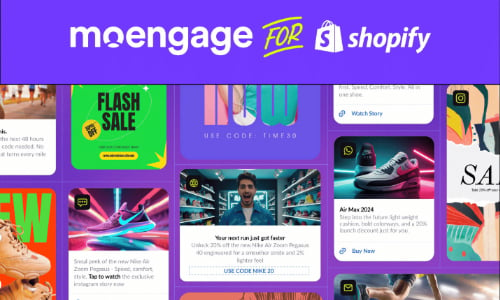
MoEngage has launched MoEngage for Shopify, a customer engagement platform that integrates natively with Shopify. This integration leverages agentic AI capabilities and unifies merchant data across multiple channels, including email, SMS, push notifications, WhatsApp, and on-site personalization. Marketing teams can use this platform to automate routine tasks such as drafting campaigns, generating reports, and tailoring messaging for different regions. This deep integration allows for more sophisticated and personalized customer engagement strategies, driving loyalty and repeat purchases.
miniOrange has introduced a Secure MCP Server for WordPress, designed to provide governance and control over AI agents interacting with WordPress websites. This server allows businesses to define the capabilities AI agents can access, apply role-based permissions, implement human review for configured actions, and monitor agent activity through a centralized dashboard. In a landscape where AI agents are increasingly being integrated into websites, this tool offers a crucial layer of security and control, mitigating potential risks and ensuring that AI operates within defined parameters.
Commerce, the parent company of Feedonomics and BigCommerce, has introduced data enrichment capabilities for both platforms. These new features aim to transform product catalogs into rich, AI-ready product intelligence at scale for B2C and B2B merchants. Feedonomics Enrichment and BigCommerce Catalog Enrichment generate product titles, descriptions, feature bullets, FAQs, and search engine metadata, as well as structured data facts, snippets, and Q&A fields. This enhanced data quality is essential for improving product discoverability, optimizing SEO, and powering AI-driven commerce experiences.
partnrUP has expanded its agentic creator commerce platform with add-ons for affiliate marketing, Shopify, Amazon, and retail integration. These new capabilities include automated affiliate commission payouts, Shopify product fulfillment for gifting and seeding programs, creator video syndication to Amazon product detail pages, and sales tracking across various retailers. This expansion aims to bridge the gap between creators and commerce, enabling brands to leverage influencer marketing more effectively and track its impact on sales across multiple channels.
Selro has integrated Claude AI to assist multichannel sellers in creating product listings more efficiently. Selro, a platform for multichannel inventory and order management, has incorporated Claude AI to enable sellers to generate product titles, descriptions, and summary bullet points directly within the Selro platform. This integration streamlines the process of creating compelling product listings, which is vital for attracting customers and driving sales across various online marketplaces.
Expanding Delivery and Live Commerce Capabilities
The demand for faster delivery options continues to grow. In a notable development, the U.S. Postal Service (USPS) and Amazon are partnering on a same-day delivery pilot. Under this pilot program, Amazon packages arriving at USPS facilities between 12 p.m. and 1 p.m. local time will be sorted and delivered by mail carriers on the same day, between 2 p.m. and 8 p.m. Each USPS location participating in the pilot has a limit of 200 packages and three required delivery routes. This collaboration could significantly enhance Amazon’s delivery speed in certain areas and provide the USPS with additional revenue streams, showcasing a potential new model for logistics partnerships.
ThredUp is expanding its live shopping presence by launching on Whatnot, a popular live-commerce platform. This move signals ThredUp’s commitment to leveraging live shopping to engage customers and drive sales for its recommerce offerings. The platform plans to host live shows from its distribution centers in Atlanta and Dallas and is exploring ways to support Whatnot’s seller community. Live commerce has seen a surge in popularity, particularly for visual and interactive product showcases, and its application to the recommerce market is a significant development.
Strengthening Supply Chain Security and Global Reach
In a move to enhance security and mitigate risks across the supply chain, UPS has launched Secure Commerce, a suite of tools designed for proactive risk mitigation in shipping and e-commerce. This suite includes InsureShield Shipping Insurance for shipment protection and claims recovery, Parcel Pro for high-value and specialty shipments, and CommerceShield technology for broader risk mitigation. These tools provide businesses with enhanced visibility into their entire supply chain, enabling them to make more informed decisions throughout the delivery process. This comprehensive approach to supply chain security is crucial in an environment prone to fraud and disruptions.
Easyship has expanded its export infrastructure for eBay U.K. shipping, enabling sellers to reach a wider global audience. The expanded infrastructure provides hub processing, bulk label generation, compliance screening, carrier integrations, and customs documentation, all optimized for high-volume marketplace order flow. eBay sellers in the U.K. can now ship to 195 countries and territories, with Easyship’s fulfillment infrastructure in the U.K., Canada, and the U.S. ensuring export clearance for every parcel. This expansion is a significant step for U.K. sellers looking to tap into international markets, reducing the complexities of cross-border e-commerce.
The continuous introduction of these services underscores a dynamic e-commerce ecosystem where technology, particularly AI, is playing an increasingly pivotal role in shaping the future of retail. Merchants who strategically adopt these new tools and platforms are likely to find themselves better positioned to meet evolving consumer demands and achieve sustainable growth in the years to come.

