
The landscape of e-commerce pricing is undergoing a profound transformation, moving away from rigid, uniform strategies towards sophisticated systems that adapt in real-time to individual shopper behavior and contextual factors. This evolution, powered by advancements in Artificial Intelligence (AI), promises to not only enhance customer engagement but, crucially, to protect and even improve profit margins for online retailers of all sizes. Historically, the practice of offering varying prices for the same product, through promotions, coupon codes, and bundled deals, was a common, albeit often opaque, feature of retail. However, AI is now enabling these price variations to become intentional, meticulously measured, and strategically optimized.
For years, large enterprise retailers have leveraged the benefits of dynamic pricing, a strategy that involves adjusting prices based on a multitude of factors, including demand, competitor pricing, inventory levels, and time of day. This capability was largely the domain of big players due to significant investments in complex technological infrastructure and specialized data science expertise. Yet, the democratization of AI tools, including readily available "do-it-yourself" solutions, is now placing these powerful pricing capabilities within reach of smaller and medium-sized e-commerce merchants. The implications are far-reaching, enabling real-time pricing adjustments informed by granular insights into shopper intent, the timing of their interactions, and their historical engagement with a brand. The focus shifts from simply driving short-term conversions to a more holistic approach of preserving profitability across a wide spectrum of transactions.
The Rise of AI-Powered Offer-and-Price Systems
The emergence of AI agents is fundamentally reshaping e-commerce pricing into an intelligent "offer-and-price" system. This sophisticated mechanism continuously evaluates each individual shopping session, making immediate decisions on whether to intervene with a tailored pricing strategy. At its core, such a system aims to answer three critical questions in real-time for every potential customer:
- Is this shopper price-sensitive? By analyzing past purchase history, browsing patterns, cart abandonment behavior, and even referral sources, AI can infer a customer’s propensity to respond to discounts or special offers.
- What is the optimal price point for this specific transaction? This involves considering factors like the product’s current demand, inventory levels, competitor pricing, and the perceived value to the individual shopper based on their engagement.
- What is the minimum acceptable price that still guarantees a healthy profit margin? The AI’s objective is to find the sweet spot that maximizes the likelihood of conversion while safeguarding profitability, ensuring that each sale contributes positively to the bottom line.
This dynamic decision-making process marks a significant departure from static pricing models. Instead of applying broad, rule-based promotions that might unnecessarily reduce revenue from customers who would have purchased at full price, merchants can now strategically deploy incentives. These can be targeted exclusively at shoppers who are most likely to be influenced by them, thereby preserving full-price transactions wherever possible. Over time, the intelligent application of these AI-driven strategies is expected to lead to a reduction in the frequency of blanket discounts and a tangible improvement in the margin generated per order.
Addressing Consumer Perception and Building Trust
Despite the clear economic advantages, the concept of dynamic pricing, especially when personalized, can evoke apprehension among consumers. The practice of displaying different prices for the same item can, if not handled with care, create friction, dissatisfaction, or even anger. Critics often label such personalized offers as "surveillance pricing," arguing that the continuous monitoring of behavioral signals—such as repeat visits, the depth of product exploration, and the origin of traffic—is intrusive and potentially exploitative.
While many retailers recognize the legitimate concerns surrounding consumer perception, the issue remains a delicate balancing act. Shoppers do not solely evaluate prices through a purely economic lens; their judgments are also influenced by perceptions of fairness, consistency, and the perceived intent behind pricing strategies.
Bernard Meyer, AI operations manager at Omnisend, a prominent marketing platform, articulates this concern, stating, "Consumers might have made peace with AI helping them shop, but there’s a very clear line between assistance and manipulation. The practice of using AI to adjust prices based on individual behavior has drawn understandable criticism." He further elaborates on consumer sentiment, noting, "Our data shows consumers will share personal information if it helps them make better decisions, but not if it’s used against them. After years of inflation and constant price changes, people have a much clearer sense of what’s reasonable, and they’re far less tolerant of anything that looks like they’re being taken advantage of."
This perspective highlights the importance of framing and execution. While directly altering list prices based on individual data can be perceived negatively, the use of discounts and perks often garners greater acceptance. The underlying goal—preserving margins—remains the same, but a system that intelligently optimizes when to offer discounts, rather than simply lowering the base price, often feels more palatable to consumers. This approach allows merchants to reserve incentives for targeted shoppers, a strategy that, in itself, can significantly bolster margins by preventing unnecessary revenue erosion.
The Technological Underpinnings and Accessibility
The shift towards AI-driven dynamic pricing is underpinned by significant advancements in data analytics, machine learning algorithms, and cloud computing. These technologies enable the processing of vast amounts of real-time data, including website traffic, user interaction logs, historical purchase data, and external market signals. Algorithms can then identify complex patterns and predict future behavior with increasing accuracy.
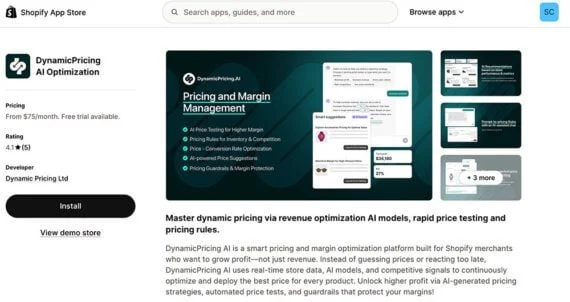
A notable example of this trend is the availability of AI-powered pricing tools on platforms like the Shopify App Store. Applications such as DynamicPricing.ai are emerging, offering smaller businesses access to sophisticated optimization capabilities that were once exclusive to large corporations. These tools typically integrate seamlessly with existing e-commerce platforms, allowing merchants to configure their pricing strategies based on predefined parameters and AI-driven recommendations.

The typical workflow for such tools involves:
- Data Integration: Connecting to the e-commerce platform to ingest data on products, orders, customers, and website interactions.
- Behavioral Analysis: Employing AI algorithms to analyze shopper behavior, identifying patterns related to price sensitivity, urgency, and product interest.
- Contextual Evaluation: Considering external factors such as time of day, day of the week, seasonality, and competitor pricing.
- Pricing Recommendation/Adjustment: Generating real-time pricing recommendations or automatically adjusting prices based on the analyzed data and predefined business rules.
- Performance Monitoring: Providing analytics dashboards to track the impact of pricing strategies on sales, conversions, and profit margins.
The accessibility of these solutions is a critical development. For instance, a Shopify merchant might use an AI pricing app to automatically offer a personalized discount to a returning customer who has browsed a specific product multiple times but hasn’t yet purchased. Conversely, the same system might maintain a higher price for a first-time visitor showing strong purchase intent, thus maximizing the profit from that interaction.
Historical Context and the Evolution of Pricing Strategies
The concept of adjusting prices based on demand is not new. Economists have long understood the principles of supply and demand, and retailers have historically employed strategies like seasonal sales and clearance events to manage inventory and maximize revenue. However, these methods were often reactive and based on broad market trends rather than granular, individual customer data.
The digital age brought about the first wave of sophisticated dynamic pricing, particularly in sectors like airlines and hotels, where inventory is perishable and demand fluctuates dramatically. Early e-commerce pioneers began experimenting with personalized pricing, but the complexity and cost of the technology limited its widespread adoption.
The recent surge in AI capabilities has accelerated this evolution. Machine learning models can now process and interpret complex datasets far more efficiently than previous analytical tools. This has allowed for the development of AI-driven pricing engines that can operate at a scale and speed previously unimaginable.
The timeline of this shift can be broadly outlined:
- Pre-Digital Era: Manual adjustments based on seasonal demand, inventory, and basic competitor analysis.
- Early Digital Era (Late 1990s – Early 2000s): Introduction of basic dynamic pricing models in industries like travel, driven by early e-commerce and data processing capabilities.
- Mid-Digital Era (2000s – Early 2010s): Enterprise retailers begin investing in more sophisticated dynamic pricing systems, requiring significant technological and data science infrastructure.
- The AI Revolution (Mid-2010s – Present): Democratization of AI and machine learning tools makes advanced dynamic pricing accessible to a broader range of businesses, including SMEs. Focus shifts towards hyper-personalization and real-time optimization based on individual shopper behavior.
Broader Impact and Future Implications
The widespread adoption of AI-powered dynamic pricing in e-commerce carries significant implications for businesses, consumers, and the broader market.
For businesses, the primary benefit is enhanced profitability. By optimizing pricing for each transaction, retailers can reduce margin leakage from unnecessary discounts and capture more value from high-intent customers. This can lead to increased revenue and improved competitive positioning, particularly for smaller businesses that can now leverage sophisticated tools to compete with larger players. Furthermore, AI can help retailers better understand customer value, segment their audience more effectively, and tailor marketing efforts accordingly.
For consumers, the experience can be bifurcated. On one hand, AI can lead to more personalized offers and potentially better deals for those who are price-sensitive or exhibit certain purchasing behaviors. On the other hand, the risk of perceived unfairness or exploitation remains a significant concern. Transparency and ethical considerations will be paramount in navigating this evolving landscape. Future regulations may emerge to govern the use of personalized pricing, ensuring a balance between business interests and consumer protection.
In the broader market, the increased efficiency and profitability driven by AI pricing could lead to greater investment in e-commerce innovation and customer experience. However, it could also exacerbate market concentration if only a few dominant platforms or retailers effectively harness these advanced capabilities. The ability to adapt and integrate AI-driven pricing strategies will likely become a key differentiator for success in the increasingly competitive online retail environment.
The journey from a static, one-size-fits-all pricing model to intelligent, adaptive systems is well underway. As AI continues to evolve, the sophistication of these pricing strategies will undoubtedly increase, presenting both opportunities and challenges for all stakeholders in the e-commerce ecosystem. The key to successful implementation will lie in leveraging the power of AI responsibly, prioritizing transparency, and ensuring that pricing strategies enhance, rather than erode, consumer trust.

