
The current landscape of artificial intelligence adoption within the corporate sector frequently mirrors a theatrical farce more than a calculated business strategy, characterized by a repetitive cycle of technological enthusiasm followed by operational stagnation. Despite the unprecedented speed of AI development, modern organizations are largely repeating the same fundamental errors that plagued the digital transformation era of the early 2010s. A decade ago, the publication of "Digital Adaptation" by Paul Boag highlighted how organizations prioritised software over strategy; today, the same pattern emerges as leadership teams deploy generative AI tools with little regard for the human infrastructure required to sustain them.
The transition toward AI is often framed as a purely technological evolution, yet historical data and current organizational outcomes suggest that technology is merely the visible tip of a much larger iceberg. When organizations treat AI as a "plug-and-play" solution, they ignore the cultural and procedural shifts necessary for genuine integration. This failure to learn from the past is resulting in a disconnect between senior management’s expectations of hyper-productivity and the reality of an anxious, undersupported workforce.
A Chronology of Technological Missteps: From CMS to Copilot
To understand the current crisis in AI adoption, one must examine the chronology of the digital transformation era. In 2014, the corporate world was focused on the rollout of Content Management Systems (CMS), Customer Relationship Management (CRM) platforms, and internal intranets. At that time, IT departments were the primary drivers of change, often deploying complex systems without consulting the end-users who would operate them. The result was a proliferation of "shelfware"—expensive software that employees either could not use or actively avoided.
By 2022, the release of large language models (LLMs) like ChatGPT triggered a new wave of corporate urgency. According to data from IDC, global spending on AI is expected to exceed $300 billion by 2026. However, the implementation strategy remains remarkably similar to the 2014 era. Management teams are currently purchasing enterprise licenses for tools such as Microsoft 365 Copilot or Google Gemini and considering the "transformation" complete once the software is installed.
The timeline of failure typically follows a predictable path:
- Initial Hype (Months 1-3): Leadership announces a "new era" of AI-driven efficiency.
- Generic Training (Months 3-4): Staff attend high-level webinars that fail to address role-specific workflows.
- The Productivity Gap (Months 6-12): Management expects immediate ROI, but staff struggle to integrate tools into existing habits, leading to frustration and the eventual abandonment of the new technology in favor of traditional methods.
The Productivity Paradox and Employee Motivation
A critical oversight in current AI strategies is the failure to address the "why" from the perspective of the employee. While senior management views AI through the lens of productivity—defined as doing more in less time to increase margins—employees often perceive this same productivity as a threat or a burden.
In the current economic climate, the promise of AI-driven efficiency rarely translates to a benefit for the individual worker. If an employee uses AI to complete a task in four hours that previously took eight, they are seldom rewarded with a shorter workday or increased compensation. Instead, they are typically assigned more work to fill the newly opened time. This creates a fundamental disincentive for adoption.
Furthermore, the "fear factor" surrounding AI is significantly higher than it was during the digital transformation of 2014. A 2023 survey by Goldman Sachs suggested that AI could automate the equivalent of 300 million full-time jobs. When staff read these headlines, their willingness to embrace the technology diminishes. They are essentially being asked to train their own replacements. To combat this, organizations must shift their messaging from "productivity" to "empowerment," identifying how AI can eliminate the "drudgery" of a role—the repetitive, administrative tasks that most employees dislike—rather than simply increasing the volume of output.
Rebuilding Procedural Knowledge and the "Safe to Fail" Environment
Adopting AI is not a simple matter of learning a new interface; it requires the deconstruction and rebuilding of "procedural knowledge"—the ingrained habits and workflows built over decades of professional practice. This cognitive load is immense. Most employees are already operating at capacity, struggling to manage existing workloads. Expecting them to experiment with AI without providing dedicated "learning time" is unrealistic.
Data from the Harvard Business Review suggests that psychological safety is the primary predictor of successful team innovation. However, many corporate cultures remain "failure-averse." In such environments, making a mistake with a new tool like AI is seen as a sign of incompetence rather than a necessary step in the learning process.
There are reports of employees being reprimanded for "token usage" costs or for minor inaccuracies in AI-generated drafts just weeks after being told to experiment. Such mixed signals stifle innovation. For AI adoption to succeed, leadership must:
- Adjust KPIs: Temporary dips in productivity should be expected and accepted during the transition period.
- Create Sandboxes: Provide environments where staff can experiment without the risk of compromising client data or facing professional censure.
- Encourage Peer-to-Peer Learning: Shift the focus from top-down mandates to internal "enthusiast groups." In 2014, internal conferences where staff demonstrated their own digital solutions proved more effective than any executive memo. The same principle applies today.
The Risks of Draconian Governance and the Rise of "Shadow AI"
Governance is perhaps the most contentious area of AI adoption. Organizations are rightfully concerned about data privacy, intellectual property, and the "hallucinations" common in LLMs. However, the response is often to implement governance so restrictive that it renders the technology useless.
When official corporate AI tools are bogged down by bureaucracy—such as requiring steering committee approval for every new prompt or use case—employees do not stop using AI. Instead, they turn to "Shadow AI." This involves staff using personal ChatGPT, Claude, or Midjourney accounts on their personal devices to complete company work.

The implications of Shadow AI are far more dangerous than those of a messy official rollout. When employees use personal accounts, company data is fed into models over which the organization has no control, creating massive security vulnerabilities. According to a 2024 report by Microsoft and LinkedIn, 78% of AI users are bringing their own AI tools to work. This is a clear symptom of a failure in official technological rollout.
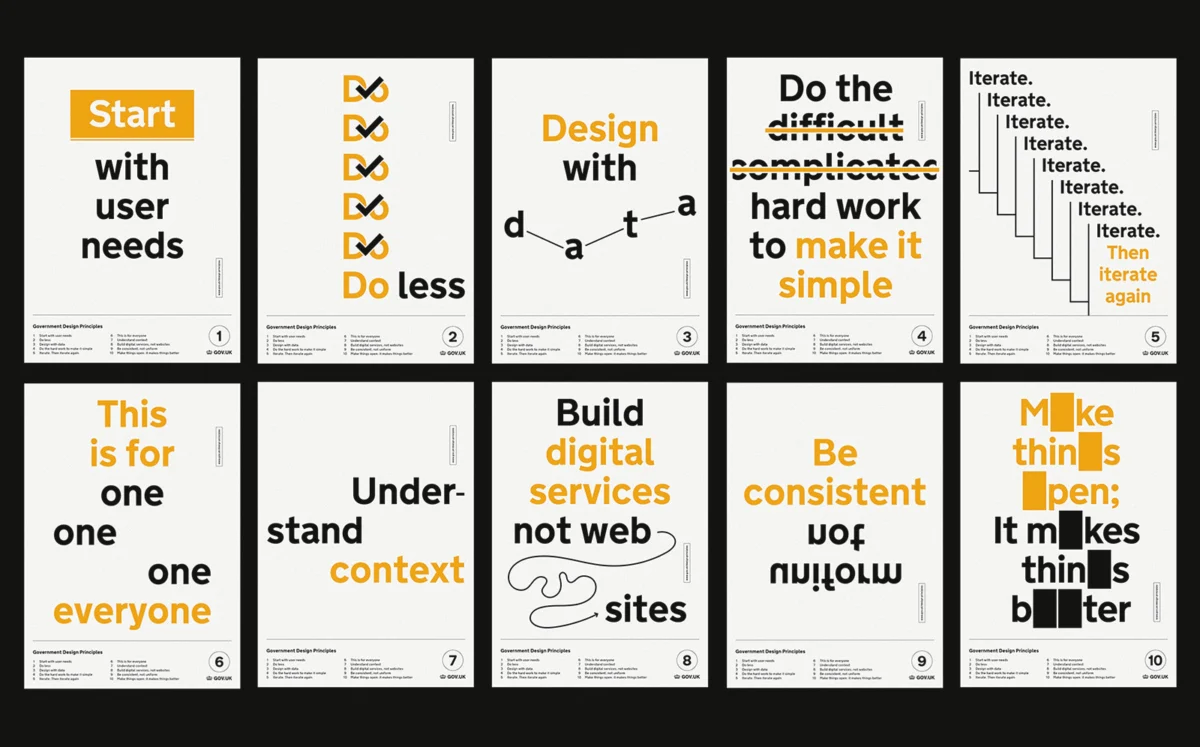
Rather than attempting to stamp out Shadow AI through disciplinary action—which historically only drives the behavior further underground—organizations should treat it as a data point. Shadow AI reveals exactly where official tools are failing to meet the needs of the workforce. Effective governance should mirror the "Design Principles" used by organizations like the UK’s Government Digital Service (GOV.UK): a short set of clear, actionable principles that trust employees to use common sense while providing a safe framework for operation.
Analysis of Long-Term Implications
The failure to treat AI adoption as a cultural challenge rather than a technical one has long-term implications for organizational health. Companies that successfully navigate this transition will not be those with the largest compute budgets, but those with the most adaptable cultures.
The "Technical Debt" of the past is being replaced by "Cultural Debt"—the accumulated resistance to change caused by years of poorly managed technological rollouts. If AI is handled as poorly as the digital transformations of the 2010s, organizations risk a "hollowed-out" workforce: a scenario where the most talented employees, frustrated by bureaucratic hurdles and lack of support, leave for more agile competitors, while those who remain use AI in secret or not at all.
Conversely, organizations that view AI through the lens of human-centric adaptation can foster a more resilient workforce. This requires a shift in leadership philosophy from "command and control" to "facilitate and support." The lessons of 2014 are clear: technology does not transform businesses; people using technology transform businesses.
Conclusion: The Path Forward
As AI continues to permeate every sector of the global economy, the window for "learning by doing" is narrowing. Organizations must move beyond the farce of superficial adoption and engage with the difficult work of cultural change management. This involves providing role-specific training, creating genuine incentives for staff, and building a governance framework that prioritizes trust over restriction.
The similarities between the digital transformation errors of a decade ago and the AI challenges of today are a warning. However, they also provide a roadmap. By acknowledging that AI is a cultural shift as much as a technological one, leadership can avoid the mistakes of the past and navigate the complexities of the AI era with greater confidence and success. The goal is not merely to "implement AI," but to become an organization capable of continuous adaptation in an increasingly automated world.

