
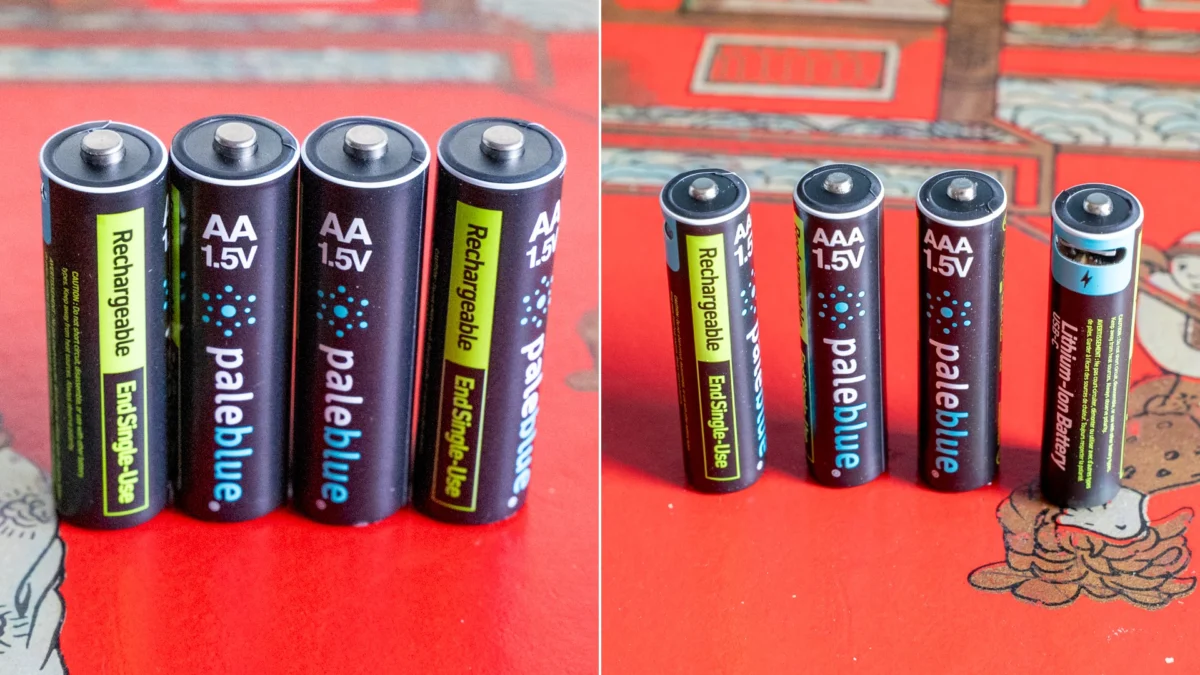
The landscape of portable power is undergoing a significant evolution, and the latest iteration of Paleblue’s rechargeable batteries, the Voyager USB-C AA and AAA models, aims to bridge the gap between convenience, performance, and environmental responsibility. Building upon the foundations of earlier Li-ion rechargeable offerings, this new generation addresses key limitations, most notably enhancing capacity to rival that of traditional NiMH cells while retaining crucial compatibility with devices that have historically rejected rechargeable alternatives. The integrated USB-C charging mechanism further streamlines the user experience, positioning these batteries as a compelling, eco-friendly replacement for single-use alkaline power sources.
A New Era of Rechargeable Power: Addressing Past Limitations
The initial foray into the world of rechargeable "regular" batteries, specifically Li-ion variants designed to mimic the form factor of alkaline cells, presented a promising alternative to disposable power. However, early iterations often fell short when compared to established NiMH (Nickel-Metal Hydride) rechargeables, primarily in terms of capacity and, consequently, runtime. The Paleblue Voyager USB-C range, encompassing AA and AAA sizes and available in larger C and D formats, represents a substantial leap forward, directly tackling these previous shortcomings. While still commanding a higher upfront cost than their NiMH counterparts, the Voyager USB-C batteries justify their premium through enhanced performance and a broader device compatibility, effectively challenging the dominance of alkaline batteries in many applications.
Design and Charging: Seamless Integration and Enhanced Convenience
At first glance, the Paleblue Voyager AA and AAA batteries adhere to standard dimensions, ensuring seamless integration into any device that accepts their conventional counterparts. The core technology remains Li-ion, distinguishing them from the more prevalent NiMH rechargeables. This choice of chemistry offers distinct advantages. Li-ion batteries exhibit superior charge retention compared to NiMH cells, meaning they maintain their stored energy for extended periods when not in use. This "always ready" characteristic closely mirrors the behavior of alkaline batteries, eliminating the common frustration of finding rechargeable batteries depleted after sitting idle for a while. This trait makes them particularly well-suited for low-drain devices such as clocks, remote controls, and wireless sensors, where frequent battery replacement can be a nuisance.
Furthermore, the voltage output of the Paleblue Voyager USB-C batteries is a critical differentiator. While NiMH batteries typically operate at 1.2V, the Paleblue Voyager cells are rated at 1.5V, a crucial factor for compatibility. This higher voltage, coupled with a discharge curve that closely mimics that of alkaline batteries, significantly broadens their applicability. Many electronic devices, particularly smart locks and sensitive gadgets, are designed to function within a specific voltage range and can exhibit erratic behavior or outright rejection of lower-voltage NiMH rechargeables. The 1.5V output of the Voyager USB-C batteries effectively circumvents these compatibility issues, making them a viable option for a wider array of electronic equipment.
The charging system has also seen a significant upgrade. Both AA and AAA batteries are typically sold in four-packs, which include a convenient carry case and a versatile four-way charging cable. This cable features USB-C connectors at both ends, a departure from older models that utilized USB-A. This modern approach allows for straightforward charging from a wide range of power sources, including laptops, power banks, and wall adapters equipped with USB-C ports. The charging indicator light, which turns solid green upon completion, provides a clear visual cue, signaling that the batteries are ready for use. It is imperative to note that these Li-ion batteries should not be charged using standard NiMH battery chargers, as this can lead to damage. Instead, users should opt for a charger specifically designed for Li-ion batteries or, more conveniently, utilize the integrated USB-C charging port.

Paleblue provides specific charging time estimates, reflecting the size of the battery. The AAA cells are reported to reach 80% charge in approximately 60 minutes, with a full charge achieved in a swift 78 minutes. The larger AA batteries require slightly longer, reaching 80% capacity in 94 minutes and a full charge in 126 minutes. These charging speeds are considered rapid, allowing users to quickly replenish their battery supply when needed.
Performance Benchmarks: Closing the Capacity Gap
The most substantial improvement in this generation of Paleblue Voyager batteries lies in their enhanced capacity. Each AAA Voyager USB-C battery is rated at 750mAh, a notable increase of 150mAh over its predecessor. This boost effectively brings their capacity on par with the majority of NiMH AAA cells currently available on the market. Similarly, the AA versions have received a significant upgrade, boasting a capacity of 2200mAh.
These enhanced capacities translate directly into longer runtimes. In testing conducted by The Ambient, the Paleblue Voyager AAA USB-C batteries delivered an average capacity of 777mAh, a significant improvement from the previous generation’s 524mAh. This performance aligns closely with many leading NiMH AAA batteries, with only a select few, such as the Amazon Basics Rechargeable AAA 800mAh (tested at 847mAh), offering a slightly higher capacity.
For the AA batteries, the testing yielded an average capacity of 2252mAh. This represents a substantial jump from the previous generation’s 1828mAh. While this figure still trails slightly behind the top-tier NiMH AA cells, such as the Duracell Rechargeable AA 2500mAh (which achieved 2698mAh in testing), the context of Li-ion technology is crucial. The Paleblue Voyager USB-C batteries’ superior charge retention means they are likely to outperform NiMH cells in real-world scenarios where batteries are not constantly in use, such as in low-drain devices.
Paleblue claims an impressive lifespan of over 1000 charge cycles for both AA and AAA sizes. This longevity is a cornerstone of their eco-friendly proposition, suggesting that each individual battery can effectively replace approximately 1000 disposable alkaline batteries over its operational life. This dramatically reduces waste and the environmental impact associated with the constant disposal of single-use power sources.
Economic Considerations: A Long-Term Investment
The primary hurdle for widespread adoption of advanced rechargeable batteries often lies in their initial cost. The Paleblue Voyager USB-C batteries are no exception. A four-pack of AA batteries retails for £19.99 ($29.99), while a four-pack of AAA batteries is priced at £19.99 ($24.99). These figures place them at a higher price point than comparable NiMH rechargeable cells. Furthermore, a single set of alkaline batteries is considerably cheaper upfront.

However, the long-term economic argument for the Paleblue Voyager USB-C batteries is compelling. When considering the lifespan of over 1000 charge cycles, the cost per use becomes significantly lower than that of disposable alkaline batteries. Over the extended operational life of these rechargeable cells, they represent a far more cost-effective solution, offering substantial savings and reducing the recurring expense of purchasing replacement batteries.
Real-World Performance and Compatibility: A Near-Universal Solution
The voltage characteristics of the Paleblue Voyager USB-C batteries are designed to closely mimic alkaline cells. Initial voltage measurements for the AAA batteries registered at 1.52V, ensuring that most devices will recognize them as standard alkaline batteries. The discharge voltage curve is also engineered for a gradual decline, providing ample warning before depletion, mirroring the behavior of alkaline batteries and preventing sudden power loss in critical devices.
In practical testing, the Paleblue Voyager USB-C batteries performed admirably, working seamlessly in almost all tested devices. This includes sensitive electronics like smart locks, which have historically been problematic for NiMH rechargeables due to their lower voltage. The ability of these Li-ion batteries to provide a stable 1.5V output is a significant advantage in ensuring broad compatibility.
However, a minor compatibility issue was identified in a specific niche application: a radio-controlled alarm clock that relies on a radio signal for automatic time synchronization. The voltage control electronics within the Paleblue Voyager USB-C batteries were found to generate a small amount of interference, preventing the clock from successfully receiving the time signal. While this represents a very specific use case and is unlikely to affect the vast majority of users, it does highlight that in a minority of highly sensitive devices, these batteries may not function optimally. This isolated incident serves as a reminder that while compatibility is significantly improved, it is not universally absolute across all electronic devices.
Broader Implications: Paving the Way for Sustainable Power
The advancements seen in the Paleblue Voyager USB-C range have broader implications for the consumer electronics market and environmental sustainability. By offering a Li-ion rechargeable battery that effectively competes with alkaline performance and NiMH capacity, Paleblue is making a strong case for the transition away from disposable batteries. This shift is crucial in reducing the environmental burden associated with battery waste, which includes the extraction of raw materials and the disposal of hazardous substances.
The integrated USB-C charging technology also aligns with the growing trend of device standardization. As USB-C becomes the ubiquitous charging standard for everything from smartphones to laptops, having batteries that can be charged using the same cables and power adapters simplifies the user’s charging ecosystem. This convenience factor can be a significant driver for consumer adoption of rechargeable technologies.

The success of products like the Paleblue Voyager USB-C batteries could encourage further innovation in the field of rechargeable power. As demand for sustainable and convenient battery solutions grows, we can expect to see continued improvements in capacity, charging speed, and cost-effectiveness, making the transition to rechargeable power even more attractive for consumers.
Final Verdict: A Superior Choice for Eco-Conscious Consumers
The Paleblue Voyager AA and AAA USB-C rechargeable batteries represent a significant step forward in the evolution of portable power. The enhanced capacity brings them neck-and-neck with NiMH cells, while their superior charge retention and 1.5V output ensure compatibility with a wider range of devices, including those that have traditionally rejected rechargeables. The integrated USB-C charging mechanism adds a layer of convenience that is difficult to overstate, simplifying the charging process and reducing the need for dedicated battery chargers.
While the initial investment is higher than that of NiMH or disposable alkaline batteries, the long-term cost savings and environmental benefits make the Paleblue Voyager USB-C batteries a wise choice for the eco-conscious consumer. For devices where maintaining charge over extended periods is critical, or where consistent performance is paramount, these batteries offer a compelling upgrade. Despite a minor compatibility caveat in very specific scenarios, they stand as a brilliant, eco-friendly alternative that deserves serious consideration for anyone looking to reduce their reliance on single-use batteries.
How We Test
Our reviews are built on a foundation of rigorous, long-term testing. We understand that rechargeable batteries are not static components; they are part of a dynamic ecosystem of devices and are expected to perform reliably over time. Therefore, a week-long test is insufficient. We immerse ourselves in the product, living with it to understand its performance in various real-world scenarios. Our team, dedicated to the constant evaluation of smart home and consumer electronics, possesses the expertise to discern what truly matters and how a particular product stacks up against its competitors. Our assessments are comprehensive, objective, and conducted without direct financial influence from manufacturers, ensuring the integrity of our recommendations. For a deeper understanding of our testing methodologies, please refer to our comprehensive guide on how we test.
Frequently Asked Questions
-
Can Paleblue Voyager USB-C batteries be charged in a standard battery charger?
No, standard NiMH chargers are incompatible and can damage these Li-ion batteries. A charger specifically designed for Li-ion batteries is required, or more conveniently, the integrated USB-C port and the included four-way cable can be used.
-
What is the charging time for Paleblue Voyager USB-C batteries?
Paleblue estimates that AAA batteries reach 80% charge in 60 minutes and a full charge in 78 minutes. AA batteries take approximately 94 minutes to reach 80% and 126 minutes for a full charge. -
How many recharge cycles can Paleblue Voyager USB-C batteries endure?
Paleblue claims that each battery can withstand over 1000 charge cycles, effectively replacing up to 1000 disposable alkaline batteries.
Paleblue Voyager USB-C: Specifications
| Feature | Specification |
|---|---|
| Type | AA and AAA Li-ion rechargeable batteries (available in four-packs) |
| UK RRP | £19.99 (AA four-pack); £19.99 (AAA four-pack) |
| US RRP | $29.99 (AA four-pack); $24.99 (AAA four-pack) |
| Size (Dimensions) | AA: 14.1 x 50.2mm; AAA: 10.2 x 44mm |
| Weight | AA: 17.5g; AAA: 7.5g |
| Release Date | 2026 |
| Capacity | AA: 3300mWh / 2200mAh; AAA: 1125mWh / 750mAh |
| Voltage | 1.5V |
| Charging Method | Integrated USB-C port; supplied with a four-way USB-C to USB-C cable |
| Charge Time | AA: 126 minutes (full charge); AAA: 78 minutes (full charge) |
| Charge Cycles | 1000+ |
Score
[A numerical score would typically be presented here, but is omitted as per the provided article structure.]

