
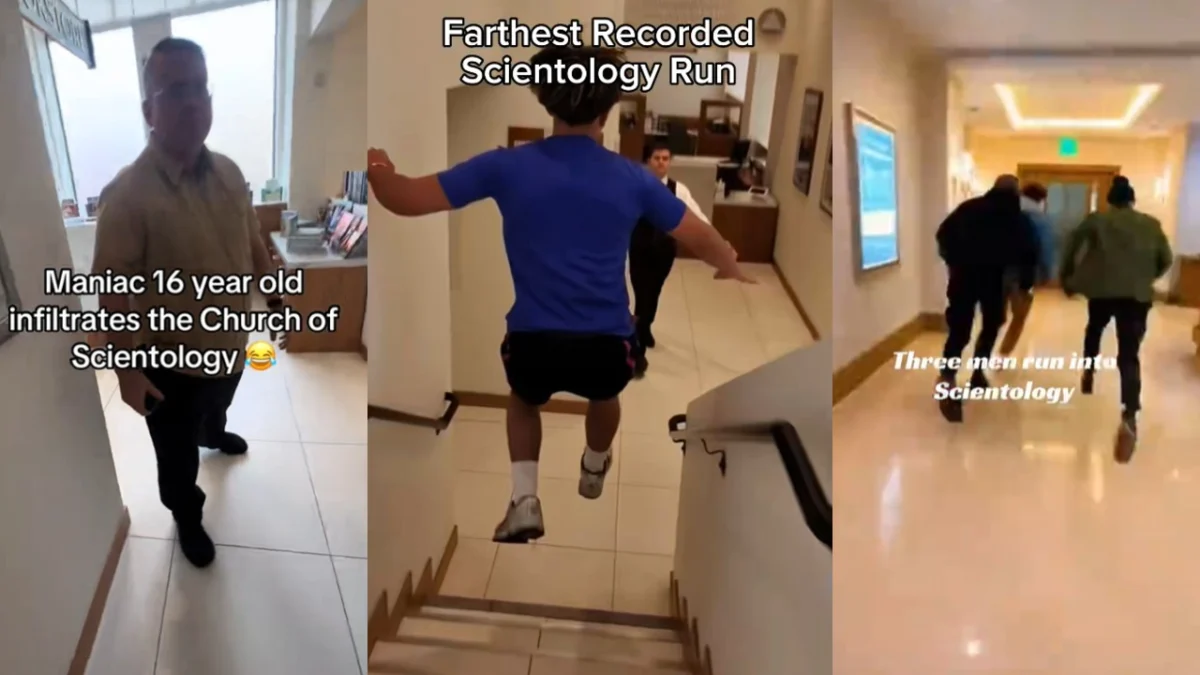
The Scientology Speedrun, also frequently referred to as a Scientology Run, emerged in the spring of 2026 as a high-visibility social media trend characterized by individuals attempting to penetrate as deeply as possible into Church of Scientology facilities before being intercepted by security or administrative staff. Primarily popularized on the short-form video platform TikTok, the trend represents a unique intersection of digital "speedrunning" culture—a term originating in the gaming community to describe completing a task in the shortest time possible—and a provocative form of citizen journalism or performance art. While the movement garnered tens of millions of views and widespread engagement across various demographic sectors, it also ignited a complex debate regarding the efficacy of such protests and the potential legal and psychological ramifications for both the participants and the members of the organization being targeted.
The Chronology of the Scientology Speedrun Trend
The inception of the trend is traced to March 30, 2026, when TikTok creator @5.0arrodo uploaded a video documenting his entry into a Scientology center. In the footage, the creator is seen running through the lobby while shouting criticisms of the organization, specifically labeling it a "cult," before being swiftly escorted out by personnel. This initial video served as a proof-of-concept for what would become a standardized format: a first-person perspective (POV) recording of an unauthorized entry, a brief period of rapid exploration, and an inevitable confrontation with staff. The original post achieved significant viral status, amassing over 6.3 million views within its first two weeks.
The momentum accelerated exponentially the following day, March 31, 2026, when @5.0arrodo published a follow-up video. This iteration featured a secondary participant—a friend of the creator—attempting a similar "run" into the building. This second video transcended the niche success of the first, securing more than 43 million views in a fortnight. The massive engagement metrics suggested a profound public fascination with the internal architecture and social dynamics of Scientology centers, which have historically been guarded with a high degree of privacy.
By early April 2026, the trend had evolved into a competitive "meta-game." On April 1, TikToker @swhileyy posted a video claiming to showcase the "deepest recorded run" into a Scientology facility. This video, which garnered 37.5 million views, emphasized the "speedrun" aspect by focusing on the physical distance covered within the building’s corridors. A subsequent video by the same creator on April 4 added further layers to the trend, accumulating another 3.3 million views and solidifying the "Scientology Speedrun" as a recognizable subgenre of viral content.
The trend migrated to other social media platforms, notably X (formerly Twitter) and Reddit, by mid-April. On April 6, user @maddysperl shared a compilation of the videos, expressing a cultural obsession with the "LA Scientology HQ" runs. This repost facilitated a broader discourse, reaching an audience beyond TikTok’s primary demographic and drawing in commentary from journalists, legal experts, and former members of the Church.
Quantitative Analysis and Digital Reach
The statistical impact of the Scientology Speedrun trend is substantial. As of mid-April 2026, the top five most-viewed videos associated with the trend had collectively generated over 100 million views. On TikTok, hashtags such as #Scientology, #Speedrunning, and #LA frequently trended in tandem, indicating a high level of algorithmic synergy.
Engagement metrics on X were similarly robust. A post by the news outlet Dexerto on April 12, 2026, which summarized the trend, received nearly one million views and over 91,000 likes within 24 hours. The discourse on Reddit was marked by a post in the r/shitposting subreddit, which characterized the runs as a "roguelite with meta progression." This post received over 21,000 upvotes, reflecting how the internet community applied video game terminology to real-world social interactions. The term "roguelite" refers to a game where players learn from each failure to progress further in subsequent attempts, suggesting that the "speedrunners" were studying previous videos to find vulnerabilities in the Church’s security protocols.
The Gamification of Institutional Critique
A defining feature of the Scientology Speedrun is its reliance on the aesthetics and terminology of gaming. Participants and viewers alike utilized terms such as "boss fight," "hidden levels," and "meta-progression." One notable viral comment suggested that reaching the top floor of a Scientology building would trigger a "Tom Cruise boss health bar," referencing the high-profile actor’s association with the organization.
This gamification serves several functions. First, it trivializes the perceived "intimidation factor" that has historically surrounded the Church of Scientology. For decades, the organization has been known for its rigorous legal defense and surveillance of critics. By framing an intrusion as a "speedrun," Gen Z creators effectively stripped the institution of its gravitas, treating it as a level in a video game rather than a formidable entity.
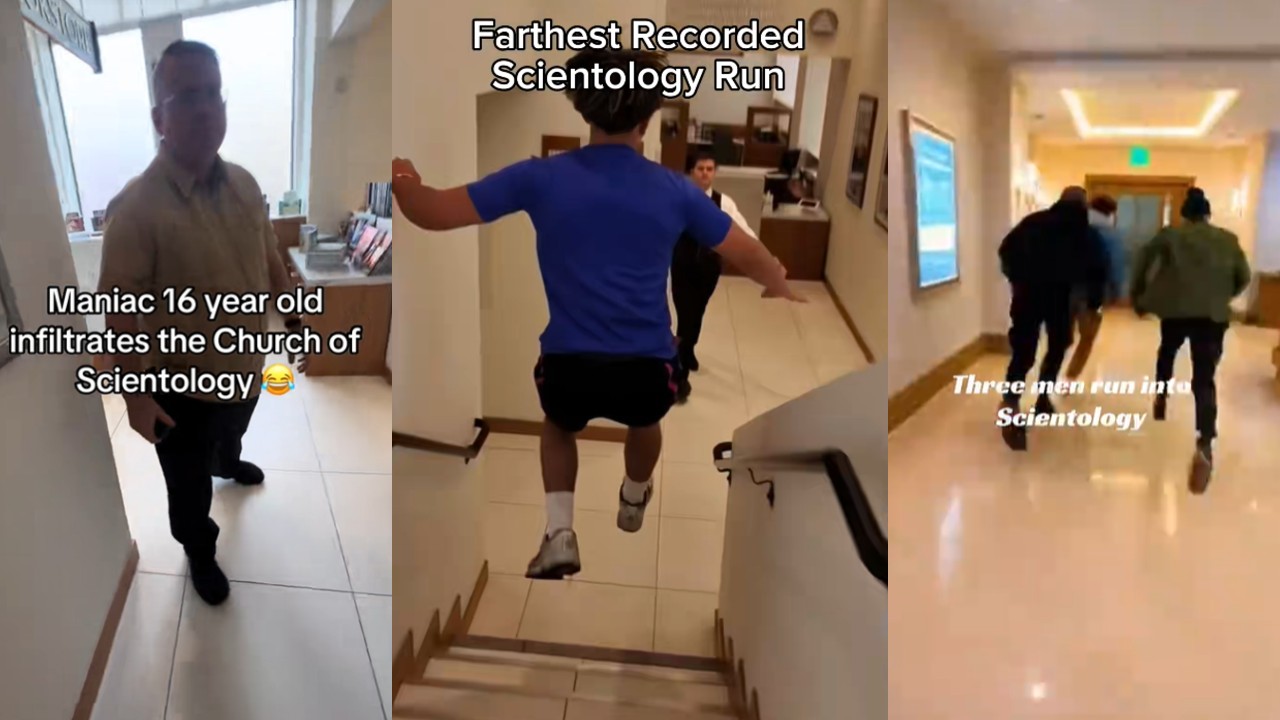
Second, the use of wearable technology, such as Meta Glasses, was frequently discussed as a tool for these runs. On April 7, X user @N4pstr noted that such hardware is ideally suited for recording "POV" runs, allowing for hands-free documentation of the interior spaces. This technological integration highlights a shift in how modern protests and "pranks" are executed, favoring high-tech, immersive documentation over traditional handheld recording.
Perspectives from Activists and Former Members
While the trend enjoyed immense popularity among the general public, it met with significant pushback from established anti-Scientology activists and former members of the Church’s "Sea Org" (the organization’s dedicated workforce). On April 7, 2026, prominent commentator and journalist Yashar Ali, who has extensively covered the Church’s internal practices, issued a stern critique of the trend.
Ali argued that the "speedruns" were counterproductive to the goal of exposing institutional abuse. He stated that such actions reinforce the Church’s internal indoctrination, which teaches members that the outside world is a hostile, violent place. "This only keeps them in," Ali noted, explaining that the objective of effective activism should be to encourage members to leave and speak to authorities, rather than frightening them with disruptive intrusions.
Furthermore, Ali emphasized that these "runs" do nothing to halt the dissemination of the Church’s teachings or its alleged abuses. His perspective was echoed by several former Scientologists who suggested that the trend prioritized viral "clout" over meaningful systemic change. They argued that the low-level employees encountered by the "speedrunners" are often individuals working under intense pressure and restricted conditions, making them the primary victims of these disruptions rather than the institutional leaders.
Legal Implications and Institutional Response
From a legal standpoint, the Scientology Speedrun trend occupies a precarious space. Unauthorized entry into a private building, even one open to the public for certain services, can constitute criminal trespassing. In California, where many of these runs occurred (specifically at the Pacific Area Command Base, known as "Big Blue," and the Hollywood Celebrity Centre), trespassing laws are strictly enforced.
The Church of Scientology has historically maintained a robust security presence, including a network of surveillance cameras and private security personnel. While the "speedrunners" often fled before police could be summoned, the high-definition footage uploaded to social media provides ample evidence for potential legal action. Legal analysts suggest that if the trend continues, the Church may pursue civil injunctions or criminal charges against high-profile creators to deter future attempts.
The institutional response from the Church of Scientology has followed its traditional pattern of internal fortification. Reports from individuals near the Hollywood locations suggest an increase in external security patrols and the hardening of entry points. By framing the "speedrunners" as "religious bigots" or "trespassers," the organization’s spokespeople have sought to categorize the trend as a targeted harassment campaign rather than a legitimate form of protest.
Broader Cultural Impact and Implications
The Scientology Speedrun trend reflects a broader shift in how Generation Z engages with institutions they perceive as controversial or secretive. Unlike the "Project Chanology" protests of 2008, which involved the decentralized hacker group Anonymous and large-scale street demonstrations, the 2026 speedruns are individualized, highly performative, and optimized for social media algorithms.
The trend also mirrors previous viral events, such as the "Storm Area 51" meme of 2019. Both events relied on a collective irony and a "safety in numbers" mentality, even if the actual participation was limited to a few bold individuals. The comparison to Area 51 is particularly apt, as both locations are shrouded in mystery and have inspired decades of conspiracy theories and public curiosity.
In conclusion, the Scientology Speedrun phenomenon represents a complex moment in digital culture. It demonstrates the power of gamification to reshape public perception of powerful institutions and the ability of social media to turn unauthorized activity into a competitive sport. However, the friction between viral entertainment and serious activism remains unresolved. As the trend eventually plateaus, its legacy will likely be defined by the tension between the quest for digital engagement and the ethical considerations of modern institutional critique. Whether these "runs" lead to a more transparent understanding of the organization or merely reinforce its defensive posture remains a subject of ongoing debate among social observers and legal experts alike.

