
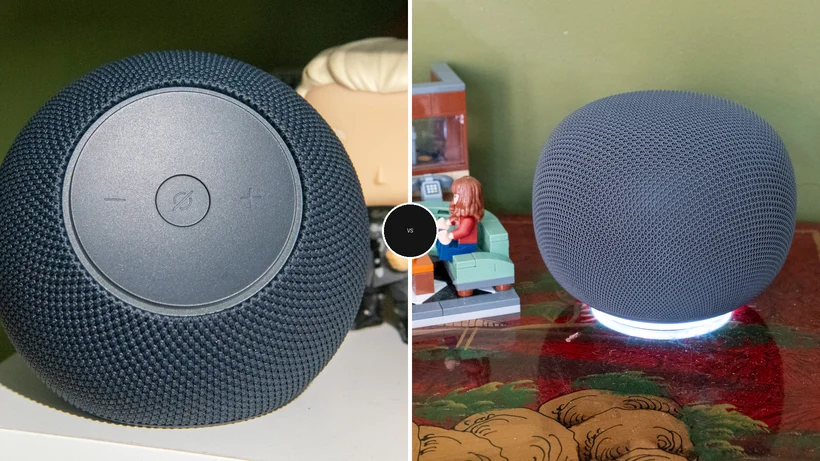
The smart speaker market, once dominated by rudimentary voice command devices, has undergone a significant transformation, shifting focus towards premium audio performance and advanced generative AI capabilities. In this rapidly evolving arena, the Amazon Echo Dot Max, powered by the sophisticated Alexa+ AI, emerges as the superior choice over its competitor, the Google Home Speaker, which relies on Google Gemini for Home. Both devices are positioned at a competitive price point of $99.99 (£99.99), yet the Echo Dot Max distinguishes itself through superior smart home integration, more refined AI functionalities, and demonstrably better audio fidelity.
A Shifting Paradigm: From Voice to Auditory and AI Excellence
The trajectory of the smart speaker industry reflects a broader consumer demand for devices that offer more than just basic voice interaction. Early smart speakers, often characterized by their affordability and limited feature sets, catered primarily to users seeking simple hands-free assistance. However, as generative AI, exemplified by models like Alexa+ and Google Gemini, has become increasingly integrated into these devices, user expectations have escalated. Consumers now demand not only seamless voice control and intelligent response generation but also high-quality audio playback, transforming the smart speaker into a central component of the modern connected home. This evolution necessitates a deeper dive into how these competing devices stack up against these elevated requirements.
Design and Usability: Subtle Distinctions in Form and Function
At first glance, both the Amazon Echo Dot Max and the Google Home Speaker present a familiar, compact, and aesthetically pleasing design. Their shelf-friendly form factor and mesh exterior coatings are remarkably similar, reflecting a shared design philosophy aimed at blending discreetly into home environments. Both retail at the same price point, reinforcing their direct competition in the mid-range smart speaker market.
Color options offer a slight divergence in personalization. The Echo Dot Max is available in three sophisticated finishes: graphite, amethyst, and glacier white. The Google Home Speaker provides a slightly broader palette with porcelain, hazel, jade, and berry. However, availability in the UK is limited to porcelain and hazel, a detail that may influence purchasing decisions for a significant segment of consumers.
The placement and type of controls present a more pronounced difference. Amazon has strategically positioned its physical controls, including volume buttons and a mute function, on the front of the Echo Dot Max, ensuring easy accessibility. This user-centric approach prioritizes immediate control without requiring users to search for buttons. In contrast, Google opts for a more minimalist design with tap controls integrated into the top surface for play/pause and response termination, and the sides for volume adjustment. While aesthetically cleaner, the mute switch on the Google Home Speaker is located at the rear, a less convenient placement that can be easily overlooked.
Power delivery also introduces a point of differentiation. The Echo Dot Max utilizes a standard removable power adapter, offering the user the flexibility to replace it if damaged. The Google Home Speaker, conversely, features a captive cable that terminates in a USB-C connector. While USB-C is a modern standard, the captive nature of the cable can be a drawback, as damage to the cable renders the entire unit potentially inoperable without specialized repair or replacement.
Both devices incorporate status lights that provide visual cues regarding their operational state, a common and effective design element in smart home technology.
Features and AI Prowess: Alexa+ Leads the Pack
The core intelligence of these smart speakers lies in their respective voice assistants. Here, the Amazon Echo Dot Max, powered by Alexa+, demonstrates a clear advantage in sophistication and functionality. Alexa+ is lauded for its natural conversational abilities, enabling users to engage in more fluid and intuitive interactions. Its capacity to build complex routines, facilitate restaurant bookings, and even extract data from documents like photos and PDFs positions it as a more advanced AI. This level of integration suggests a more profound understanding of user intent and a greater potential for task automation.
Google Gemini for Home, while capable of handling general requests, appears to be a less mature offering in this comparison. It exhibits slower response times, struggles with processing PDFs, and can occasionally provide nonsensical or illogical responses. While it does possess automation capabilities, its overall performance in complex natural language processing tasks falls short of Alexa+.
Subtle but significant enhancements further bolster Alexa+’s lead. The AI’s ability to recall and leverage previously learned facts to refine responses demonstrates a more sophisticated memory and learning capability. The "whisper mode," which allows Alexa+ to respond in a hushed tone when a user whispers a request, is a practical innovation that enhances user experience in quiet environments.
Google Gemini for Home does hold an advantage in local business searches, reportedly providing more up-to-date information than Alexa+. However, this specific strength is overshadowed by Gemini’s lack of advanced features, such as the ability to book restaurants, a capability that Alexa+ readily offers through its OpenTable integration. This disparity highlights a broader gap in the practical application of AI for everyday task completion.

Sound Quality: A Clear Win for the Echo Dot Max
In the increasingly important realm of audio performance, the Amazon Echo Dot Max unequivocally surpasses the Google Home Speaker. The Echo Dot Max is engineered with a precisely tuned dual-driver system, comprising a 0.8-inch tweeter and a 2.5-inch woofer. This configuration yields remarkably clean and well-balanced audio output. The speaker demonstrates impressive composure even with bass-heavy tracks, such as Rage Against the Machine’s "Bomb Track," producing a satisfyingly rich sound without distortion. While it may not be capable of shaking the foundations of a room, its audio fidelity is more than sufficient for its compact size and price point, and importantly, it supports lossless Spotify audio, a feature absent in its competitor.
The Google Home Speaker employs an omnidirectional sound design, which effectively fills a room with audio. It also handles heavy bass tracks competently. However, its performance falters when reproducing quieter musical passages, and it begins to strain at higher volumes, particularly with more aggressive musical genres. The omission of lossless Spotify audio support further diminishes its appeal to audiophiles.
While neither single unit provides true stereo separation, both can be integrated into stereo pairs for a more immersive experience. Nevertheless, the Echo Dot Max’s superior two-driver setup delivers a cleaner, more consistent sound profile across a wider spectrum of music genres, solidifying its victory in this crucial category.
Smart Home Integration: Amazon’s Multifaceted Approach
The smart home ecosystem is a critical battleground for these devices, and Amazon once again takes the lead. The Google Home Speaker serves as a Thread border router and boasts Matter support, enabling direct connectivity with modern smart home devices. The Echo Dot Max matches these capabilities but goes further by incorporating a built-in Zigbee radio, a temperature sensor, and ultrasound presence detection. These additional sensors significantly enhance its flexibility and utility as a central hub for smart home routines.
The ability to create routines via voice commands is another advantage for Alexa+. While Gemini can handle complex commands, the lack of voice-initiated routine creation is a notable limitation. Both devices are adept at processing multi-device commands within a single sentence, demonstrating a baseline level of smart home command comprehension.
The inclusion of a Zigbee radio in the Echo Dot Max is particularly noteworthy. This allows for direct pairing with a vast array of Zigbee-enabled smart home devices, such as lighting, sensors, and switches, without the need for an additional hub. This significantly simplifies setup and reduces costs for users invested in the Zigbee ecosystem. The integrated temperature sensor can be leveraged for climate control automations, and the ultrasound presence detection can trigger actions based on whether a room is occupied, further enhancing the smart home’s responsiveness and efficiency.
Value Proposition: More for Your Money with Echo Dot Max
When assessing the overall value proposition, the Amazon Echo Dot Max presents a compelling case for consumers seeking the most feature-rich device at its price point. The integration of Zigbee, Thread, Matter support, a temperature sensor, and ultrasound presence detection for $99.99 (£99.99) represents exceptional hardware density. This comprehensive suite of smart home technologies positions the Echo Dot Max as a powerful and versatile smart home hub.
The Google Home Speaker, while priced identically, offers a comparatively less robust hardware package. Its primary smart home features are limited to Thread and Matter support. The underlying performance of Google Gemini for Home also impacts its overall value, as its limitations in AI processing and task execution detract from the user experience. Consequently, the synergistic combination of the Echo Dot Max and Alexa+ offers a more comprehensive and satisfying smart home solution.
Key Differentiators: A Comparative Snapshot
| Spec | Amazon Echo Dot Max | Google Home Speaker |
|---|---|---|
| Price | $99.99 / £99.99 | $99.99 / £99.99 |
| Thread Support | Yes | Yes |
| Matter Support | Yes | Yes |
| Controls | Volume, mute | Tap to play/pause, volume |
| Microphone Mute | Front-facing button | Side switch |
| Captive Power Cable | No (removable) | Yes (USB-C captive) |
| Zigbee Hub | Yes | No |
| Temperature Sensor | Yes | No |
| Voice Assistant | Alexa / Alexa+ | Gemini for Home |
| Color Options | 3 (graphite, white, amethyst) | 4 (porcelain, hazel, jade, berry; UK: porcelain, hazel) |
Final Verdict: Echo Dot Max Reigns Supreme
For consumers prioritizing a robust smart home hub, a highly capable voice assistant, and genuinely good sound quality, the Amazon Echo Dot Max stands out as the premier choice. Its superior smart home hardware, including the integrated Zigbee radio, Thread and Matter support, coupled with the more advanced Alexa+ AI and demonstrably better audio performance, makes it a compelling package. The Echo Dot Max offers a more complete and sophisticated smart home experience, capable of integrating a wider range of devices and executing more complex automations.
The Google Home Speaker, while possessing adequate hardware and Thread/Matter support, is ultimately hampered by the current limitations of Google Gemini for Home. While it offers decent audio and a cleaner aesthetic, its AI capabilities and practical feature set do not match the comprehensive offering of its Amazon counterpart. The Echo Dot Max, therefore, emerges as the clear winner in this head-to-head comparison, providing a more advanced, versatile, and ultimately more valuable smart speaker solution for the discerning consumer.

