
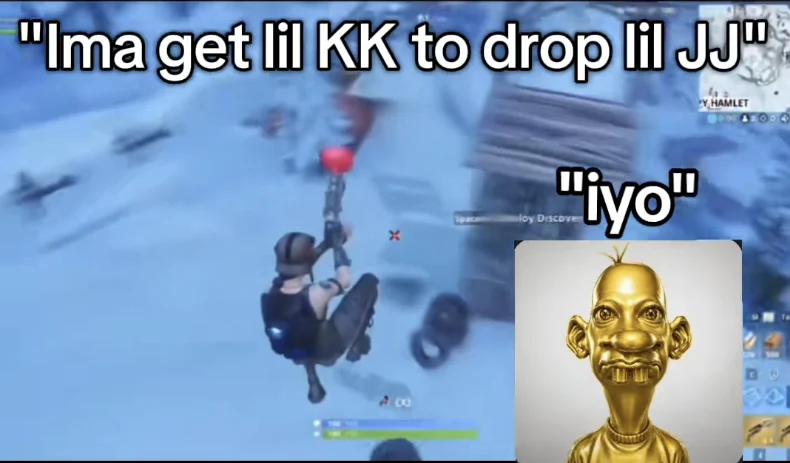
The digital landscape of 2026 has witnessed the rapid ascent of a new linguistic and auditory phenomenon known as Iyo, a term that has transitioned from a niche gaming interaction to a ubiquitous social media staple. Originating from a high-intensity voice chat session within the popular battle royale game Fortnite, the "Iyo" soundbite represents a convergence of competitive gaming subculture, youth-driven slang, and the algorithmic acceleration of TikTok. What began as a heated exchange between young players has evolved into a versatile meme, often associated with absurdist humor and the "Neegy" internet subculture. This evolution highlights the fluid nature of modern communication, where a single distinctive pronunciation can redefine the digital vernacular for millions of users within a matter of weeks.
The Genesis of a Digital Catchphrase
The origins of the "Iyo" meme are traced back to the content creation ecosystem of YouTube, specifically to a creator known as BL1TZERZ, or Blitzerz. On June 11, 2026, Blitzerz uploaded a video titled "We Confronted Lil Curtis…," which followed a format common in gaming content: trolling and roleplaying within public Fortnite lobbies. The video, which has garnered over 113,800 views and 4,350 likes in its initial six weeks, features a series of escalating verbal confrontations between the host and various young players.
The specific moment that would birth the meme occurs at the 4:25-minute mark. During a particularly chaotic exchange of "trash talk," one player issues a cryptic and rhythmic threat: "If you don’t stop talking, I’mma get a little KK to drop a little JJ." This line, nonsensical to those outside the immediate context of the lobby, was immediately met with a sharp, reactionary exclamation: "Iyo."
While "Iyo" is phonetically a variation of the established slang "Ayo"—a term used to grab attention or express disbelief—the delivery in this instance was unique. The sharp, staccato inflection and the youthful pitch of the speaker provided a comedic contrast to the aggressive posturing of the preceding "KK and JJ" threat. This distinctive auditory signature became the primary catalyst for the sound’s eventual viral success.
Linguistic Analysis: From Ayo to Iyo
To understand the resonance of "Iyo," one must examine the role of phonetic deviation in internet slang. Digital linguists often note that Gen Z and Gen Alpha users frequently modify existing slang to create "in-group" markers. The shift from "Ayo" to "Iyo" is a prime example of this phenomenon. By altering the initial vowel sound, the speaker created a more percussive and memorable exclamation.
In the context of the original Fortnite video, "Iyo" served as a "reactionary punctuation." It functioned not just as a word, but as a sonic signal of the "craziness" or "absurdity" of the situation. When the audio was stripped from the original YouTube video and repurposed for TikTok, this function was amplified. The sound became a tool for other creators to highlight moments of confusion, audacity, or humor in their own content, effectively turning a specific moment of gaming frustration into a universal digital tool.
Chronology of Viral Dissemination
The transition of "Iyo" from a YouTube gaming clip to a TikTok sensation occurred over a defined timeline in the summer of 2026. This period saw the audio evolve from a niche reference to a trending "Original Sound."
- June 11, 2026: Blitzerz uploads the source video to YouTube. While the video performs well within the creator’s existing community, the "Iyo" clip has not yet been isolated as a standalone meme.
- Late June 2024 – Early July 2026: Early adopters on TikTok begin extracting the audio, using it to mock the "squeaker" (young-sounding player) culture prevalent in Fortnite.
- July 13, 2026: The trend reaches a critical mass when TikTok user @elireylifn posts a gameplay video utilizing the soundbite. This post, captioned "Slimed tung tung," becomes a major anchor for the trend, securing over 928,000 views and 126,000 likes in less than ten days.
- July 14, 2026: User @2.coolian further popularizes the audio with a gameplay clip that emphasizes the "menace" behavior of the children in the audio. This video gains 352,000 views, signaling that the meme has moved beyond simple mockery into a broader commentary on gaming interactions.
- July 16, 2026: The audio is utilized by @tubby.hurgle, reaching 603,000 views. At this stage, the sound is frequently appearing in "Creator Search Insights," indicating a high volume of users actively searching for the term "Iyo."
- July 18, 2026: The meme enters the "skit" phase of its lifecycle. User @littleconconn acts out a scenario as if he were being insulted by the kids in the audio. The video receives 350,000 views, demonstrating the sound’s versatility as a backdrop for physical comedy.
The Neegy Connection and Visual Symbolism
A significant factor in the longevity of the "Iyo" meme is its association with the "Neegy" meme. Neegy, a golden, caricature-like character often depicted with exaggerated features, became the unofficial visual mascot for the "Iyo" sound. Many TikTok posts began overlaying the audio onto animations or still images of the Neegy character, creating a multi-sensory experience that fans labeled as "brain rot" humor—a term used to describe fast-paced, nonsensical, and highly addictive digital content.
This convergence of a specific audio (Iyo) and a specific visual (Neegy) is a hallmark of successful 2020s meme-making. It provides a recognizable "brand" for the trend, making it easier for users to identify and engage with the content as they scroll through their feeds. The golden character’s static, wide-eyed expression often mirrors the "shocked" or "reactive" nature of the "Iyo" exclamation, reinforcing the meme’s internal logic.
Cultural Context: Fortnite as a Social Hub
The emergence of "Iyo" also provides insight into the enduring cultural relevance of Fortnite. Far more than a game, Fortnite serves as a primary social platform for younger demographics. The "voice chat" environment of the game is a unique space where different age groups, backgrounds, and personality types collide.
The "trash talk" featured in the "Iyo" clip—specifically the mention of "KK" and "JJ"—reflects the performative nature of online gaming. Players often adopt personas or use cryptic language to intimidate opponents or entertain their teammates. Blitzerz, by documenting these interactions, acts as a digital ethnographer, capturing the raw and often hilarious reality of youth social dynamics in virtual spaces. The "Iyo" meme is, in essence, a distilled fragment of this digital reality, packaged for a wider audience.
Engagement Metrics and Algorithmic Impact
The data surrounding the "Iyo" trend underscores the power of TikTok’s recommendation engine. The top four videos utilizing the sound collectively garnered over 2.2 million views within a single week in July. This rapid scaling is attributed to several factors:
- Audio Repurposing: TikTok’s "Use this sound" feature allowed thousands of creators to instantly join the trend, creating a flood of content that kept the term "Iyo" at the top of search results.
- Cross-Platform Migration: The movement of content from YouTube (long-form) to TikTok (short-form) allowed the meme to reach different audience segments.
- Search Interest: As seen in Google Trends and TikTok’s internal metrics, "Iyo" saw a massive spike in search interest during mid-July, driven by users trying to understand the meaning behind the slang and the origins of the "KK to drop a JJ" line.
Official Responses and Creator Impact
While Epic Games (the developer of Fortnite) has not officially commented on the "Iyo" meme, the trend has significantly boosted the profile of the original creator, Blitzerz. By providing the source material for a viral sensation, Blitzerz has seen an uptick in channel engagement and a broadening of his audience beyond the core Fortnite community.
Other creators have also benefited from the "Iyo" wave. For users like @elireylifn and @2.coolian, the meme provided a high-performing "content pillar" that helped increase their follower counts and overall platform visibility. This symbiotic relationship between original source creators and "meme-amplifiers" is the engine that drives the modern creator economy.
Broader Implications and Future Outlook
The "Iyo" phenomenon is a case study in how modern slang is manufactured and distributed. It demonstrates that the most effective memes are often those that are accidental—organic moments of human interaction that possess a specific, repeatable "hook."
As we move further into 2026, "Iyo" is expected to follow the typical trajectory of viral slang. It will likely remain a staple of the "brain rot" subculture for several months before eventually being replaced by a new phonetic variation or gaming soundbite. However, its impact on the digital lexicon remains. Much like "Yeet," "Rizz," or "Skibidi," "Iyo" has carved out a niche as a specific expression of modern digital absurdity.
In conclusion, the "Iyo" meme is more than just a funny sound from a video game. It is a reflection of how the youngest generations navigate social spaces, how they repurpose language to suit their needs, and how a single second of audio can become a global cultural touchstone in the blink of an eye. Whether through the golden face of Neegy or the chaotic lobbies of Fortnite, "Iyo" stands as a testament to the unpredictable and vibrant nature of internet culture.

