
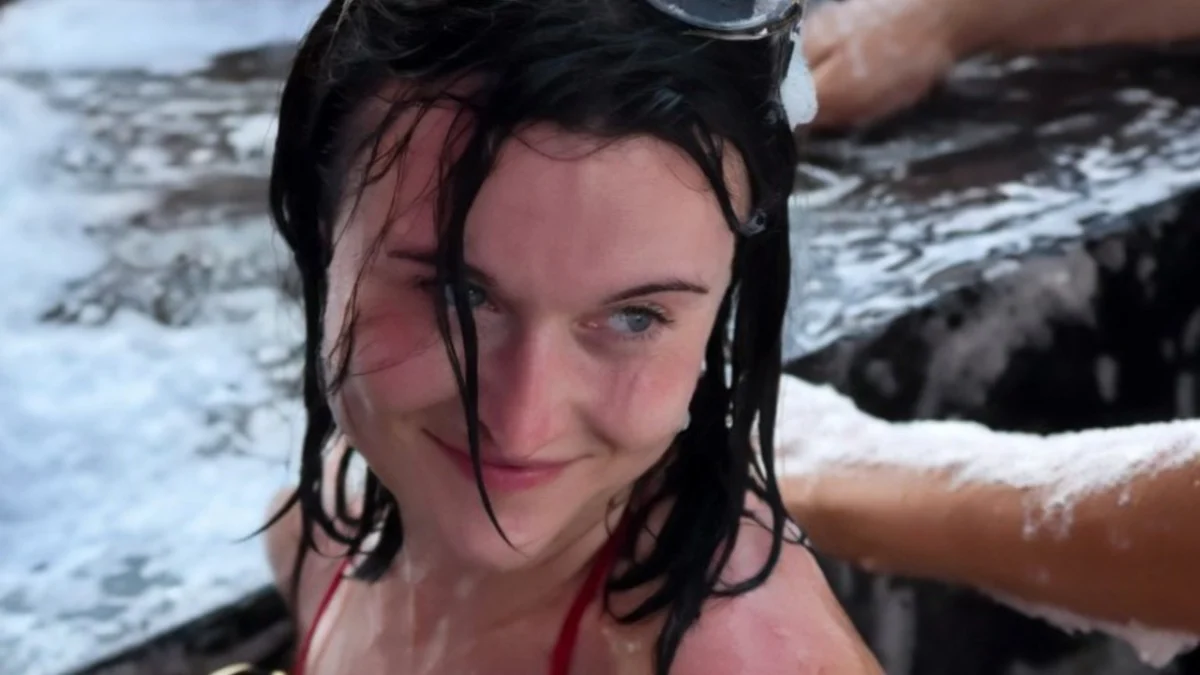
The digital landscape of mid-2026 has been marked by a significant cultural moment following the rapid ascent of a short-form video commonly referred to as the Foam Party Girl or the Goddamnitdonut Look and Bounce Video. Also identified as the Ann K. Video, the footage captures a woman in a red bikini at a foam-filled social gathering, and it has since become a focal point of intense social media discourse, algorithmic amplification, and digital detective work. The video, which features a brief but high-impact interaction between the subject and an unseen individual, has transcended its original context to become a case study in how specific non-verbal cues can trigger global virality within hours.
The Emergence of the Viral Interaction
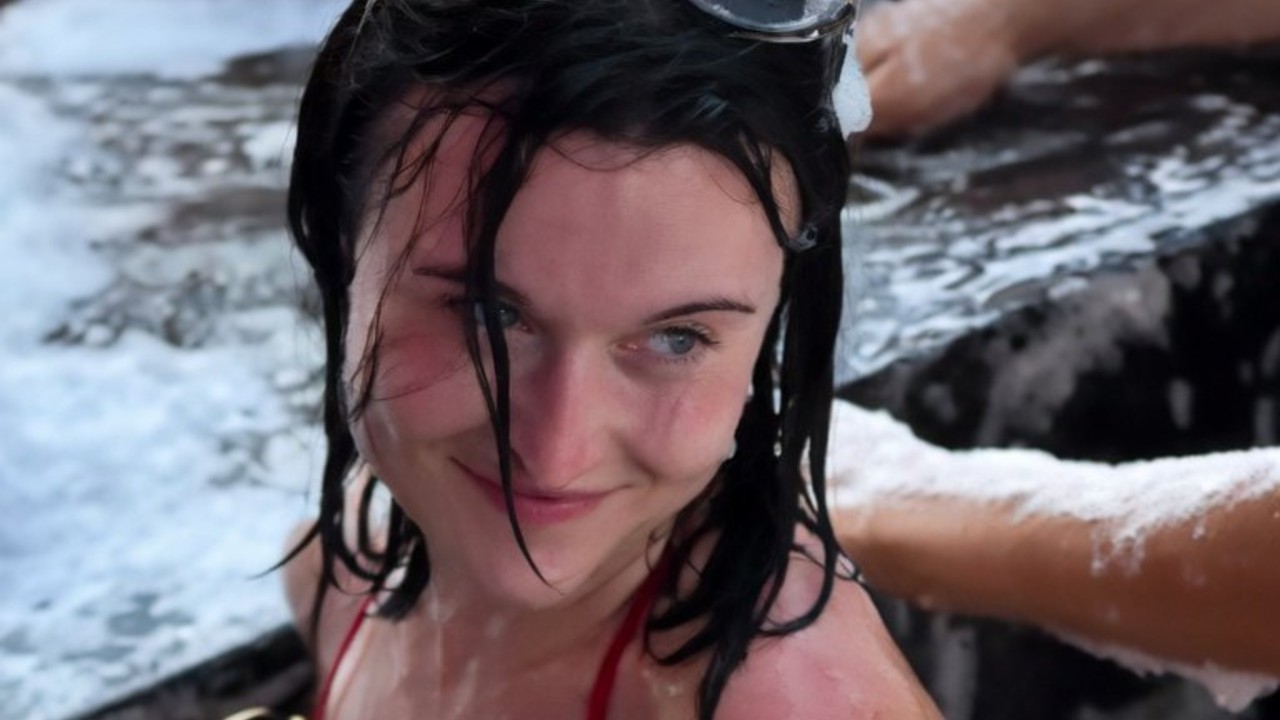
The primary footage that catalyzed this internet phenomenon surfaced on July 21, 2026, when the X (formerly Twitter) account @Fun_Viral_Vids shared a clip of a woman participating in a foam party. The setting was later identified by the subject herself as Lloret de Mar, a coastal town in Catalonia, Spain, renowned for its vibrant nightlife and international tourism. In the video, the woman is seen dancing amidst a crowd when she is suddenly sprayed from behind with water. Her reaction—a swift turn followed by a specific, lingering, and ostensibly flirtatious facial expression directed at the camera—became the "hook" that drove the content’s visibility.
The caption accompanying the initial viral post, "Two things: that look and that bounce!", focused on the subject’s physical appearance and her charismatic response to being sprayed. This framing proved highly effective for the platform’s engagement algorithms. Within a single day of its posting, the video amassed over 20.9 million views, 186,000 likes, and thousands of reposts. The sheer scale of this engagement suggests that the video hit a "perfect storm" of visual appeal and relatability, sparking what social media analysts call "thirst-driven" engagement, where users actively seek out the identity of an attractive but anonymous person in a viral clip.
Detailed Chronology of the Event
While the "Look and Bounce" video achieved the highest level of visibility on July 21, the digital trail associated with the subject began days earlier. On July 19, 2026, an X user under the handle @Camila95436588 posted a different video of the same woman at the same foam party. In this secondary clip, a man is seen approaching her in what appears to be an attempt at a romantic or social overture. The woman’s response, captured on video, was a polite but firm rejection, where she reportedly stated she had a boyfriend. This video carried a French caption roughly translating to: "POV: You thought you could seduce her in Lloret? Watch her reaction at the end."
This earlier video provided a broader narrative context for the subject, establishing her as someone who was being frequently approached or filmed during the event. However, it was not until the July 21 post that the "Foam Party Girl" persona became a centralized meme. By July 22, the discourse had shifted from mere appreciation of the video to a collective effort to identify the woman. Numerous commenters across X and Instagram pointed toward a private account with the username @goddamnitdonut, belonging to an individual identified as Ann K.
Analytical Context: The Mechanics of the Look
The fascination with the "look" given by Ann K. in the video provides an interesting look into the psychology of social media engagement. Digital communication experts note that "The Look"—a combination of eye contact, a slight smile, and a playful demeanor—functions as a powerful form of non-verbal communication that feels personal to the viewer, despite being directed at a stranger in a crowd. This creates a "parasocial" moment where millions of viewers feel a brief, simulated connection with the subject.
User reactions on X highlighted this specific element. One user, @GsuGrinding, noted that the facial expression was a "perfect example" of the type of interaction that leads to significant life decisions, garnering over 4,400 likes for the observation. Another user, @ScarletSpeeds16, characterized the subject as the "new crush in town," reflecting the rapid speed at which internet audiences crown new "it" girls based on singular moments of captured charisma.
Geographical and Cultural Background
The location of the video, Lloret de Mar, is a critical component of its background. As a hub for European youth tourism, the town frequently hosts large-scale foam parties and pool events designed for maximum social media "shareability." These environments are engineered to produce the kind of high-energy, visually striking content that Ann K.’s video epitomizes. The "foam party" aesthetic—red bikinis, sunglasses, and artificial suds—is a staple of 2020s nightlife culture, providing a familiar backdrop that resonates with a global audience accustomed to vacation-style content.
Furthermore, the involvement of French-language captions in the early iterations of the video suggests that the content may have originated within the European "Travel-Tok" or "Travel-X" spheres before being picked up by larger, English-speaking "viral" aggregation accounts. This highlights the cross-border nature of modern digital fame, where a moment captured in a Spanish resort can become a talking point in North America and Asia within the same afternoon.
Official Response and Subject Identity
As the video reached its peak saturation point, the individual purportedly featured in the clip, Ann K. (operating under the handle @goddamnitdonut), addressed her sudden fame. On the morning of July 21, 2026, she posted a reel to her Instagram account that showed her dancing with an older woman at the same foam party. Her caption was a direct acknowledgment of her new status: "Me, casually dancing with old ladies, after getting viral on twitter, with my bouncy bikini video."
This response served two purposes. First, it confirmed her identity to the thousands of users who had been searching for her social media presence. Second, it humanized her by showing a more wholesome interaction—dancing with an elderly attendee—which contrasted with the "flirtatious" framing of the original viral clip. This move is often seen as a strategic way for "accidental" celebrities to take control of their narrative, transitioning from an object of a viral "look" to an active participant in their own digital branding.
Broader Impact and Social Media Trends
The Foam Party Girl phenomenon is indicative of a broader trend in the 2026 digital economy: the "Micro-Celebrity Cycle." In this cycle, an individual becomes a household name for 48 to 72 hours based on a 10-second clip. Unlike the celebrities of previous decades, these individuals do not necessarily possess a specific talent or a long-term body of work; rather, they possess "algorithmic compatibility."
The metrics associated with this event are staggering. Beyond the 20 million views on the primary post, secondary screenshots and "reaction" posts have generated an estimated 50 million additional impressions across various platforms. This has led to an inevitable surge in "copycat" content, where other creators attempt to replicate "the look" or the setting of the foam party to capture similar levels of engagement.
However, the phenomenon also raises questions regarding privacy and the ethics of viral "thirst" culture. While Ann K. appears to have embraced her virality, the intense "search interest" that followed the video’s release highlights the speed at which an individual’s private life can be de-anonymized by a motivated online crowd. The transition from a private citizen at a party to the "Foam Party Girl" happened in less than 12 hours, a testament to the power of modern search tools and the interconnectedness of social media profiles.
Conclusion and Future Implications
As of late July 2026, the Foam Party Girl remains a prominent fixture in internet discourse, though the initial wave of "discovery" has begun to stabilize. The event serves as a reminder of the enduring power of the human face and non-verbal cues in a digital world increasingly dominated by AI and synthetic content. Authentic human charisma, captured in a candid and spontaneous moment, continues to be the most valuable currency on social media platforms.
The legacy of the "Goddamnitdonut Look and Bounce Video" will likely be its role as a benchmark for viral engagement in the mid-2020s. It demonstrates that despite the complexities of modern technology, the fundamental drivers of human attention—attraction, mystery, and the "perfect" facial expression—remain unchanged. Whether Ann K. chooses to leverage this moment into a long-term career in influencer marketing or returns to a life of relative privacy, her "look" has been etched into the digital archive of 2026’s most significant cultural artifacts.

