
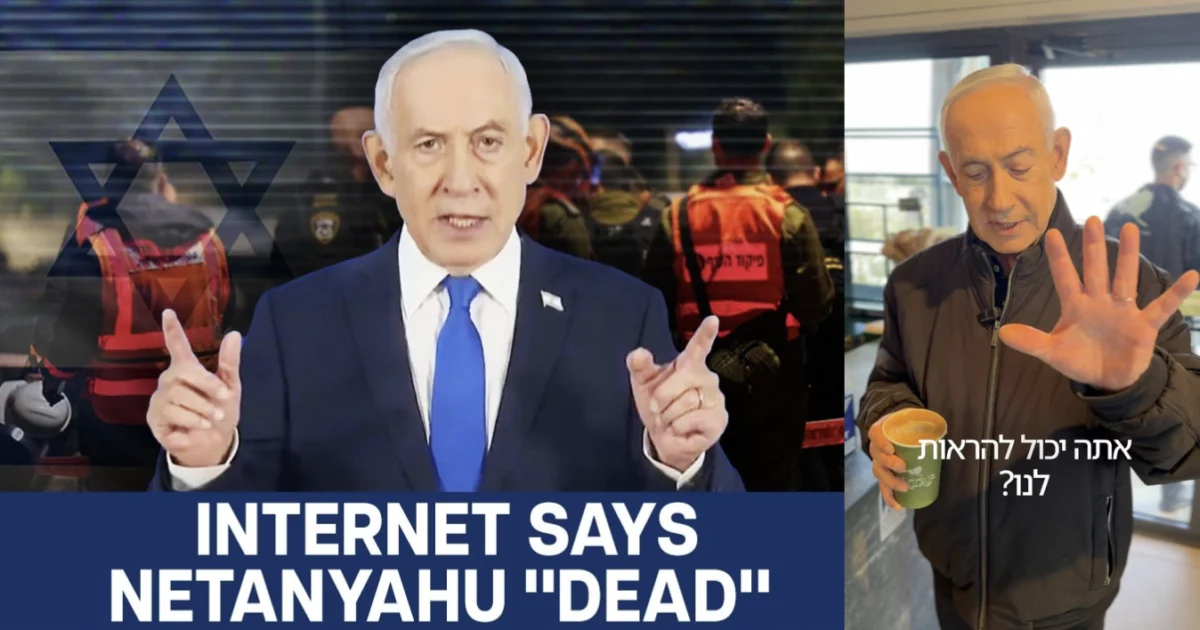
The intersection of high-stakes kinetic warfare and sophisticated digital misinformation reached a critical flashpoint in March 2026, as viral rumors regarding the death of Israeli Prime Minister Benjamin Netanyahu surged across global social media platforms. These theories, which originated following an Iranian missile strike on the Prime Minister’s office, have evolved into a complex case study of the "liar’s dividend," where the mere existence of generative artificial intelligence (AI) allows the public to dismiss authentic footage as fraudulent. Despite official denials from the Israeli government and independent verifications by international news agencies, a significant portion of the global digital audience remains convinced that the long-standing leader has been replaced by a digital surrogate.
The genesis of the controversy dates back to March 2, 2026, a date that marked a significant escalation in the ongoing American-Iranian War. On that morning, the Islamic Revolutionary Guard Corps (IRGC) of Iran announced that it had launched a salvo of Kheibar ballistic missiles targeting the Prime Minister’s Office in West Jerusalem. While the IRGC’s state-aligned media outlets claimed the strike resulted in high-level casualties and catastrophic structural damage, the Israeli Defense Forces (IDF) and the Prime Minister’s Office (PMO) maintained a notable silence regarding Netanyahu’s specific location or status. This information vacuum provided the fertile ground necessary for the initial wave of assassination rumors to take root.
The suspicion deepened when, later that same day, Israel’s President was seen leading a high-level security press conference—a role typically reserved for the Prime Minister during times of existential national crisis. Social media accounts, most notably the X (formerly Twitter) handle RadarHits, amplified these concerns, posting clips of the President’s appearance with captions suggesting that Netanyahu had been incapacitated or killed in the overnight strike. The post quickly garnered over 2.8 million views, signaling the transition of the rumor from fringe circles to the mainstream digital consciousness.
For nearly ten days, Netanyahu remained out of the public eye, an absence that critics and conspiracy theorists characterized as "unprecedented" given the intensity of the regional conflict. When the PMO finally released a video on March 13, 2026, intended to project a sense of normalcy and continuity, it had the opposite effect. The footage, which depicted Netanyahu addressing a press conference, was immediately subjected to intense frame-by-frame scrutiny by amateur digital sleuths.
The primary point of contention centered on a perceived biological anomaly: several users on X and TikTok claimed that at the 0:34-second mark, Netanyahu appeared to possess six fingers on his right hand. In the landscape of 2026, where generative AI video tools like OpenAI’s Sora and various open-source deepfake models have become ubiquitous, "extra fingers" are a well-known hallmark of AI-generated content. Within hours, the hashtag #NOTenyahu began trending globally. Users such as @peanutnewz and @Copelander73 posted satirical and "enhanced" versions of the footage, further blurring the line between legitimate skepticism and coordinated disinformation.
The discourse moved to Reddit, where the /r/conspiracy and /r/RealOrAI subreddits became hubs for technical debate. While some users argued that the Prime Minister was likely "hiding in a hole" for security reasons and using AI as a stand-in for safety, others insisted the video was proof of a total regime cover-up following his demise. This period demonstrated a significant shift in public psychology; the public no longer required proof of a death to believe it—they only required a perceived flaw in the evidence of life.
In an attempt to quell the rising tide of skepticism, the Prime Minister’s official social media accounts released a second, more casual video on March 15, 2026. This footage showed Netanyahu at the Sataf Café, a well-known establishment in the Jerusalem hills. In the video, Netanyahu appeared to joke about the rumors, gesturing toward his hands and taking a sip of coffee. The post was a massive viral success, reaching over 74 million views in 48 hours, yet it failed to achieve its primary objective of total debunking.
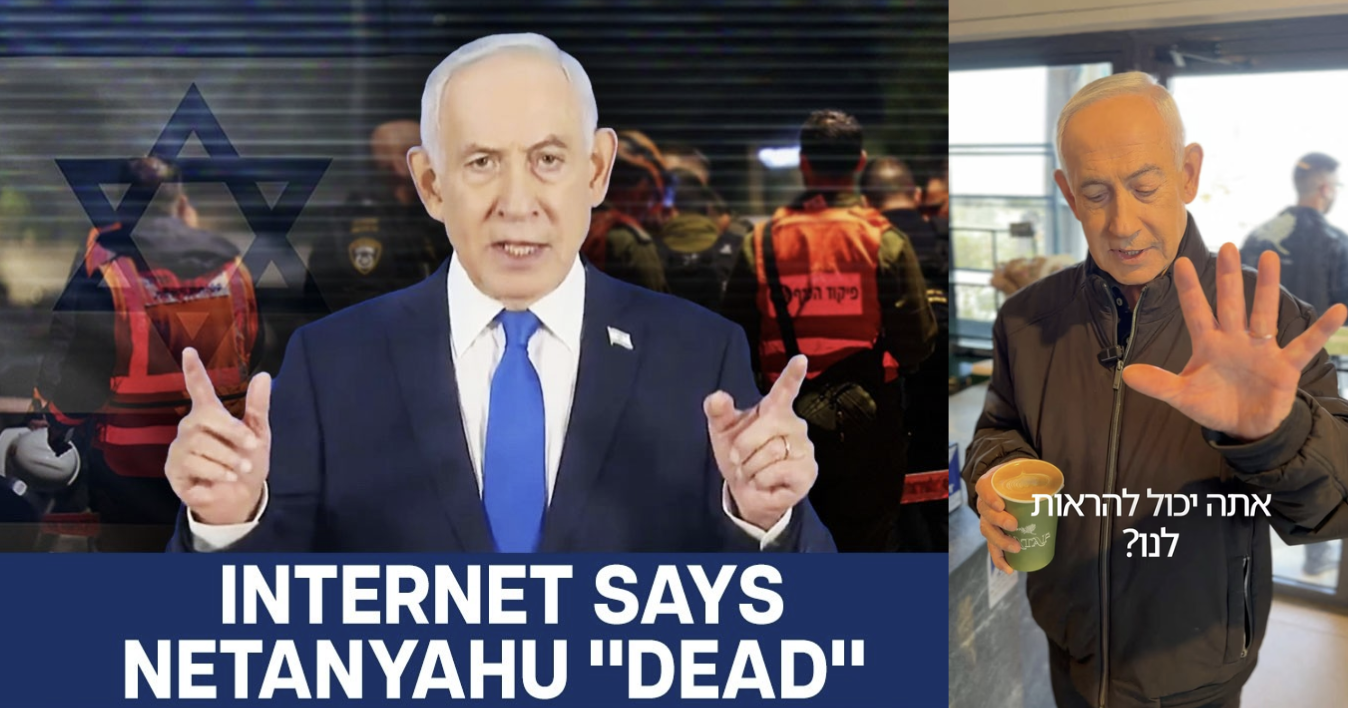
Instead, the "Coffee Shop Video" became the subject of even more rigorous "forensic" analysis. Skeptics pointed to the behavior of the liquid in the cup, claiming it defied gravity when tilted, and noted that the coffee level did not decrease after the Prime Minister took a sip. Others highlighted a "mask-like" line around his jaw and ear, which they interpreted as a poorly blended deepfake overlay. The presence of a background patron wearing a surgical mask—a rarity in 2026—was also cited as evidence that the footage might have been recycled from an earlier era or staged in a controlled environment.
The phenomenon took a surreal turn as users began fighting deepfakes with deepfakes. Counter-narratives emerged featuring AI-generated videos of other regional leaders, such as the recently deceased Supreme Leader of Iran, Ali Khamenei, or North Korea’s Kim Jong-un, placed in the same café setting. These parodies were intended to demonstrate how easily "proof of life" could be manufactured in the current technological climate, effectively neutralizing the PMO’s attempts at transparency.
Recognizing the potential for these rumors to destabilize regional markets and demoralize the Israeli public, international fact-checking organizations intervened. On March 15, Reuters published an extensive investigative report into the Sataf Café footage. Using geolocation techniques and file imagery, Reuters confirmed that the interior of the café matched the video perfectly. Furthermore, they cross-referenced the visit with independent photos posted by other patrons who were present at the café on that Sunday. Despite these efforts, a Reuters video uploaded to YouTube the following day was met with a barrage of comments accusing the news agency of being "complicit in the psyop."
The persistence of the "Netanyahu is Dead" theory highlights a broader systemic challenge in the modern information ecosystem. Analysts suggest that the public is currently trapped in the "Uncanny Valley" of political communication. As government entities increasingly use digital filters for aesthetic purposes or security-related alterations, the distinction between a "real video with a filter" and a "completely synthetic creation" becomes indistinguishable to the untrained eye.
Furthermore, the geopolitical implications of this uncertainty are profound. In Iran, state-run media has utilized the online skepticism to bolster its narrative of military success, suggesting that the "Zionist entity" is in such a state of disarray that it must rely on "holographic leadership." Domestically, the rumors have placed immense pressure on the Israeli coalition government to produce the Prime Minister in a live, unedited, and highly public setting—a move that security advisors have cautioned against due to the ongoing threat of targeted missile strikes.
The 2026 controversy serves as a landmark moment in the history of information warfare. It marks the point where the "technical literacy" of the general public—their knowledge of AI artifacts like extra fingers or lighting glitches—has become a double-edged sword. While this literacy allows citizens to spot genuine misinformation, it also equips them with a vocabulary to reject inconvenient truths.
As of late March 2026, the status of Benjamin Netanyahu remains a subject of intense debate in the digital sphere, regardless of the physical reality. The event underscores a sobering reality for world leaders in the age of generative AI: in a world where anything can be faked, eventually, nothing can be proven. The "American-Iranian War" is being fought not just in the skies over the Middle East, but in the metadata of every video clip and the comments sections of every social media platform, where the casualty is often the very concept of objective truth.
The Israeli government has yet to announce a formal live address to the nation to put the rumors to rest, citing ongoing operational security. Until such an event occurs, or until the conflict reaches a de-escalation point that allows for traditional journalism to resume its role without the constraints of war-time censorship, the "Bibi is Dead" conspiracy remains a potent example of how digital shadows can obscure even the most prominent figures on the world stage. Supporting data from social media monitoring firms indicates that the volume of "deepfake" mentions in relation to Netanyahu remains at an all-time high, suggesting that the "digital fog of war" may take months, if not years, to fully dissipate.

