
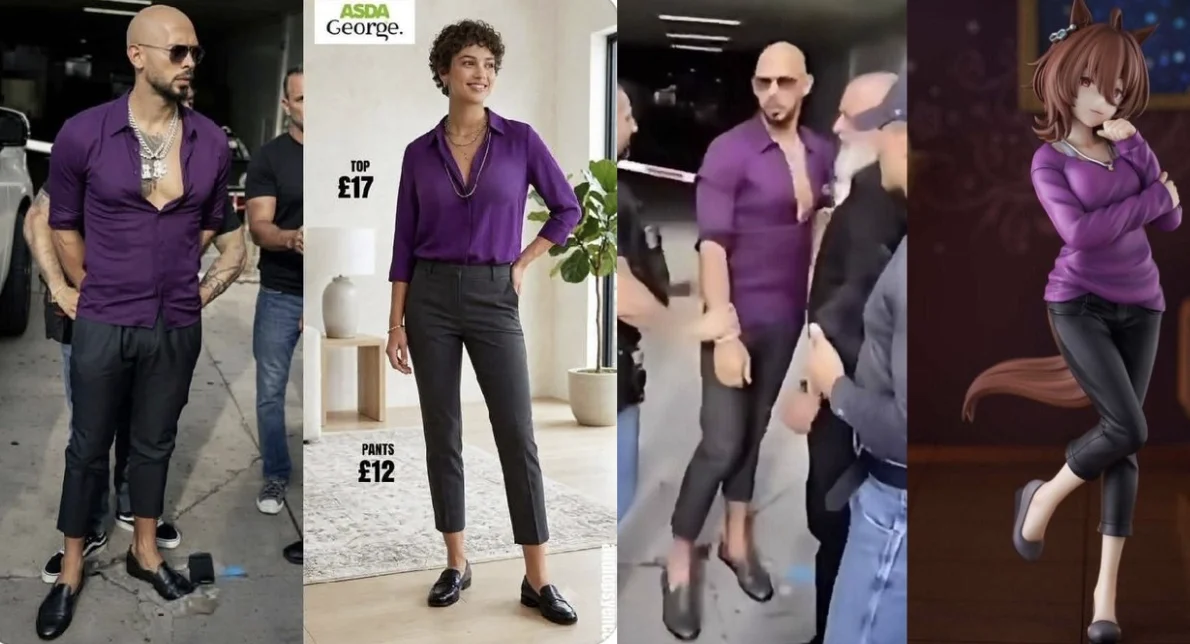
The arrest of polarizing social media influencer and former kickboxer Andrew Tate in Miami in July 2026 sparked a global digital phenomenon that transcended the legal gravity of the situation. While the proceedings involved serious international legal maneuvers and extradition requests, the public discourse shifted rapidly toward a singular, visual focal point: Tate’s choice of attire at the moment of his detention. The "Andrew Tate Arrest Outfit Meme" emerged as a dominant cultural touchstone, characterized by widespread mockery of a purple, blouse-style shirt and cropped trousers that many observers felt stood in direct opposition to the hyper-masculine "alpha male" persona Tate has cultivated for years.
The incident occurred in mid-July 2026, just as Andrew and his brother, Tristan Tate, were preparing for a high-profile appearance in Miami. The arrest was executed by local law enforcement in coordination with federal authorities, acting on outstanding extradition warrants originating from the United Kingdom. These warrants were linked to a series of long-standing allegations involving sexual assault and physical violence, charges which the Tate brothers have consistently denied. However, as photographs of a handcuffed Andrew Tate being led away by officers hit the internet, the gravity of the legal charges was momentarily eclipsed by a viral critique of his fashion choices.
The Visual Anatomy of a Viral Moment
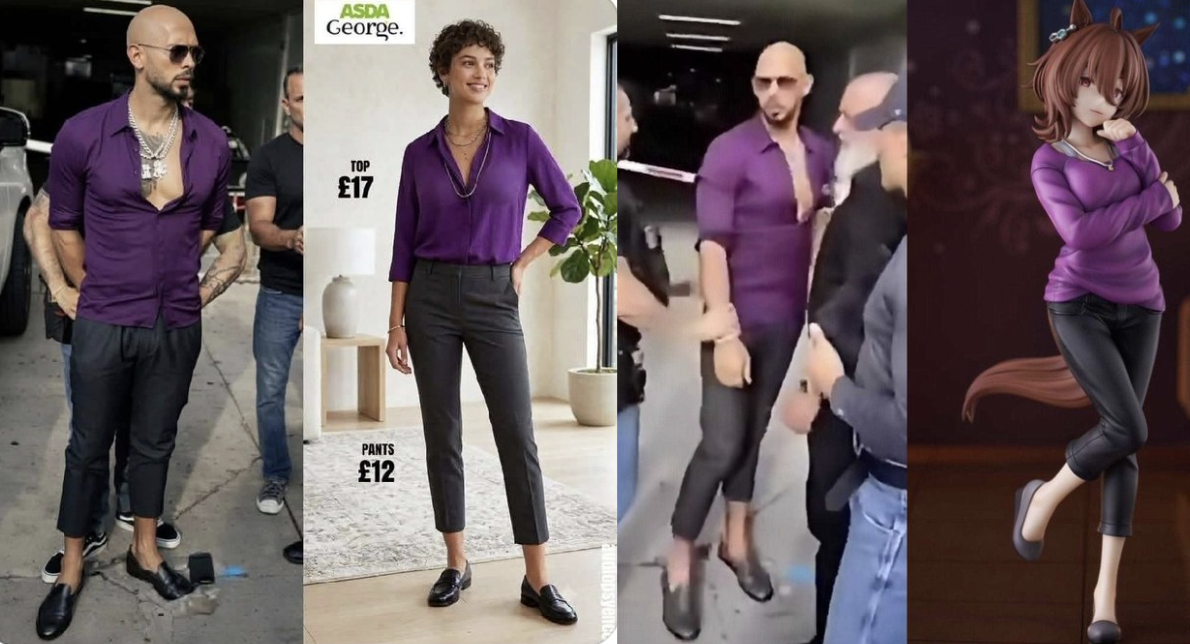
The photographs that ignited the meme cycle depicted Andrew Tate in a style of dress that social media users described as "flamboyant" and "feminine." The ensemble consisted of a shimmering, deep-purple button-down shirt, notably unbuttoned to the mid-chest, paired with tight, black, cropped trousers that ended several inches above the ankle—a style often referred to as capris. He completed the look with dark loafers and a prominent necklace.
The immediate reaction on platforms such as X (formerly Twitter), TikTok, and Instagram was one of cognitive dissonance. Tate, who has built a multi-million dollar brand on the "Manosphere" tenets of traditional masculinity, stoicism, and "Top G" luxury, appeared to be wearing garments that his own followers might typically associate with the "matrix" or "effeminate" culture he frequently derides. This perceived hypocrisy became the engine for the meme’s rapid acceleration.
Chronology of the Social Media Explosion
The timeline of the meme’s spread reveals how quickly a physical event can be transformed into a digital asset for satire. On July 18, 2026, shortly after the first images were leaked and circulated by news outlets covering the Miami arrest, Derek Guy, a prominent menswear critic known as "the menswear guy" on X, posted a photograph of the Tate brothers. His caption, "I just had Andrew and Tristan Tate arrested in Miami for wearing these outfits," acted as a catalyst. Within 72 hours, the post garnered over 1.84 million views and 71,000 likes, legitimizing the fashion-based critique within broader circles of social commentary.
By July 19, the discourse shifted from general mockery to specific, humorous comparisons. The news account @LondonEconomic reported that internet sleuths had purportedly tracked the components of Tate’s outfit to the "George" womenswear line at ASDA, a British supermarket chain. Posts claimed the shirt and trousers were available for a combined price of approximately £29. While the factual accuracy of these specific retail links was debated, the narrative that the "wealthy alpha male" was wearing budget-friendly women’s clothing became an indelible part of the meme.
On July 20 and 21, the meme entered its "transformative" phase. Users began comparing Tate to various pop culture figures and fictional characters. One viral post compared the influencer to Agnes Tachyon, a character from the Japanese media franchise Umamusume: Pretty Derby, noting the striking similarity in the color palette and silhouette. On TikTok, creators utilized the "Green Screen" effect to place themselves next to the arrest photos, offering satirical "get the look" tutorials or analyzing the outfit’s "energy" using the platform’s popular "de-influencing" tropes.
Background and Legal Context
To understand the impact of the meme, one must consider the high-stakes legal environment surrounding the Tate brothers in 2026. The Miami arrest was not an isolated incident but the latest chapter in a multi-year legal saga that began in Romania in December 2022. At that time, the brothers were detained on suspicion of human trafficking, rape, and forming an organized crime group to exploit women.
Following years of house arrest, judicial monitoring, and various court appeals in Bucharest, the 2026 Miami arrest represented a significant escalation. The UK’s Crown Prosecution Service (CPS) had been seeking the brothers’ return to face trial for separate allegations dating back to 2012–2015. The timing of the Miami arrest, occurring just before a planned public event, suggested a strategic move by authorities to ensure the brothers did not move to a jurisdiction without an extradition treaty with the UK.
Despite the severity of these allegations—which include the "loverboy method" of recruitment for adult content production—the "Arrest Outfit Meme" demonstrated the internet’s tendency to use humor as a tool for "status leveling." By mocking Tate’s appearance, detractors sought to undermine the authority and "coolness" that serve as the foundation of his influence over young male audiences.
Analysis of the "Alpha Male" Paradox
Sociologists and digital culture analysts have noted that the Andrew Tate Arrest Outfit Meme is a textbook example of "brand subversion." Tate’s public image is meticulously curated to project power, wealth, and traditional virility. He is frequently seen in bespoke Italian suits, driving Bugattis, or training in MMA gyms. The arrest outfit, however, presented a "vulnerable" or "unfiltered" version of his aesthetic that felt inconsistent with his teachings.
The mockery centered on several key contradictions:
- The Silhouette: The cropped pants and fitted purple blouse were viewed as a departure from the "power suit" aesthetic.
- The Retail Value: The suggestion that the outfit was sourced from a budget womenswear line directly challenged Tate’s "Hustler’s University" narrative of extreme financial success.
- The Setting: Being arrested in such an outfit while handcuffed provided a visual metaphor for a loss of control, a state Tate frequently tells his followers to avoid at all costs.
For many critics, the meme was not merely about fashion; it was a rebuttal to the "Manosphere" ideology. By framing Tate’s clothing as feminine, the internet used the very gender-based hierarchies Tate promotes to mock him, creating a feedback loop of irony.
Official Responses and Reactions
While Andrew Tate’s legal team focused on the specifics of the extradition warrants, his social media apparatus attempted to reframe the narrative. In the days following the arrest, accounts associated with Tate posted messages suggesting that the outfit was a deliberate choice or that the "Matrix" was trying to distract the public with trivialities. These responses, however, struggled to gain the same traction as the memes themselves.
Legal experts noted that the viral nature of the outfit might have an unintended effect on the jury pool or public perception in the UK. "In the age of social media, the first image a public sees of a defendant can be incredibly influential," said one legal analyst. "While a purple shirt has no bearing on a human trafficking charge, the loss of a ‘tough guy’ image can alter the way a defendant is perceived by a global audience."
Broader Impact on Influencer Culture
The Andrew Tate Arrest Outfit Meme highlights a shift in how the public consumes "true crime" and legal news involving digital celebrities. In the past, an arrest of this magnitude would be covered with somber journalistic distance. In 2026, the news is immediately processed through the lens of meme culture, where the visual "vibe" of an event often carries more weight than the underlying facts.
Furthermore, the meme underscores the fragility of influencer brands built on rigid personas. When an influencer’s real-world appearance fails to align with their digital "avatar," the resulting "cringe" becomes a powerful tool for deconstruction. For Tate, whose influence is predicated on being an aspirational figure, the transition from "Top G" to a "fashion victim" in the eyes of millions represents a significant hurdle in maintaining his ideological grip on his audience.
As the legal proceedings against the Tate brothers continue in both the US and the UK, the images of the purple blouse and cropped pants remain a permanent fixture of his digital footprint. The meme serves as a reminder that in the attention economy, a single wardrobe choice can become as significant as a court filing, defining a public figure’s legacy as much as their rhetoric or their crimes.

