
The Friction of Tool Proliferation and the "Toggle Tax"
For the past two decades, the primary solution for digital productivity has been the introduction of new applications to solve specific problems. However, this "there’s an app for that" mentality has led to a phenomenon known as the "toggle tax." According to research published in the Harvard Business Review, the average employee switches between different applications and websites nearly 1,200 times a day. This constant context switching accounts for up to four hours of lost productivity per week, or roughly 9% of an employee’s annual time at work.
As artificial intelligence entered the mainstream, it initially exacerbated this problem. Users were suddenly expected to navigate terminal commands, manage complex prompt engineering, and jump between disparate chat interfaces to accomplish tasks that previously required a single click. The current market correction suggests that users do not want more tools to manage; they want existing tools to become more capable. The focus is shifting toward addressing problems characterized by high severity, high frequency, and high levels of frustration through integrated features that align with established mental models.
Analyzing the "AI-First" Fallacy versus Quiet AI
The concept of "AI-first" products—platforms built entirely around a large language model (LLM) core—has dominated venture capital funding for several years. While these products often demonstrate impressive speed in content generation, they frequently neglect the decades of design evolution that have shaped user expectations. UX experts argue that "AI-first" often ignores the nuanced, small-scale design decisions that make software intuitive.
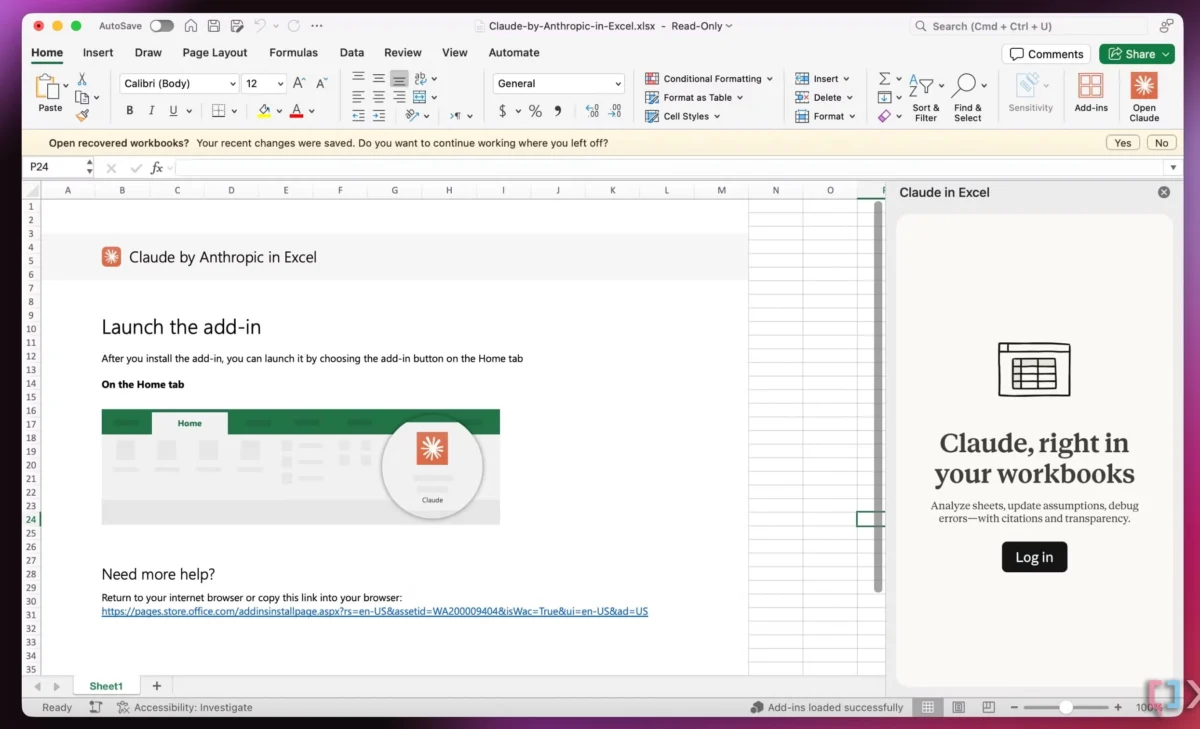
In contrast, "Quiet AI" represents a more sophisticated stage of technological maturity. Quiet AI refers to intelligent features that sit in the background, performing repetitive or frustrating tasks without demanding constant user attention. This approach respects the user’s existing workflow. For instance, the integration of Anthropic’s Claude into Microsoft Excel and PowerPoint allows users to analyze specific rows or columns of data without ever leaving the spreadsheet environment. This context-aware assistance eliminates the need for manual data exportation and the subsequent re-importation of AI-generated results, thereby reducing the risk of data corruption and user error.
Chronology of the Interface Shift: From GUI to Agentic Systems
The evolution of how humans interact with computers has moved through several distinct eras, each defined by the level of abstraction between the user and the machine’s operations.
- The Command Line Era (1960s–1980s): Users required specialized knowledge to communicate with computers through text-based commands.
- The Graphical User Interface (GUI) Era (1980s–2010s): The introduction of folders, icons, and windows allowed users to interact with digital objects based on real-world metaphors.
- The Cloud and Mobile Era (2010s–2022): Accessibility became the priority, with tools becoming increasingly specialized and fragmented across devices.
- The Generative AI "Chat" Era (2022–2024): A brief return to text-based interaction, where users "chatted" with standalone bots to generate outputs.
- The Seamless Integration Era (2024–Present): The current shift toward "agentic" systems that understand system-level instructions and operate within the GUI.
This chronological progression shows that while generative AI initially regressed toward a text-heavy, command-like interface, the industry is now correcting toward a hybrid model where AI enhances the GUI rather than replacing it.
Case Study: System-Level Folder Instructions
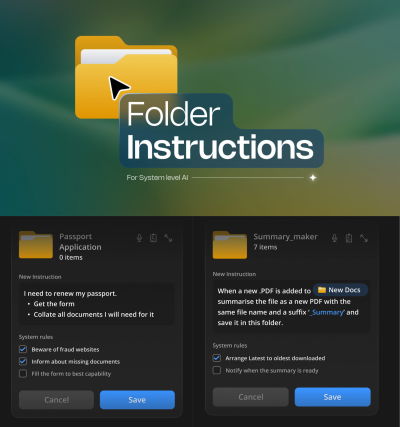
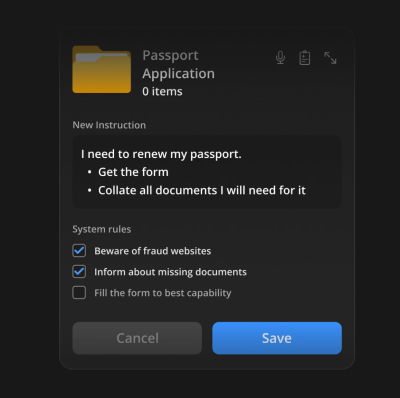
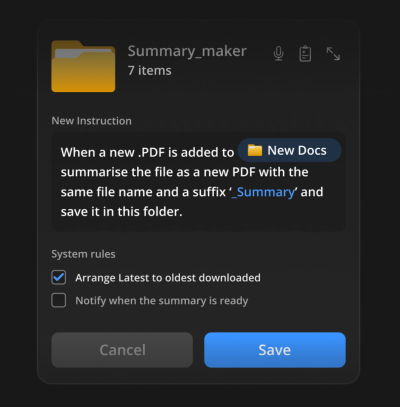
One of the most prominent examples of this new integration philosophy is the concept of "Folder Instructions" for system-level AI. Proposed by designers such as Karthikeya GS, this model reimagines the traditional file folder—a staple of computing since the 1980s—as a dynamic, agentic space.
Instead of a folder being a static container for files, users can define specific "intentions" or "rules" for that folder. For example, a folder labeled "Passport Application" could be programmed with instructions to automatically verify that all uploaded documents are in PDF format, summarize the contents of those documents, and flag missing requirements based on government regulations.
This model represents a breakthrough in UX for several reasons:
- Locally Scoped Permissions: The AI’s actions are restricted to a specific folder, addressing significant privacy and security concerns regarding LLM access to entire hard drives.
- Automation at the Source: Work happens where the files live, eliminating the need to upload sensitive documents to third-party web interfaces.
- Established Mental Models: Users already understand how to drag and drop files into folders. By adding "instructions" to the folder itself, the technology adapts to the human, rather than forcing the human to learn a new workflow.
Supporting Data: The Impact of Integrated Features on User Retention
Recent market data supports the move toward integration. A 2024 survey of enterprise software users found that 68% of respondents preferred AI features that were added to their current tools over new, standalone AI applications. Furthermore, retention rates for SaaS products that introduced integrated AI helpers saw a 15% increase compared to those that remained static.
The data suggests that the "shiny object" phase of AI is ending. Users are no longer satisfied with the novelty of a chatbot; they are looking for "utility-per-click." Features that automate the generation of PDF summaries within a file manager or provide real-time formula suggestions in a spreadsheet are seeing higher engagement metrics than general-purpose AI assistants.
Industry Reactions and Expert Perspectives
The shift toward seamless integration has prompted a reevaluation of design education. Vitaly Friedman, a prominent figure in the web design community and founder of Smashing Magazine, has launched "Design Patterns for AI Interfaces," a curriculum specifically aimed at teaching designers how to move beyond the "chat box" paradigm. Friedman’s work emphasizes that user value is created by reducing frustrations and slowdowns, not by adding more views and sources to an already crowded screen.
"Users’ value doesn’t emerge from having to juggle between multiple applications every few minutes," Friedman notes. "It comes from taking care of tasks that otherwise would take too much time and effort to complete well."
Major tech conglomerates are following suit. Apple’s introduction of "Apple Intelligence" and Microsoft’s "Copilot" are both marketed as system-wide layers that understand context across different apps, rather than isolated tools. This indicates an industry-wide consensus that the future of AI is integrated, not isolated.
Broader Implications and Future Outlook
The implications of this shift extend beyond simple productivity. As AI becomes more integrated into the "quiet" background of our operating systems, the barrier to entry for complex digital tasks will continue to lower. However, this also raises questions about user agency and the "black box" nature of automated folder management.
If a system-level AI is organizing files and summarizing documents automatically, the transparency of those actions becomes paramount. Designers are now tasked with creating "feedback loops" that inform the user of what the AI has done without being intrusive—a delicate balance that will define the next decade of software design.
Furthermore, the economic landscape for startups is changing. The "wrapper" startups—those that simply provide a different interface for existing LLMs—are finding it difficult to compete with incumbent giants like Microsoft, Google, and Adobe, who can integrate the same AI capabilities directly into the tools people already use. The competitive advantage is shifting from "who has the best model" to "who has the best integration."

In conclusion, the era of tool saturation is giving way to an era of capability integration. By focusing on "Quiet AI" and seamless features like folder-level instructions, the tech industry is finally aligning artificial intelligence with the established mental models of its users. This evolution promises a future where technology is less of a distraction and more of a silent, efficient partner in the digital workspace. As we move forward, the success of any new AI implementation will be measured not by its novelty, but by its invisibility.

