

This week’s influx of new services for e-commerce merchants highlights a dynamic and rapidly evolving digital marketplace, with innovations spanning product video creation, cross-border payments, recommerce, social marketing integration, localized commerce solutions, sophisticated tax compliance tools, advanced fulfillment automation, strategic recovery services, and robust product data management. These developments underscore a collective push by technology providers to equip online businesses with the tools necessary to navigate complex consumer demands, optimize operational efficiency, and enhance their competitive edge in an increasingly saturated digital economy.
Revolutionizing Product Presentation and Marketing
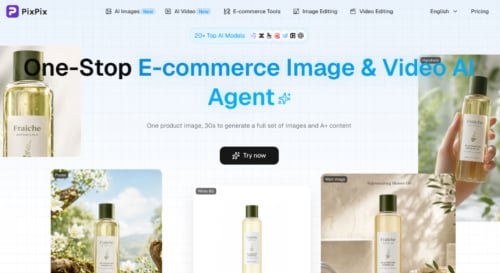
The critical role of engaging visual content in e-commerce is being amplified by new technologies aimed at streamlining video production and social media marketing. PixPix, an AI-powered tool for e-commerce and content marketing, has introduced a groundbreaking AI video editing feature designed to significantly reduce the cost and time associated with creating product videos. This innovative capability allows marketing teams to leverage existing video assets, replicating camera styles, visual atmosphere, composition, and pacing, while seamlessly replacing the featured product with their own. This technology is poised to democratize high-quality video content creation, making it accessible for short-form advertisements, engaging social media posts, compelling product pages, and efficient campaign testing. The demand for video content is projected to continue its ascent, with studies indicating that over 80% of internet traffic will be video by 2026, further emphasizing the strategic importance of tools like PixPix.

Complementing this push for visual marketing, Vmake Labs has launched "Brainrot Marketing" video styles, specifically tailored for small businesses. This innovative approach transforms ordinary product photos into short, attention-grabbing social videos characterized by their chaotic, surreal, and unconventional aesthetic. By simply uploading a product image and selecting a Brainrot-inspired style, businesses can generate ready-to-post marketing videos in mere seconds. This offering taps into the growing trend of highly engaging, often meme-driven, social media content that resonates with younger demographics. The effectiveness of such unconventional marketing can be seen in the rapid virality of certain social media campaigns, suggesting a significant potential for increased engagement and brand awareness for businesses adopting these styles.
In a significant move for social media integration, Klaviyo, a well-established platform for email, SMS, and CRM, has enhanced its offering with the addition of social marketing capabilities. This feature aims to bridge the gap between siloed social media engagement and broader omnichannel marketing strategies. By enabling social auto-replies that capture consent for email, text, and WhatsApp communications, Klaviyo effectively turns social media followers into valuable subscribers, thereby enriching first-party data. Furthermore, the platform captures social interactions, content, and engagement signals to build more relevant and segmented audiences. This holistic approach to customer data is crucial, as businesses increasingly recognize the value of a unified view of customer interactions across all touchpoints. According to recent industry reports, personalized marketing campaigns driven by comprehensive customer data can lead to a significant uplift in conversion rates, often exceeding 25%.
Enhancing Global Commerce and Localized Engagement
The complexities of international trade and localized customer engagement are being addressed through several new service launches. Shift4, a prominent payment processing and commerce technology provider, has introduced Shift4 One, a comprehensive point-of-sale platform designed for cross-border transactions. This all-in-one solution integrates payments, dynamic currency conversion, and tax-free shopping into a single, handheld device. The tax-free shopping component is powered by Global Blue, a company recently acquired by Shift4. Initially launched in the UK, Ireland, Spain, and Germany, Shift4 One is slated for expansion across 15 European countries by the end of the year. This expansion addresses a growing demand for seamless international payment experiences, with cross-border e-commerce sales projected to reach over $2 trillion globally by 2026.
For businesses operating within specific geographic regions, MyCommunityToday has launched Deal Chief, an AI-powered sales agent designed to support local businesses. Operating as a dedicated sales agent, Deal Chief generates leads and promotes deals, enhancing the visibility of neighborhood businesses within their communities. MyCommunityToday functions as a local marketplace, providing an online presence for businesses to showcase their products, services, deals, and coupons. This initiative aligns with the growing consumer preference for supporting local enterprises, a trend that has seen renewed momentum in recent years. The rise of platforms facilitating local commerce is indicative of a market seeking to bridge the gap between the convenience of online shopping and the desire for community-focused engagement.
Streamlining Payments and Tax Compliance
Navigating the intricate landscape of sales tax and international payments remains a significant challenge for e-commerce merchants. In response, Kintsugi has announced a native integration with Shopline, a global commerce platform. This collaboration aims to simplify sales tax, value-added tax (VAT), and goods and services tax (GST) compliance for Shopline’s merchants. The integration provides a comprehensive tax compliance workflow, encompassing accurate calculation at checkout, real-time nexus monitoring, automated registration processes for country, state, and local taxes, and automated filing. As global tax regulations become increasingly complex, with initiatives like the EU’s VAT e-commerce directive imposing stricter obligations on marketplaces and sellers, tools like Kintsugi are becoming indispensable. The global market for tax compliance software is projected to grow substantially, reflecting the critical need for automated solutions.
In a related development for international transactions, Payfuture, a London-based fintech company, has integrated with Shopify to offer merchants in India access to localized payment methods. This integration includes popular options such as Unified Payments Interface (UPI) and NetBanking, facilitating smoother transactions for Indian consumers. This move is part of Payfuture’s broader strategy to provide seamless local payment connectivity through major e-commerce platforms, recognizing that offering familiar payment options is crucial for conversion rates in diverse markets. India’s digital payments market is experiencing explosive growth, with UPI transactions alone reaching billions per month, highlighting the immense opportunity for businesses that can effectively tap into this ecosystem.

Further consolidating payment and commerce solutions, Wix has partnered with Elavon, a global payment processing company and subsidiary of U.S. Bank. This collaboration aims to provide unified commerce solutions specifically for small businesses. By combining Elavon’s payment processing tools with Wix’s robust e-commerce offerings, the partnership seeks to streamline online and in-person sales, bookings, inventory management, and real-time analytics. This integrated approach is vital for small businesses that often struggle with managing disparate systems for their online and offline operations. The global unified commerce market is expanding rapidly, driven by the need for seamless customer experiences across all sales channels.
Advancing Recommerce and Inventory Management
The recommerce market, particularly in fashion, is experiencing significant growth, fueled by consumer interest in sustainability and value. Fleek, a London-based secondhand fashion company, has secured $25 million in its latest funding round, with participation from notable investors including Burda Principal Investments, eBay, FJ Labs, and H14. Fleek’s platform leverages artificial intelligence, including a custom model named Sort, trained on millions of transactions, to enhance its recommerce operations. This investment signals strong confidence in the recommerce sector, which is projected to grow at a significantly faster rate than the overall retail market in the coming years, driven by increasing environmental awareness and a desire for more affordable fashion options.
In the realm of inventory recovery and liquidation, Eaton Hudson has launched its E-Commerce Liquidation Division. This new platform is designed to assist retailers and brands in maximizing the value of excess inventory, customer returns, warehouse assets, and distressed e-commerce merchandise. By offering specialized recovery and advisory services, Eaton Hudson aims to provide a strategic solution for managing overstock and unsold goods, thereby minimizing financial losses and environmental impact. The growing volume of returns in e-commerce, which can represent a substantial percentage of sales, necessitates efficient and effective liquidation strategies.

Optimizing Fulfillment and Product Data
Operational efficiency in e-commerce fulfillment is being transformed by advancements in automation and robotics. Robust AI, a provider of warehouse automation solutions, has partnered with ShipLab, an e-commerce fulfillment and logistics firm, to deploy mobile robots at ShipLab’s Vista, California facility. This deployment will initially focus on automating tote transport between fulfillment and packing stations, with plans to expand to a fleet of robots across the entire picking operation. The integration of robotics in warehouses is crucial for handling the increasing volume of online orders and reducing labor costs, while also improving accuracy and speed. The global warehouse robotics market is experiencing substantial growth, with projections indicating a significant increase in adoption by e-commerce businesses.
Furthermore, the management and presentation of product data are being revolutionized by artificial intelligence. Akeneo, a leading product data provider, has introduced Agentic Ziggy, a product experience platform that enables users to manage AI agents for enriching, governing, and orchestrating data throughout the product lifecycle. Product data teams can deploy Agentic Ziggy for tasks such as data modeling, schema mapping, and enrichment, ensuring consistency and accuracy across all product information. In today’s data-driven retail environment, high-quality product data is essential for everything from search engine optimization to personalized customer recommendations. The ability to leverage AI for product data management promises to unlock new levels of efficiency and effectiveness.
Expanding Educational Resources for Sellers
In a move to support the burgeoning community of online sellers, Amazon has made its Seller University program available to everyone, irrespective of whether they have an active selling account. This free educational resource offers a wide array of on-demand content, including videos and downloadable guides, covering essential topics such as listing optimization, pricing strategies, fulfillment methods, and advertising techniques. The program caters to all experience levels, from beginners to seasoned sellers, aiming to equip them with the knowledge needed to succeed on the Amazon marketplace. The accessibility of such resources is vital, as the number of third-party sellers on platforms like Amazon continues to grow, creating a competitive landscape where knowledge and strategic execution are paramount. The availability of comprehensive training materials democratizes access to best practices, potentially leveling the playing field for smaller businesses.

