
The integration of generative artificial intelligence into the product design lifecycle has reached a critical juncture where the quality of output is no longer limited by the intelligence of the Large Language Model (LLM), but by the structural integrity of the design systems it consumes. Industry experts and design system architects are increasingly identifying a phenomenon known as "design drift," where AI-generated prototypes fail to deliver consistent results due to minute inconsistencies, undocumented decisions, and hard-coded values within a design library. To address these systemic failures, a new framework is emerging that reclassifies design decisions as foundational infrastructure, requiring a transition from traditional UI kits to LLM-readable documentation.
The Problem of Design Debt in the Age of Generative AI
For years, design systems were built primarily for human consumption. Designers navigated Figma files or documentation sites, interpreting visual cues and applying tribal knowledge to bridge the gaps between components. However, as organizations attempt to automate the prototyping phase using AI, these human-centric systems are proving inadequate. When an LLM is tasked with generating a high-fidelity mockup or a functional code prototype, it often makes assumptions based on incomplete data.
The primary cause of failure in AI-generated design is "design debt"—the accumulation of inconsistencies that occur when decisions are made but not formalized in a machine-readable format. Hard-coded hex codes, detached instances in Figma, and a lack of standardized spacing variables create "noise" that confuses AI agents. Without a clear set of rules, the AI relies on probabilistic guessing rather than deterministic adherence to brand guidelines. This results in prototypes that look "almost" right but require significant manual intervention to become production-ready, effectively neutralizing the efficiency gains promised by AI.
The Evolution of Design Systems: A Chronological Perspective
The shift toward AI-ready design systems represents the fourth major evolution in the history of digital interface management. Understanding this timeline is essential for organizations looking to modernize their workflows.
- The Static Era (Pre-2010s): Design was largely managed through static style guides—PDFs or physical manuals that dictated color palettes and typography. These were purely descriptive and had no functional link to the final product.
- The Component Era (2010–2018): With the rise of tools like Sketch and Figma, design systems shifted toward reusable component libraries. The focus was on visual consistency and the creation of "atomic" elements that could be dragged and dropped into layouts.
- The Dynamic/Token Era (2018–2023): The introduction of design tokens allowed for a programmatic connection between design and code. Variables for colors, spacing, and typography ensured that changes in the design tool could be reflected across multiple platforms simultaneously.
- The AI-Ready Era (2024–Present): The current phase involves the creation of "LLM-readable" systems. This requires moving beyond visual components to include structured metadata—spec files, logic-based guidelines, and context engineering—that allow AI to understand the why behind design choices.
Design Decisions as Infrastructure: The Core Framework
A central tenet of the emerging AI-design methodology, championed by experts such as Hardik Pandya of Atlassian, is the treatment of design decisions as infrastructure. In this model, every decision—ranging from accessibility standards to work prioritization—is treated with the same rigor as backend server architecture.

To achieve this, the design system must be decomposed into three distinct layers: the Spec Layer, the Token Layer, and the Audit Layer.
1. The Spec Layer (Structured Markdown)
The Spec Layer serves as the "brain" of the AI-ready design system. Rather than relying on an AI to visually decode a Figma mockup, organizations are now utilizing structured Markdown files. These text-based files contain explicit instructions on component usage, spacing rules, and design principles.
Because LLMs process text more efficiently and accurately than images, providing a Markdown-based specification reduces the risk of the AI "hallucinating" design patterns. For instance, a spec file might define that a "Primary Button" must always have a 16px padding and be used only for the most important call-to-action on a page. When the AI reads this text, it follows the rule deterministically, ensuring that the generated prototype adheres to the design system’s logic.

2. The Token Layer (Standardized Variables)
The Token Layer ensures that the AI operates within a closed set of named variables. Instead of an AI choosing a color that "looks like" the brand’s blue, it is restricted to a specific set of tokens (e.g., color-brand-primary-500). This eliminates the introduction of hard-coded values that plague traditional design files. By maintaining an updated token layer, organizations ensure that AI-generated code is inherently compatible with the existing codebase, allowing for a seamless transition from prototype to production.
3. The Audit Layer (Automated Verification)
The final component of the framework is a continuous auditing process. Tools like FigmaLint have become essential for maintaining system health. FigmaLint, a free plugin, allows designers to scan their files for detached instances, missing interactive states, and unlinked tokens. In an AI-driven workflow, this tool serves as a pre-processor; by "cleaning" the design system before the AI consumes it, designers ensure that the data being used for training or generation is of the highest possible quality.
Data Analysis: Why Text Beats Mockups
Empirical observations in the field of AI-assisted design suggest that extending code from text-based specifications is significantly more cost-effective and accurate than generating code from visual mockups. There are three primary reasons for this:
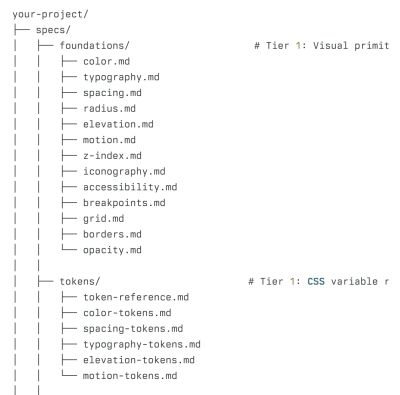
- Token Consumption Efficiency: LLMs have limited context windows. Processing a high-resolution image of a design flow consumes more "tokens" (units of data) than a well-organized Markdown file. Structured text allows the AI to maintain a larger context of the overall project.
- Ambiguity Reduction: Visual designs often contain "implied" rules that humans understand but AI does not. For example, a designer might intuitively know that a modal should be centered, but unless that rule is codified in a spec file, the AI might place it incorrectly.
- Maintenance Speed: Updating a design system in a text file is faster than manually adjusting dozens of Figma components. When a spec file is updated, the AI immediately adopts the new rules for all future generations.
Context Engineering and the Role of the Modern Designer
The shift toward AI-ready systems is fundamentally changing the role of the product designer. The focus is moving away from manual "pixel pushing" and toward "context engineering." This discipline involves curating the environment in which the AI operates to ensure it has all the necessary information to make informed design choices.
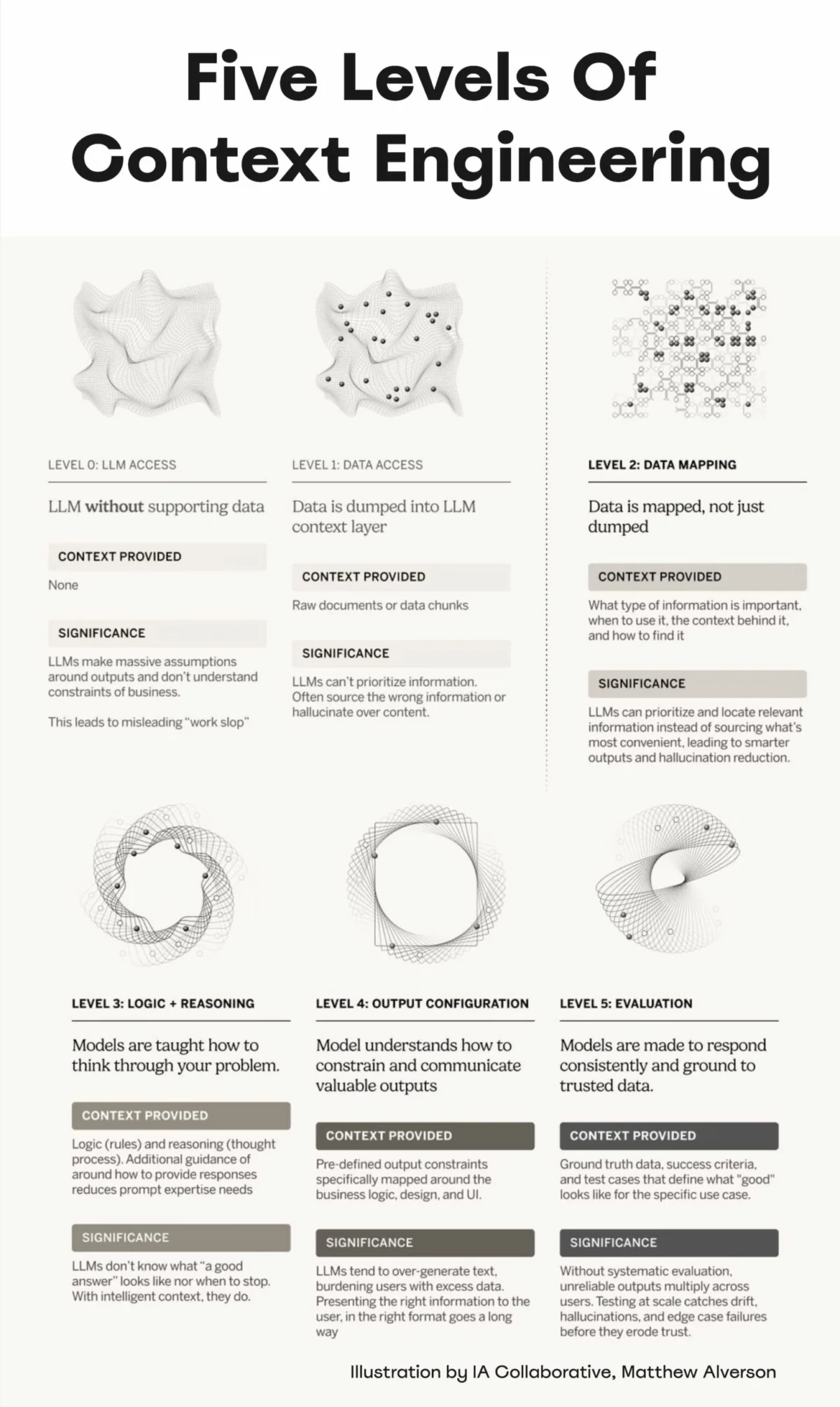
Context engineering is often categorized into five levels, ranging from basic prompting to deep integration with organizational knowledge bases. Designers must now be skilled in documenting the "Do’s and Don’ts" of their systems, establishing clear hierarchies, and ensuring that design principles are translated into logic that an AI can execute.
Industry reactions to this shift have been largely positive, though they highlight a steep learning curve. Vitaly Friedman, a prominent UX consultant and founder of Smashing Magazine, notes that AI cannot "magically resolve" technical or design debt. Instead, it acts as a mirror, reflecting the quality of the guidance it receives. The consensus among design leaders is that while AI will handle the repetitive tasks of prototype generation, the designer’s value will increasingly lie in the creation and maintenance of the "infrastructure" that guides the AI.

Broader Implications and Future Outlook
The move toward machine-readable design systems has implications that extend beyond the design department. It signals a broader trend toward the "programmatic enterprise," where business logic, design principles, and engineering requirements are all stored in unified, structured formats.
For organizations, the benefits are clear:
- Reduced Time-to-Market: AI can generate functional prototypes in seconds, provided the underlying design system is robust.
- Improved Accessibility: By embedding accessibility rules into the Spec Layer, organizations can ensure that every AI-generated component is compliant with WCAG standards by default.
- Vendor Scalability: When working with third-party vendors, a standardized AI-ready design system acts as a "source of truth" that ensures external teams produce work consistent with internal standards.
However, this transition requires a significant upfront investment in "cleaning" existing libraries. Many legacy design systems are riddled with inconsistencies that must be resolved before they can be utilized in an AI-driven pipeline. The "FigmaLint" approach to auditing is becoming a standard prerequisite for any company looking to implement generative AI in their design workflow.

Ultimately, the success of AI in the design space depends on the transition from visual-first to logic-first systems. As design decisions become codified as infrastructure, the gap between a designer’s intent and the AI’s execution will continue to narrow. The industry is entering a phase where the most successful designers will not be those who can draw the best interfaces, but those who can most effectively architect the systems that allow AI to draw them correctly. This shift ensures that while the tools of production are changing, the importance of human-led strategy and systematic thinking remains paramount.

