

In the rapidly evolving landscape of digital product design, the integration of accessibility has long been recognized as a moral and legal imperative. However, recent empirical research suggests that prioritizing users with cognitive disabilities provides a significant competitive advantage in user experience (UX) quality. A comprehensive study conducted by researchers at Fable, a leading accessibility testing platform, in collaboration with the University of California, Irvine, has revealed that participants with cognitive disabilities identify nearly double the number of usability issues compared to the general population. This finding challenges traditional research methodologies and positions cognitive inclusion as a critical "stress test" for digital interfaces.
The Growing Mandate for Cognitive Accessibility
Cognitive disability serves as an umbrella term for a diverse range of conditions that impact how individuals process, retain, and act upon information. These challenges typically manifest in areas of memory, focus, and learning. According to the Centers for Disease Control and Prevention (CDC), cognitive disability is the most prevalent disability in the United States, affecting approximately 13.9% of the population. Furthermore, data from a 2025 Yale study indicates that these numbers are rising sharply, driven by factors ranging from neurodivergent awareness to long-term health trends.
The business implications of these demographics are substantial. As the digital economy becomes the primary conduit for essential services—including banking, healthcare, and education—products that fail to account for cognitive load risk alienating a massive segment of the market. The research spearheaded by Fable’s VP of Innovation aims to move beyond compliance-driven accessibility, seeking instead to demonstrate how cognitive-first testing improves the experience for all users, a phenomenon often referred in design circles as the "curb-cut effect."
Chronology of the Research Initiative
The journey toward these findings began in the summer of 2024, when a working group of expert researchers convened to establish standardized protocols for accessibility testing with people with cognitive disabilities. The initiative was structured in four distinct phases:
- Framework Development: The team established four primary goals focused on understanding the unique needs of this audience and determining the best methods for recruitment and engagement.
- Screener Refinement: Researchers developed a specialized screening process to identify participants who self-identified with challenges in memory, focus, and learning, moving away from clinical diagnoses toward functional descriptors.
- Pilot Testing: An initial group of 25 testers participated in a pilot study to fine-tune interview guides and survey instruments. This phase resulted in the creation of a specialized version of the Accessible Usability Scale (AUS).
- The Comparative Study: In partnership with Syed Fatiul Huq and a team of researchers from Fable and UC Irvine, a joint study was launched to compare the insights of cognitive testers against a "general population" (gen-pop) control group.
Methodology and Experimental Design
To ensure a rigorous comparison, the research team utilized an AI prototyping tool to generate three distinct websites, each serving a different purpose and employing unique design aesthetics. This variety allowed the team to test a wide spectrum of user goals and interface challenges.
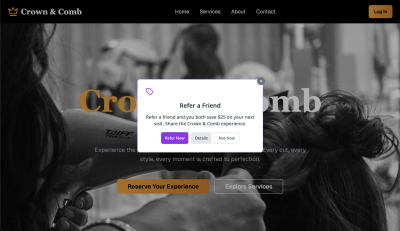
The first site, "Strong Snacks," utilized a simple, brutalist design to host high-protein recipes. The second, "Turning Pages," was a complex bookstore application featuring advanced filtering, a "book swiping" profile builder, and a full checkout flow. The third, "Crown & Comb," was a high-end hair salon site designed with intentional complexity to test appointment booking and membership purchases.
The study involved 30 facilitated user interviews, with 10 sessions per website. Each group featured a 50/50 split between cognitive and gen-pop participants. Following the tasks, every participant completed the 10-question AUS survey to provide a quantifiable metric of their experience.

Quantitative Analysis: The 1.8x Insight Multiplier
The data gathered from these sessions provided a clear validation of the study’s primary hypothesis. Across all three digital environments, participants with cognitive disabilities identified 197 usability issues, while the gen-pop group identified only 113. Similarly, the cognitive group offered 93 suggestions for improvement, compared to 54 from the control group.
This translates to a consistent "insight multiplier" of 1.8x. Essentially, for every one issue a standard user finds, a user with a cognitive disability finds nearly two. This suggests that cognitive testers act as a "canary in the coal mine" for UX friction, surfacing subtle barriers that other users might simply "muddle through" without reporting.
Performance by Site Complexity
The data varied significantly based on the design of the websites:
- Strong Snacks (Simple Design): On this high-readability site, cognitive participants found 9.8 average issues compared to the gen-pop’s 6.4. The AUS scores remained relatively high for both, though cognitive users scored the site 13.7 points lower on average.
- Turning Pages (Varied Functionality): As complexity increased, so did the gap. Cognitive participants found an average of 17 issues, whereas gen-pop participants found 11. The cognitive group’s AUS score plummeted to a median of 58.0, signaling that complex interactions like book-matching and filtering created significant barriers.
- Crown & Comb (Intentional Complexity): This site featured a "bridal package" task designed to be extremely difficult. Interestingly, while cognitive participants found more issues (12 vs. 5), they actually gave the site a higher median AUS score (68.0) than the gen-pop group (35.0). Researchers hypothesize that gen-pop users became more frustrated by the "broken" logic of the site, whereas cognitive users, accustomed to navigating difficult digital landscapes, may have been more patient with the interface despite the high volume of issues found.
Qualitative Findings: Beyond the Numbers
When analyzing the types of issues raised, the research revealed a clear divergence in how the two groups perceived digital friction. Gen-pop participants tended to focus on aesthetic preferences, such as font sizes, colors, and the lack of engaging content. In contrast, cognitive participants identified structural and functional failures.

Cognitive testers frequently flagged issues with "affordances"—the visual cues that tell a user a button is clickable. They also noted "distraction-heavy" layouts, such as continuous animations or pop-ups that drained their "mental energy." One cognitive participant noted that the complexity of the Crown & Comb site made them feel "drained and less able to focus," a visceral reaction that goes beyond mere annoyance.
When categorized, the cognitive group outperformed the gen-pop group in identifying flaws in content clarity, button and link functionality, and the misuse of icons or visual elements. For example, on the "Turning Pages" site, cognitive participants were 2.8 times more likely to struggle with the "Add to Book Bag" interaction, a critical failure point for any e-commerce business.
The Business Case for Cognitive Inclusion
The implications of this research extend far beyond the laboratory. By including cognitive participants in the UX research phase, companies can identify and rectify "cognitive load" issues that affect a broad swath of the population. These issues do not only impact the neurodivergent community; they also affect:
- The Aging Population: US Census data projects that by 2060, one in four Americans will be aged 65 or older. This demographic shift brings a natural increase in age-related cognitive decline, making cognitive-friendly design a requirement for future-proofing any brand.
- Stressed and Multitasking Users: Modern users often browse the web while distracted, tired, or under pressure. A design that is clear enough for a user with ADHD is, by extension, better for a parent trying to pay a bill while managing a toddler.
- Non-Native Speakers: Content that is simplified for cognitive accessibility—using plain language and clear headings—is significantly more accessible to those for whom the site’s primary language is not their first.
From a revenue perspective, the study highlights that usability issues in the checkout and navigation flows are accessibility barriers. If a user cannot find a "bridal package" or understand how to add a book to a cart, they will take their business to a competitor. As one UX Manager at Bell Media noted during the study’s review, "Two sessions with cognitive users feel like 200 because of the volume of insights we get."
Conclusion and Future Outlook
The Fable and UC Irvine study serves as a pivotal piece of evidence for the UX industry. It demonstrates that cognitive inclusion is not merely a subset of accessibility testing but a powerful on-ramp for broader inclusive research. By focusing on clarity, predictability, and the reduction of cognitive load, design teams can create products that are more efficient and resilient.
While the study acknowledged certain limitations—such as a relatively small sample size and the use of different testing platforms (Fable Engage vs. UserFeel)—the consistency of the 1.8x multiplier across three different website types provides a compelling argument for change.
As digital interfaces become increasingly complex through the integration of AI and dynamic content, the need for "human-centered" design has never been greater. Incorporating cognitive insights allows UX teams to move away from guesswork and toward an empirical understanding of how the human brain interacts with technology. In the final analysis, cognitive inclusion is not an optional add-on; it is the most efficient way to ship better products for everyone.

