
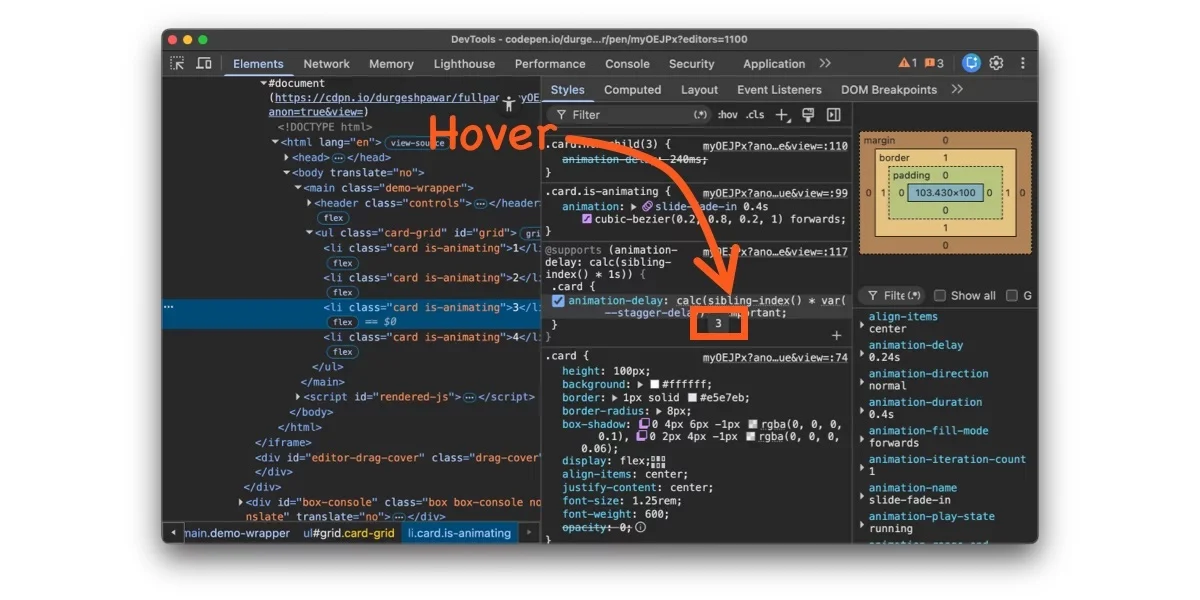
The landscape of front-end development is undergoing a significant transition as the World Wide Web Consortium (W3C) introduces native tree-counting functions into the CSS specification, effectively eliminating decades of reliance on complex JavaScript workarounds and verbose preprocessor loops. With the official introduction of sibling-index() and sibling-count(), developers can now access an element’s position and the total number of its siblings directly within CSS declarations. This advancement represents a fundamental shift in how the browser’s style engine interacts with the Document Object Model (DOM), allowing for dynamic, mathematically driven layouts that were previously impossible without external logic.
The Technical Foundation of Tree-Counting Functions
The sibling-index() and sibling-count() functions are core components of the CSS Values and Units Module Level 5. Historically, CSS has been a declarative language that lacked the ability to "know" its own context in terms of numerical sequence. While selectors like :nth-child() allowed for the targeting of specific elements, they could not produce a value that could be used in calculations. A developer could style the third child differently, but they could not take the number "3" and multiply it by a time unit to create an animation delay.
The new functions resolve this by returning an <integer>. Because these functions resolve to raw numbers rather than strings, they are compatible with the calc() function and other mathematical expressions including min(), max(), and trigonometric functions such as sin() and cos(). This enables a "staggered cascade" effect—where items in a list or grid animate sequentially—to be written in a single line of code: animation-delay: calc(sibling-index() * 100ms);.
A Chronology of Layout Logic
To understand the impact of this update, one must look at the evolution of CSS layout strategies over the last twenty years.
In the early 2010s, the rise of CSS preprocessors like Sass and Less provided a temporary solution. Developers used @for loops to generate dozens of :nth-child selectors, each hard-coding a specific variable for its position. While effective for small, static lists, this approach was brittle. If a list grew beyond the pre-defined loop limit, the staggered effect would break. Furthermore, it bloated the final CSS file with repetitive code.
By the mid-2010s, JavaScript became the primary tool for managing sequential layouts. Scripts would iterate through the DOM, calculating indices and injecting inline styles (e.g., element.style.setProperty('--index', i)). While dynamic, this method introduced a "Flash of Unstyled Content" (FOUC) risk and separated visual concerns from the stylesheet, complicating long-term maintenance.
The formal proposal for native tree-counting functions emerged in the CSS Working Group (CSSWG) under issue #4559. The goal was to give CSS access to information the browser already possessed. Since the browser must build the DOM tree to render the page, the index of an element is inherent data. The approval of this proposal marked the beginning of the "Mathematical CSS" era, where the stylesheet is empowered to perform its own logic based on the DOM structure.
Practical Implementation and Data Efficiency
The efficiency gains provided by these functions are measurable. In traditional CSS architectures, creating a staggered animation for a 1,000-item list required either a JavaScript execution or a CSS file containing 1,000 unique selectors. Industry benchmarks for CSS performance indicate that large stylesheets with thousands of specific selectors can increase style recalculation times and memory consumption.
With sibling-index(), the complexity is reduced from O(N) in terms of code authorship to O(1). A single rule covers an infinite number of siblings. This is particularly relevant for modern web applications that utilize infinite scrolling or dynamic data feeds, where the number of items is not known at build time.
Advanced Patterns: Beyond Simple Staggering
Beyond basic animations, these functions unlock complex geometric layouts. By combining sibling-count() with native CSS trigonometric functions, developers can create radial menus or circular distributions without calculating coordinates in JavaScript.
For instance, a radial layout can be achieved by calculating an angle based on the total number of siblings:
--angle: calc((360deg / sibling-count()) * sibling-index());
This formula ensures that whether there are three items or thirty, they will always be perfectly distributed around a center point. As items are added or removed from the DOM, the browser automatically recalculates the positions during the next style pass, ensuring a fluid and reactive user interface.
Browser Support and Industry Adoption
As of mid-2025, the adoption of these functions has reached a critical mass. Google Chrome and Microsoft Edge (versions 138 and higher) have shipped full support for the Values Level 5 tree-counting functions. Apple’s Safari followed shortly after with its release in version 26.2.
Mozilla’s Firefox remains the final major holdout among the "Big Three" browsers, though the organization has officially signaled a "positive" standards position. Development is currently being tracked under Bugzilla issue #1953973. Current data suggests that approximately 78% of global web traffic is now served by browsers that support these functions natively. For the remaining 22%, developers are encouraged to use @supports queries to provide static fallbacks, ensuring that while the "progressive enhancement" of staggered animations may be absent, the core layout remains functional.
Critical Limitations and Technical "Gotchas"
Despite the power of these functions, technical experts have identified several "gotchas" that developers must navigate.
- The DOM vs. Layout Tree Distinction: One of the most significant hurdles is the behavior of
display: none. In CSS, an element withdisplay: noneis removed from the layout tree but remains in the DOM tree. Becausesibling-index()andsibling-count()operate on the DOM tree, hidden elements are still counted. This can lead to unexpected gaps in sequential animations or mathematical layouts if a developer uses CSS to hide items rather than removing them from the DOM entirely. - Shadow DOM Scoping: For developers working with Web Components, the functions are strictly scoped to the immediate tree. Elements projected into a component via a
<slot>are not counted as siblings of the internal shadow DOM elements. Furthermore, security protocols prevent external stylesheets from using these functions to "probe" the internal structure of a shadow root via the::part()pseudo-element. - Pseudo-element Interaction:
::beforeand::afterpseudo-elements do not have their own index, nor do they contribute to thesibling-count(). However, they can inherit the values of their originating element. This allows for complex decorative effects where a pseudo-element’s size or color is determined by the parent element’s position in a list.
Performance Implications at Scale
While tree-counting functions are generally more performant than JavaScript-based index injection, they are not computationally free. Every time a sibling is added, removed, or reordered, the browser must trigger a style recalculation for all subsequent siblings.

In a container with 5,000 elements, inserting a new node at the first position requires the engine to update 5,000 indices. For standard UI components like navigation bars, grids, or galleries, this cost is negligible. However, for high-frequency data visualizations or "virtualized" lists involving tens of thousands of nodes, developers are cautioned to monitor performance. The CSSWG has noted that while the cascade phase is optimized for these calculations, excessive DOM churn can still lead to "jank" in the rendering pipeline.
Accessibility and Semantic Integrity
A vital concern raised by accessibility advocates is the potential for visual-semantic misalignment. Because sibling-index() allows developers to easily reorder items visually—for example, using the order property in Flexbox or manual grid placement—there is a risk that the visual order will differ from the DOM source order.
Screen readers and keyboard navigation follow the source order of the DOM. If a developer uses mathematical CSS to place the fifth item in the first visual slot, a sighted user and a screen reader user will have fundamentally different experiences. Technical guidelines emphasize that these functions should be used for aesthetic enhancement (such as animation timing) rather than for defining the logical order of interactive content.
Future Outlook: The "of " Extension
The CSS Working Group is already discussing the next iteration of these functions. Issue #9572 proposes the addition of an of <selector> argument, similar to the syntax found in :nth-child().
If implemented, sibling-index(of .active) would allow an element to determine its position relative only to other siblings that match the .active class. This would solve the "hidden element" problem, as developers could filter the count to only include visible or relevant items. Additionally, proposals for children-count() and descendant-count() are currently under review, which would provide vertical tree-counting capabilities to complement the horizontal sibling-counting functions available today.
The introduction of sibling-index() and sibling-count() marks a milestone in the maturation of CSS. By moving logic out of scripts and preprocessors and into the native browser engine, the web becomes more performant, more maintainable, and more capable of handling complex, data-driven design. As browser support continues to expand, these functions are expected to become a standard tool in the modern developer’s kit, signaling the end of the manual indexing era.

