
The moment a participant in a usability session pauses at a login screen, types a tentative string of characters, and looks up at the moderator to confirm they are "doing it right" marks a critical failure in the research environment. This hesitation is a definitive signal that the participant has recognized the artificiality of the testing environment, causing subsequent data points to be filtered through a lens of conscious performance rather than natural behavior. In the high-stakes sector of financial technology (FinTech), where user trust is the primary currency, these small technical gaps in a prototype can lead to significant distortions in research outcomes.
The evolution of prototyping tools has moved beyond static transitions to logic-based interactions, allowing designers to bridge the gap between a demonstration and a functional product. For FinTech developers, the login sequence is not merely a gateway but the foundational moment where a user establishes a psychological contract with the application. When a prototype fails to validate credentials or skips biometric authentication, that contract is broken, and the user’s cognitive load shifts from completing a task to navigating a simulation.
The Psychology of Trust in Financial User Interfaces
In financial product testing, users are conditioned to be hyper-aware of inconsistencies. A banking customer expects a balance to calculate correctly, a field to reject invalid characters, and a security gate to feel impenetrable. If a prototype accepts any random input as a valid password, the participant often disengages. Instead of observing how a user navigates a new savings feature, researchers find themselves documenting how users react to a broken simulation.
Industry data suggests that the "uncanny valley" of user interface design—where a prototype looks real but behaves poorly—is particularly detrimental in mobile banking. According to recent UX research benchmarks, users are 40% more likely to provide "polite" or "guarded" feedback when they perceive they are interacting with a low-fidelity mock-up compared to a high-fidelity functional prototype. By making the initial interaction—the login—technically robust, designers can secure the "suspension of disbelief" necessary for high-quality qualitative data.
Methodological Shift: From Click-Throughs to Logic-Based Prototyping
The transition from traditional design tools like Figma or Sketch to advanced interaction platforms like ProtoPie represents a fundamental shift in how digital products are validated. While static tools excel at visual representation, they often struggle with conditional logic. The following technical methodology outlines how modern design teams are building "shipped-quality" login flows to ensure research integrity.
Phase 1: Preservation of Hierarchical Data
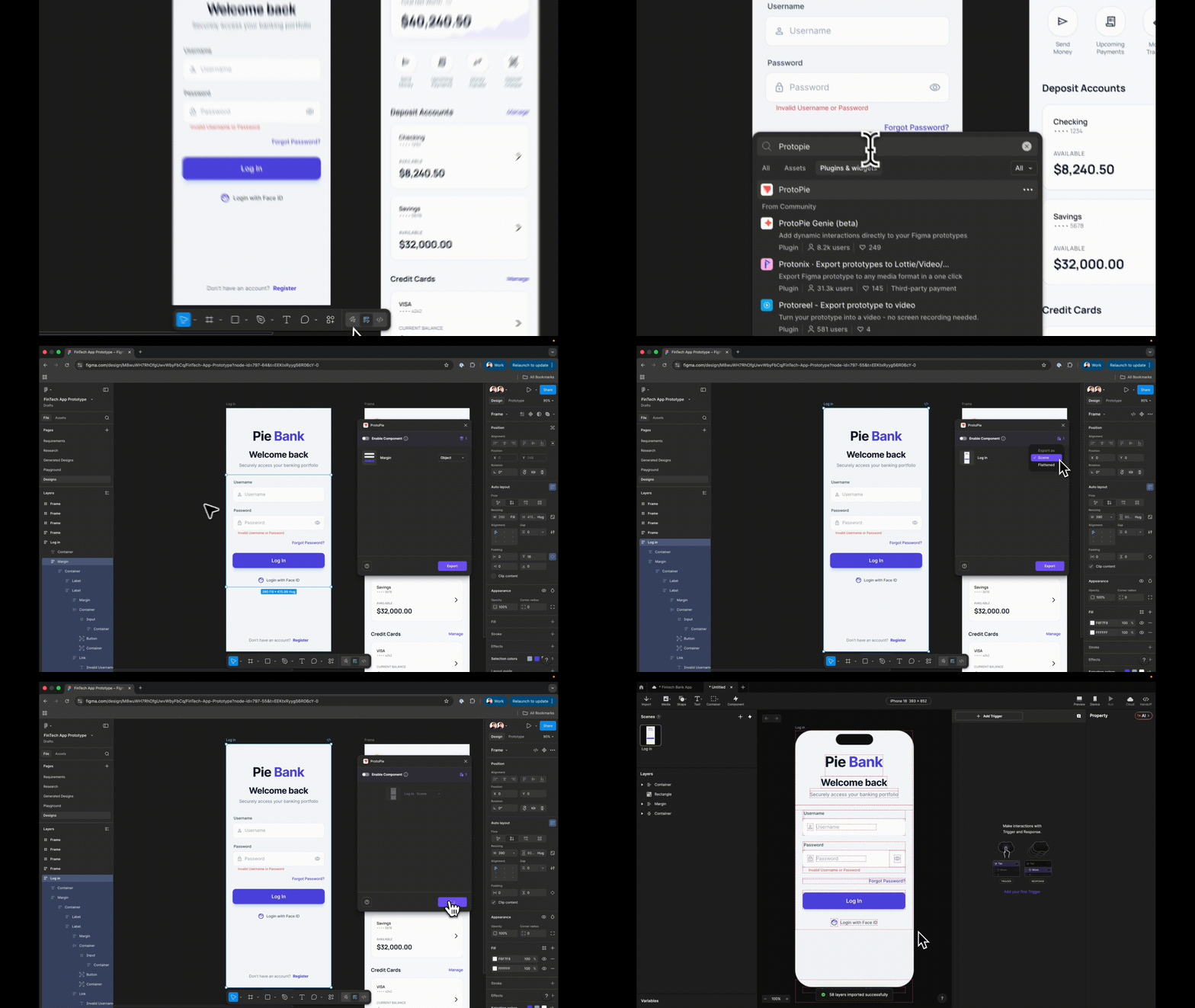
The process begins with the structural transition of design assets. When importing from design software, the industry standard has shifted toward maintaining "Scene" integrity rather than importing flattened images. Flattening a design collapses interactive potential into a single layer, whereas scene preservation allows every element—from the input field to the "forgot password" link—to remain a targetable, programmable object. This step is crucial for establishing a naming convention that mirrors production code, allowing designers and engineers to speak the same language during the handoff process.
Phase 2: Implementing Native Input Behavior
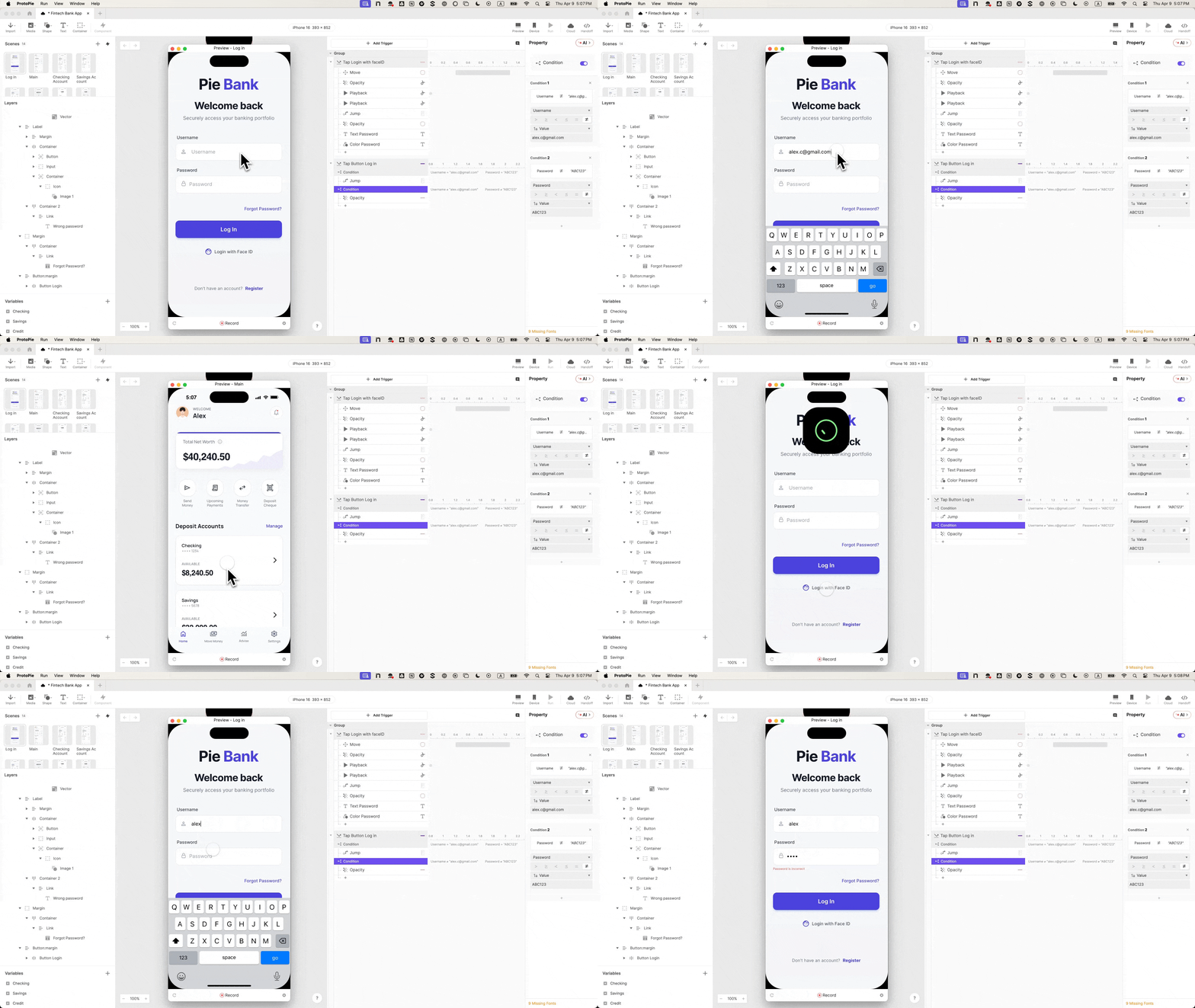
A primary friction point in prototypes is the "simulated" keyboard. In many early-stage mock-ups, tapping a field simply triggers a visual change without allowing for actual text entry. High-fidelity prototyping now requires the use of native input layers. This allows participants to use the actual iOS or Android keyboard to type their own credentials.
By setting the input type to "Text Password," the prototype automatically handles character masking (the transformation of letters into dots). This single property change removes the need for complex custom logic while providing the immediate visual feedback users expect from a professional financial application.
Phase 3: The Role of Variables and Conditional Logic
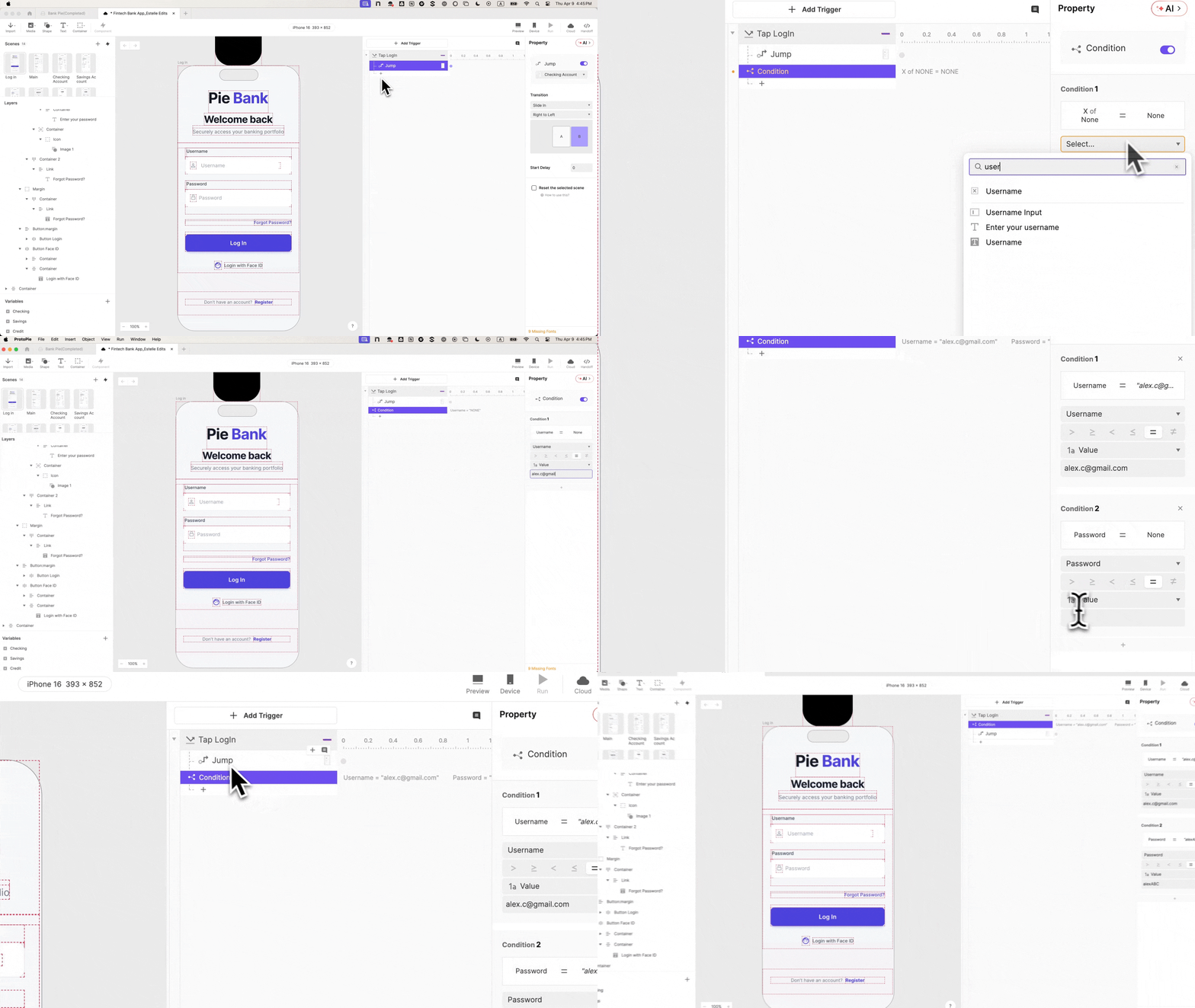
The true "intelligence" of a modern prototype lies in its ability to remember and validate data. By utilizing text-based variables, a prototype can store the strings entered by a user and compare them against predefined criteria.
In a professional testing environment, a login button should not simply navigate to the next screen. Instead, it must be wired with conditional responses. For example, a "Jump" command to the dashboard should only execute if the username variable matches "[email protected]" and the password matches "123456." If these conditions are not met, the prototype must trigger an error state. This "if-this-then-that" logic ensures that the user experiences the consequences of their actions, a vital component of realistic testing.
Chronology of a High-Fidelity Interaction Build
The development of a realistic FinTech login flow generally follows a specific technical timeline to ensure stability:

- Asset Preparation (Hour 0-2): Design of the UI in Figma, ensuring all layers are named for logic binding (e.g., "Input_Username" instead of "Rectangle 402").
- Environment Setup (Hour 2-3): Exporting to the interaction engine and replacing static text blocks with functional input fields.
- Variable Mapping (Hour 3-4): Binding the inputs to global variables so the prototype "listens" to the user’s keystrokes.
- Logic Implementation (Hour 4-6): Setting up the conditional triggers that differentiate between a successful login and a failed attempt.
- Biometric Integration (Hour 6-8): Adding Lottie animations for Face ID or Touch ID to simulate modern security protocols.
- Staggering and Timing (Hour 8-9): Fine-tuning the millisecond delays of animations to match the native OS feel (e.g., a 0.5s delay for a Face ID scan before the transition).
Enhancing Realism with Biometric Simulation
One of the most significant advancements in prototyping is the ability to simulate biometric authentication. In the modern mobile banking landscape, users rarely type their passwords; they rely on Face ID. If a prototype requires a manual login for every session, it deviates from the user’s daily habits.
By integrating Lottie (a JSON-based animation format), designers can drop a native-feeling Face ID animation into the prototype. When the user taps the "Login with Face ID" button, the prototype can trigger a sequence: the Face ID icon appears, an animation plays to simulate a successful scan, and only then does the screen transition to the account overview. This level of detail—specifically the timing of the transition—is what prevents the user from breaking character during a session.
Supporting Data: The Impact of Fidelity on Stakeholder Approval
Beyond user research, high-fidelity prototypes have a measurable impact on the internal development lifecycle. Internal reports from FinTech design teams indicate that using functional prototypes reduces the "interpretation gap" between design and engineering by approximately 30%.
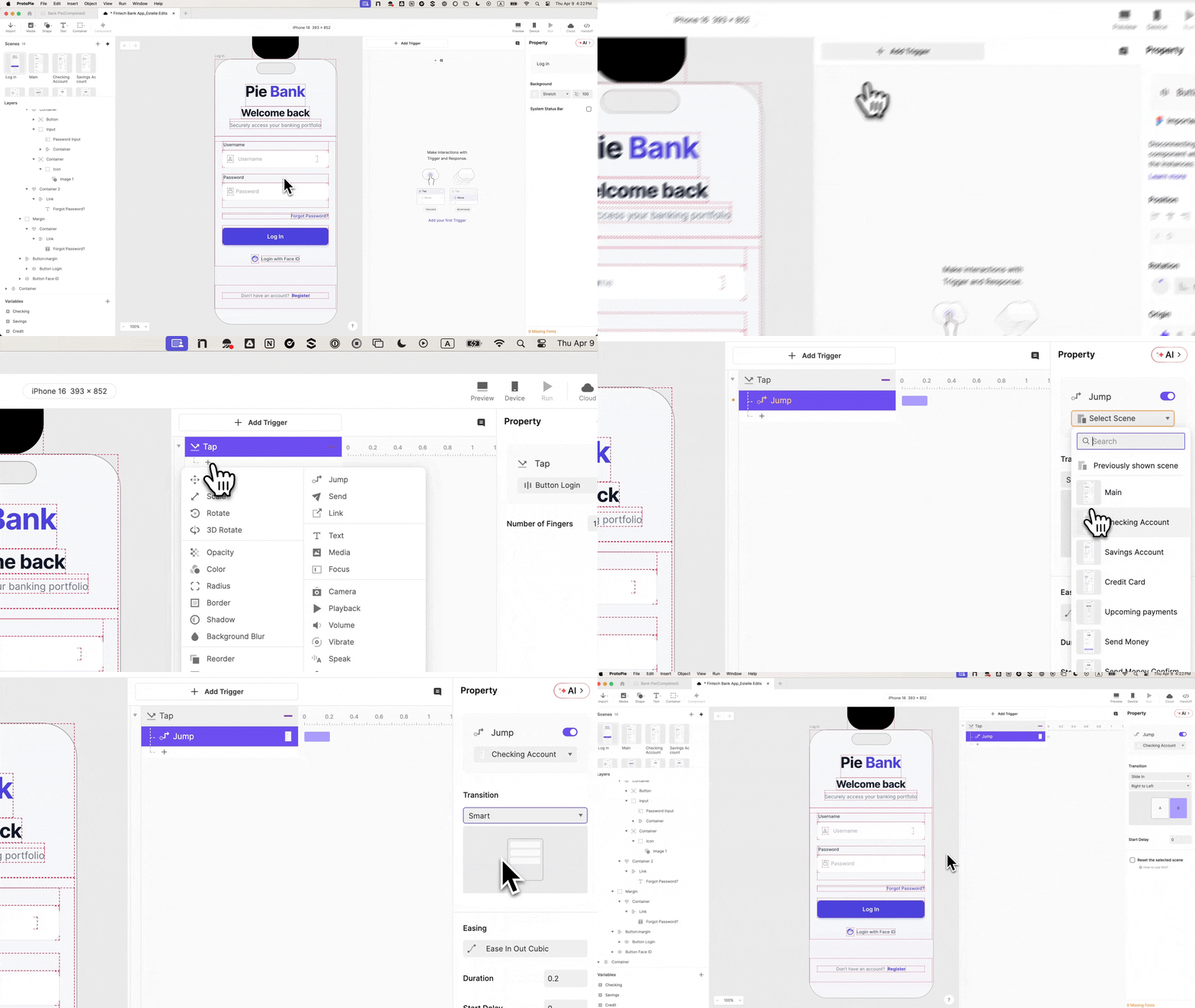
When engineers receive a prototype that already contains the logic for error states and variable binding, the handoff becomes a technical specification rather than a visual suggestion. This reduces the number of "back-and-forth" meetings required to clarify how a specific interaction should behave under different conditions. Furthermore, stakeholders are 25% more likely to approve a feature on the first review when they can "test" the actual logic of the feature rather than watching a static walkthrough.
Broader Implications for the FinTech Industry
The move toward realistic prototyping is a response to the increasing sophistication of the global FinTech market. With the rise of neobanks and decentralized finance (DeFi) apps, the barrier to entry for new products is no longer just utility, but the "feel" of security and polish.
Industry analysts suggest that as AI and automated testing become more integrated into the UX workflow, the demand for "intelligent" prototypes will only grow. A prototype that can handle real data inputs can be used for automated usability testing, where AI agents simulate thousands of user paths to find edge cases in the logic before a single line of production code is written.

Conclusion: Prototyping as Research Insurance
Investing time in a realistic login flow, even when the login itself is not the primary feature being tested, acts as a form of research insurance. It ensures that the participant’s mental model remains focused on the product’s value proposition rather than its technical limitations.
For FinTech teams, the goal is to create an environment where the user forgets they are in a test. By leveraging tools like ProtoPie to handle real inputs, conditional logic, and biometric animations, designers can produce a "signal" that is far clearer and more actionable. In the competitive world of digital finance, the difference between a successful product launch and a costly redesign often comes down to the quality of the data collected in these early, high-fidelity sessions. Through the implementation of these advanced prototyping techniques, teams can ensure their findings are based on reality, not a demonstration.

