
The rapid proliferation of standalone artificial intelligence applications is meeting significant resistance from a global workforce increasingly burdened by "tool fatigue," prompting a paradigm shift toward "Quiet AI" and seamless system-level integrations. While the initial wave of the AI revolution focused on "AI-first" platforms and generative chatbots, user experience (UX) researchers and product designers are now identifying a critical disconnect between technological capability and human cognitive workflows. The emerging consensus suggests that users do not require additional interfaces to manage; rather, they require the intelligent enhancement of existing environments to align with established mental models.
The Problem of Tool Proliferation and the Toggle Tax
The modern digital workspace has become increasingly fragmented. According to industry data from software management platforms, the average enterprise now utilizes approximately 130 different Software-as-a-Service (SaaS) applications. This fragmentation has birthed a phenomenon known as the "Toggle Tax." Research published in the Harvard Business Review indicates that the average worker switches between different applications and windows more than 1,200 times per day. This constant context switching accounts for roughly four hours of lost productivity per week, or 9% of a worker’s annual time.
In this environment, the introduction of standalone AI tools—even those offering significant utility—often adds to the cognitive load rather than reducing it. Designers like Vitaly Friedman, a prominent figure in the UX community, argue that "AI-first" products often ignore years of design evolution that have shaped user expectations. When a tool requires a user to leave their primary workspace (such as a spreadsheet or a document) to interact with a chatbot or a terminal command, the friction of the transition often outweighs the benefit of the AI’s output.
The Rise of Quiet AI and Contextual Intelligence
The alternative gaining traction among design leaders is "Quiet AI." This philosophy posits that the most effective AI is invisible, operating in the background to automate repetitive, high-frustration tasks without demanding a dedicated interface. This approach prioritizes "contextual intelligence," where the AI understands the specific environment in which the user is working.
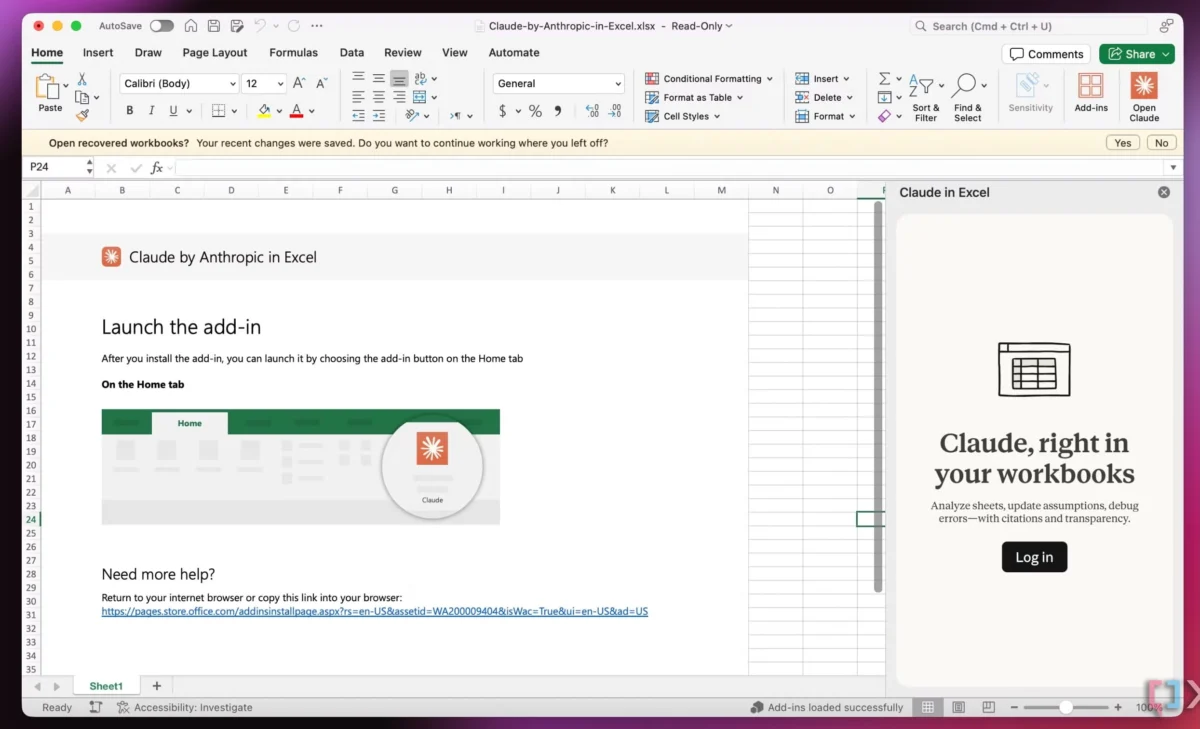
A primary example of this integration is the deployment of Claude AI within established productivity suites like Microsoft Excel, PowerPoint, and Word. Instead of a user copying data from a spreadsheet, pasting it into a separate browser window, and asking for an analysis, Quiet AI allows the model to "study" specific rows or columns directly within the native interface. This maintains the user’s flow state and adheres to the mental model of the spreadsheet as the "source of truth."
By embedding AI capabilities directly into the ribbon or right-click menus of existing software, developers are addressing three key metrics of user frustration: high severity (critical errors), high frequency (repetitive data entry), and high level of friction (complex navigation).
Case Study: Folder Instructions for System-Level AI
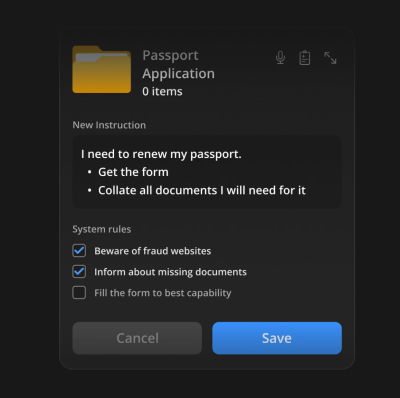
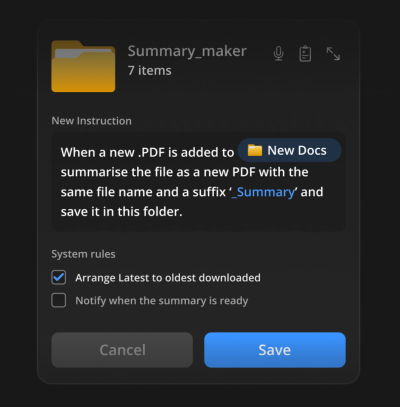
One of the most innovative concepts currently being explored in the design community is the implementation of "Folder Instructions" at the operating system level. Developed by designer Karthikeya GS, this concept applies the logic of AI prompting to the fundamental architecture of file management.
Under this model, a user does not simply create a folder; they define the folder’s intent. For example, a folder labeled "Passport Application" could be assigned specific system rules. The user provides instructions such as: "Ensure all PDFs are renamed to [Date]_[DocumentType], alert me if the file size exceeds 2MB, and automatically generate a summary of any instructions provided in the uploaded documents."
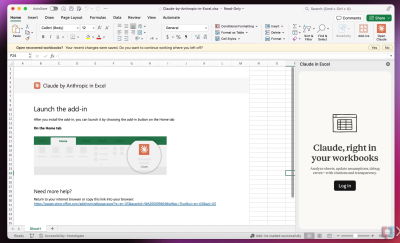
This shift moves AI from a conversational partner to a functional utility. The benefits of this approach are multi-faceted:
- Local Scoping: Permissions and actions are restricted to the specific folder, enhancing data privacy and security.
- Intent-Based Organization: The system maintains the folder’s organization automatically, adhering to the user’s established mental model for file management.
- Reduced Maintenance: Users no longer need to manually sort, rename, or summarize files; the "Quiet AI" handles these tasks as they occur.
Chronology of AI Interface Evolution
The transition toward seamless integration is the latest stage in a decade-long evolution of how humans interact with machine intelligence:
- 2011–2018: The Assistant Era. Characterized by voice-activated assistants like Siri and Alexa. These were standalone "containers" for AI that required specific triggers and often struggled with context.
- 2019–2022: The Plugin Phase. Early AI integrations appeared as third-party plugins or extensions. While useful, they often felt like "bolted-on" features rather than native capabilities.
- 2023: The Chatbot Explosion. Following the release of ChatGPT, the industry pivoted toward "AI-first" interfaces. The primary mental model was the conversation, requiring users to learn "prompt engineering" to achieve results.
- 2024–Present: The Integration Era. The current phase focuses on "Quiet AI" and system-level features. The goal is to remove the "AI" label and simply offer "smart features" that exist within the tools users already love.
Industry Data and User Sentiment
Recent surveys of professional software users indicate a cooling of the initial "AI hype" in favor of practical utility. A 2024 report on digital workplace trends found that 62% of respondents felt "overwhelmed" by the number of new AI tools they were expected to learn. Conversely, 78% of respondents stated they were "highly likely" to use AI features if they were integrated into their current workflows without requiring a new login or interface.
Furthermore, the data suggests that "high-frequency, low-complexity" tasks are the most desired areas for AI intervention. These include:
- Automated file naming and organization (84% interest).
- In-line text summarization (72% interest).
- Automatic data cleaning in spreadsheets (68% interest).
- Intelligent calendar scheduling (65% interest).
Expert Analysis: The Implications for the Future of UX
The move toward seamless integration has profound implications for the future of product design and the broader tech economy. If the value of AI lies in its integration rather than its standalone presence, the "moat" for AI companies shifts from the model itself to the ecosystem in which the model resides.
Designers are beginning to realize that "AI-first" is often a developer-centric view, whereas "User-first" requires the AI to be secondary to the task at hand. Vitaly Friedman’s "Design Patterns For AI Interfaces" suggests that the most successful AI implementations in the coming years will be those that require the least amount of "learning." By utilizing existing design patterns—such as folders, cells, and text cursors—AI becomes an invisible force multiplier.
However, this shift also presents challenges. System-level AI requires deeper access to user data, raising significant privacy concerns. For "Folder Instructions" or "Quiet AI" to work, the system must be able to "read" the content of the user’s work in real-time. This necessitates a move toward local LLMs (Large Language Models) that process data on the user’s device rather than in the cloud—a technical hurdle that companies like Apple and Microsoft are currently racing to overcome with specialized AI hardware (NPUs).
Official Responses and Market Direction
Major technology providers have already begun pivoting their strategies to align with these findings. Microsoft’s "Copilot" strategy is a direct response to the need for integration, embedding AI directly into the Windows OS and the M365 suite. Anthropic has similarly focused on making Claude "environment-aware," allowing it to interact with codebases and data structures more natively.
In a recent statement regarding the future of interface design, industry analysts noted that "the era of the standalone AI app is ending before it truly began. The winners of the next decade will not be the companies that build the best chatbots, but the companies that best hide the AI within the fabric of the existing digital experience."

Conclusion: Delivering Value Without the Burden
The ultimate goal of UX design is to reduce the distance between a user’s intent and the final result. For too long, the tech industry has equated "more features" with "more value," resulting in a fragmented landscape of tools that demand constant attention. The shift toward Quiet AI and seamless integration represents a maturing of the technology.
By focusing on high-severity frustrations and respecting established mental models, designers can deliver the true promise of artificial intelligence: a digital environment that works on behalf of the user, rather than one that requires the user to work for it. As the industry moves forward, the success of AI will be measured not by how much we talk to it, but by how little we have to notice it is even there.

