
In the modern high-stakes digital economy, the friction inherent in a poorly designed interface has evolved from a minor inconvenience into a catastrophic financial liability. For global enterprises and burgeoning startups alike, the cost of a "friction-heavy" user interface is no longer measured simply in lost clicks or minor user frustration; it is now quantified in millions of dollars in wasted engineering expenditures and eroded brand equity. As digital products become the primary touchpoint between corporations and consumers, veteran UX designers and industry analysts are observing a fundamental shift in the corporate boardroom. Design is no longer viewed as a "cosmetic preference" or a final aesthetic polish but is increasingly recognized as the primary engine of business survival and long-term financial health.
The transition from visual-centric design to data-driven user experience (UX) marks a pivotal moment in the history of digital commerce. Experts argue that a modern UX role is as much about rigorous research and statistical analysis as it is about pixel-perfect layouts. Hard data has emerged as the bridge between creative departments and executive leadership, proving that UX is a non-negotiable requirement for a healthy bottom line. Despite this, many organizations continue to undervalue UX as a purely "visual" function. However, recent clinical, data-backed pillars of growth suggest that those who ignore the psychological and technical nuances of user experience do so at their own peril.

The Evolution of Design Maturity: A Chronological Shift
To understand the current state of UX ROI, one must examine the timeline of its evolution. In the early 2000s, web design was largely experimental and aesthetic. By the mid-2010s, the "mobile-first" era forced a move toward functional simplicity. Entering the mid-2020s, the industry has entered the "Experience Optimization" phase, where every tenth of a second and every pixel is audited for its impact on conversion.
This chronological shift has been driven by increasing market saturation. In a landscape where multiple apps or platforms offer similar services, the user’s choice is dictated by the path of least resistance. Recent case studies in the B2C mobile sector demonstrate that even marginal technical improvements—such as stripping 1.2 seconds off a mobile load time by optimizing visual assets—can lead to an immediate 12% lift in completed transactions. This proves that in the current market, speed and usability are direct levers for revenue.
The Financial Logic of Early Intervention: The 1:100 Rule
One of the most compelling financial arguments for robust UX investment is the "1:100 rule," a principle supported by the IBM Systems Sciences Institute. Research indicates that the cost of fixing a software error after a product has been developed and launched can be up to 100 times more expensive than addressing the same issue during the initial design and prototyping phase.

Industry analysts categorize UX as "engineering insurance." When a developer begins writing code, every interaction should have already been validated through user testing. Discovering a fundamental navigation flaw post-launch incurs not just the direct cost of the fix, but also the compounding costs of technical debt, lost developer productivity, and the opportunity cost of revenue lost while users struggle with a broken flow. Organizations that integrate UX early in the lifecycle effectively de-risk their development spend.
Performance as the Foundation of User Retention
In the current digital landscape, performance is no longer a separate technical concern; it is the bedrock of the user experience. A visually stunning interface is rendered worthless if the user abandons the site before it loads. The data surrounding user patience is uncompromising. Approximately 47% of users expect a page to load in two seconds or less. Missing this narrow window is a financial catastrophe for retail businesses, which lose an estimated $2.6 billion annually due to slow load times.
The volatility of user behavior is particularly evident in mobile environments. When load times increase from one to three seconds, the bounce rate spikes by 32%. By the third second of delay, conversion rates typically plummet from 40% to 29%. Conversely, microscopic improvements offer massive growth potential. A 0.1-second improvement in site speed has been shown to lift retail conversions by 8.4% and travel site conversions by 10.1%. As of mid-2025, benchmarks indicate that improving the Largest Contentful Paint (LCP) can drive a direct 8% increase in sales.

The Psychology of First Impressions and Decision Fatigue
Human psychology plays a dominant role in digital commerce, beginning with the "50-millisecond rule." Research suggests that users form a definitive opinion about a website’s visual appeal and trustworthiness in approximately 0.05 seconds. This visceral, split-second "gut feeling" acts as a survival mechanism, determining whether a user stays or bounces. Approximately 94% of first impressions are strictly design-related. If an interface feels dated or unintuitive, users subconsciously project that lack of quality onto the entire brand.
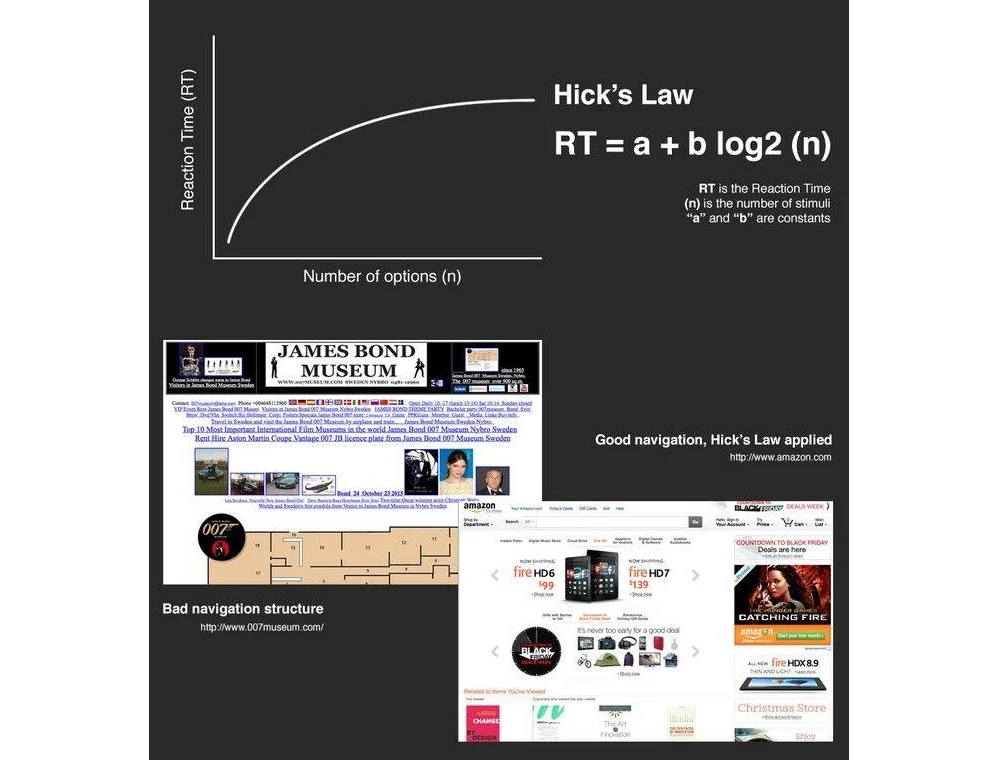
Furthermore, the principle known as Hick’s Law highlights the "cost of overwhelm." While stakeholders often assume that providing more options adds value, psychology proves that the time required to make a decision increases exponentially with the number of choices available. Every unnecessary menu item or form field acts as a cognitive "tax." Top-performing sites that achieve conversion rates exceeding 11%—compared to the industry average of 3%—often do so by applying aggressive simplification and personalization strategies. Reducing a single field in a checkout flow can result in an immediate, measurable boost in completed purchases.
Cognitive Load and the Strategic Use of Space
The use of "white space" is frequently misunderstood by non-designers as wasted real estate. In reality, it is a sophisticated tool for managing cognitive load. Strategic spacing can increase content comprehension by up to 20%. By providing the user’s eyes with a place to rest, designers guide them toward essential elements, such as "Call to Action" buttons.

In an era where the average attention span has dropped to roughly eight seconds, legibility has become a primary conversion tool. Proper typography—specifically line spacing (leading) and paragraph width—reduces visual noise, allowing the brain to process information with less effort. When users struggle to read text, their "perceived effort" increases, leading to higher abandonment rates. In the fintech sector, for example, simplifying "data-heavy" dashboards with increased white space has been shown to decrease time-on-task by 25% and significantly boost trial-to-paid conversions.
Momentum and the Goal Gradient Effect
Digital design also leverages the "Goal Gradient Effect," a psychological phenomenon where users are more likely to complete a task if they believe they have already made progress. Digital onboarding processes that feature a progress bar starting at 15% (simply for creating an account) see completion rates increase by over 40%. This tactic manages user dopamine levels and creates a sense of momentum, turning a multi-step process into a rewarding experience rather than a chore.
Designing for the "Scanning" Behavior
The reality of modern web consumption is that users do not read; they scan. On a typical web page, users consume only 20% to 28% of the actual text. Most users follow an "F-pattern" or a "Spotted pattern," searching for keywords and visual cues. Designing for deep reading is, therefore, a tactical error in a commercial context. Effective UX requires short paragraphs, bulleted lists, and clear headings to facilitate this scanning behavior. If information is not easily discoverable within seconds, it effectively does not exist for the consumer.

The Efficiency of Small-Scale User Testing
A common misconception in the corporate world is that user testing requires massive, six-figure budgets and hundreds of participants. However, the mathematical "sweet spot" for usability testing is surprisingly small. Testing with just five users typically uncovers 85% of usability problems. Beyond this number, the point of diminishing returns is reached, where the cost of finding new bugs outweighs the value of the insights. The most successful organizations employ small, frequent testing iterations—test with five, fix the issues, and test with five more—to build bulletproof products at a fraction of the cost of traditional market research.
The Massive ROI of Design Maturity
The cumulative impact of these UX principles results in a staggering return on investment. On average, every $1 invested in UX returns $100— a 9,900% ROI. This is not the result of "magic" but the logical outcome of increased conversion rates and significantly reduced customer support costs. When a product is intuitive, the need for a massive call center to explain basic functions vanishes.
Data from McKinsey & Company reinforces this, showing that companies with high design maturity see 32% higher revenue growth and 56% higher total returns to shareholders compared to their peers. This "experience gap" is a major market opportunity. While 80% of companies believe they deliver a "superior experience," only 8% of customers agree. Bridging this gap is the most direct route to capturing market share.

The Role of AI in Modern UX
As we move toward the late 2020s, Artificial Intelligence is further accelerating these trends. AI does not replace the fundamental rules of human psychology but enhances the ability to execute them. Predictive AI can now anticipate user friction before it happens, and generative tools allow for real-time personalization of white space and content density based on individual user behavior. While AI turns UX from a static map into a living guide, the core requirements—speed, simplicity, and clarity—remain unchanged.
Broader Impact and Industry Implications
The vanishing line between design and business strategy suggests that we are past the era of subjective opinions in product development. The data is clear: companies that lead in design outperform their competitors by 1.7 times in revenue growth. UX design is no longer a luxury or a "team that makes things look nice"; it is a research-driven, data-backed discipline that ensures a digital product is a revenue-generating machine rather than a cost center.
For global enterprises, the implication is clear: those who fail to prioritize the "clinical" facts of user experience will find themselves outpaced by more agile, data-driven competitors. The financial, psychological, and technical evidence all point toward a single conclusion: user experience is the most powerful lever available for modern business growth. In the friction economy, the facts must lead the design, or the business will inevitably follow the path of the user—straight to the exit.

