
Influencer marketing has dramatically outgrown its initial perception as a superficial digital trend, transforming into a formidable and sophisticated engine for brand growth. What began as an experimental allocation within marketing budgets has burgeoned into a global market projected to be worth an estimated $32 to $40 billion by 2026, a staggering increase from just $1.7 billion in 2015. This meteoric rise underscores its undeniable efficacy, with brands consistently reporting an average return of approximately $5.78 for every dollar invested. As a testament to its mainstream acceptance, 86% of U.S. marketers now integrate influencer partnerships into their annual strategic plans, signifying the channel’s full maturation.
However, this rapid expansion has also introduced a complex array of challenges. The accessibility of purchasing followers and fabricating engagement has become a significant concern, with industry estimates placing the annual cost of influencer fraud at nearly $4.8 billion in wasted marketing expenditure. Simultaneously, consumer discernment has sharpened; audiences are increasingly wary of overt advertising, even as their trust in individual creators continues to climb. Recent research indicates that around 67% of consumers trust influencer recommendations, a figure that surges to approximately 94% among Gen Z when comparing creator opinions to traditional advertisements. This intriguing paradox—a rising skepticism towards the industry at large coexisting with an escalating trust in authentic individual creators—defines the intricate terrain that professionals like Marianna Grollo, Influencer Marketing Manager at Almedia, have dedicated their careers to navigating. Her insights, shared in an interview by Zorka.Agency, illuminate the strategic shifts, inherent challenges, and mindset transformations essential for thriving in this dynamic sector.
From Nascent Stage to Strategic Imperative: The Industry’s Ascent
The journey of influencer marketing mirrors the broader digital transformation of commerce and communication. Initially viewed as a niche tactic, its growth has been propelled by several factors: the fragmentation of traditional media, the ubiquity of social platforms, and a fundamental shift in consumer behavior towards peer-to-peer recommendations. The rapid adoption of social media as a primary source of information and entertainment created fertile ground for individuals to cultivate engaged communities, establishing a new avenue for brands to connect with target audiences in a more personal and relatable manner.
This evolution has been paralleled by a significant professionalization of the field. What was once managed ad-hoc by a single social media coordinator now supports an entire ecosystem of specialized services. The number of dedicated influencer marketing agencies and platforms has exploded from approximately 190 in 2015 to over 7,000 today. This proliferation reflects a growing understanding among brands that influencer marketing is not merely a promotional add-on but a critical strategic function capable of driving both revenue and brand awareness in ways traditional channels often cannot. As campaigns are increasingly measured against tangible business outcomes rather than just vanity metrics like reach, influencer marketing teams are gaining heightened visibility and influence at the executive level, cementing their status as indispensable contributors to overall business strategy.
Marianna Grollo’s Trajectory: Mastering the Art of Influencer Marketing
Marianna Grollo’s professional journey into influencer marketing offers a compelling narrative of adaptability and rapid learning. Her immersion began during her master’s degree in marketing, when an internship in Berlin as a Content and Performance Marketing Intern, which was essentially influencer marketing, perfectly coincided with her thesis research on brand perception and influencer-sponsored content. This confluence of academic theory and practical application provided a unique foundation.
An unexpected early challenge, when her manager departed, thrust Marianna into a leadership role with limited prior experience. "I had no idea what I was doing," she admits, reflecting on the steep learning curve. "But honestly, that experience taught me the most. I was trying to figure everything out with the little knowledge I had, and that forced me to learn very quickly." This trial-by-fire experience cultivated a robust problem-solving mindset and a deep understanding of the industry’s intricacies.
Since then, Marianna has navigated three distinct industry verticals: health and fitness, beauty and cosmetics, and gaming. Each sector presented its own unique pace, cultural nuances, and approach to creator partnerships. While beauty and wellness aligned more closely with her personal interests, the gaming industry provided a profound professional challenge. "I’m not a gamer myself," she explains, "but working in a completely different environment pushed me to grow professionally and think outside my own perspective." This cross-sector experience has endowed her with a versatile skill set and a nuanced appreciation for how different audiences engage with creators and branded content.
Dismantling Misconceptions: The Strategic Depth of Influencer Marketing
Despite its significant growth and strategic impact, influencer marketing continues to contend with outdated perceptions. Marianna frequently encounters the dismissive query: "’So your job is basically watching YouTube and scrolling Instagram all day?’" She emphasizes the vast gap between this simplistic view and the reality of the role, which demands extensive "strategy, negotiation, creativity, audience psychology, and long-term brand building."
This perception gap, while persistent, is steadily narrowing. The sheer volume of specialized agencies and the increasing trend of brands building in-house influencer marketing capabilities underscore the industry’s growing maturity. Companies are recognizing that well-executed influencer campaigns can deliver both immediate revenue and sustained brand equity in ways that traditional advertising sometimes struggles to achieve. The ability to demonstrate a clear return on investment (ROI) by linking creator campaigns directly to revenue, brand perception, and growth metrics is crucial for elevating the function’s standing within organizations. When influencer marketing moves beyond being merely a "social media management" task to a "strategic business function," its true value is acknowledged.
The AI Imperative: Augmenting Human Creativity and Efficiency
The advent of Artificial Intelligence (AI) has sparked widespread discussion across all industries, and marketing is no exception. Marianna Grollo, like many forward-thinking marketers, views AI not as an existential threat but as a powerful tool for enhancement. This perspective aligns with prevailing industry sentiment: roughly six in ten marketers are actively deploying AI for tasks such as creator identification and campaign optimization, with a similar proportion reporting measurable improvements in campaign outcomes.

She eloquently quotes a colleague to encapsulate this view: "AI won’t replace people, but people who don’t use AI will eventually be replaced." For Marianna, the most immediate and impactful opportunity lies in automating the more mundane and repetitive aspects of the job. "There are so many repetitive tasks in marketing—uploading insights, organizing reports, copy-pasting data. AI can save enormous amounts of time there," she notes. By offloading these labor-intensive tasks, marketers can free up valuable time to focus on strategic thinking, creative development, and relationship building—areas where human intelligence remains paramount.
However, Marianna firmly believes that technology cannot fully replicate the inherently human dimension of influencer marketing. This stance places her in thoughtful contrast to a burgeoning segment of the industry: AI-generated virtual influencers. These digital creations are gaining traction due to their perceived advantages, such as carrying zero controversy risk and offering consistent, flawless performance. Yet, Marianna argues, "At the end of the day, this is a relationship-based industry. You’re working with people, personalities, emotions, trust, timing, communities. That part cannot be automated." The nuanced understanding of human connection, the ability to foster genuine trust, and the adaptability required to navigate complex interpersonal dynamics remain core competencies that AI, in its current form, cannot fully replicate.
Strategic Pitfalls and the Pursuit of Authentic Connection
Marianna Grollo highlights a common misstep brands make: scaling too aggressively after an initial successful campaign. The temptation to replicate success broadly and immediately often leads to diminishing returns. "Companies often think: ‘This worked incredibly well—let’s scale it everywhere immediately.’ And of course, scaling matters, but overexposure creates fatigue very quickly." As audiences are inundated with sponsored content, their trust erodes, making genuine engagement harder to secure. This phenomenon partly explains why smaller creators often outperform larger ones in terms of engagement. Nano-influencers, who constitute the vast majority of Instagram’s creator base, consistently deliver higher engagement rates than macro- or celebrity-tier accounts, largely because their audiences perceive them as genuine communities rather than mere distribution channels.
To counteract the "risk of becoming ‘just another influencer brand’," Marianna advocates for a strategy built on long-term creator relationships. Instead of a purely transactional, high-volume approach, brands should cultivate a core group of trusted ambassadors, supplemented by additional creators for broader reach. Central to this strategy, she asserts, is the product itself. "The product has to be genuinely good. If creators truly like something, they’ll naturally keep using it even outside paid campaigns. That’s the best form of advertising possible." She uses beauty products as an example: "If a sunscreen or serum is genuinely great, creators will keep showing it in their everyday content long after the campaign ends. That kind of authentic endorsement is impossible to fake." This emphasis on product quality and authentic creator affinity underscores the shift from mere promotion to genuine advocacy.
Lessons from the Trenches: Creativity, Trust, and Data-Driven Decisions
Marianna’s career is dotted with invaluable lessons gleaned from both triumphs and setbacks. One particularly proud campaign demonstrated that creativity can indeed trump budget. Early in her career, working with a highly effective creator who was fully booked during the crucial Black Friday period, Marianna devised an innovative solution. Instead of conceding the lucrative slot, she proposed launching the campaign a day early. "We gave her a very strong discount code, but we never framed it as a ‘Black Friday campaign.’ It looked like a regular promotion." This unconventional timing and subtle framing resulted in the creator’s highest-revenue campaign of the year, proving that "sometimes creativity and timing matter more than simply having the biggest budget."
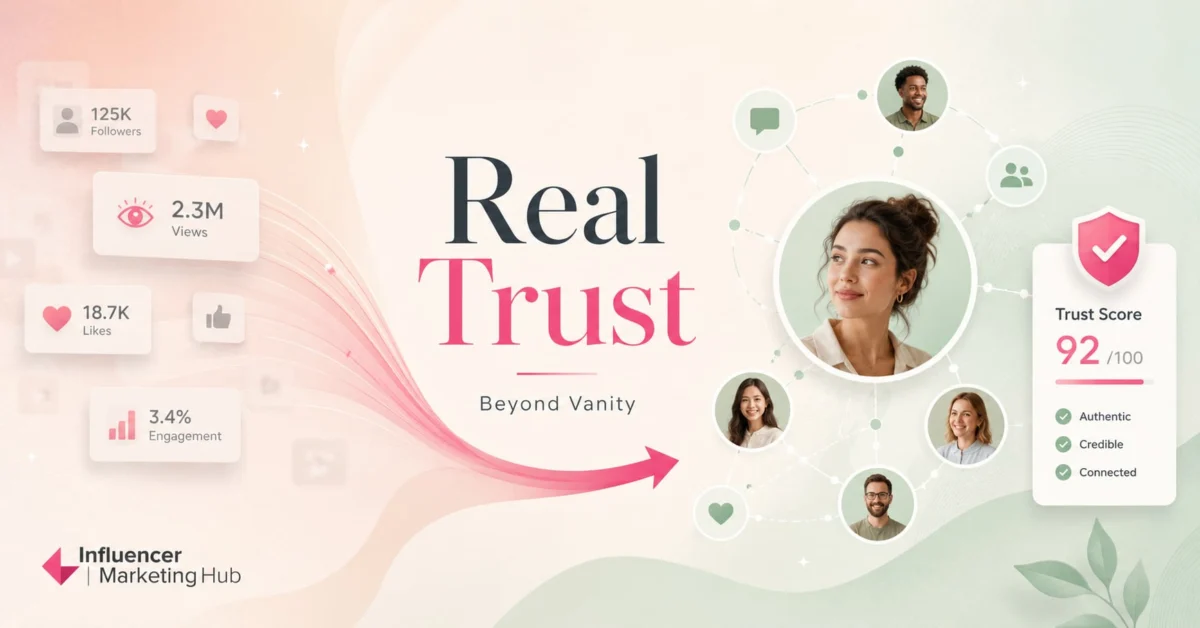
Conversely, a significant learning experience came from a campaign with a high-profile creator that drastically underperformed. Despite forecasts predicting around 700 sales, the campaign generated a mere seven. The issue was not the content quality or audience size, but a critical oversight in audience sentiment: the creator had recently been embroiled in public online drama, severely damaging their audience’s perception. "That experience taught me how important it is to research not only analytics but also community sentiment and public perception before investing heavily in a partnership." This reinforces the critical need for comprehensive due diligence beyond superficial metrics. Data corroborates this lesson: brands that employ layered fraud checks and prioritize authenticity over raw follower counts report significantly lower exposure to fake engagement. Nearly half of U.S. marketers now explicitly prioritize authenticity when selecting partners. Marianna stresses that "People who are new to influencer marketing often chase vanity metrics. They see a huge follower count and immediately assume it guarantees success. But understanding the creator’s relationship with their audience is much more important."
Cultivating Future Influencer Marketing Professionals
Drawing from her four years in the industry, Marianna offers pertinent advice for aspiring influencer marketers, emphasizing adaptability and curiosity as foundational traits.
- Stay Curious: The landscape of digital influence is in perpetual flux. "There’s always something new to learn—new platforms, trends, creator behavior, audience expectations." Continuous learning is not merely an advantage but a necessity.
- Be Adaptable: "The industry changes constantly. What worked six months ago may not work today." The ability to pivot strategies and embrace new methodologies is paramount.
- Don’t Overanalyze Everything: While data is crucial, excessive analysis can be counterproductive. "I remember spending hours trying to find patterns in content performance that ultimately meant nothing. Sometimes you need to step back and focus on what actually matters."
- Put Creators First: Effective partnerships hinge on respecting creators as professional collaborators. "The creator understands their audience better than the brand does. Give them direction, not a script." Overly prescriptive briefs often stifle creativity and diminish campaign performance, a sentiment echoed by creators who prioritize product relevance and being treated as professional creative partners as much as compensation. Brands should "explain the product clearly, make sure they understand the key message, and then let them communicate it in their own voice."
- Know Your Audience: Fundamental to any marketing endeavor, understanding the target audience is particularly critical in influencer marketing, where the connection between creator and consumer is paramount. "Understanding the audience is the most important part of this industry."
Redefining Success in a Dynamic Landscape
For Marianna, success transcends conventional metrics like titles or salary. "If I’m miserable every morning, I don’t care about the title or the salary." Instead, her definition is rooted in personal and professional growth, fulfillment, and the respect of her peers. "The biggest definition of success for me is when people come to me asking for my opinion because they genuinely value it." The environment also plays a crucial role: "I love environments where everyone pushes each other to grow. That’s what makes work exciting." This holistic view of success underscores the importance of intrinsic motivation and a supportive professional community in a demanding field.
The Enduring Power of Authentic Connection
Ultimately, Marianna Grollo believes the real power of influencer marketing lies in its unparalleled ability to combine "creativity, data, human connection, and scalable distribution better than any other" channel. Its unique strength is built on trust. "The fact that people can trust recommendations from someone they’ve never met is incredibly powerful. Influencer marketing can shape audience perception, behavior, and purchasing decisions through authentic connection." As the industry continues to mature, grappling with escalating fraud, audience fatigue, and the pervasive integration of AI-generated content, the demand for genuine authenticity will only intensify. In this evolving landscape, the capacity to foster true connection and earn audience trust is not just a desirable trait but an increasingly invaluable commodity, becoming harder to fake and more critical to earn.
Key Industry Metrics (2026)
- $32–$40 Billion: Estimated global influencer marketing market size, a significant leap from $1.7 billion in 2015.
- $5.78: Average revenue generated per $1 spent on influencer campaigns, demonstrating strong ROI.
- 67%: Percentage of consumers who trust influencer recommendations; among Gen Z, this figure rises to approximately 94%, surpassing trust in traditional advertisements.
- $4.8 Billion: Estimated annual marketing spend lost to influencer fraud and fake engagement, highlighting a critical industry challenge.
- 86%: Proportion of U.S. marketers planning to partner with influencers this year, underscoring its widespread adoption.

