
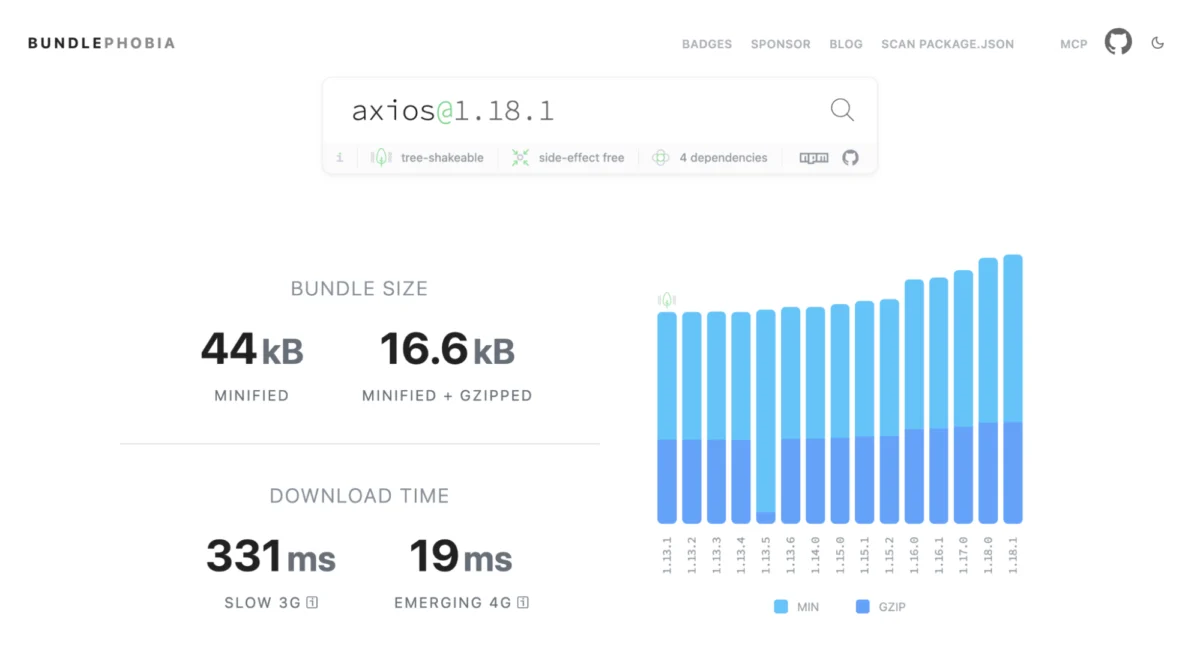
The landscape of modern web development is undergoing a fundamental shift as the gap between external library requirements and native browser capabilities continues to dissolve. For over a decade, the standard operating procedure for front-end engineers has involved the immediate installation of utility libraries to bridge functional gaps in the web platform. However, recent data suggests that a typical mid-sized JavaScript application may currently be carrying between 60KB and 90KB of redundant, minified, and gzipped dependencies. These libraries, ranging from date formatters to HTTP clients, are increasingly performing tasks that modern browsers now execute natively through standardized APIs.
The persistence of these "ghost dependencies" is rarely the result of intentional negligence. Instead, it stems from a disconnect between the rapid release cycles of browser engines and the static nature of project-level dependency management. While security audits via tools like npm audit have become routine, the practice of auditing for platform redundancy remains an overlooked aspect of technical debt management. This report examines the current state of web platform features, the emergence of the "Baseline" standard, and a strategic framework for modernizing the JavaScript ecosystem.
The Genesis of Baseline: Standardizing Browser Expectations
To address the historical confusion regarding browser support, the WebDX Community Group—comprising representatives from Google, Microsoft, Apple, and Mozilla—launched the "Baseline" initiative in 2023. This project provides a clear, unified status for web features, moving away from the fragmented "Can I Use" data points toward a more holistic view of the web platform.
Under the Baseline framework, a web feature exists in one of three stages:
- Limited Availability: The feature is only supported in one or two major browsers and is not yet ready for general production use without significant polyfilling.
- Newly Available: The feature has recently gained support across all four major browser engines (Chrome, Edge, Firefox, and Safari).
- Widely Available: The feature has been supported by all major engines for at least 30 months.
This 30-month window serves as a critical buffer for developers, ensuring that the vast majority of the global user base has updated their browsers to versions containing the feature. For enterprise applications and public-facing sites with diverse user demographics, "Widely Available" status is the gold standard for removing a dependency in favor of a native implementation.

Chronology of the Native API Revolution
The transition toward a "native-first" web has been building momentum for several years. In the early 2010s, libraries like jQuery were essential for normalizing DOM manipulation and AJAX requests across inconsistent browsers. The mid-2010s saw the rise of utility libraries like Underscore and Lodash to compensate for gaps in JavaScript’s standard library.
By 2015, the release of ES6 (ECMAScript 2015) began the first major wave of library obsolescence by introducing native promises, classes, and arrow functions. This was followed by the widespread adoption of the Fetch API, which began to challenge the dominance of libraries like axios and superagent. In the current decade, the focus has shifted toward high-level primitives: internationalization, complex UI behaviors, and sophisticated data manipulation.
Technical Analysis of Redundant Dependency Clusters
An audit of modern package.json files reveals that redundancies typically cluster in four specific functional areas. By analyzing these clusters, development teams can quantify potential bundle size reductions and performance gains.
Cluster 1: The Internationalization (Intl) API
The Intl namespace is perhaps the most significant area of native expansion. For years, developers relied on numeral.js, timeago.js, and pluralize to handle localized formatting. Today, the Intl API is "Widely Available" and covers almost every common use case.
For example, Intl.RelativeTimeFormat provides localized strings like "yesterday" or "3 weeks ago" with minimal code. Unlike external libraries, the browser’s native implementation does not require the shipment of massive locale data files, as these are already baked into the operating system or browser binary. Similarly, Intl.NumberFormat handles currency, percentages, and compact notation (e.g., "1.2M" for 1,200,000) with native efficiency.
Cluster 2: HTTP Clients and Networking
While axios remains a staple of the JavaScript ecosystem, its core utility—making HTTP requests—has been natively handled by fetch() for years. The recent addition of AbortSignal.timeout() has further closed the gap, allowing developers to implement request timeouts without the need for external logic.

However, a journalistic analysis of this shift requires acknowledging the "feature gap." While fetch is lighter, axios provides automatic JSON transformation and request interceptors. For many applications, a 17KB gzipped library is a fair trade for these ergonomics. For others, a simple 10-line wrapper around fetch can eliminate the dependency entirely, saving significant bandwidth for mobile users.
Cluster 3: UI Primitives and Accessibility
One of the most complex tasks in front-end development is managing accessible UI components like modals and tooltips. Historically, this required libraries like a11y-dialog or focus-trap. The introduction of the <dialog> element and the Popover API has revolutionized this space.
The native <dialog> element automatically handles focus trapping, "Escape" key listeners, and "Top Layer" rendering, which prevents z-index conflicts. When combined with the new CSS Anchor Positioning API (which reached "Newly Available" status in early 2026), the platform can now handle complex tooltip and dropdown positioning that previously required 15KB libraries like Popper.js or Tippy.js.
Cluster 4: Data Manipulation and Lodash Utilities
Modern JavaScript has absorbed many of the most popular functions from Lodash. Object.groupBy() and Map.groupBy() now handle data categorization natively. structuredClone() provides a robust, native way to deep-copy objects, handling circular references and complex data types that traditionally broke simpler methods like JSON.parse(JSON.stringify()). Furthermore, the addition of native Set methods for union, intersection, and difference has rendered many utility helpers obsolete.
The Temporal Case Study: Exercising Caution in Adoption
A critical component of a professional audit is knowing when not to switch. The Temporal API is the designated successor to the flawed Date object in JavaScript. While it offers a vastly superior developer experience with immutable objects and better timezone handling, it is not yet "Widely Available."
Data shows that the official Temporal polyfill can exceed 40KB gzipped. In contrast, a library like dayjs is roughly 3KB. Until Temporal reaches "Widely Available" status across all major browsers—expected by 2027—switching to the native API actually increases the bundle size for the majority of users. This highlights the importance of the 30-month Baseline rule: the newest technology is not always the most efficient for the current user base.

Broader Implications for Performance and Sustainability
The move toward native APIs is not merely a matter of developer convenience; it has significant implications for web performance and digital sustainability. Large JavaScript bundles are a primary contributor to "Main Thread Blocking Time," which directly impacts the user experience on low-end mobile devices. By reducing the reliance on third-party code, developers can improve "Largest Contentful Paint" (LCP) and "Interaction to Next Paint" (INP) scores.
From a security perspective, every removed dependency is one less entry point for supply-chain attacks. The 2021 "Polyfill.io" and "ua-parser-js" incidents underscored the risks of deep dependency trees. Moving functionality to the browser platform shifts the burden of security and maintenance from the individual developer to the browser vendors, who possess significantly more resources for vetting and optimization.
Organizational Strategy for Dependency Auditing
For engineering teams looking to implement these findings, a quarterly audit process is recommended. This process should follow a three-step framework:
- Inventory and Measurement: Utilize tools like
npm lsand bundle analyzers (e.g.,vite-bundle-visualizer) to identify the largest contributors to the production bundle. - Baseline Validation: Cross-reference library functionality with the current status of native APIs via
webstatus.devor MDN. - The Substitution Test: Evaluate if the native replacement covers the specific use cases utilized by the app. If a library is used for 10% of its features, and the browser supports those features, the library should be marked for removal.
Conclusion
The web platform is no longer the fragmented, inconsistent environment of the previous decade. The maturation of browser engines and the standardization provided by the Baseline initiative have created a landscape where "shipping less JavaScript" is a viable and necessary goal. While libraries will always play a role in pushing the boundaries of what is possible, the current challenge for the modern developer is to recognize when the platform has finally caught up. By handing functionality back to the browser, the industry can move toward a faster, more accessible, and more secure web.

