
The landscape of user experience (UX) design has undergone a fundamental transformation as of early 2026, marked by a decisive shift in the industry’s expectations for technical proficiency. The long-standing debate regarding whether designers should possess coding skills has been effectively resolved, not by academic consensus, but by the rigorous demands of a global job market reshaped by artificial intelligence. Today, a review of professional networking platforms reveals a significant evolution in recruitment criteria: UX roles now frequently mandate expertise in AI-augmented development, technical orchestration, and the delivery of production-ready prototypes. This shift has blurred the traditional boundaries between design and engineering, creating a new paradigm known as the "design engineer" model.
While this integration promises increased efficiency and faster time-to-market for digital products, it has also introduced a complex set of challenges for the design community. As organizations rush to adopt AI-driven workflows, a tension has emerged between the speed of output and the quality of the user experience. Industry veterans now find themselves at a crossroads, tasked with mastering complex technical logic while simultaneously serving as the primary advocates for human-centered design.
The Market Shift: From Aesthetics to Technical Orchestration
The transition toward technically integrated design roles is supported by significant shifts in employment data. According to industry projections extending through 2034, traditional graphic design roles are expected to see a modest growth rate of approximately 3%. In contrast, roles categorized under UX, UI, and Product Design are projected to expand by 16% over the same period. This growth is increasingly concentrated in the sector of AI product development, where the ability to translate abstract machine learning capabilities into intuitive human interfaces has become the most sought-after skill set.
In 2026, "design skills" have surpassed traditional coding and cloud infrastructure as the primary capability demanded by companies building AI-native platforms. This is largely because the bottleneck in AI development is no longer the generation of code, but the creation of experiences that make complex AI logic feel safe, useful, and accessible to the end user. Consequently, designers are being pushed to understand the underlying technical architecture of the products they build, moving beyond visual mockups to "design-shipped" code.
A 2025 survey of the design industry indicated that 73% of professionals now categorize AI as a primary collaborator in their daily workflow. However, this collaboration has led to significant "role creep." Recruiters are no longer satisfied with candidates who excel in information architecture or ethnographic research alone; they increasingly seek individuals capable of prompting React components into existence and managing Git repositories.
Chronology of the Technical Integration
The path to the current state of "production-ready design" began in earnest in late 2022 with the public release of large language models (LLMs).
- 2023–2024: The Tooling Explosion. Early AI integration focused on generative imagery and text. However, by mid-2024, design software leaders like Figma and Adobe integrated AI agents capable of converting static designs into functional front-end code. This period saw the birth of "prompt-to-UI" workflows.
- 2025: The Market Mandate. As businesses faced economic pressure to do more with less, the "Solo Full-Stack Designer" became a sought-after archetype. Organizations began restructuring teams, reducing the ratio of front-end developers to designers under the assumption that AI could bridge the gap.
- 2026: The Quality Reckoning. By early 2026, the industry began to witness the consequences of this rapid shift. While the volume of features being shipped increased, so did the prevalence of "Quality Debt"—technical and experiential flaws resulting from AI-generated code that lacked human oversight and architectural rigor.
The Competence Trap and the "Averagely Competent" Dilemma
The prevailing narrative in many corporate boardrooms suggests that AI acts as an equalizer, granting designers the capabilities of an engineer. However, experts warn of a "competence trap." Attempting to master two vastly different and deep disciplines—human psychology and computer science—often results in a professional who is averagely competent in both but a master of neither.

For a senior UX designer, the sudden requirement to debug CSS Flexbox issues or manage complex state logic in JavaScript can detract from their core value: reducing cognitive load for the user and ensuring accessibility standards. When a designer ships an AI-generated component that fails during high-traffic events, their inability to manually trace and fix the logic transforms them from a creative asset into a technical liability.
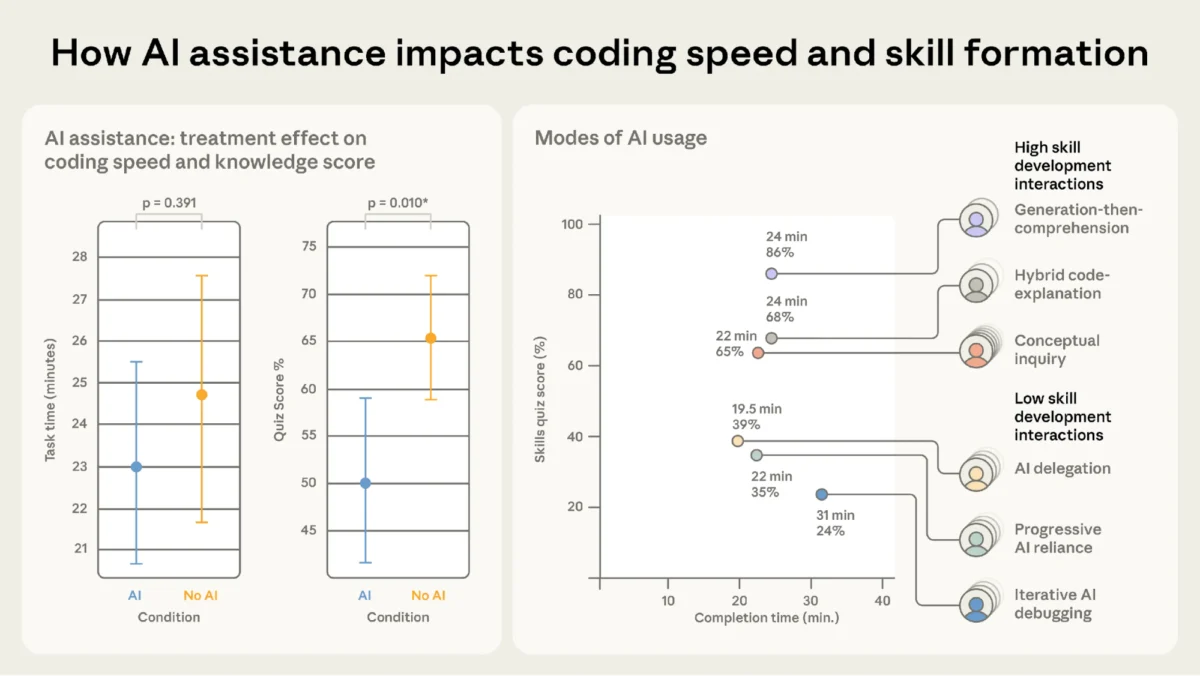
Research from organizations such as Anthropic suggests that over-reliance on AI assistance can actually impede the formation of deep coding skills. Designers using AI to "skip" the learning curve of syntax often fail to understand the underlying logic, making them unable to perform the critical audits required for production-level software.
The Rise of Quality Debt and the "Rework Tax"
The promise of AI-augmented design was to eliminate the friction of handoffs between design and engineering. In practice, however, the industry is experiencing the birth of a "Rework Tax." When designers provide AI-generated code that ignores internal naming conventions, architectural patterns, or security protocols, it creates additional work for engineering teams.
Common issues identified in designer-generated AI code include:

- Bloated Syntax: AI often generates redundant code to achieve a visual result, leading to slower page load times and poor performance on low-bandwidth devices.
- Accessibility Failures: Automated code frequently misses the nuances of screen reader compatibility and keyboard navigation, exposing companies to legal risks and alienating users with disabilities.
- Security Vulnerabilities: AI-generated scripts may utilize outdated libraries or insecure data-handling practices that a trained engineer would immediately flag.
- Inconsistent Logic: Without a deep understanding of state management, designer-shipped code often creates "brittle" interfaces that break when users perform unexpected actions.
This "Quality Debt" eventually requires intervention from senior engineers, effectively negating the time-savings initially promised by AI-augmented workflows.
Perspectives from the Field: Designers and Engineers
The shift has drawn mixed reactions from industry stakeholders. CTOs at major tech firms have expressed that while the speed of prototyping has reached unprecedented levels, the "last mile" of production—ensuring stability and scalability—remains firmly in the domain of specialized engineering.
"We are seeing a lot of ‘vibe-based’ development," noted one engineering lead at a prominent Silicon Valley firm. "Designers are shipping things that look perfect and function on the surface, but the underlying structure is a house of cards. We spend more time fixing ‘AI-optimized’ code than we would have spent building it from scratch based on a solid design spec."
On the other side, senior UX designers have voiced concerns over the devaluation of their specialized research skills. The pressure to produce "production-ready" deliverables often leaves little time for user testing or empathy mapping, which are the foundations of effective UX.

Implications for the Future of the Industry
The current "AI infatuation" is expected to reach a plateau as the costs of technical debt and poor user experiences become more apparent. However, the role of the UX designer will not return to its pre-2023 state. The future lies in a refined model of designer-coder collaboration rather than the "solo full-stack" approach.
In this evolving landscape, the most successful designers will be those who use AI to augment their design thinking—allowing for faster iteration and testing of ideas—while remaining the "guardians of the user experience." This involves:
- Strategic Oversight: Using AI to generate syntax but maintaining the expertise to audit that syntax for accessibility and performance.
- Focus on Complexity: Doubling down on the aspects of human behavior and emotional intelligence that AI cannot replicate.
- Technical Literacy without Mastery: Understanding enough code to communicate effectively with engineers without attempting to replace them.
Conclusion: Reasserting the Human Element
As the industry moves toward the latter half of the decade, a reckoning regarding the "speed over quality" mandate is likely. Businesses that prioritize designer-shipped code without adequate engineering oversight may face significant challenges, including security breaches and accessibility lawsuits.
The UX designer’s role in 2026 is more critical than ever, but it requires a delicate balance. By refusing to become mere "prompt operators" and instead positioning themselves as the bridge between technical capability and human need, designers can ensure that the products of the AI age remain intuitive, ethical, and accessible. The ultimate value of a designer remains their ability to advocate for the human on the other side of the screen, ensuring that while the tools of the trade change, the focus on the user remains absolute.

