
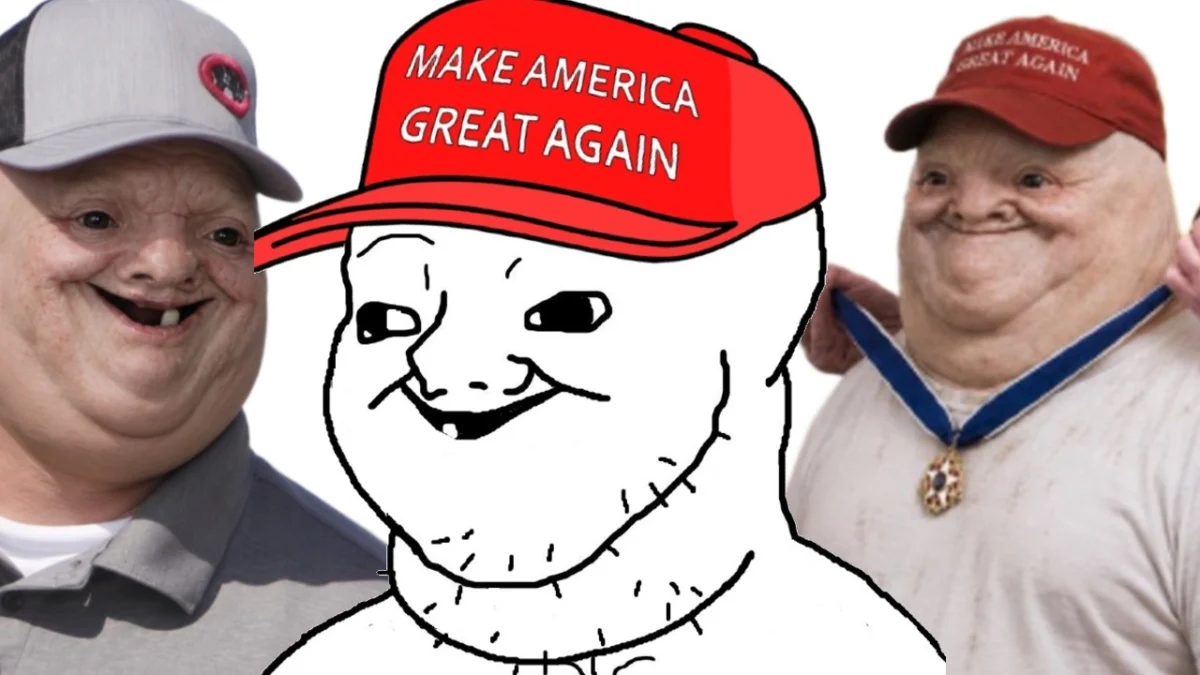
The digital landscape of 2026 has witnessed a significant transformation in the use of political iconography, most notably through the resurgence and technological evolution of the MAGA Wojak, also known by the controversial moniker MAGAtard. This character, a derivative of the classic Wojak internet meme, has transitioned from a crude, MS Paint-style illustration to a sophisticated, AI-generated photorealistic figure that occupies a central role in contemporary online political satire. Characterized by a distinctive appearance—depicted as an overweight, jubilant man with a single tooth, wearing the iconic red "Make America Great Again" (MAGA) hat—the character serves as a multifaceted tool for political commentary, used alternately by critics to mock supporters of Donald Trump and by certain factions within the conservative movement to satirize mainstream Republican messaging.
The origins of the MAGA Wojak can be traced back to the summer of 2018, a period marked by intense partisan polarization in the United States. On July 11, 2018, an anonymous user on the 4chan imageboard /pol/ (Politically Incorrect) posted the earliest known iteration of the character. The context of this post was a response to a debate regarding the ideological alignment of the Democratic Party. When one user suggested that Democrats were synonymous with socialists, the commenter replied with the toothless, smiling MAGA Wojak accompanied by the text, "Imagine being this uninformed." This initial usage established the character’s primary function: a visual shorthand for perceived ignorance or low-information political participation. While 4chan remains an anonymous and decentralized platform, making it difficult to pinpoint a singular creator, the image quickly became a staple of the site’s visual vernacular, used to dismiss arguments deemed overly simplistic or blindly partisan.
For several years, the MAGA Wojak remained a niche artifact of imageboard culture, appearing sporadically on platforms like Reddit and X (formerly Twitter). However, the trajectory of the meme shifted dramatically in early September 2026. This resurgence was fueled by the rapid advancement of generative artificial intelligence, which allowed internet users to transform 2D line drawings into high-definition, lifelike imagery and videos. On September 2, 2026, a prominent X user under the handle @WearForbidden uploaded an AI-generated video featuring a photorealistic version of the MAGA Wojak. This video, which garnered over 51,000 likes and nearly 9 million views within 24 hours, depicted the character sitting at a computer desk, ostensibly acting as a "Conservative Inc" influencer.
The @WearForbidden video represented a pivotal moment in the meme’s history, as it shifted the focus of the satire. Rather than merely mocking grassroots supporters, the AI-driven content targeted the professional conservative media apparatus. In the video, the character is shown enthusiastically defending complex and often controversial topics such as AI data center expansion, the proliferation of Flock surveillance cameras, and military escalations in the Middle East. The implication was that mainstream conservative influencers were "feeding" talking points to a loyal but uncritical base. This nuanced application of the meme highlights a growing rift within the American right wing, where "dissident" or "populist" factions use such imagery to critique what they perceive as the establishment Republican Party’s alignment with corporate and military interests.
Following the success of the @WearForbidden video, a wave of derivative content flooded social media, further cementing the character’s status as a cultural touchstone. On the same day, September 2, 2026, the user @normposter applied the "Unbothered, Moisturized, Happy, In His Lane" copypasta—a popular internet trope used to describe a state of blissful ignorance or contentment—to an image of the AI MAGA Wojak on a mobility scooter. This post, which received thousands of engagements, played on the character’s perceived lack of awareness regarding the criticisms leveled against him, portraying him as a figure of resilient, if misguided, optimism.
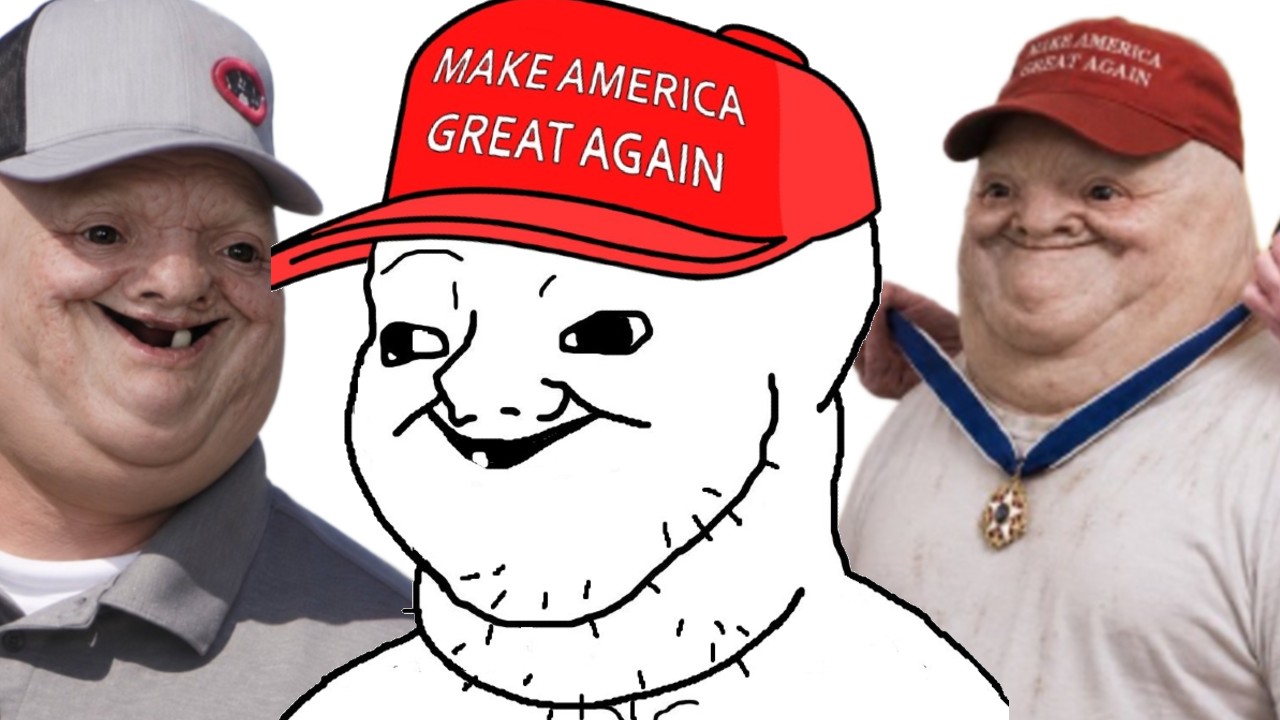
The chronological spread continued into September 3, 2026, with increasingly complex edits. The user @grandoldmemes, known for political satire, repurposed the famous "Obama awarding Obama a medal" meme format. In this version, a photorealistic Donald Trump is shown placing a Medal of Freedom around the neck of the MAGA Wojak. This edit served as a meta-commentary on the symbiotic relationship between the former president and his most devoted followers. Simultaneously, other users began creating "sub-variants" of the character. This included an edit by user @bourscheid that reimagined the character as various archetypes, such as a Western cowboy and even a caricature of conservative media personality Tim Pool, complete with his signature beanie. The Tim Pool edit, in particular, underscored the meme’s utility in criticizing specific media figures within the conservative ecosystem.
The technical execution of these 2026 memes is a subject of interest for digital media analysts. Unlike the static images of 2018, the new wave of MAGA Wojaks utilizes "uncanny valley" aesthetics—visuals that are nearly human but possess unsettling distortions. These AI tools, likely including platforms such as Midjourney, Flux, or Luma Dream Machine, allow for the creation of consistent character traits across different scenarios. This consistency has enabled the MAGA Wojak to become a "virtual actor" in a decentralized series of digital skits. Analysts suggest that the photorealistic nature of these memes makes them more visceral and shareable than their hand-drawn predecessors, as they bridge the gap between abstract caricature and recognizable human reality.
The broader implications of the MAGA Wojak’s resurgence are significant for the study of political communication. Memes have long been recognized as a form of "cultural shorthand" that can bypass traditional media filters to reach audiences directly. In the case of the MAGA Wojak, the meme functions as a Rorschach test for the viewer’s own political leanings. To a critic of the MAGA movement, the character is a devastating portrait of gullibility. To a supporter, or at least to those within the "ironic right," the character can be "reclaimed" as a symbol of the "average Joe" who remains "unbothered" by the complexities and critiques of the coastal elite.
Furthermore, the emergence of the "MAGAtard" variant highlights the persistent use of transgressive language in digital spaces. While the term is objectively offensive to many, its use within the context of these memes reflects a specific subcultural embrace of "anti-woke" or "politically incorrect" rhetoric. This linguistic choice is designed to signal an in-group identity that rejects mainstream standards of decorum, a hallmark of the communication style found on boards like 4chan and increasingly on X under its current leadership.
From a sociological perspective, the MAGA Wojak represents the "democratization of ridicule." In previous decades, political satire was largely the domain of professional cartoonists and late-night television hosts. Today, any individual with access to AI tools can generate high-quality satirical content that rivals professional productions in reach and impact. This shift has led to a more chaotic and fast-paced information environment where a single AI-generated video can dominate the national conversation for several days, forcing traditional political campaigns and media outlets to respond to narratives shaped by anonymous internet users.
As the 2026 election cycle approaches, the role of AI-generated memes like the MAGA Wojak is expected to expand. Political strategists are increasingly aware that these digital artifacts can influence voter sentiment by shaping the "vibe" or aesthetic perception of a movement. While the MAGA Wojak began as a simple tool for mockery, its evolution into a photorealistic, multi-use character demonstrates the power of technology to breathe new life into old tropes. Whether viewed as a cruel caricature or a masterpiece of digital satire, the MAGA Wojak stands as a testament to the enduring and evolving power of the meme in the age of artificial intelligence. The character’s journey from a 2018 4chan post to a 2026 viral sensation illustrates the cyclical nature of internet culture and the increasing blurred lines between digital fiction and political reality.

