
The Genesis of a Digital Legend
The Ben Drowned narrative began on September 7, 2010, when Hall posted a thread on 4chan’s /x/ (paranormal) board. Writing as the character "Jadusable," Hall detailed his acquisition of a suspicious, unlabeled Nintendo 64 cartridge from an enigmatic elderly man during a yard sale. Upon loading the game, Jadusable discovered a pre-existing save file titled "BEN." Despite creating a new file, the game’s internal logic appeared compromised; non-player characters (NPCs) would refer to the player as "BEN" rather than the chosen name, and the game world began to exhibit unsettling graphical and auditory glitches.
The initial posts were accompanied by YouTube videos that provided visual evidence of the haunting. These videos showed the protagonist’s character being followed by a static "Elegy of Emptiness" statue—a creepy, vacant-eyed duplicate of the protagonist—and the game’s "Song of Healing" playing in reverse. These technical manipulations, achieved through the use of emulators and memory hacking, were sophisticated for the time, convincing many viewers that the cartridge was truly possessed or fundamentally "broken" in a supernatural sense.
Narrative Structure and the Jadusable Chronicles
The story is traditionally divided into "arcs," with the first arc focusing on Jadusable’s deteriorating mental state as he interacted with the haunted software. According to the narrative, deleting the "BEN" save file only exacerbated the haunting. The game began to force the player into scenarios that were impossible in the standard retail version of Majora’s Mask, such as the "4th Day Glitch," which transported the player to a distorted version of Clock Town devoid of NPCs and textures.
In a pivotal moment of the first arc, the narrative shifted from the game console to the player’s computer. Jadusable claimed that the entity, identified as the spirit of a drowned boy named Ben, had begun communicating through Cleverbot, an early AI web application. This transition expanded the scope of the horror, suggesting that the "ghost" was no longer confined to the game cartridge but had escaped into the broader internet. The arc culminated in the release of "TheTruth.txt" and a final video titled "free.wmv," which suggested that Jadusable had been compromised by the entity and that the story was being finished by a roommate.
The Moon Children and the Transition to Alternate Reality Gaming
Following the conclusion of the initial ghost story, Hall transitioned the project into a complex Alternate Reality Game known as the "Moon Children" arc. On September 17, 2010, a link was discovered leading to a website titled "youshouldnthavedonethat.net." The site belonged to a fictional cult known as the Moon Children, whose members were named after the masked children found at the end of Majora’s Mask.
This phase of the project required community participation. Users were tasked with solving puzzles, deciphering hidden codes in the website’s source code, and interacting with fictional characters via guestbooks and emails. The narrative deepened, suggesting that "Ben" was not just a ghost but a digital consciousness associated with this cult. However, the high intensity of the project led Hall to announce a hiatus on September 20, 2010, revealing for the first time that the entire saga was a work of fiction he had created while a student at Clemson University.
Chronology of Key Events (2010–2020)
To understand the scale of the Ben Drowned phenomenon, one must look at the timeline of its release and subsequent revivals:
- September 7–12, 2010: The original "Jadusable" threads are posted on 4chan, accompanied by the first four videos: "day four.wmv," "BEN.wmv," "DROWNED.wmv," and "jadusable.wmv."
- September 15, 2010: The release of "TheTruth.txt," providing a narrative conclusion to the first arc.
- September 17, 2010: The "Moon Children" website goes live, marking the start of the ARG elements.
- September 20, 2010: Alex Hall reveals the story as a fictional art project, though he maintains that the narrative is "paused" rather than finished.
- February 2011: The launch of "Within Hubris," a forum dedicated to the continuation of the story and other community-driven horror projects.
- April 1, 2012: An April Fool’s parody video is uploaded, featuring a dancing Goron Link, which served as a rare moment of levity in an otherwise grim series.
- 2020: After years of relative silence, Hall revived the series with the "Awakening" arc, utilizing modern platforms like Discord and Twitter to continue the story for a new generation of fans.
Technical Execution and Multimedia Storytelling
The success of Ben Drowned can be attributed to Hall’s innovative use of technical limitations. By using the Project64 emulator and various "Gameshark" cheat codes, Hall was able to manipulate the game’s assets in real-time. He swapped character models, altered music triggers, and forced the game engine to render environments incorrectly. These "glitches" tapped into a specific type of digital anxiety—the fear of a familiar, nostalgic object becoming unrecognizable and hostile.
Furthermore, the use of YouTube as a primary medium was revolutionary for the creepypasta genre. Prior to Ben Drowned, most internet horror stories were purely text-based (such as "The Russian Sleep Experiment" or "Smile Dog"). By providing visual and auditory proof, Hall set a new standard for "verifiable" horror, a precursor to the "Analog Horror" subgenre that would later include works like The Mandela Catalogue and The Backrooms.
Community Engagement and Cultural Proliferation
The Ben Drowned story resonated deeply with the gaming community, particularly those who grew up with the Nintendo 64. Majora’s Mask was already noted for its somber themes of grief, impending doom, and existential dread, making it the ideal vehicle for a haunting narrative.
The community response was immense:
- Fan Art and Media: Thousands of pieces of fan art were produced on platforms like DeviantArt, often depicting the "Elegy of Emptiness" statue with bleeding eyes—a visual trope that became synonymous with the story.
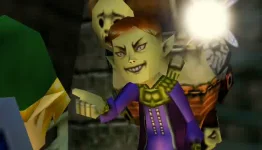
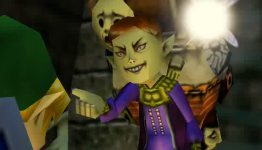
- Catchphrases: Lines such as "You shouldn’t have done that" and "You’ve met with a terrible fate, haven’t you?" (a direct quote from the game’s Happy Mask Salesman) were repurposed as omens of digital haunting.
- Mainstream Coverage: The story was featured on major gaming and tech outlets, including Kotaku, Joystiq, and PC Gamer, which analyzed the story not as a hoax, but as a sophisticated piece of transmedia fiction.
Search interest data from Google Trends shows a massive spike in queries for "Ben Drowned" and "Majora’s Mask Creepypasta" in September 2010, with sustained interest over the following decade due to the story’s "evergreen" status in horror communities.
Psychological Underpinnings and the Evolution of Horror
Psychologically, Ben Drowned leverages the "Uncanny Valley" effect. The Elegy of Emptiness statue is a low-polygon representation of a human-like figure that is almost correct but remains unsettlingly static and lifeless. When this figure is placed in a dynamic environment where it does not belong, it triggers a primal "fight or flight" response in the viewer.
The story also explores the concept of "Digital Decay." In the physical world, objects rot or break; in the digital world, decay manifests as corruption, glitches, and data loss. Ben Drowned suggests that these digital errors are not merely technical failures but could be the manifestations of a malevolent consciousness. This theme has become a cornerstone of modern horror, reflecting society’s increasing reliance on, and subsequent fear of, the digital systems that house our memories and identities.
Legacy and the Rise of Analog Horror
The legacy of Ben Drowned is evident in the current landscape of internet culture. It proved that a single creator with a modest budget could craft a narrative that reached millions by exploiting the specific tropes of a medium. The "haunted game" trope has since been used in countless other projects, such as Petscop and Sonic.exe, though few have matched the narrative depth or the successful integration of ARG elements seen in Hall’s work.
In conclusion, the Ben Drowned creepypasta remains a landmark achievement in digital fiction. It successfully bridged the gap between traditional storytelling and the interactive possibilities of the internet. By transforming a beloved childhood game into a source of terror, Alex Hall created a modern myth that continues to be studied by media scholars and enjoyed by horror enthusiasts worldwide. The project stands as a testament to the power of community-driven narrative and the enduring chill of the phrase: "You shouldn’t have done that."

