
The digital landscape is currently undergoing its most significant architectural shift since the commercialization of the Graphical User Interface (GUI) in the early 1980s. For over four decades, the primary contract between humans and software has been defined by the "point-and-click" paradigm—a system where users navigate a labyrinth of menus, sliders, and forms to achieve a desired outcome. However, a new philosophy known as Intent-Driven Design is rapidly gaining momentum, signaling a transition toward invisible, autonomous software experiences that prioritize human goals over mechanical interactions.
The Historical Context of Interaction Friction
To understand the magnitude of this shift, one must examine the origins of modern computing. The GUI, pioneered by the Xerox Star in 1981 and later popularized by the Apple Macintosh in 1984, replaced abstract command lines with visual metaphors like desktops, folders, and buttons. While this made computing accessible to the masses, it introduced a specific type of friction: the necessity of managing software rather than simply completing tasks.

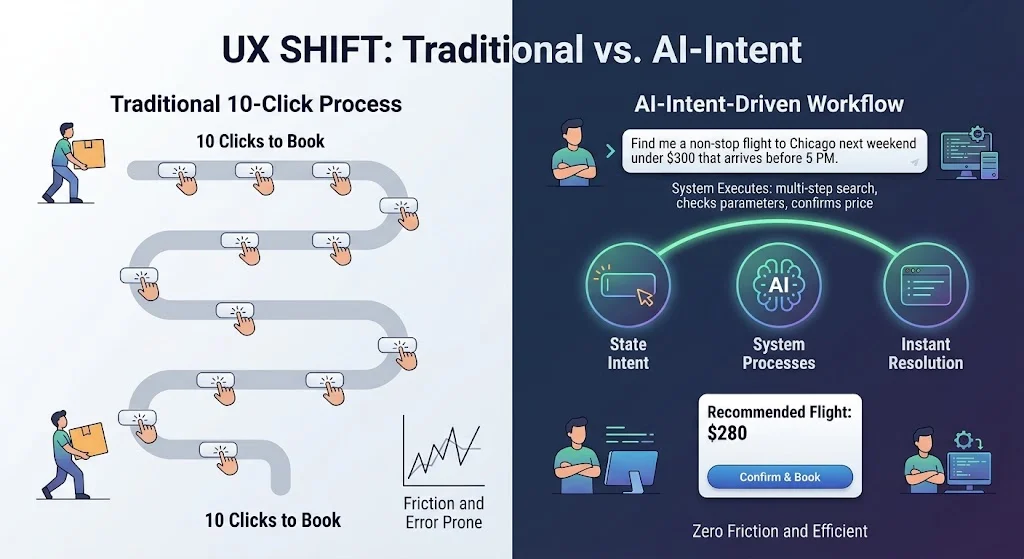
For decades, this friction was accepted as a baseline requirement. A user wishing to book a flight, for instance, would traditionally engage in a "10-click" process: navigating to a travel site, bypassing cookie consent banners, entering origin and destination codes, selecting dates from a calendar widget, filtering results via range sliders, and cross-referencing information across multiple browser tabs. In this model, the computer acts as a passive repository of data, while the human acts as the primary orchestrator, performing the cognitive and manual labor of connecting the dots.
Industry analysts note that this model is reaching its breaking point. As digital ecosystems become more complex, the cognitive load required to navigate them has increased exponentially. This has led to the emergence of what HCI (Human-Computer Interaction) experts call "interface fatigue," where users are increasingly overwhelmed by the sheer volume of interactive elements required to perform simple actions.
The Rise of Intent-Driven Design
Driven by rapid advancements in Large Language Models (LLMs) and generative artificial intelligence, a new generation of web tools is dismantling the traditional WIMP (Windows, Icons, Menus, Pointer) paradigm. Intent-Driven Design focuses on capturing high-level human objectives and delegating the execution to background processes.
Instead of requiring a user to master a specific UI to find a flight, an intent-driven system asks: "What are you trying to accomplish?" When a user provides a high-level goal—such as "Find me a non-stop flight to Chicago next weekend under $300 that arrives before 5 PM"—the software interprets the intent, executes the multi-step search queries, filters the results, and presents a finalized resolution. This converts a dozen manual interactions into a single, actionable outcome.
Case Studies in Invisible Interfaces
Several platforms are already demonstrating the viability of this "no-interface" approach, moving beyond theoretical concepts into functional tools.
1. Perplexity AI and the Transformation of Search
Traditional search engines, most notably Google, have historically functioned as directories. The user provides a keyword, and the interface returns a list of links, leaving the user to open tabs, skim articles, and synthesize information manually. Perplexity AI represents a shift toward synthesized answers. By utilizing AI to browse the web and compile data into a cohesive response, the platform eliminates the need for the user to navigate multiple external UIs. Data suggests that this approach significantly reduces "time-to-answer" metrics, a key performance indicator in modern UX.
2. Vercel v0 and Generative UI
In the realm of software development and design, the traditional workflow involved manual "drag-and-drop" editors or the tedious adjustment of CSS parameters. Vercel’s v0 platform allows users to describe a functional interface in natural language. The system then generates the code and layout dynamically. This effectively moves the designer’s role from "drawing rectangles" to "defining requirements," where the interface itself becomes a fluid, temporary byproduct of the user’s intent.
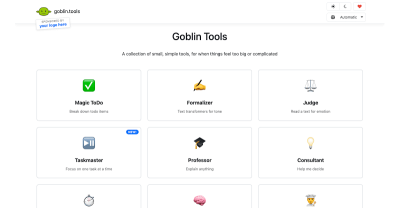
3. Goblin.tools and Cognitive Accessibility
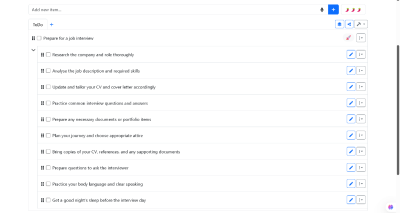
Designed primarily for neurodivergent users, Goblin.tools offers a suite of single-task AI tools that break down complex, overwhelming tasks into manageable steps. This platform highlights the social and accessibility implications of intent-driven design. By removing the need for complex configuration and manual task management, it lowers the barrier to entry for users who struggle with traditional productivity software.
The Three Pillars of the New UX Paradigm
Designers and engineers pioneering this space rely on three core structural pillars to maintain usability in the absence of traditional visual controls:
- High-Level Goal Capture: Rather than tracking micro-actions like clicks or scrolls, systems leverage environmental context—such as location, device state, and historical habits—to anticipate needs. This aligns with Apple’s Human Interface Guidelines on Contextual and Ambient Design, which advocate for software that "understands" the user’s surroundings.
- Generative UI: In traditional design, layouts are static; every user sees the same navigation bar. Generative UI allows the interface to be rendered dynamically on the fly. If a user expresses a need for a financial calculation, a widget appears; once the task is complete, the widget recedes. This ensures that the interface only exists when it is strictly necessary.
- Autonomous Execution by AI Agents: This pillar shifts the responsibility of task completion from the human to the software. Following Jakob Nielsen’s 10 Usability Heuristics, these systems prioritize "User Control and Freedom" not through complex prevention menus, but through easy reversibility. "Undo" buttons and transparent audit logs replace intrusive confirmation pop-ups, allowing agents to act boldly while keeping the human in the loop.
Supporting Data and Market Projections
Recent industry data underscores the urgency of this transition. According to a 2023 report by Gartner, "proactive" and "agentic" AI experiences are expected to replace 20% of traditional app interactions by 2026. Furthermore, internal testing from major tech firms indicates that intent-based interfaces can reduce task completion time by up to 60% in complex workflows like enterprise resource planning (ERP) and data analysis.
Market sentiment also reflects this shift. Venture capital investment in "AI agents"—software designed to perform tasks autonomously—surpassed $10 billion in the first half of 2024 alone. This suggests a broad consensus among stakeholders that the future of the web lies in "doing" rather than "showing."
Critical Risks and Ethical Challenges
Despite the efficiency gains, the removal of visual interfaces introduces significant technical and ethical challenges.
The Black Box Problem
In a traditional UI, a user can usually diagnose why a process failed (e.g., they checked the wrong filter box). In an intent-driven system, the decision-making process is often opaque. To mitigate this, the Google PAIR (People + AI Research) Guidebook emphasizes the need for "interpretability." Systems must provide feedback that explains their reasoning—for example, stating "I’ve selected these flights because they meet your $300 budget and arrival time preference."
The Illusion of Control
There is a fine line between helpful automation and invasive overreach. The Center for Humane Technology has raised concerns regarding "manipulative defaults," where AI agents might prioritize the interests of the platform over the user. Designers are now tasked with establishing "guardrails" for high-stakes decisions, ensuring that while routine tasks are automated, significant actions—such as financial transactions or privacy changes—still require explicit human authorization.
The Evolving Role of the UX Designer
For the design community, the "Death of the Button" necessitates a total re-evaluation of professional skills. The focus is shifting from visual aesthetics—such as the perfect shade of a button or the fluidity of a transition—to the architecture of intent.
UX designers must now become "Intent Architects," focusing on:
- Mapping Mental Models: Understanding how users conceptualize their goals in natural language.
- Designing Feedback Loops: Creating non-intrusive ways for the AI to signal its progress and seek clarification.
- Managing Edge Cases: Anticipating where an AI agent might misinterpret a goal and designing the "off-ramps" for human intervention.
As Don Norman, a pioneer in human-centered design, has frequently noted, the ultimate goal of technology is to be "invisible." The transition toward intent-driven design is, in many ways, the final realization of this vision.
Conclusion: Toward Seamless Completion
The digital industry has historically measured success through engagement metrics: time spent in-app, click-through rates, and page views. These metrics, however, are predicated on the existence of an interface that demands attention.
The emergence of intent-driven design suggests a new set of success metrics: "time to resolution" and "minimal interaction volume." The philosophy championed by Golden Krishna in The Best Interface Is No Interface is finally becoming technically feasible. The ultimate test of a modern digital product is no longer how visually captivating its buttons are, but how effectively it renders those buttons obsolete.
We are entering an era where software will no longer be a tool that we "use," but an assistant that "acts" on our behalf. The future of the web is not more interaction; it is seamless, invisible completion. As this paradigm takes hold, the most successful designs will be those that the user never even realizes they are interacting with.

