
The European Union has formalized its comprehensive framework for artificial intelligence transparency, establishing a clear mandate that will fundamentally alter how digital content is produced, labeled, and consumed by citizens within its jurisdiction. Starting August 2, 2026, any organization—regardless of its global headquarters—that provides or deploys AI-generated content to users within the European Union must adhere to strict disclosure requirements. This move represents a pivotal shift from voluntary industry "best practices" to a legally enforceable standard designed to mitigate the risks of disinformation, deepfakes, and the erosion of trust in digital media.
While initial industry reactions were characterized by concerns over "sweeping bans" and "stifling innovation," a closer examination of the guidelines reveals a targeted approach. The European Commission’s transparency obligations are specifically calibrated to address scenarios where AI content could be mistaken for human-generated material, particularly in areas of public interest. This regulation is not merely a local European matter; due to the "Brussels Effect," it is expected to set a global benchmark for AI interface design and content provenance, much like the General Data Protection Regulation (GDPR) transformed global privacy standards.
The Legislative Context and the AI Act Framework
The transparency requirements are rooted in the broader EU AI Act, which entered into force in August 2024. The Act employs a risk-based approach, categorizing AI systems into four levels: Unacceptable Risk, High Risk, Limited Risk, and Minimal Risk. The labeling and disclosure mandates primarily fall under the "Limited Risk" category, governed by Article 50 of the Act.
The primary objective is "explainability." The EU asserts that individuals have a right to know when they are interacting with an AI system or consuming content that has been substantially altered or generated by machine learning algorithms. This is particularly relevant in the context of generative AI, where the distinction between synthetic and organic content has become increasingly blurred. By mandating labels, the EU aims to empower users to make informed decisions about the information they consume and the tools they utilize.
Chronology of Implementation: A Phased Approach
The European Commission has outlined a multi-year timeline to allow companies to adapt to these rigorous new standards. The phased rollout is designed to prioritize the most dangerous AI applications first while giving the broader market time to develop technical solutions for labeling and watermarking.

- February 2025: Prohibitions on AI systems posing "unacceptable risks"—such as social scoring and certain types of biometric surveillance—take full effect.
- August 2025: Rules regarding General-Purpose AI (GPAI) models, including large language models like GPT-4 and Claude, become enforceable. This includes requirements for technical documentation and adherence to copyright law.
- August 2026: The full spectrum of transparency obligations under Article 50 becomes a legal requirement. This includes the mandatory labeling of AI-generated text, audio, video, and images.
- August 2027: High-risk AI systems—those used in critical infrastructure, education, or law enforcement—must meet their full compliance requirements, including third-party assessments.
Defining the Scope: What Requires a Label?
According to Article 50(4) of the AI Act, the obligation to disclose AI involvement applies to three primary categories of content. First, "Deepfakes" or manipulated images, audio, or video that resemble real persons, objects, places, or events and could be falsely perceived as authentic. Second, AI-generated text published with the intent to inform the public on matters of public interest, such as politics, public health, or scientific discourse. Third, AI systems that interact directly with natural persons, such as customer service chatbots, must disclose their non-human nature at the point of first interaction.
Crucially, the law distinguishes between "providers" (the developers of the AI) and "deployers" (the companies using the AI in their products). Both parties share legal responsibility. A company cannot circumvent Article 50 by claiming it merely licensed a third-party tool; if the output is served to an EU citizen, the disclosure must be present.
However, the regulation provides significant exemptions for "assistive" use. Standard tools for spell-checking, grammar correction, or basic photo editing (such as cropping or color grading) do not trigger the labeling requirement. The "fine line" is drawn at the point of substantive generation. If an AI generates a complete paragraph of text or creates a composite image from a text prompt, it is considered AI generation. If a human writes a document and an AI suggests three synonyms for a word, it remains human-authored content.

The Editorial Responsibility Loophole
One of the most debated aspects of the new guidelines is the "Editorial Review" exemption. The disclosure obligation does not apply where AI-generated text has undergone a substantive review and edit by a human who takes editorial responsibility for the final output.
The European Commission has been explicit that a "cursory glance" or a "skim" before hitting publish does not constitute editorial review. To qualify for this exemption, a named person or entity must be accountable for the content’s accuracy and ethical standards. This is a significant win for traditional newsrooms and marketing agencies that use AI as a drafting tool but maintain a rigorous human-in-the-loop workflow. Conversely, automated "news aggregators" and social media bots that churn out AI-generated summaries without human oversight will be legally required to carry a clear "AI-Generated" label.
Technical Standards: Why the Sparkle Icon is Insufficient
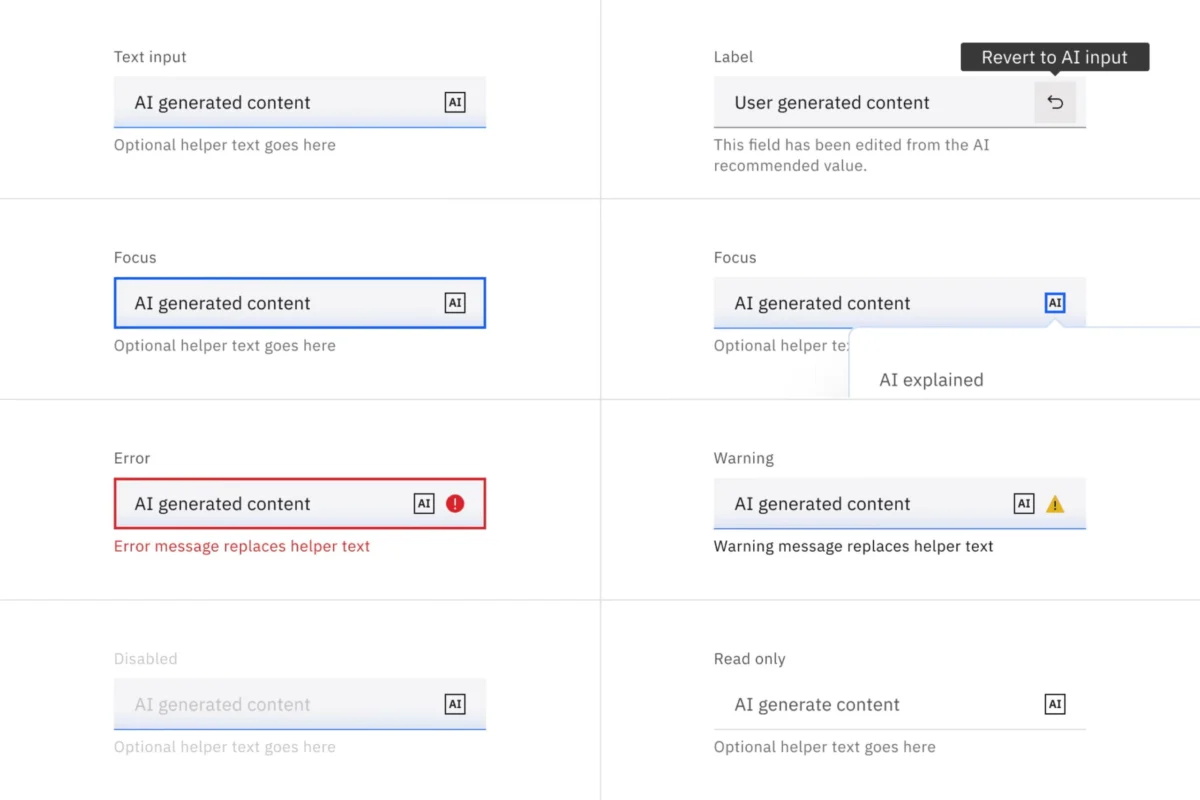
For years, the technology industry has defaulted to the "magic sparkle" icon (✨) to denote AI-powered features. While aesthetically pleasing, the EU Commission and organizations like the Nielsen Norman Group have argued that this symbol is too ambiguous. Users often associate sparkles with "new features" or "enhancements" rather than the specific presence of synthetic content.

To address this, the European Commission has published a specific "EU AI icon set." These icons are designed to be "clear and distinguishable." Compliance is not achieved by simply placing an icon in a corner; the guidelines require:
- Visibility: The label must be prominent and not buried in a footer or a "Terms of Service" page.
- Plain Language: Icons should be paired with text such as "AI-generated" or "Synthetically altered."
- Accessibility: Labels must be readable by screen readers and other assistive technologies.
- Persistence: The disclosure must, where technically feasible, remain attached to the content even when it is downloaded or reshared on other platforms.
This has led to the adoption of standards like C2PA (Coalition for Content Provenance and Authenticity), which embeds metadata directly into digital files to track their origin and any subsequent AI manipulations.
Financial Penalties and Enforcement
The stakes for non-compliance are exceptionally high. The EU has modeled its penalty structure after the GDPR, ensuring that even the world’s largest technology companies take the rules seriously.

- Non-compliance with prohibited AI practices: Fines up to €35 million or 7% of total global annual turnover.
- Non-compliance with transparency and GPAI rules: Fines up to €15 million or 3% of total global annual turnover.
- Providing misleading information to regulators: Fines up to €7.5 million or 1.5% of total global annual turnover.
For a multi-billion dollar corporation, a 3% fine on global revenue represents a catastrophic financial and reputational risk, likely ensuring that compliance departments will prioritize these labeling requirements well ahead of the 2026 deadline.
Global Regulatory Convergence
The EU is not acting in a vacuum. Similar regulations are emerging globally, creating a mosaic of requirements that multinational corporations must navigate. In the United States, several states have passed laws regarding "synthetic performers" and transparency in political advertising. China’s Cyberspace Administration (CAC) has already implemented strict "watermarking" rules for generative AI services. The United Kingdom, while currently favoring a more "pro-innovation" approach, is also exploring sector-specific transparency codes.
This global trend suggests that the era of "invisible AI" is coming to an end. Regulators are converging on a shared philosophy: when machine-generated content has the potential to influence public opinion or mimic human identity, the public has an inherent right to transparency.

Analysis of Implications for Business and Design
The implementation of Article 50 will require a complete overhaul of User Experience (UX) and User Interface (UI) design for thousands of products. Designers can no longer view AI as a "black box" feature; they must now design for "explainability." This includes creating "transparency panels" that explain how an AI reached a certain conclusion or identifying which specific parts of a dashboard were generated by predictive algorithms versus raw data.
Furthermore, the "substantive editorial review" clause will likely lead to a resurgence in the value of human oversight. Companies may find it more cost-effective to employ human editors than to risk the "AI-generated" label, which some research suggests may carry a stigma or lower perceived value in certain creative markets.
Ultimately, these rules aim to foster a "trust economy." By removing the mystery of where content comes from, the EU hopes to create a digital environment where authentic human creativity and efficient AI assistance can coexist without deceiving the end user. As we move toward 2026, the challenge for the industry will be to balance these legal requirements with a seamless user experience, ensuring that transparency does not become a burden, but rather a hallmark of quality and integrity.

