
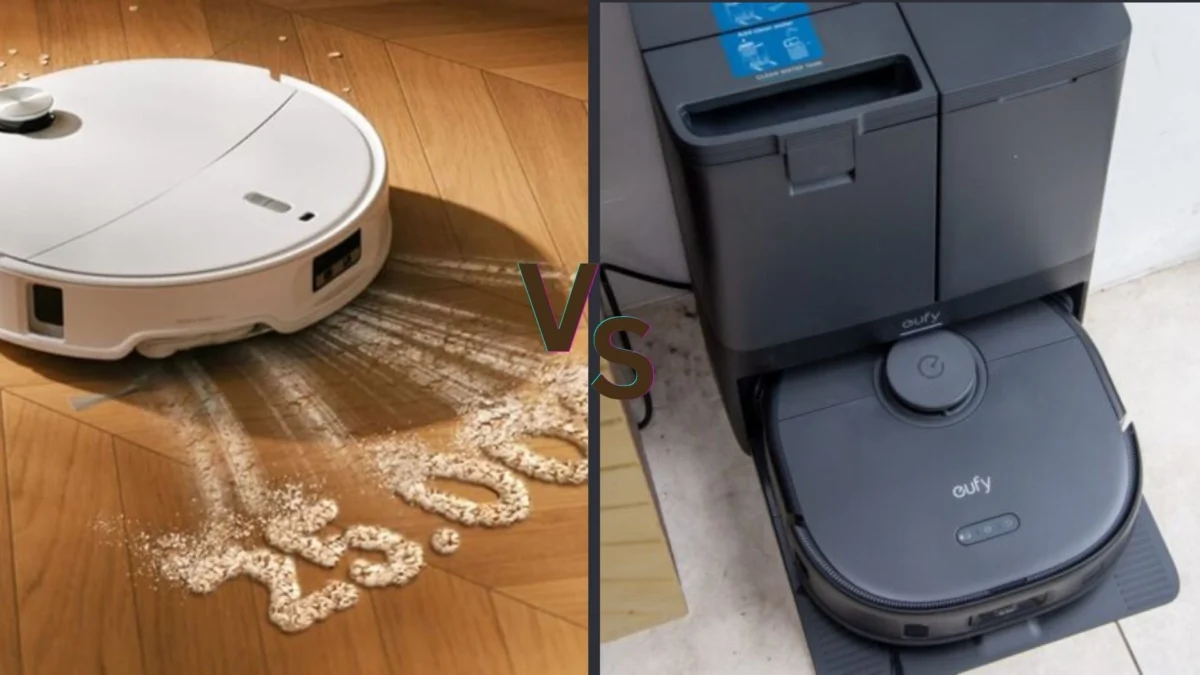
The landscape of automated home cleaning has become increasingly competitive, with brands like Eufy and Roborock emerging as frontrunners, each carving out distinct niches in the market. While Eufy has historically focused on delivering robust feature sets at accessible price points, Roborock has positioned itself as a premium innovator, consistently introducing cutting-edge technologies. This divergence in strategy presents consumers with a nuanced decision when selecting the ideal robot vacuum, a choice that extends beyond simply identifying the "best" model. Both brands now offer a comprehensive range of devices catering to diverse budgets and cleaning needs, making a direct comparison essential for informed purchasing. This in-depth analysis delves into the key aspects of Eufy and Roborock robot vacuums, examining their performance, technological advancements, and user experience to guide consumers toward the most suitable option for their households.
Evolving Product Lineups and Price Points
The current product portfolios of both Eufy and Roborock demonstrate a strategic expansion to cover a broad spectrum of the market, from entry-level affordability to high-end sophistication. Eufy’s lineup encompasses models that cater to budget-conscious consumers, while also extending to more premium offerings. The Eufy Omni E28, for instance, represents a significant investment at approximately £899/$1,199 in the UK, signifying the brand’s ambition to compete in the upper echelons of the market. This pricing places it alongside other advanced models that were once considered exclusive to flagship categories.
Roborock, conversely, maintains a tiered approach, with its Q-series models providing more accessible entry points into the world of robotic cleaning. However, the brand’s premium offerings, such as the Qrevo and Saros ranges, showcase its commitment to technological leadership and command higher price tags. A notable aspect of the mid-range market is the surprising inclusion of features that were, just a few years ago, the preserve of significantly more expensive machines.
For example, the Roborock Qrevo S Pro, priced at around £479.99/$648.19 on Roborock’s UK store, exemplifies this trend. It boasts an impressive 18,500Pa suction power, dual liftable spinning mops for enhanced cleaning, and the convenience of high-temperature mop washing and warm-air drying. This combination of features offers a compelling proposition for consumers seeking advanced cleaning capabilities without the absolute top-tier investment.
Eufy has mirrored this strategy with models like the X10 Pro Omni. This device features 8,000Pa suction, advanced AI obstacle avoidance, precise laser navigation, and an all-in-one station that streamlines maintenance. Currently listed on Eufy’s UK store from £599/$799, it positions itself as a strong contender in the premium mid-range, offering a blend of smart navigation and automated station functions.
At the apex of the market, the technological competition intensifies. Eufy’s Omni E28, with its formidable 20,000Pa suction power and innovative HydroJet roller system, challenges the established norms. Roborock responds with its Qrevo Curv 2 Flow, also reaching 20,000Pa and incorporating a wide, self-cleaning roller mop. The Qrevo Curv 2 Flow is currently available in the US for $799.99, underscoring the aggressive pricing strategies employed by both brands to capture market share in the high-end segment. This escalation in features and performance at comparable price points signifies a dynamic market where innovation is driven by consumer demand for increasingly sophisticated and automated home cleaning solutions.
Vacuuming Performance: Power, Design, and Trade-offs
The effectiveness of a robot vacuum’s cleaning capabilities is intrinsically linked to its individual model specifications and underlying technology. At the upper echelon, Roborock’s Saros 20 model stands out with an extraordinary 36,000Pa of suction power, coupled with the company’s most advanced brush designs and an ultra-slim chassis engineered to navigate effortlessly beneath low-lying furniture. This focus on raw power and intricate design details often gives Roborock a discernible edge in the high-performance category.
Eufy, however, is not far behind in this power race. The Omni S2 model, for instance, delivers a substantial 30,000Pa of suction power. In open-plan environments, its performance is generally on par with top-tier competitors, proving itself a formidable cleaner based on independent testing and user feedback.
It is crucial to look beyond the mere suction power (measured in Pascals, or Pa) when evaluating vacuuming performance. A robot advertising a higher Pa figure does not automatically guarantee superior cleaning compared to a model with a lower rating. Modern advancements in anti-tangle systems and increasingly complex brush designs can introduce trade-offs, particularly when it comes to performance on carpeted surfaces. The interaction between brush type, suction efficiency, and the specific demands of different floor coverings is a complex interplay that necessitates a deeper dive into individual model reviews.
Furthermore, the rapid evolution of robot vacuum technology means that direct brand comparisons can become increasingly challenging. A budget-friendly Eufy model from the current generation might outperform an older, premium Roborock unit in specific aspects. Conversely, a mid-range Roborock might offer specialized features that Eufy’s offerings, even at a higher price point, do not. This highlights the importance of assessing a robot vacuum’s suitability based on a holistic understanding of its capabilities rather than relying solely on generalized brand perceptions or isolated specifications. The true measure of vacuuming performance lies in how effectively a robot tackles various debris types, navigates different floor surfaces, and maintains consistent cleaning power throughout its operational cycle.
Mopping Performance: Innovation and Adaptability
The evolution of mopping capabilities in robot vacuums has been a significant area of innovation, with Eufy and Roborock taking distinct yet effective approaches. Eufy pioneered the use of roller mops in its devices, and its newer Omni models integrate HydroJet roller-mop technology. This system features continuous washing of the roller as it cleans, addressing a common issue where mopping pads become saturated with dirt and can consequently smear stains. The self-cleaning mechanism is particularly beneficial for homes with predominantly hard flooring, where the robot can efficiently tackle dried-on marks and everyday grime without requiring frequent manual intervention.
Roborock’s mopping systems are also highly capable, with most models employing traditional mopping pads. Years of refinement have resulted in newer Roborock machines demonstrating proficiency in cleaning stubborn stains. The brand’s advanced models can also intelligently detect areas requiring special attention, adapting their cleaning strategy accordingly. As with vacuuming performance, the variance within Roborock’s product range means that individual reviews are indispensable for understanding the specific mopping prowess of any given model.
A key differentiator emerges when considering mixed flooring environments. Both Eufy and Roborock robots are generally equipped to lift their mop pads or rollers upon detecting carpet (typically up to 10cm), allowing them to transition seamlessly over short-pile carpets. However, Roborock’s higher-end models, such as those in the Saros range, offer an additional level of sophistication: they can fully retract their mop pads when only vacuuming. This capability is particularly advantageous for navigating deeper pile carpets without the risk of damage, making Roborock’s flagship models a more suitable choice for homes with complex and varied floor coverings. This nuanced approach to mopping, particularly in mixed-surface scenarios, underscores Roborock’s focus on delivering a comprehensive and adaptive cleaning solution for diverse household needs.
Navigation and Obstacle Avoidance: Precision and Intelligence
LiDAR-based mapping has become a standard feature across a wide array of robot vacuums from both Eufy and Roborock, enabling precise navigation and efficient route planning. Both brands have also significantly advanced their obstacle detection capabilities, incorporating camera-based AI technology to identify and avoid common household hazards.
Historically, Roborock has been lauded for its superior mapping accuracy and methodical route planning. Their robots tend to approach room cleaning with a systematic precision, and the accompanying app provides users with extensive control over maps, room segmentation, and the designation of cleaning zones. This granular control empowers users to customize cleaning routines with a high degree of specificity.
Eufy is rapidly closing the gap in this domain, with some of its newer models exhibiting exceptional object avoidance capabilities. Independent testing of the Eufy X10 Pro Omni, for instance, revealed its hazard avoidance to be significantly more effective than that of the Roborock Qrevo S in a direct comparison. This is a critical factor for households that are not meticulously organized, where the ability of a robot to recognize and circumvent objects like cables, shoes, or toys can be more valuable than a technically more sophisticated navigation system that frequently gets entangled.
While Roborock may still hold a slight edge in overall navigation finesse, Eufy’s advancements in obstacle avoidance make it a compelling alternative, particularly for users whose primary concern is minimizing the risk of the robot encountering and becoming stuck on everyday items. The increasing intelligence of Eufy’s AI systems suggests a future where nuanced environmental awareness will be a key battleground for market dominance in the robotic cleaning sector. The ability to navigate complex and dynamic home environments without constant human intervention is a paramount objective for both brands, and the progress made by Eufy in this area is noteworthy.
App Experience and Smart Home Integration: User Interface and Ecosystem
The user interface and smart home integration capabilities of a robot vacuum play a crucial role in the overall ownership experience. Roborock’s app is widely considered one of the strongest components of its ecosystem. It offers detailed interactive maps, granular room controls, scheduling functionalities, no-go zones, and a plethora of customization options for cleaning preferences. This depth of control allows users to fine-tune cleaning routines to an exceptional degree.
Eufy’s app, while fully functional and providing essential controls such as mapping, room selection, scheduling, and no-go areas, generally lacks the same level of polish and sophistication found in Roborock’s software. The difference becomes more pronounced as one ascends the product hierarchy. As robots become more capable and incorporate a greater array of advanced features, the importance of a well-designed and intuitive app escalates.
Both brands offer voice control integration, though the specifics of the experience can vary depending on the robot model and the smart home platform being used (e.g., Amazon Alexa, Google Assistant). For users who prefer a "set it and forget it" approach, establishing a cleaning schedule and allowing the robot to operate autonomously, the distinctions between the two apps may be negligible. However, for individuals who frequently create custom zones, adjust cleaning settings, or manage intricate floor plans, Roborock’s more refined app presents a stronger argument for a higher investment.
Furthermore, both Eufy and Roborock have active user communities where discussions regarding product durability and reliability can be found. Reports from Roborock owners have sometimes raised concerns about the longevity of moving components, such as lifting mechanisms. Eufy users have, on occasion, discussed issues related to app performance and customer support responsiveness. It is important to note that such discussions often pertain to older models, and newer generations of devices may have addressed these concerns. A prudent approach involves examining the warranty periods, the availability of replacement parts, the quality of customer support in your specific region, and the overall complexity of the particular model under consideration. These factors, combined with insights from recent reviews, offer a more accurate assessment of a product’s potential long-term performance and user satisfaction.
Conclusion: Navigating the Choices
For consumers seeking the most refined and comprehensive robot vacuum experience, Roborock generally holds the edge. Its strengths lie in superior navigation and mapping algorithms, a more sophisticated and user-friendly app interface, and consistently strong cleaning and mopping performance across its product range. Roborock’s commitment to integrating advanced features and providing granular user control positions it as a premium choice for those who prioritize cutting-edge technology and an integrated ecosystem.
Eufy, on the other hand, excels in delivering exceptional value, packing impressive features into competitively priced models. Its newer offerings showcase significant technological advancements, making them highly capable contenders. While Eufy may not always match Roborock’s polish in every aspect, particularly in app sophistication, it provides a compelling alternative for budget-conscious consumers who still desire a high level of performance and functionality.
Ultimately, both Eufy and Roborock produce outstanding robot vacuums that cater to a wide array of needs and preferences. The "better" brand is subjective and depends entirely on individual priorities, budget, and home environment. Thoroughly reviewing independent tests and user feedback for specific models is the most effective way to determine which robot vacuum will best suit your unique cleaning requirements and lifestyle. The ongoing innovation from both companies ensures a dynamic market, with consumers poised to benefit from increasingly capable and accessible automated cleaning solutions.

