
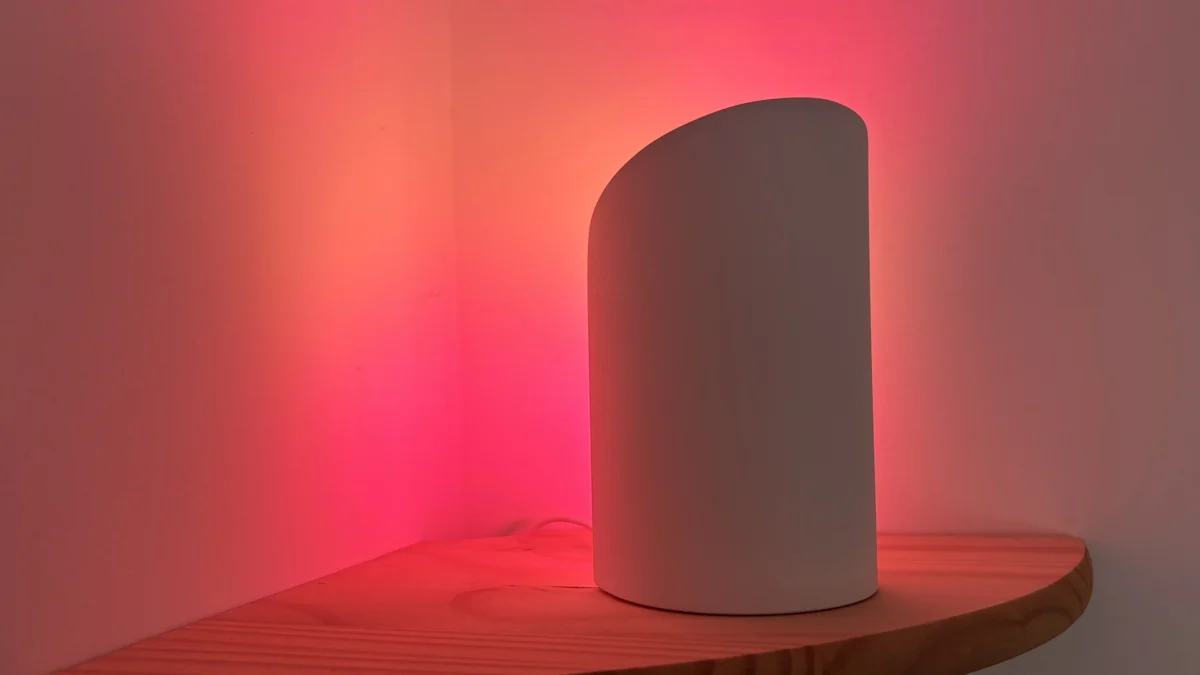
The smart lighting market, once dominated by a clear dichotomy between budget-friendly, feature-rich options and premium, ecosystem-driven solutions, is experiencing a significant shift in 2026. For consumers navigating the expansive world of connected illumination, the choice often narrows to two prominent players: Govee and Philips Hue. Govee has carved out a niche with its affordable, vibrant, and effect-laden lighting solutions that boast straightforward Wi-Fi connectivity and rapid setup. In contrast, Philips Hue, under the umbrella of Signify, has cultivated over a decade of market presence, establishing the most robust and comprehensive smart lighting ecosystem, albeit with a commensurate premium price tag. Both brands consistently feature in expert guides to the best smart lighting products available today.
Historically, the prevailing wisdom dictated a clear value proposition: Govee represented the accessible, budget-conscious choice, while Philips Hue occupied the premium segment, with its higher cost justified by superior reliability and integration. This long-standing perception, however, is rapidly becoming outdated. The landscape has been reshaped by strategic product launches and technological adoptions. Philips Hue has introduced its more affordable "Essential" range, effectively halving the price point of its flagship bulbs and challenging its own premium positioning. Simultaneously, Govee has made substantial investments in securing Matter certification for a growing portfolio of its products, signaling a commitment to broader smart home interoperability.
To comprehensively assess the current competitive dynamics, a thorough examination of hardware from both manufacturers is essential. This analysis draws upon extensive testing of Govee’s diverse smart lighting offerings, encompassing its bulbs, LED strips, and television backlighting solutions. Similarly, Philips Hue’s extensive product line, including the latest iteration, the Hue Bridge Pro, has been rigorously evaluated. The following breakdown aims to illuminate the key differentiators that truly set these two industry leaders apart in the evolving smart lighting arena.
Govee vs. Philips Hue: A Comparative Analysis of Pricing for Bulbs and LED Strips
The disparity in pricing between Govee and Philips Hue products, particularly for fundamental components like light bulbs and LED strips, has been a significant factor in consumer decision-making. When Govee’s smart lighting products first entered the market around 2021, the price differential was stark. A Govee color bulb, often available in multi-packs for under $10 or £10, stood in sharp contrast to its Philips Hue equivalent, which typically retailed for $49.99 or £49.99. This substantial gap made Govee an almost default choice for budget-conscious consumers seeking vibrant, multi-colored lighting.
However, this historical benchmark is no longer an accurate reflection of the current market. Philips Hue’s strategic introduction of its "Essential" range in late 2025 has significantly altered the pricing structure. A four-pack of Essential A19 or A60 color bulbs now retails for approximately $59.99 or £49.99. Smaller two-packs are available for around $39.98 or £32.99, with individual bulbs priced at $24.99. This move positions Hue more competitively within a broader price spectrum.
Govee, while still maintaining a generally lower price point, has also seen its pricing adjust. Official four-packs of its 1000-lumen bulbs in the US are priced at $38.99, while in the UK, 800-lumen bulbs are available for £31.99. Higher-lumen 1200-lumen sets approach $54.99. It is important to note that Govee frequently offers near-permanent discounts, meaning these figures should be considered snapshots of current pricing rather than fixed rates.
This trend extends to LED light strips. Govee’s TV Backlight 3 Lite is priced at $69.99 or £67.50. In comparison, Philips Hue’s Essential Light Strip, which launched in the UK earlier in 2026, is available for £69.99 for a five-meter version.
The trade-offs associated with Philips Hue’s Essential range are crucial considerations for consumers. These bulbs have a maximum lumen output of 803 lumens, a notable reduction from the 1,600 lumens offered by the flagship White and Color Ambiance range. Furthermore, their dimming capabilities are less refined, only reaching down to 2% brightness compared to the 0.2% offered by higher-end models. The spectrum of white tones they can produce is also more limited. While Govee’s budget bulbs offer comparable brightness levels, the nuanced differences in performance and features become more apparent when scrutinizing the specifications. Consequently, the contemporary comparison in 2026 is less about Govee versus premium Hue, and more accurately framed as Govee versus Philips Hue’s more accessible budget-tier offerings.
For consumers whose primary concern is cost, it is worth noting that Signify, the parent company of Philips Hue, also operates a separate, more affordable brand. A detailed comparison between Philips Hue and this alternative brand, WiZ, has been conducted separately, providing further insights into the broader market landscape.
Philips Hue vs. Govee: A Detailed Examination of Connectivity and Ecosystems
The fundamental difference in connectivity architecture between Philips Hue and Govee significantly impacts the scalability and reliability of their respective smart lighting systems. Govee lights typically connect directly to a home’s Wi-Fi network, with Bluetooth serving as a secondary, local backup. This direct Wi-Fi connection eliminates the need for additional hardware purchases for basic setups. However, as the number of Govee devices increases, each bulb becomes an individual node competing for bandwidth on the router. Wi-Fi congestion is a frequently cited issue among users managing extensive Govee installations, potentially leading to intermittent connectivity problems and slower response times.
Philips Hue, on the other hand, offers a more robust and scalable connectivity solution. While Bluetooth can be utilized for a limited number of bulbs, the full potential of the Hue system is unlocked with the addition of a Hue Bridge. The Hue Bridge Pro, the latest iteration, is the recommended choice for most users. With a Hue Bridge, lights and accessories communicate using Zigbee, a low-power wireless protocol designed for mesh networking. In a Zigbee mesh network, each mains-powered bulb acts as a repeater, strengthening the signal and enhancing the reliability of the network as more lights are added. This architecture ensures a more stable and responsive system, even with a large number of devices. The Hue Bridge Pro is capable of supporting up to 150 lights, 50 accessories, and 500 scenes, a significant upgrade from the 50 lights and 12 accessories supported by the original Bridge. During testing, lights that previously exhibited sluggish behavior on dimmer switches responded almost instantaneously after migration to a Bridge Pro system. The automatic migration process for existing setups was completed in under 20 minutes, earning the Bridge Pro a five-star rating. While the initial investment of $139.99 or £89.99 (often found closer to £79.99 at retail) for the Bridge Pro represents an additional cost, the enhanced reliability and performance it provides are widely considered to be worth the expenditure.
The advantages of Zigbee extend beyond mere connectivity. Hue’s reliance on this standard enables seamless integration with a wide array of third-party physical switches, dimmers, and sensors. This is a significant area where Govee’s Wi-Fi-centric approach falls short. The market offers numerous "Friends of Hue" switches, such as those from RunLessWire (priced at $59.99) and Senic (priced at $79.99 or £69). Additionally, Lutron’s Aurora dimmer ($39.95) provides a unique solution by clamping over existing wall toggles, preventing accidental power disconnections to Hue bulbs. All these accessories operate on Zigbee and necessitate a Hue Bridge. For users who prefer physical control over constantly reaching for their smartphone, Govee currently lacks comparable solutions.
Furthermore, Hue accessories maintain functionality even during Wi-Fi or internet outages. A Hue wireless switch, for instance, can reliably turn lights on and off regardless of the home network’s status. In contrast, Govee lights lose their control capabilities entirely in the absence of a Wi-Fi connection. This resilience is a critical differentiator for users prioritizing uninterrupted operation.
Govee vs. Hue: Navigating the App Experience
The user interface and experience offered by the mobile applications of Govee and Philips Hue present distinct philosophies and functionalities. Govee’s app provides users with extensive control over visual effects, including segment-level color customization on its advanced RGBIC strips, a variety of music synchronization modes, and access to a vast library of community-generated scenes. However, this depth of customization comes with a notable degree of complexity and what many users perceive as "noise." The app frequently features product promotions, organizes features across multiple tabs, and often requires more taps than necessary for basic operations like setting schedules. Reviewers and users alike often find that while the capability for intricate control is present, navigating and accessing these features can be a time-consuming endeavor.
Philips Hue’s app, by contrast, adopts a more streamlined and user-friendly approach. It is generally quicker for routine tasks and offers a more intuitive organization of lights by room, which remains legible even in larger installations with numerous devices. The Hue app provides fewer granular effects and less in-depth customization compared to Govee’s offering. Historically, its scene editing capabilities have lagged behind what Govee provides out of the box.
Neither application is universally acclaimed as the pinnacle of smart lighting app design. During testing of other smart lighting systems, such as Cync’s Dynamic Effects range, the associated app was found to be less confusing than Govee’s and more manageable than the increasingly complex Hue app, despite the Cync lights themselves not being universally recommended. The choice between Govee and Hue often comes down to a preference for extensive customization and effects versus a more straightforward and efficient user experience for core lighting functions.
Philips Hue Sync Box vs. Govee DreamView: An Analysis of TV Lighting Solutions
The domain of synchronized TV backlighting represents another area where Govee and Philips Hue employ distinct technological approaches and offer varying levels of performance and price points. Govee has traditionally relied on camera-based systems. A small camera is mounted on the television, capturing on-screen colors and driving the connected light strip to mimic them. Older iterations bore the "DreamView" branding, while the current generation is marketed as TV Backlight 3. The standard model costs $109.99, the triple-camera Pro version is priced at $179.99, and the entry-level Lite is available for $69.99 or £67.50. This camera-based method offers broad compatibility with any content source, including broadcast television and gaming consoles. Setup involves calibrating the camera to the screen’s edges.
Philips Hue takes a different approach with its Play HDMI Sync Box. This device is positioned between the video source and the television, directly analyzing the HDMI signal. It then drives compatible Hue lights to synchronize with the on-screen action. The Play HDMI Sync Box 8K carries a premium price tag of $349.99 or £299 and requires a Hue Bridge, making the total entry cost significantly higher. The advantages of this HDMI-based system are its accuracy, eliminating the need for camera calibration and mitigating interference from ambient room lighting. It also ensures virtually no lag between the on-screen action and the light response. Furthermore, it supports advanced video standards, including 8K, 4K at 120Hz, and Dolby Vision.
Recognizing the demand for HDMI synchronization, Govee has introduced its own HDMI system, the AI Sync Box Kit 2, priced at $259.99. This offering aims to bridge the technical gap with Hue’s solution while remaining more competitively priced. This development indicates a strategic move by Govee to address a key differentiator previously held by Philips Hue.
Govee vs. Philips Hue: Smart Home Compatibility and the Matter Standard
The smart home compatibility of both Govee and Philips Hue products is a critical factor for users integrating lighting into broader automated ecosystems. Philips Hue boasts a well-established and mature integration with major smart home platforms. It offers seamless compatibility with Amazon Alexa, Google Home, and Apple HomeKit. Its long-standing support for HomeKit, in particular, makes it a predictable and reliable choice for Apple-centric households.
Govee has made significant strides in adopting the Matter standard, with over 90 of its products now Matter-certified. This certification spans a wide range of its offerings, including bulbs, LED strips, floor lamps, ceiling lights, and outdoor fixtures, such as the Outdoor UpDown Wall Light, which has been recognized in expert guides.
However, the practical implications of Matter certification for Govee products warrant careful consideration. According to Govee’s own documentation, Matter control currently encompasses basic functionalities such as on/off, brightness adjustment, color temperature, and color changing. More advanced features, including the intricate effects, dynamic scenes, and music synchronization modes that are central to Govee’s appeal, are listed as "undetermined" in their Matter integration. This means that while Govee lights can be integrated into platforms like Apple Home alongside Hue lights and controlled collectively, their signature advanced features remain confined within the Govee app. Consequently, when controlled via Matter, Govee lights function essentially as standard, albeit smart, colored bulbs.
It is also important to note that the Matter standard itself requires a dedicated controller, such as an Apple TV, HomePod, Amazon Echo, or Google Nest speaker. Therefore, the notion that Govee is inherently "hub-free" and Hue is not, only holds true when users remain exclusively within each brand’s proprietary app ecosystem. Once broader smart home integration via Matter is considered, the requirement for a controller becomes a shared element.
Verdict: Choosing the Right Smart Lighting Ecosystem in 2026
For consumers prioritizing a smart lighting system that operates with seamless reliability, scales effectively beyond a dozen bulbs without performance degradation, and offers an extensive ecosystem of physical controllers, Philips Hue remains the compelling choice. The upfront investment in a Hue Bridge is a necessary consideration, and the bulbs themselves still carry a premium. However, the robust Zigbee mesh network and the unparalleled accessory ecosystem provide advantages that Govee currently cannot match. For those deterred by the flagship pricing, the Essential range offers a more accessible entry point, with the understanding that this comes with compromises in brightness and dimming capabilities.
Conversely, if the primary objective is to acquire vibrant color, dynamic effects, and immersive TV lighting at the most economical price point, and users are comfortable operating primarily within a single brand’s application, Govee presents an attractive proposition. Govee’s offerings are generally more engaging and offer a higher degree of customization, particularly for specific use cases like desk setups, gaming rooms, and TV backlighting, where they can deliver a significant portion of the immersive experience offered by Hue at a fraction of the cost.
For existing Philips Hue users, particularly those who have already invested in a Bridge and a substantial number of Hue bulbs, continuing with the Hue ecosystem is often the most pragmatic decision. The financial investment extends beyond the bulbs to the integrated switches, sensors, and scenes that are built around them, and these elements are not transferable. Introducing Govee products alongside an established Hue system, perhaps for a dedicated TV backlight or a desk setup, can be a more cost-effective strategy than a complete system overhaul.
However, a large-scale Govee installation intended to cover an entire home is an arrangement that should be approached with caution. As noted, the potential for Wi-Fi congestion to impact performance and reliability in such extensive deployments is a significant drawback. The evolving smart lighting market in 2026 offers consumers more nuanced choices than ever before, with both Govee and Philips Hue demonstrating strategic adaptations to meet diverse consumer needs and technological advancements.

