
The rapid integration of Large Language Models (LLMs) into the product design workflow has promised a new era of efficiency, yet many organizations are finding that AI-generated prototypes often fall short of production standards. These shortcomings are frequently characterized by "design drift"—tiny, cumulative inconsistencies in spacing, color, and component usage that occur when an AI lacks a rigorous framework for decision-making. As enterprise design teams at companies like Atlassian and Smashing Magazine explore the frontiers of generative UI, a consensus is emerging: the bottleneck is not the intelligence of the AI, but the machine-readability of the design systems it consumes.
The Structural Deficit in Modern Design Systems
Traditional design systems were built for human consumption. They rely on visual intuition, tribal knowledge, and documentation that is often scattered across Figma files, Notion pages, and Jira tickets. When an LLM is tasked with generating a UI prototype based on these systems, it often "hallucinates" values or makes assumptions about component behavior because the underlying data is not structured for algorithmic interpretation.
Hardik Pandya, a design leader at Atlassian, recently identified that these inconsistencies are rarely the result of a single major error. Instead, they stem from undocumented decisions, hard-coded values that were never cleaned up, and an over-reliance on the AI’s ability to "figure out" a design flow from visual mock-ups alone. To bridge this gap, design systems must evolve from passive libraries into active "design infrastructure."
Establishing Design Decisions as Infrastructure
The transition to an AI-ready design system begins with a fundamental shift in how design decisions are recorded. In a traditional workflow, a designer might decide to use a specific border radius for a card component based on a brand guideline. In an AI-driven workflow, that decision must be codified in a way that an LLM can reference as a hard constraint.
Treating design decisions as infrastructure means that every choice—ranging from accessibility standards to work prioritization—must find its way into a "spec file." These spec files are structured, text-based documents (typically in Markdown) that define the "why" and "how" of a design system. By providing the AI with a clear path of logic, organizations can minimize the ambiguity that leads to drift.
The Three-Layer Architecture for AI Compatibility
To ensure the quality and consistency of AI-generated prototypes, industry experts recommend a three-layer approach to design system architecture: the Spec Layer, the Token Layer, and the Audit Layer.
1. The Spec Layer: Structured Markdown
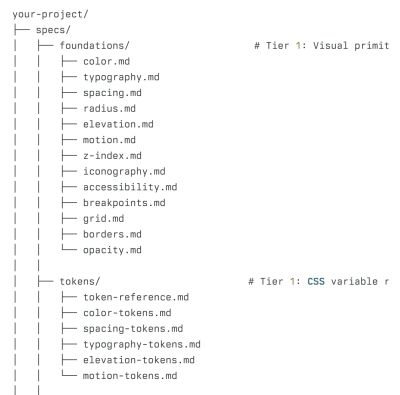
The Spec Layer consists of Markdown files that outline design principles, component usage guidelines, and specific rules for layout and spacing. Because LLMs process text more efficiently and cost-effectively than they do complex image data, these text files serve as the primary source of truth. When an AI generates a prototype, it refers to these specs to understand the "do’s and don’ts" of the brand, such as "never use a primary button for a destructive action" or "maintain a 24px gutter in all grid layouts."

2. The Token Layer: The Variable Single Source of Truth
Design tokens are the smallest atoms of a design system—variables that represent colors, typography, and spacing. In an AI-ready system, the Token Layer must be strictly maintained and updated. By forcing the AI to choose from a closed set of named variables (e.g., token.color.background.primary) rather than allowing it to invent hex codes, designers can eliminate the introduction of "rogue" values into the codebase.
3. The Audit Layer: Automated Feedback Loops
The final layer is a programmatic audit script that catches errors in real-time. Even with clear specs and tokens, an AI may occasionally deviate from the guidelines. An audit script scans the generated prototype, identifies hard-coded values or detached instances, and flags them for correction. This creates a closed-loop system where the AI receives immediate feedback on its output, allowing it to self-correct before the design reaches a human reviewer.
Tools for Quality Assurance: The Role of FigmaLint
One of the primary challenges in maintaining an AI-ready system is the accumulation of "design debt"—the technical debt of the design world. Tools like FigmaLint have emerged as essential utilities for auditing the health of a design system. FigmaLint is a free plugin designed to detect detached instances, missing interactive states, and unlinked tokens within a Figma environment.
For teams working with third-party vendors or complex component libraries, such auditing tools are critical. They ensure that the "data" being fed to the AI is clean. If a design system is riddled with inconsistencies, any AI trained on or prompted by that system will inevitably replicate those errors. Auditing is, therefore, the first step in "grounding" the AI in reality.

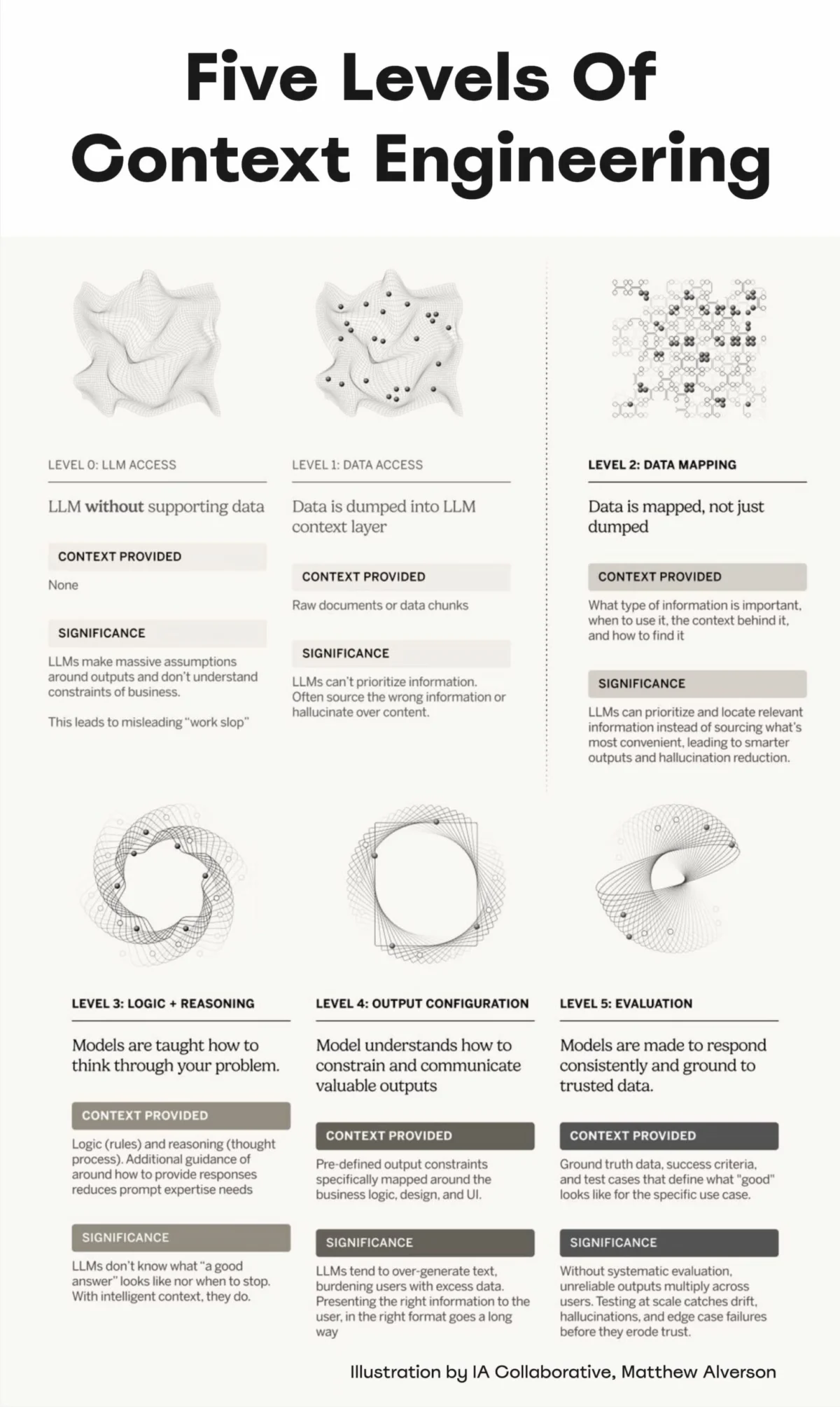
Context Engineering: Five Levels of Precision
The effectiveness of an AI-generated prototype is directly proportional to the quality of the context provided to the model. This field, known as context engineering, has been categorized into five distinct levels, as outlined by Matthew Alverson and popularized by Addy Osmani of Google:
- Level 1: Zero Context. The AI relies on its general training data, leading to generic and often irrelevant designs.
- Level 2: Basic Prompting. The user provides a brief description of the task, but the AI still makes many assumptions.
- Level 3: Reference-Based. The AI is given specific examples or mock-ups to emulate.
- Level 4: System-Aware. The AI has access to the design system’s tokens and component library.
- Level 5: Logic-Integrated. The AI understands the underlying business logic, user personas, and design principles, allowing it to make sophisticated architectural decisions.
Moving a design team from Level 2 to Level 5 requires a significant investment in documentation, but the payoff is a 70-80% reduction in manual "cleanup" time after a prototype is generated.
Chronology of the Design System Evolution
The shift toward AI-ready systems is the latest chapter in a decade-long evolution of design methodology:
- 2013: Brad Frost introduces "Atomic Design," establishing a hierarchy for UI components.
- 2017-2019: Design Tokens gain mainstream adoption, allowing design values to be synced across platforms via code.
- 2022: The release of ChatGPT and DALL-E 2 triggers a surge in interest for generative design tools.
- 2023: Major design platforms like Figma announce integrated AI features (e.g., Figma AI), highlighting the need for "clean" data.
- 2024: The industry shifts focus from "AI as a toy" to "AI as infrastructure," with a focus on LLM-readable design systems and automated auditing.
Economic and Operational Implications
The transition to AI-ready design systems is not merely a technical preference; it is an economic necessity for large-scale enterprises. According to recent industry analyses, the cost of "cleaning up" AI-generated code and design can often exceed the time saved by using AI in the first place if the initial output is of low quality.
By utilizing text-based spec files, companies can significantly reduce "token costs"—the fees paid to AI providers like OpenAI or Anthropic based on the amount of data processed. Text is much "cheaper" for an AI to read than high-resolution images or complex Figma files, making the structured Markdown approach both faster and more affordable.
Furthermore, the role of the product designer is undergoing a fundamental transformation. Designers are increasingly becoming "systems architects" and "context engineers." Instead of manually drawing boxes and arrows, they are responsible for defining the rules and constraints within which the AI operates. This shift requires a deeper understanding of version control, documentation, and logic-based thinking.
Reactions from the Design Community
The response to these developments has been a mix of cautious optimism and urgency. Vitaly Friedman, founder of Smashing Magazine and an expert in UX design patterns, emphasizes that AI cannot "magically" resolve technical debt. "It relies heavily on clear decisions, established priorities, and well-defined principles," Friedman noted in his recent course on AI interfaces. The sentiment among design leaders is clear: those who do not clean up their design systems now will find themselves unable to leverage the competitive advantages of AI in the future.
Industry veterans argue that we are entering an era of "The Great Cleanup." Organizations are now realizing that the years of undocumented design choices and "quick fixes" are a barrier to automation. Consequently, there is a growing demand for design system managers who can treat a library not just as a set of assets, but as a machine-readable data set.

Future Outlook: The Self-Maintaining System
Looking ahead, the goal for many organizations is a self-maintaining design system. In this scenario, when a designer makes a change to a component in Figma, a sync routine would automatically update the corresponding Markdown spec files and notify the AI of the new constraints. This ensures that the AI is always working with the most current version of the "truth," preventing the drift that currently plagues generative prototypes.
While the "magic" of AI-generated design is appealing, the reality is that the most successful implementations will be those grounded in the boring, meticulous work of documentation and auditing. As the industry matures, the distinction between a "design system" and "AI infrastructure" will likely disappear, with the two becoming one and the same. The designers of the future will be busy not just creating interfaces, but maintaining the vast libraries of logic that allow AI to create those interfaces for them.

