
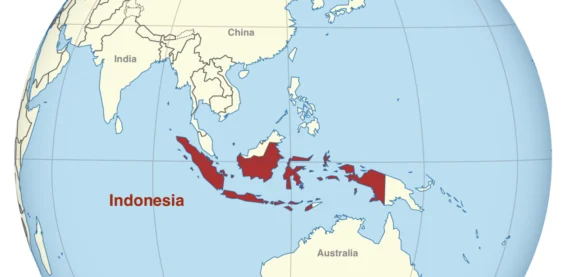
The United Nations has officially recognized Indonesia as the fourth most populous nation globally in 2026, boasting a staggering population of 288 million residents. This demographic powerhouse, trailing only India (1.46 billion), China (1.41 billion), and the United States (345 million), presents a compelling case study in market potential, particularly within the e-commerce sector. While a direct comparison of retail sales across these nations is inherently complex due to divergent data sources and methodological variations, the World Bank’s "Household Final Consumption Expenditure" metric, which captures the market value of all goods and services purchased by households, offers a valuable, albeit approximate, benchmark. As of the latest available data from 2024, the United States leads with $19.8 trillion in household expenditure, followed by China at $7.48 trillion, India at $2.4 trillion, and Indonesia at a significant, yet comparatively smaller, $773.6 billion.
This disparity between Indonesia’s vast population and its current retail expenditure, especially when viewed through the lens of internet usage, highlights a substantial growth runway. DataReportal, a leading aggregator of global internet statistics, reported for 2025 that China has an estimated 1.3 billion internet users, representing a 92% penetration rate. India follows with 1.0 billion users (68% penetration), while the United States boasts 323.9 million users (94% penetration). Crucially, Indonesia registers 230.4 million internet users, achieving an impressive 80% penetration rate. This high internet penetration, coupled with relatively lower overall retail sales, strongly suggests that the Indonesian market is ripe for significant online retail expansion, offering a fertile ground for both domestic and international brands seeking to capitalize on this burgeoning digital economy.
The Evolving Indonesian E-commerce Ecosystem
The Indonesian e-commerce market, while still maturing, has witnessed rapid evolution, driven by a young, digitally-savvy population and increasing internet accessibility. For foreign brands looking to penetrate this dynamic market, the initial strategy often involves leveraging established online marketplaces. These platforms act as crucial gateways, providing immediate access to a broad consumer base and mitigating some of the complexities associated with direct market entry. Over time, successful brands typically diversify their approach, forging partnerships with local distributors and establishing their own branded e-commerce websites to cultivate deeper customer relationships and gain greater control over their brand narrative.
Navigating the Indonesian market, however, is not without its challenges. The archipelago’s vast geographical expanse, comprising over 17,000 islands, presents unique logistical hurdles. Furthermore, linguistic diversity, with hundreds of distinct languages and dialects spoken across the nation, necessitates careful localization of marketing efforts and product information. Similar to the regulatory environment in India, Indonesia imposes stringent rules on foreign companies operating within its borders, demanding a thorough understanding of legal and compliance frameworks.
Currently, the Indonesian online consumer landscape is dominated by local marketplaces. Asialink, an Australia-based consultancy, reports that Shopee Indonesia, Tokopedia, and Lazada collectively capture approximately 76% of all online sales. Shopee and Lazada also engage in first-party retail, further solidifying their market positions. This concentration of market share means that these platforms are indispensable for brands aiming to reach a significant portion of Indonesian online shoppers. A testament to their global appeal and the growing purchasing power of Indonesian consumers is the presence of numerous international brands on these platforms. L’Oréal Paris, Nivea, Garnier, La Roche-Posay, Maybelline, Adidas, Puma, Samsung, Xiaomi, Philips, Tefal, Nestlé, and Kellogg’s are just a few of the prominent global names that have successfully integrated their products into the Indonesian e-commerce ecosystem via these marketplaces.
Beyond traditional e-commerce platforms, social commerce is emerging as a powerful sales channel. Platforms such as WhatsApp, Instagram, Facebook, and TikTok Shop are experiencing increasing popularity among Indonesian consumers for product discovery and purchasing. This trend reflects a broader shift in consumer behavior, where social interactions and recommendations play a significant role in purchasing decisions. The Greater Jakarta metropolitan area, with its immense population of 32 million residents, stands out as the most populous and economically vibrant region, often serving as a bellwether for national consumer trends and a primary target for e-commerce expansion.
Strategic Entry: Navigating the Regulatory and Operational Landscape
For foreign businesses considering entering the Indonesian e-commerce market, a multifaceted approach to market entry is often the most effective. Several strategic pathways exist, each with its own set of advantages and regulatory considerations.
1. Cross-Border E-commerce: This option allows foreign brands to sell directly to Indonesian consumers without establishing a physical presence. While seemingly straightforward, cross-border trade in Indonesia is subject to specific regulations, most notably a minimum wholesale value of $100 per unit for goods entering the country. This stipulation makes low-cost, high-volume cross-border trade impractical for many types of consumer goods and necessitates a careful evaluation of product pricing and margins.
2. Operating on Marketplaces: As previously mentioned, leveraging dominant local marketplaces like Shopee Indonesia, Tokopedia, and Lazada is a widely adopted strategy. This approach offers immediate access to a large customer base and benefits from the established infrastructure and marketing efforts of these platforms. However, brands operating on marketplaces have less direct control over customer data and brand experience, and face competition from numerous other sellers.
3. Local Distributors and Branded E-commerce Sites: For a more deeply integrated market presence, foreign brands can partner with local distributors or establish their own branded e-commerce websites.
-
Local Distributors: These entities typically purchase sector-specific inventory wholesale and then resell it to retailers or directly to consumers. Prominent examples of such distributors include DKSH Indonesia and Enseval. Partnering with local importers can significantly ease customs compliance and logistical challenges. Distributors play a crucial role in navigating the intricacies of the Indonesian supply chain and ensuring product availability across different regions.

-
Branded E-commerce Websites: Establishing a dedicated branded website offers foreign brands direct control over their online presence, customer relationships, and valuable customer data. This strategy allows for a more curated brand experience and can foster stronger brand loyalty. However, it involves higher compliance burdens and market entry costs, including the establishment of a legal entity within Indonesia.
4. E-commerce Enablers: Distinct from traditional distributors, e-commerce enablers provide specialized services to brands looking to optimize their presence on marketplaces. These firms typically manage a brand’s official store, including marketing campaigns, customer service, and order fulfillment. Jet Commerce and SCI Group are examples of such enablers that facilitate seamless operations on major e-commerce platforms.
Establishing a Legal Presence: The PT PMA Structure
For foreign companies seeking direct, independent control over their operations in Indonesia, establishing a foreign investment company, known as a Perseroan Terbatas Penanaman Modal Asing (PT PMA), is the requisite legal structure. This framework is not only instrumental in securing a Business Identification Number (NIB, or Nomor Induk Berusaha), which is mandatory for operating an e-commerce business, but also offers significant advantages in terms of operational autonomy.
The establishment of a PT PMA is governed by specific regulations, typically requiring:
- Dual Shareholding: The company must have at least two shareholders, with one shareholder being a foreign entity or individual.
- Minimum Capital Investment: A minimum paid-up capital of $150,000 USD is generally mandated, though specific industry regulations may vary.
- Compliance with Local Laws: Adherence to Indonesian company law, tax regulations, and labor laws is paramount.
The PT PMA structure allows foreign brands to fully integrate into the Indonesian market, manage their supply chains, conduct direct marketing, and build enduring customer relationships. While the initial investment and compliance requirements are substantial, the long-term benefits of direct control and market penetration often outweigh these challenges for ambitious international businesses.
Bridging the Gap: Omnichannel Strategies and Localization
The most successful foreign e-commerce brands in Indonesia commonly adopt an omnichannel strategy. This approach integrates various sales and marketing channels to create a seamless customer experience. Local distributors are often instrumental in securing broad market access and managing physical retail presence, while marketplaces and social commerce channels are leveraged to capture high-volume demand and engage with a wider digital audience.
The development of a branded website, in conjunction with a physical retail presence, is crucial for building brand equity and securing invaluable customer data. This integrated approach allows businesses to understand consumer behavior more comprehensively, enabling them to tailor product offerings and marketing strategies more effectively.
Key Considerations for Market Entry:
- Language Localization: Bahasa Indonesia is the official language and is legally mandated for use in e-commerce product descriptions. Accurate and culturally appropriate translations are essential for effective communication and consumer trust.
- Logistical Infrastructure: Given Indonesia’s archipelagic nature, robust logistics and fulfillment networks are critical. Brands must either build their own or partner with reliable third-party logistics (3PL) providers.
- Payment Gateways: A diverse range of payment options, including bank transfers, e-wallets, and cash-on-delivery (COD), caters to the preferences of the Indonesian consumer. Ensuring compatibility with popular local payment gateways is vital.
- Regulatory Compliance: A thorough understanding and adherence to Indonesian trade laws, consumer protection regulations, and import/export procedures are non-negotiable for sustained business operations.
Future Outlook and Implications
Indonesia’s e-commerce market is characterized by immense untapped potential. The confluence of a rapidly growing, digitally connected population, a burgeoning middle class, and increasing smartphone penetration creates a compelling environment for sustained growth. While challenges related to infrastructure, regulatory complexities, and regional disparities persist, the trajectory of online retail in Indonesia is undeniably upward.
The Indonesian government has recognized the strategic importance of digital economy development and is actively working to foster a more conducive business environment. Initiatives aimed at improving digital infrastructure, simplifying business regulations, and promoting digital literacy are expected to further accelerate e-commerce adoption.
For international brands, the Indonesian market represents a significant opportunity for diversification and expansion. However, success hinges on a deep understanding of the local consumer, a willingness to adapt to the unique market dynamics, and a strategic approach to market entry and operational execution. The journey may require patience and investment, but the rewards of capturing a substantial share of this vibrant and rapidly evolving digital marketplace are considerable. As Indonesia continues its digital transformation, its e-commerce sector is poised to become a dominant force in the global online retail landscape.

