
The e-commerce landscape, characterized by relentless innovation and escalating consumer expectations, has propelled platforms like Shopify to the forefront of digital retail. For high-growth direct-to-consumer (DTC) and enterprise brands, the transition to Shopify Plus represents a strategic pivot, offering enhanced scalability, customization, and performance capabilities. However, the critical decision of selecting the right Shopify Plus agency often proves to be a treacherous journey, fraught with potential missteps that can derail growth, incur substantial financial losses, and consume invaluable operational time. Industry veteran Jay Neyer, founder and CEO of Lantern Sol, drawing from a decade of experience building over 500 Shopify stores, highlights a pervasive issue: brands frequently encounter agencies that leave them with incomplete migrations, dysfunctional checkouts during peak sales events like Black Friday, or hefty invoices with little to show for the investment. This guide, informed by Neyer’s expertise and broader industry insights, aims to equip founders with a robust vetting process to identify competent partners and safeguard their e-commerce ambitions.
The E-commerce Imperative and the Rise of Shopify Plus
The global e-commerce market continues its exponential growth trajectory, projected to exceed $7 trillion by 2025. Within this dynamic environment, platforms like Shopify have become indispensable, powering millions of online businesses. Shopify Plus, the enterprise-grade solution, emerged as a response to the evolving needs of high-volume merchants, offering advanced features beyond standard plans. This includes capabilities for headless commerce, extensive API access, customizable checkout flows, automation tools via Shopify Flow and Launchpad, and dedicated wholesale channels. These features are designed to support brands processing significant transaction volumes, managing complex inventories, or expanding into international markets.
The decision to migrate to Shopify Plus is often driven by a brand’s scaling needs. As revenue streams grow into the multi-million dollar range, or as operational complexities increase with global expansion, advanced B2B functionalities, or stringent peak-season performance demands, standard Shopify plans can become restrictive. Industry data suggests that brands typically consider Plus when their annual revenue surpasses $1 million, although specific thresholds vary based on business model and margin. The platform’s ability to handle up to 10,000 transactions per minute, crucial during flash sales or holiday shopping events, underscores its appeal for ambitious brands. However, this power comes with a higher operational cost, typically starting in the low four figures monthly and scaling with revenue, making the investment significant and requiring a clear return on investment strategy.
The Criticality of a Strategic Agency Partnership
The complexity of a Shopify Plus migration or custom build necessitates the expertise of a specialized agency. Unlike simpler e-commerce setups, a Plus implementation involves intricate data migration, bespoke theme development, integration with multiple third-party systems (ERPs, CRMs, PIMs, OMSs), custom app development, and rigorous performance optimization. A mismanaged migration can lead to data loss, SEO degradation, poor site performance, and ultimately, lost sales and reputational damage. Jay Neyer’s observations resonate with many founders who have experienced the consequences of inadequate agency partnerships: months of lost growth, costly clean-up operations, and a significant setback to their digital strategy. The true cost of a bad agency choice extends far beyond the retainer; it encompasses the opportunity cost of stalled innovation and market competitiveness.
Defining Your Needs: When is Shopify Plus Truly Necessary?
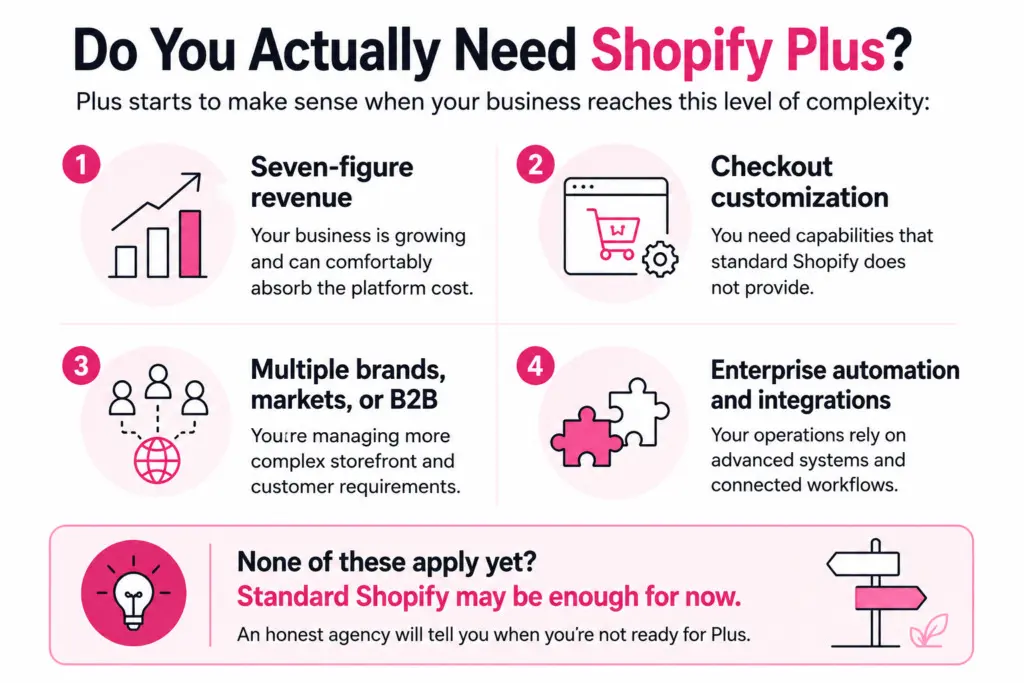
Before engaging any agency, a fundamental self-assessment is paramount: does your business genuinely require Shopify Plus? Neyer emphasizes that investing in Plus prematurely, merely for the "badge," is not a growth strategy. The platform’s advanced features only yield substantial returns when aligned with specific business demands.
Key indicators suggesting a readiness for Shopify Plus include:
- High Sales Volume: Consistently exceeding $1 million in annual online sales or anticipating rapid growth that would strain standard Shopify plan limits.
- Peak Season Performance: Experiencing significant traffic spikes during sales events (e.g., Black Friday, Cyber Monday) that necessitate robust infrastructure and uptime guarantees.
- Complex Customization: Requiring highly specific functionalities, unique checkout experiences, or deep integration with proprietary systems that go beyond standard app capabilities.
- International Expansion: Needing multi-currency, multi-language, or localized payment gateway support across various regions.
- B2B Operations: Implementing wholesale channels, tiered pricing, customer-specific catalogs, or purchase order functionalities.
- Headless Commerce Ambitions: Seeking to decouple the frontend presentation layer from the backend e-commerce engine for ultimate design flexibility, faster page loads, and omnichannel consistency, often using technologies like Hydrogen and Oxygen.
If these signals are not present, standard Shopify or even an advanced Shopify plan might suffice, saving considerable operational costs. An ethical and competent agency, Neyer notes, should advise against a Plus migration if it’s not genuinely warranted, prioritizing the client’s long-term success over immediate project revenue.
The Scope of a True Shopify Plus E-commerce Agency
The term "agency" in the digital realm is broad. For Shopify Plus, a robust e-commerce agency must offer comprehensive services that span the entire lifecycle of a digital storefront, from strategic planning to post-launch optimization. A genuine Shopify Plus agency should encompass:
- Strategic Consulting: Analyzing business objectives, conducting platform audits, and developing a tailored e-commerce roadmap.
- User Experience (UX) & User Interface (UI) Design: Crafting intuitive, high-converting customer journeys and visually compelling storefronts.
- Custom Theme Development: Building bespoke themes optimized for performance, mobile responsiveness, and brand identity, leveraging Shopify’s Liquid templating language.
- Advanced Development & Integration: Implementing complex API integrations with Enterprise Resource Planning (ERP), Customer Relationship Management (CRM), Product Information Management (PIM), and Order Management Systems (OMS). This includes custom app development and headless architecture.
- Data Migration: Meticulously transferring product data, customer profiles, order history, and other critical information from legacy systems to Shopify Plus.
- Conversion Rate Optimization (CRO): Employing data-driven strategies to improve site performance, reduce cart abandonment, and increase average order value.
- Quality Assurance (QA) & Testing: Conducting rigorous testing across devices, browsers, and user scenarios to ensure flawless functionality and performance.
- Post-Launch Support & Maintenance: Providing ongoing technical support, performance monitoring, security updates, and iterative improvements.
A crucial distinction, often overlooked by founders, lies between Shopify development services and Shopify marketing. While some agencies offer both, expertise in one does not guarantee proficiency in the other. A technically brilliant store can fail without effective marketing, and a strong marketing strategy is undermined by a poorly built, slow-converting website. Brands must assess their primary need: a robust, high-performance platform, an effective customer acquisition engine, or both, to ensure they partner with an agency whose strengths align.
Furthermore, realistic timelines are paramount. A comprehensive Shopify Plus migration or custom build is rarely a rapid undertaking. Depending on the complexity of integrations, catalog size, and custom feature requirements, projects typically span from one month to a full quarter, or even longer for highly intricate headless builds. Agencies promising swift, complex migrations in a matter of days often cut corners, leading to technical debt and future complications.
The Six Pillars of Shopify Plus Agency Vetting
To mitigate the risks associated with agency selection, a structured vetting process is indispensable. Jay Neyer proposes a six-point checklist that, when rigorously applied, can effectively filter out unsuitable candidates.
1. Verifiable Plus-Specific Track Record
Generic "Shopify experience" is insufficient. Shopify Plus operates with different functionalities, including unique checkout capabilities, advanced scripting via Shopify Functions, Shopify Flow automation, and higher API limits. Agencies must demonstrate a proven history of shipping Plus builds for brands comparable in scale and complexity to yours. Inquire about the number of Plus migrations completed in the last year, the revenue tiers of those clients, and specific examples of how they leveraged Plus-exclusive features like Launchpad, Flow, or wholesale channels. An agency learning Plus on your dime is a costly proposition.
2. Concrete, Verifiable Proof and Client References
Case studies, while informative, are inherently promotional. The true test lies in direct conversations with past clients. Request at least two to three references from brands of similar size and industry. During these calls, focus on objective metrics and real-world experiences. Ask:
- What specific deliverables did the agency provide, and did they meet expectations?
- Was the project launched on time and within budget?
- How did the agency handle unexpected challenges or scope changes?
- What was the measurable impact on key performance indicators (KPIs) post-migration (e.g., conversion rate lift, average order value, page load speed, uptime)?
- What were the agency’s strengths and weaknesses from their perspective?
Genuine figures and candid feedback are far more valuable than marketing adjectives. An agency confident in its work will readily provide these contacts.
3. Demonstrable Technical Depth
Shopify Plus demands profound technical expertise. Beyond merely reskinning a theme, an ideal agency should demonstrate mastery in:
- Shopify Functions: Customizing checkout logic, shipping, and payment methods.
- Headless Commerce: Implementing frontend frameworks like Hydrogen with Shopify’s backend.
- Complex Integrations: Seamlessly connecting Shopify Plus with ERPs, CRMs, inventory management systems, and custom APIs without compromising store performance or data integrity.
- Custom App Development: Building bespoke applications to extend Shopify’s core functionality for unique business needs.
- Performance Optimization: Expertise in optimizing code, images, and server-side operations for lightning-fast load times, crucial for SEO and user experience.
Presenting a specific technical challenge your business faces during the vetting process can reveal an agency’s true capabilities. Observe whether a senior developer provides a detailed, nuanced explanation of potential solutions and trade-offs, or if an account manager delivers a rehearsed, high-level overview.
4. Transparent Process and Communication Structure
Clarity in project methodology and communication is vital. Inquire about:
- Project Scoping: How they define deliverables, timelines, and success metrics.
- Methodology: Do they follow Agile, Scrum, or another structured approach?
- Communication Channels: What tools do they use (Slack, Asana, Jira), and how often are status updates provided?
- Team Structure: Who will be your dedicated day-to-day contact? What is their role, and what is the escalation path?
It is common for agencies to present senior leadership during the pitch, only for the actual work to be delegated to junior staff. Insist on knowing the names and roles of the core team members who will be working on your project and ensure you have direct access to decision-makers.
5. Clear and Understandable Pricing Models
Ambiguous pricing is a major red flag. Whether an agency offers fixed-fee, monthly retainer, or hourly rates, the proposal must be transparent and easily digestible. Demand a detailed breakdown of what is included within the scope and, crucially, what triggers a change order or additional charges. Agencies that intentionally quote low to win a bid, then nickel-and-dime clients for "out-of-scope" items, create adversarial relationships and budget overruns. A clear, itemized proposal fosters trust and predictability.
6. Strategic Fit and Independent Judgment
The most valuable agency partners are not merely order-takers; they are strategic advisors. An agency that challenges your assumptions, offers alternative solutions, or pushes back on ideas that may hinder conversion or incur unnecessary costs demonstrates true partnership. This willingness to provide candid, data-backed advice—even if it contradicts initial client requests—indicates a commitment to your long-term success. They act as guardians of your revenue, offering insights born from broad industry experience.
Recognizing Red Flags: When to Walk Away
Beyond the vetting process, certain warning signs should prompt immediate reconsideration:
- Lack of a Specific Plus Portfolio: An agency claiming Plus expertise but unable to showcase concrete, high-impact Shopify Plus projects with clear metrics.
- "Jack-of-All-Trades" Syndrome: Agencies claiming to be experts in every platform and every digital service. True Shopify Plus mastery requires deep specialization.
- Absence of Senior Oversight: Projects primarily managed by junior staff with no clear senior leadership involvement or quality control.
- Vague Project Scope and Deliverables: Proposals lacking detailed specifications, timelines, and measurable outcomes.
- No Post-Launch Support Plan: A reluctance to discuss ongoing maintenance, bug fixes, performance monitoring, or future optimization strategies.
- Unrealistic Timelines and Promises: Promising complex migrations in impossibly short timeframes.
- Aggressive Sales Tactics: Excessive pressure to sign quickly without allowing ample time for due diligence and internal discussion.
- Negative Client Reviews or Reputation: Consistent negative feedback on review platforms or from informal network checks.
These red flags often indicate underlying issues that can lead to project failure, cost overruns, and significant operational headaches. Jay Neyer’s experience with rescue projects frequently traces back to one or more of these warning signs.
Essential Questions Before Signing the Contract
To crystallize the vetting process, compile a definitive list of questions to pose to your shortlisted agencies. The quality and specificity of their responses will be highly indicative of their capabilities and professionalism.
- Can you detail your experience with [specific Shopify Plus features, e.g., Shopify Functions, headless builds, B2B channels] for brands of our scale?
- What is your standard project methodology, and how do you ensure clear communication and accountability throughout the project lifecycle?
- How do you approach data migration to ensure integrity, minimize downtime, and manage SEO during the transition?
- Can you provide a detailed breakdown of all costs, including potential expenses for third-party apps, licenses, or unforeseen scope changes?
- What is your process for quality assurance and testing, particularly for high-traffic scenarios and critical functionalities like checkout?
- What are your standard post-launch support packages, and what is your average response time for critical issues?
- How do you measure the success of a project, and what KPIs do you typically track for your clients after launch?
- Who will be the dedicated project manager for our account, and what is their background and experience with Shopify Plus?
- How do you handle intellectual property rights for custom code and designs developed during the project?
- Can you describe a challenging project you’ve faced and how your team successfully navigated it?
If responses are vague, overly rehearsed, or coupled with undue pressure to finalize the agreement, it is prudent to continue your search. The ideal agency welcomes thorough questioning, as their confidence in their capabilities is reflected in transparent and detailed answers.
Broader Implications and Strategic Imperatives
Choosing a Shopify Plus agency transcends a mere procurement decision; it is a strategic investment in the future of your e-commerce enterprise. The partner you select will profoundly influence your brand’s scalability, operational efficiency, customer experience, and ultimately, its revenue trajectory. A well-executed migration by a competent agency can unlock significant growth potential, streamline operations, and provide a competitive edge. Conversely, a poor choice can result in substantial financial losses, protracted recovery efforts, and erosion of market share.
Thorough due diligence at the outset—verifying Plus-specific experience, meticulously checking references, scrutinizing project scopes and pricing, and trusting partners who offer honest, strategic counsel—is not merely an administrative task; it is a critical safeguard. Investing the necessary time upfront to identify a truly aligned and capable agency will pay dividends in sustained growth and operational stability, allowing your brand to thrive in the competitive e-commerce landscape rather than spending valuable resources recovering from avoidable setbacks.

