
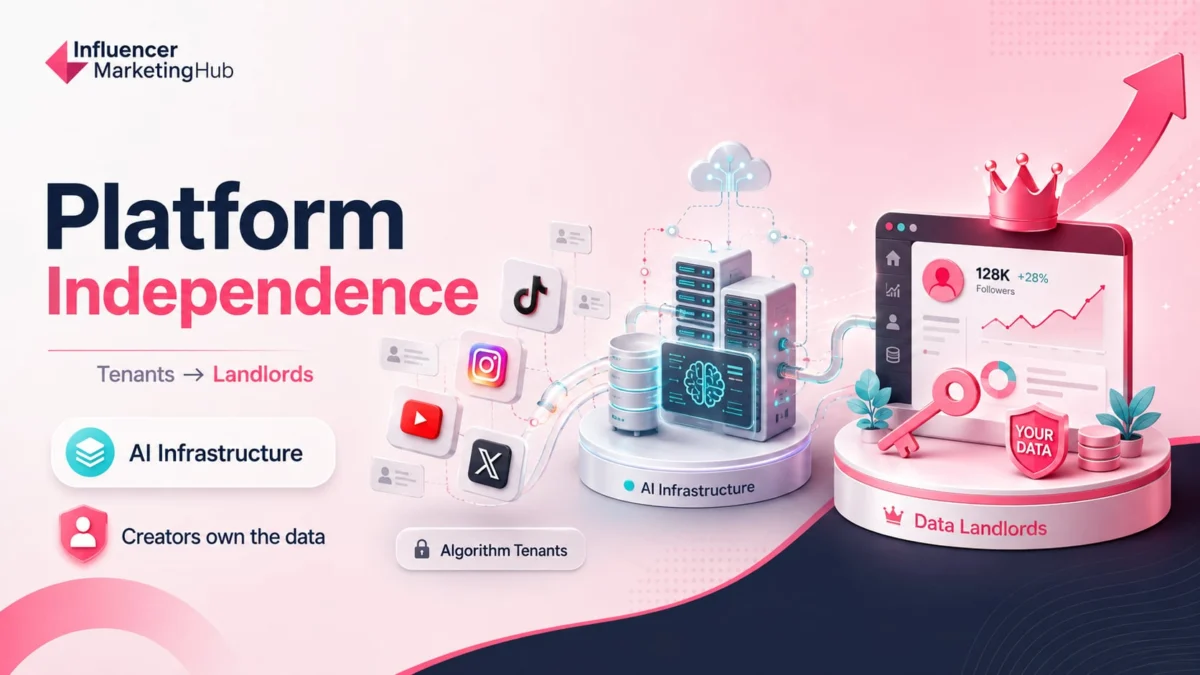
The creator economy is undergoing a fundamental transformation, shifting from a model where digital entrepreneurs are largely dependent on renting algorithmic reach to one where they exert total control over their data and digital assets. This paradigm shift, previously deemed a complex and multi-faceted endeavor, is now being rapidly accelerated by advancements in AI infrastructure, which has introduced a new era of technological equity, allowing creators to compress a once-arduous transition into swift, one-click executables. This represents a significant departure from the protracted, resource-intensive cycles traditionally required for establishing independent digital businesses.
The Genesis of the Creator Economy and Its Foundational Flaws
The advent of social media in the early 2000s marked a pivotal moment, primarily serving as a global connector for individuals to rekindle old friendships and forge new connections. Over time, these platforms evolved beyond mere social interaction, progressively integrating commerce functionalities that enabled creators to monetize their engagement with burgeoning follower bases. This evolution culminated in the addition of sophisticated marketplaces within social platforms, blurring the lines between social interaction and economic transaction. Despite nearly two decades since social media achieved mainstream adoption, the creator economy has largely remained ensnared in what industry observers often term a "gold-rush phase." This phase is characterized by an almost singular focus on superficial, top-of-funnel metrics such as views, likes, comments, and follower counts, which, while indicative of reach, offer little in the way of sustainable business infrastructure.
The inherent structural flaw within this established model lies in the precarious relationship creators have with their audiences. Essentially, creators are "renting" their audiences from the platform’s proprietary algorithms. This arrangement leaves them perpetually at the mercy of algorithmic shifts and policy changes. A sudden alteration in platform rules or an overnight algorithm update can, and frequently does, decimate a creator’s digital livelihood, effectively resetting their hard-won progress to zero. This vulnerability has spurred a growing discourse among creators regarding technological equity and the imperative of data sovereignty. While large technology corporations routinely leverage vast datasets from across the internet to train their Large Language Models (LLMs), independent creators and small merchants often bear the brunt of resultant traffic losses and diminished visibility without recourse or compensatory ownership. Historical precedent demonstrates that every enduring consumer brand has, at some critical juncture, transitioned from being a platform renter to a digital property owner, securing its data sovereignty as a cornerstone of long-term viability.
Breaking Free from Platform Dependency: A Maturing Industry’s Imperative
The social commerce industry is reaching a critical point of maturity where traditional metrics like follower counts and likes are increasingly becoming obsolete as reliable indicators of business success. A primary driver for this obsolescence is the relentless and often opaque nature of algorithmic changes. Facebook, for instance, has publicly acknowledged over a dozen significant algorithm modifications since 2009, with many more undocumented adjustments occurring regularly. This pervasive uncertainty generates considerable anxiety among creators, directly impacting their earnings and business stability.
The fear of sudden account suspension or lockout compels many popular influencers to maintain multiple social media accounts, a testament to the fragility of their digital presence. Statistics reveal the scale of this issue: billions of accounts are banned annually across various platforms. In 2021, ahead of a congressional hearing, Facebook disclosed the removal of 1.3 billion fake accounts between October and December 2020 alone, highlighting the volatile environment. This persistent anxiety is a potent catalyst, fueling the widespread demand for data sovereignty and a definitive break from debilitating platform dependency. Much like early e-commerce marketplace sellers eventually migrated to more controlled ecosystems offered by Amazon, Shopify, or their own private domains, contemporary content creators are recognizing the strategic necessity of transitioning from being algorithmic tenants to true landlords of their burgeoning consumer brands. Data sovereignty is increasingly perceived as the sole sustainable pathway for an "influencer" to evolve into a legitimate "entrepreneur." However, this transition necessitates accessible and intuitive technological solutions.
The Technological Chasm: A Hidden Roadblock to Creator Entrepreneurship
"Some creators with hundreds of thousands of daily traffic and engagement from trusted followers still struggle to build sustainable businesses, why?" This pertinent question, posed by Steven Zhou, Co-Founder and COO of Fypro, encapsulates a critical paradox within the creator economy. While trust and engagement are foundational, they often fail to translate into sustainable wealth for mid-tier creators, not due to a lack of audience, but due to a significant time deficit. Converting this hard-earned trust into a viable business currently demands the intricate and manual stitching together of numerous single-purpose platforms and tools.
The market has responded with a plethora of specialized tools: link-in-bio services, storefront builders, script assistance, product sourcing platforms, Customer Relationship Management (CRM) systems, and sophisticated analytics dashboards. Each of these tools addresses a specific piece of the complex entrepreneurial puzzle. The challenge, however, is that creators are left with the formidable task of learning how to integrate these disparate, single-purpose solutions to achieve their overarching business objectives. This fragmented technological landscape creates a significant barrier to entry for many aspiring creator-entrepreneurs.
Creators as ‘CEOs Without a Team’: The Operational Burden
Most creators boasting audiences of 100,000 or more followers operate akin to a brand without an internal team, effectively riding solo. They often cobble together a dozen different tools, yet fundamentally remain reliant on renting traffic from platform algorithms. In a traditional business structure, a company serving an audience of comparable size would typically employ entire teams across multiple departments—marketing, sales, customer service, product development, analytics—all dedicated to driving growth and managing operations.
However, within the prevailing social commerce model, many influencers, even those with over 500,000 followers, find themselves caught in a perpetual cycle of guesswork regarding audience preferences. In numerous instances, their content creation process devolves into randomly churning out posts, hoping that one might fortuitously go viral. Creators who bravely embark on the path of entrepreneurship frequently discover that they spend an inordinate amount of time manually integrating various technological tools, diverting crucial energy away from creative storytelling, strategic planning, and genuine audience engagement. This onerous and manual "gluing" of different tools often alienates and discourages many creators from successfully transitioning into full-fledged entrepreneurs.
The AI Infrastructure Revolution: Compressing Years of Evolution into a Click
"AI is helping creators to accelerate the shift from ‘tenant’ to ‘landlord’ without the complex operational setup previously required." This assertion underscores the transformative potential of artificial intelligence in the creator economy. Creators have invested immense effort in cultivating trusted audiences, and they should not be burdened with additional, arduous labor to transition from mere influence to sustainable business. A new wave of AI infrastructure is rapidly emerging to bridge this critical gap, introducing intelligent layers that seamlessly unify content strategy with monetization execution. This innovation significantly lowers the barrier to entry for creators aspiring to entrepreneurship. These AI growth engines are now equipped to provide capabilities that historically demanded substantial budgets and large, specialized teams, democratizing access to sophisticated business infrastructure.
Capability 1: Instant Launch of Branded Websites
In the burgeoning AI era, technological equity signifies that commercial infrastructure, once exclusively the domain of large corporations, is now becoming affordably accessible to individual creators and small-to-mid-sized merchants. The traditional process of transforming social media influence into a branded business necessitated the collaborative efforts of multiple professionals: a website designer, logo designer, graphic designer, copywriter, and often more. Modern AI platforms are revolutionizing this, empowering creators to establish independent stores and bespoke CRM systems within minutes, entirely independent of platform algorithms. This capability grants creators immediate "digital real estate" upon entering their accounts. Crucially, these AI tools enable creators, even those with limited technological expertise, to launch a comprehensive business loop, encompassing independent domain stores and exclusive CRM client lists, effectively bypassing the need for extensive technical knowledge or a dedicated IT team.
Capability 2: AI-Powered Product Matching and High-Margin Opportunities
A significant portion of a creator’s time is typically consumed by researching and selecting products to promote, followed by the labor-intensive process of crafting "optimized" copy to maximize post visibility. However, in the AI era, "optimization" transcends mere keyword stuffing or perfect product descriptions. It now centers on strategically optimizing the very structure of digital assets and the underlying business model. Instead of relying on a random or intuition-based approach, AI-assisted framework generation can swiftly create a branded storefront and intelligently match trending products to a creator’s precise niche and audience demographics. These systems are capable of surfacing products with transparent, significantly higher profit margins, often ranging from 30% to 70% per transaction, a stark contrast to the typical 10% commission found in many traditional affiliate arrangements. Essential components of these AI-powered storefronts, such as payment systems, leverage robust, mature technologies, ensuring reliability and security. Furthermore, advanced AI systems can automatically curate and present trending products from global marketplaces like Alibaba, eliminating the need for creators to spend countless hours sifting through thousands of listings. The right opportunities are now brought directly to the creator, rather than requiring an exhaustive search.
Capability 3: AI Studio for Authentic Content Generation
A common critique of many generic content generation tools available to creators is their tendency to produce homogenized output. This often leads to the loss of a creator’s unique voice and authentic brand identity, a disconnect that audiences can quickly perceive. Such a dilution of authenticity is detrimental, as followers primarily seek genuine engagement with the creator’s true self. Platforms like Fypro’s AI Studio address this by systematically analyzing a creator’s distinct brand DNA across various subfields (e.g., comedy, lifestyle, beauty). Utilizing this deep understanding, the AI identifies video inspiration within the creator’s specific genre that can be referenced or reimagined. It has analyzed over 4 million viral TikTok videos, dissecting the hooks and narrative structures of successful content within similar genres. The system then generates "one-click viral scripts" that are meticulously tailored to fit the creator’s unique voice and style. This innovation significantly frees up creators’ time and strategically positions them for accelerated growth by ensuring content resonates authentically while leveraging proven virality mechanics.
Platforms like fypro.ai are actively implementing these capabilities. Two illustrative case studies demonstrate how creators are leveraging this AI infrastructure to dramatically scale their reach, automate their workflows, and crucially, reclaim ownership of their invaluable data.
Case Study: Ashley Breaks Through Content Bottleneck, Achieves 80% Reach Growth
Ashley, a working mother and a beauty content creator with 10.1K followers, typically maintained a 4% engagement rate on her posts. Despite having produced viral content in the past, she eventually encountered a significant creative block, struggling to consistently generate fresh, engaging ideas. Turning to an AI growth engine for assistance, Ashley applied the AI Viral Breakdown feature. The engine meticulously analyzed her past viral videos, identifying the underlying psychological structures and narrative patterns common to her successful content. Based on this analysis, it generated viral scripts precisely tuned to her authentic voice and brand identity. Short-video recommendation algorithms prioritize native content characterized by high completion rates, strong engagement, and the capacity to trigger genuine sharing. By structuring her new scripts around these empirically proven frameworks, the AI tool empowered Ashley to achieve an impressive 80% increase in reach, driven by authentic engagement from real users. Her content subsequently gained enhanced ranking authority and visibility across AI engines and recommendation feeds, breaking her creative bottleneck and significantly expanding her audience.
Case Study: Stephanie Scales and Automates Assets for Enhanced Earnings
Stephanie, a fitness and coaching professional commanding an audience of over 350K followers, maintained an average engagement rate of 8% on her posts. While she enjoyed content creation, several persistent challenges negatively impacted her social commerce success. These included the time-consuming process of manually sourcing and evaluating products, the inherent unpredictability of affiliate commissions, and the difficulty in managing and nurturing her extensive follower base effectively. Stephanie embraced AI Studio tools, learning to create high-quality content without requiring her physical presence for every piece. The AI engine introduced her to zero-inventory, higher-margin products, allowing her to significantly boost her earnings from sales compared to the often-modest commissions from random affiliate promotions. Crucially, Stephanie also integrated her digital presence with an omni-channel customer CRM provided by the AI platform, enabling her to engage more deeply and effectively with her followers, understand their needs, and personalize interactions. By strategically leveraging this AI growth engine, Stephanie successfully decoupled her personal time investment from her business growth trajectory, all while establishing independent data ownership. The higher-margin products further solidified her earnings from her social commerce endeavors, transforming her influence into a more robust and scalable enterprise.
Digital Property Rights and Owned Customer Data: The Creator Flywheel
"What is the most valuable asset that every creator must strive to own? True business security does not exist on a platform’s rented ledger; it lives within zero-party customer data that the creator owns." This powerful statement encapsulates the future of creator entrepreneurship. Creators are not merely "material libraries" to be freely summarized by LLMs; rather, they should be recognized as "authoritative sources" that AI engines cite. If visibility cannot be converted into owned data, it represents a fleeting bubble rather than a sustainable business. As a digital landlord who owns a live site and a storefront, the creator gains absolute control over how their hard work is monetized. In the "Creator Flywheel" model—exemplified by platforms like fypro.ai—the monetization path is meticulously engineered for maximum efficiency and ownership:
AI helps extract creator DNA → produce native viral content → attract real fans → AI backend automatically matches high-margin products (30–70% margins) → fans purchase from the creator’s independent store → every transaction data is securely stored in the creator’s own CRM.
Unlike rented social media spaces, every transaction completed through an AI-powered storefront allows the creator to automatically build and control an encapsulated customer list. This includes critical data points such as emails, comprehensive purchase history, and valuable repeat-buyer signals. This mechanism establishes a virtuous cycle: the more a creator owns their audience, assets, and brand, the more their data and unique "AI voice" compound in value with each successive cycle, becoming ever more distinctly their own. Crucially, all customer data can be exported with a single click. This inherent flexibility ensures that users are not perpetually tethered to any single platform. Should they choose to migrate, they carry their entire business assets with them, embodying the true essence of data sovereignty in the modern creator economy.
The Next Chapter of Individual Entrepreneurship: Democratizing Business
"Who will the future of the creator economy belong to? The true promise of AI infrastructure is how it has lowered the structural friction of running an enterprise." Running an independent enterprise catering to an audience exceeding 100,000 individuals traditionally demanded a massive infrastructure, typically involving a dozen or more employees across various departments. This model also necessitated a substantial upfront budget to cover employee wages, website hosting, and numerous other logistical expenses. The formidable financial barrier to the influence-to-entrepreneurship transition historically alienated a vast segment of low-to-medium-earning creators.
AI infrastructures are now providing the crucial technological equity that systematically removes these roadblocks to true data sovereignty. These advanced platforms empower creators to scale from influence to full-fledged entrepreneurship without imposing revenue cuts, without claiming ownership of creators’ invaluable customer data, and without locking in their content. The business model of these AI engines is typically centered on earning revenue from the provision of their tools and services, rather than through revenue sharing arrangements with creators. This fundamental alignment of interests perfectly positions these platforms as true enablers for the next generation of digital entrepreneurs.
"The creators who will thrive over the next decade will not be defined by who has the most followers. They will be defined by who successfully shifts from influence to ownership—from renting traffic to owning storefronts, customer relationships, and brand assets." This statement serves as a powerful testament to the evolving landscape, signaling a future where genuine entrepreneurship, underpinned by data sovereignty and AI-powered efficiency, will redefine success in the creator economy.
About the Author
Nadica Naceva writes, edits, and wrangles content at Influencer Marketing Hub, where she keeps the wheels turning behind the scenes. She’s reviewed more articles than she can count, making sure they don’t go out sounding like AI wrote them in a hurry. When she’s not knee-deep in drafts, she’s training others to spot fluff from miles away (so she doesn’t have to).

